

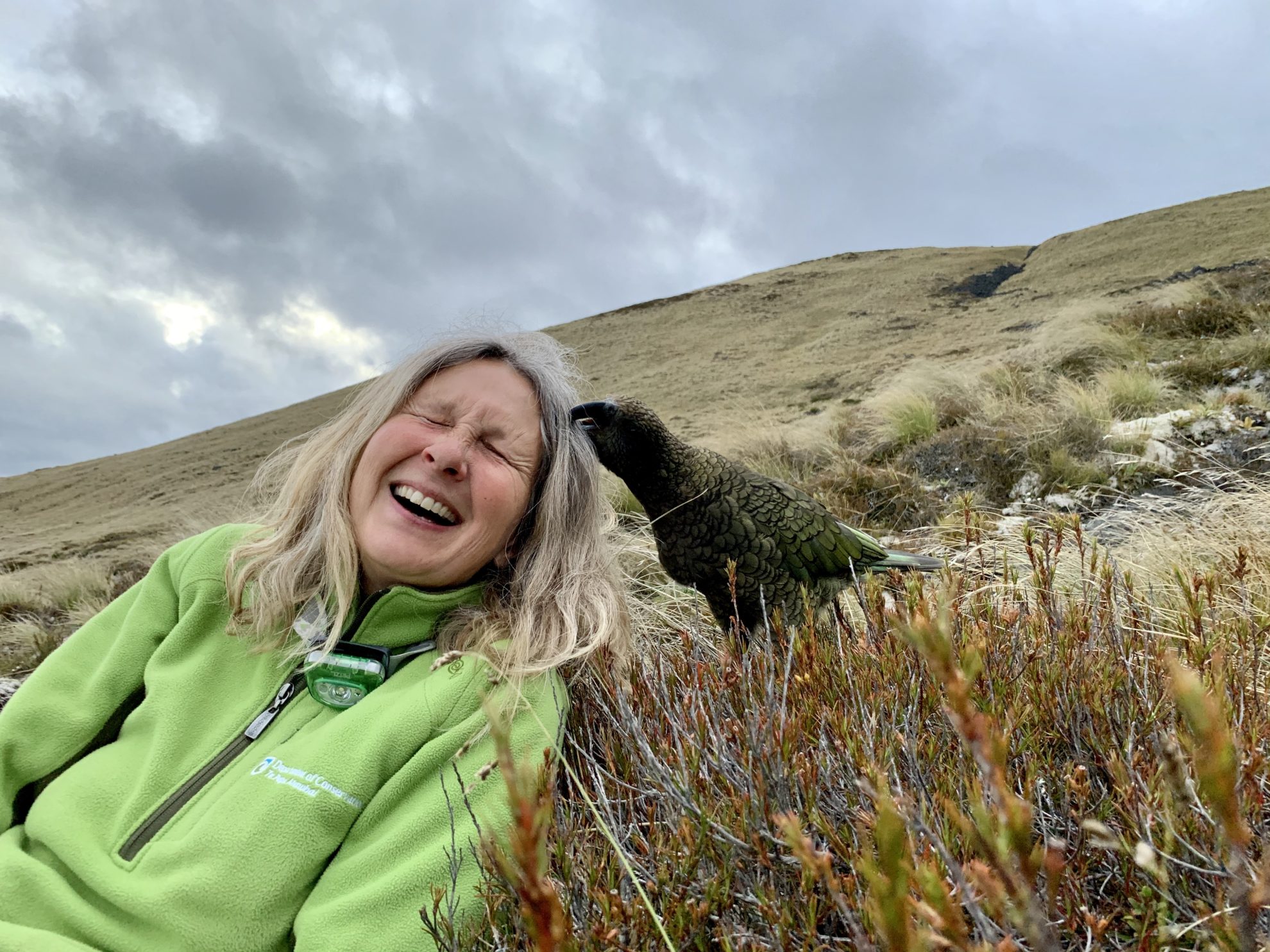
Meet the warden: Janine Martig
Janine Martig was a hut warden at Iris Burn Hut for the 2018/19 season, then at Luxmore Hut for the 2019/20 season. She will be back at Luxmore in 2020/21.
Best wildlife encounter: Both Iris Burn and Luxmore are popular stops on kea flight paths. Apparently some people find them annoying but I never tire of their company and antics. My most surprising kea encounter – and one of my most memorable days – was at Luxmore when I was lounging in the grass just off the track to the caves, when an adult male kea hopped closer and closer, then extended his beak and began grooming my head. It kept grooming for a couple of minutes, mostly gently, before pulling on a few strands of hair and disrupting my stillness.
What’s something you recommend walkers do: In the last light of the day, it’s nice to walk up the track to the Luxmore Caves, whether or not you actually feel like exploring them. It’s a great time for taking photos – all the plants are looking their best and you get a clear view of the final approach to the hut through the open tussock area. Tussock is underrated, I think, especially when light is playing on it.
What’s in tramper’s packs? Some people pack strange things. One of the oddest was a heavy pressure-cooker, though the spicy smells coming from it were to die for. They shared their dinner with me, which made a silly item into something pretty special! But I know for a fact that they’ll switch to lightweight cookware in future.
Best time to walk the Kepler: Any time from late October to early May is equally as awesome. The weather can be kind or testing at any time. The secret is to be prepared for all conditions – sun, rain, snow and wind. And for goodness sake, make sure your footwear has good tread and is not on its last legs – it’s a 60km walk, so don’t use it for your footwear’s last stand!
In the neighbourhood
Alternative track: Experience southern Fiordland on the soon-to-be Great Walk, the Humpridge Track.
Since you’re already here: If you haven’t got your fill of lakes, take a stroll on the Te Anau Lakefront Walk.
Just got a weekend? Spend a night above Te Anau in Luxmore Hut, with a sunrise at the summit.
Where to stay: Te Anau has multiple accommodation options, including backpackers, hotels, campsites and lodges.
Where to stock up: Outside Sports, Fiordland Frontier Supplies or Bev’s Tramping Gear Hire in Te Anau.
Walking the Kepler Track
One of just two Great Walk loop tracks, the Kepler can also be walked from Te Anau township.
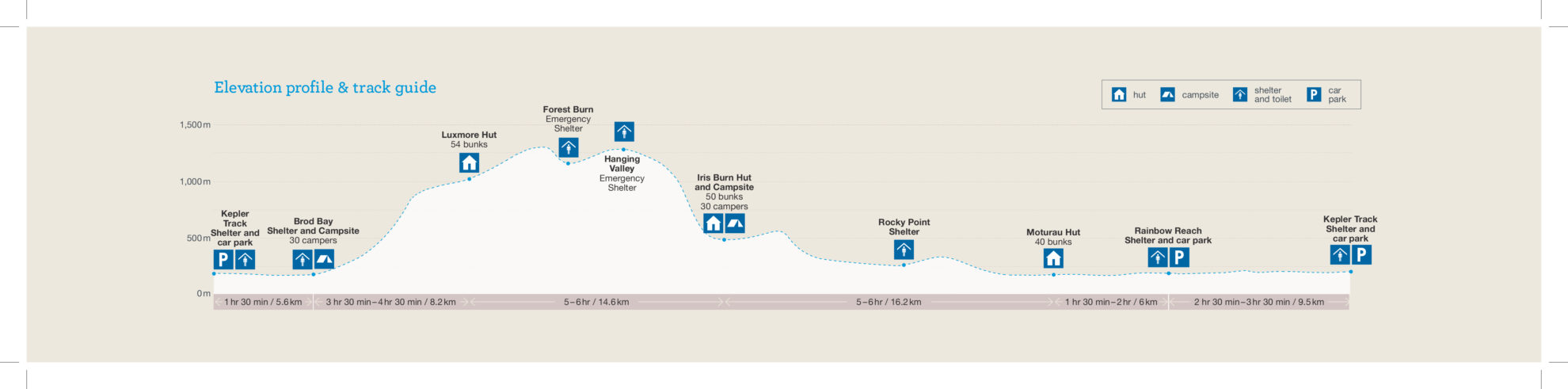
Kepler Track car park to Luxmore Hut
13.8km, 5-6hr
The track hugs the shore of Lake Te Anau to Brod Bay, where it begins a steep switch-back ascent. Above the treeline, stunning views over Lake Te Anau are revealed from amongst the tussock and the hut is then reached within an hour. Side tracks to Luxmore Cave and Mt Luxmore are worthwhile.
Luxmore Hut to Iris Burn Hut
14.6km, 5-6hr
The day begins with a climb to a ridgeline which provides staggering views across the south fiord of Lake Te Anau and the Murchison Mountains. The tops travel in this section is marvellous – perhaps the best of any Great Walk. Two shelters – Forest Burn and Hanging Valley – provide good spots for a snack or break from the weather before the steep descent into the Iris Burn. A 20 minute walk leading to the impressive falls is a must-do side trip from the hut.
Iris Burn Hut to Moturau Hut
16.2km, 5-6hr
The track follows the river down a glacial valley beneath beech and podocarps to the shores of Lake Manapouri. Sidling around Shallow Bay, the track soon reaches Moturau Hut – home to many sandflies.
Moturau Hut to Kepler Track car park
15.5km, 4-5.5hr
The final day begins in the forest before emerging into a boardwalk section crossing a wetland. Before long, it returns to the forest and follows the Waiau River to Rainbow Reach, where some trampers may wish to shuttle back to Te Anau. Those who continue follow Waiau River for another 2-3hr to reach the car park.the Kepler Track car park.



