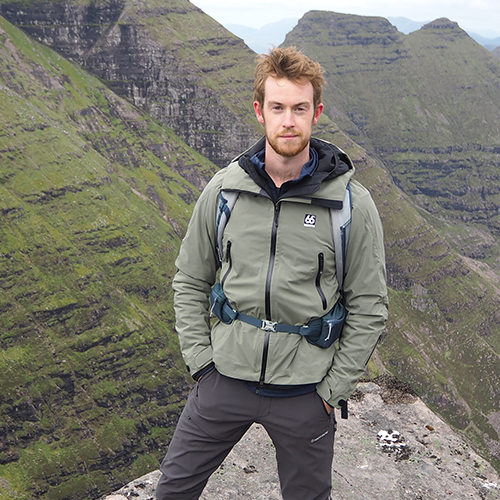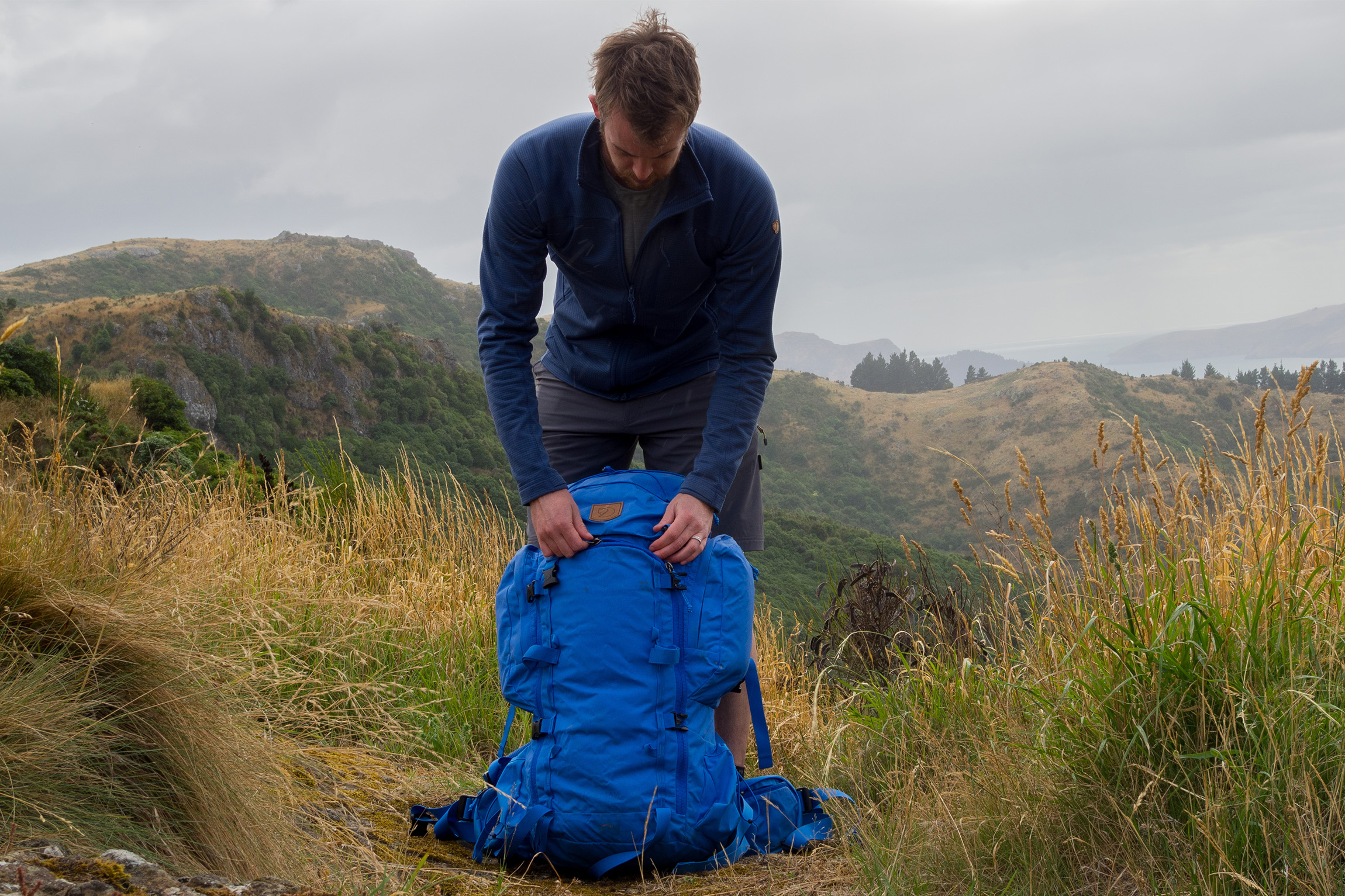
Chris Williams considered price, durability and load capacity when he chose a fully framed 3kg pack.
Ultralight tramping equipment and apparel is a tidal wave that has swept the hiking world, but some outdoor gear brands have withstood the trend. Swedish brand Fjällräven, for instance, has stuck to its guns, producing sturdy, durable kit for long tramps.
The essence of Fjällräven’s design ethos is apparent in its range of Kajka tramping packs. Launched in 2008, relaunched in 2013 and updated in 2024, the Kajka uses a tough synthetic fabric called Vinylon F, along with recycled 500D and 210D nylon. In a move to reduce the carbon footprint of the range, its aluminium frame was replaced with a wooden one (birch) in 2013.
Padding is generous, zips are chunky and pockets are plentiful. The result is a pack which, in 55, 65, 75 or 85-litre models, weighs roughly 3–3.4kg. By contrast, ultralight packs of comparable volumes can dip below 1.5kg.
I’m not an ultralight sceptic. Having reviewed plenty of ultralight tramping products over the years, I understand the appeal. Yet here I am, committing to a 3kg tramping pack. Why?
While I enjoy fast’n’light day hikes, when I go on multi-day tramps I prefer to be well-equipped and take my time, which requires a pack that supports heavier loads.
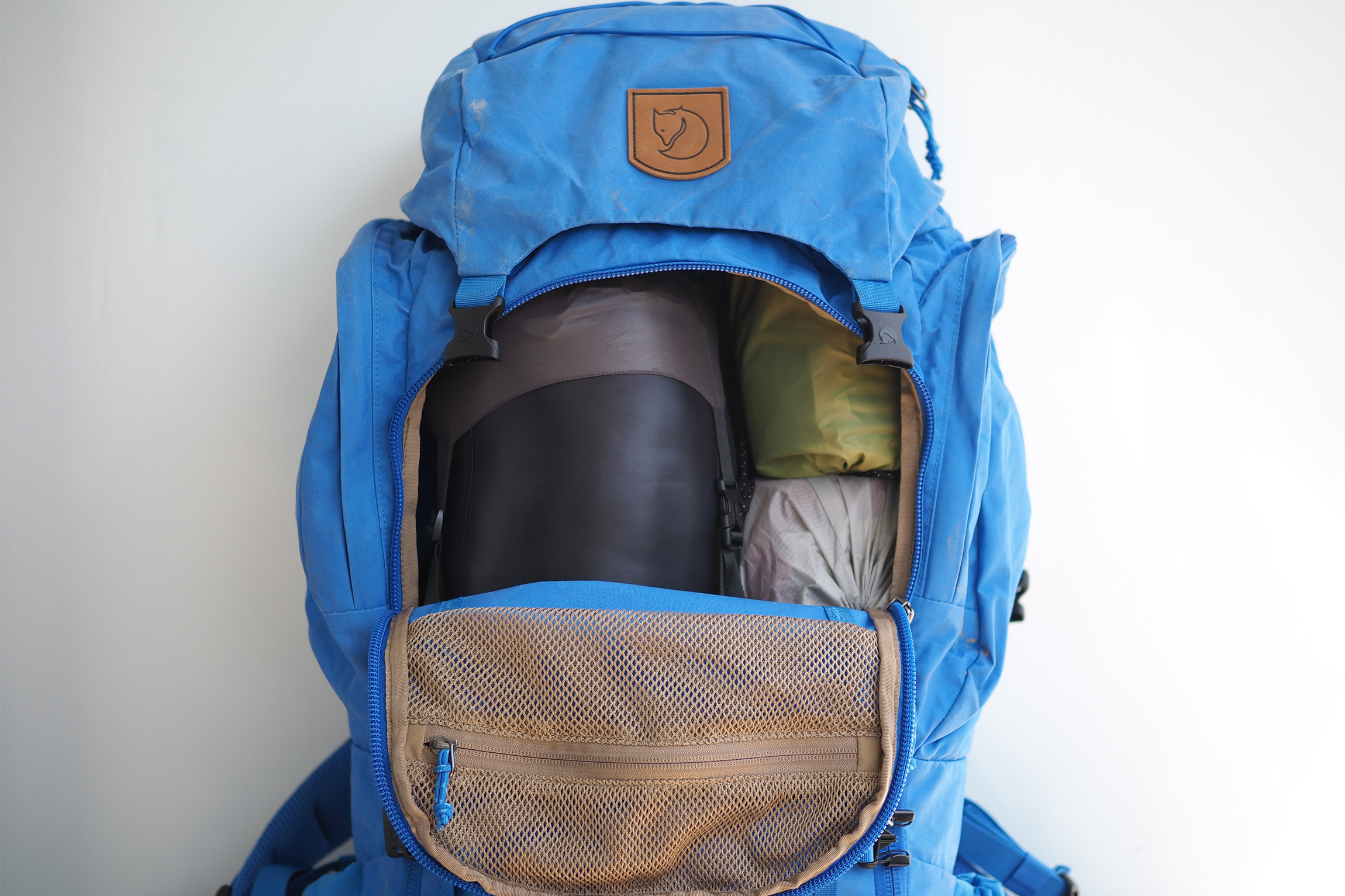
I also like the Kajka’s styling: classic looks paired with modern design techniques. But in considering whether a heavy-duty pack was preferable over ultralight options, I had a handful of points to mull over.
The first, inevitably, concerns money. The 55-litre Kajka costs $879.90. Unquestionably, this premium, if not eye-watering, price tag partly reflects the pack’s quality, but also Fjällräven’s international standing as a desirable brand.
For a fair comparison, the high-end Kajka ought to be compared against high-end lightweight packs. Class-leading examples include offerings from US-based Hyperlite Mountain Gear, and cottage industry producers like Atom Packs from the UK and New Zealand’s own Southern Lite Packs. In terms of upfront costs, these charge a premium too – upwards of circa $600. Their lower-volume production runs, innovative designs and cutting-edge materials are the reasons for this, and we will come back to them in a moment.
The second part of cost is repairs and lifespan. My logic is that ultimately, two $300 packs with lifespans of, say, seven or eight years cost about the same as a $600 pack that lasts 15 years. And that is before taking price inflation and any repair costs into account (the less durable the materials used, the more frequently repairs are required).
From this perspective, the rugged Kajka makes economic sense because my ambition is for it to be a lifelong tramping pack.
This is a neat segue into the question of durability. A more durable pack likely means fewer repairs and a longer lifespan. Having now used the Kajka for 18 months, it so far feels up to the task of putting in a two- or three-decade shift. When you have used a lot of outdoor gear, you quickly get a good idea of what’s durable and what isn’t. Everything about the Kajka feels reassuringly tough.
After numerous tramps both here and in the UK, every component feels the same as it did when it was new.
Whether the ultralight rivals can go the distance depends on individual packs. Those that simply use lighter zips and thinner polyester or nylon will not. But those that employ fabrics such as Dyneema (a type of lightweight polyethylene that claims to be the strongest synthetic fibre on the market), certainly can, which feels counterintuitive. Delicate lightweight zips are not generally found on high-end ultralight packs either; instead, you find toggles and clips.
Of these ultralight packs, the one I’ve had the most to do with is Atom Packs’ (now succeeded) Atom EP50. My colleagues in the UK at Trail magazine loved it for its ability to be ultralight and tough, and it racked up product awards as a result. However, as mentioned, packs like these cost a premium, just like the heavy-duty Kajka.
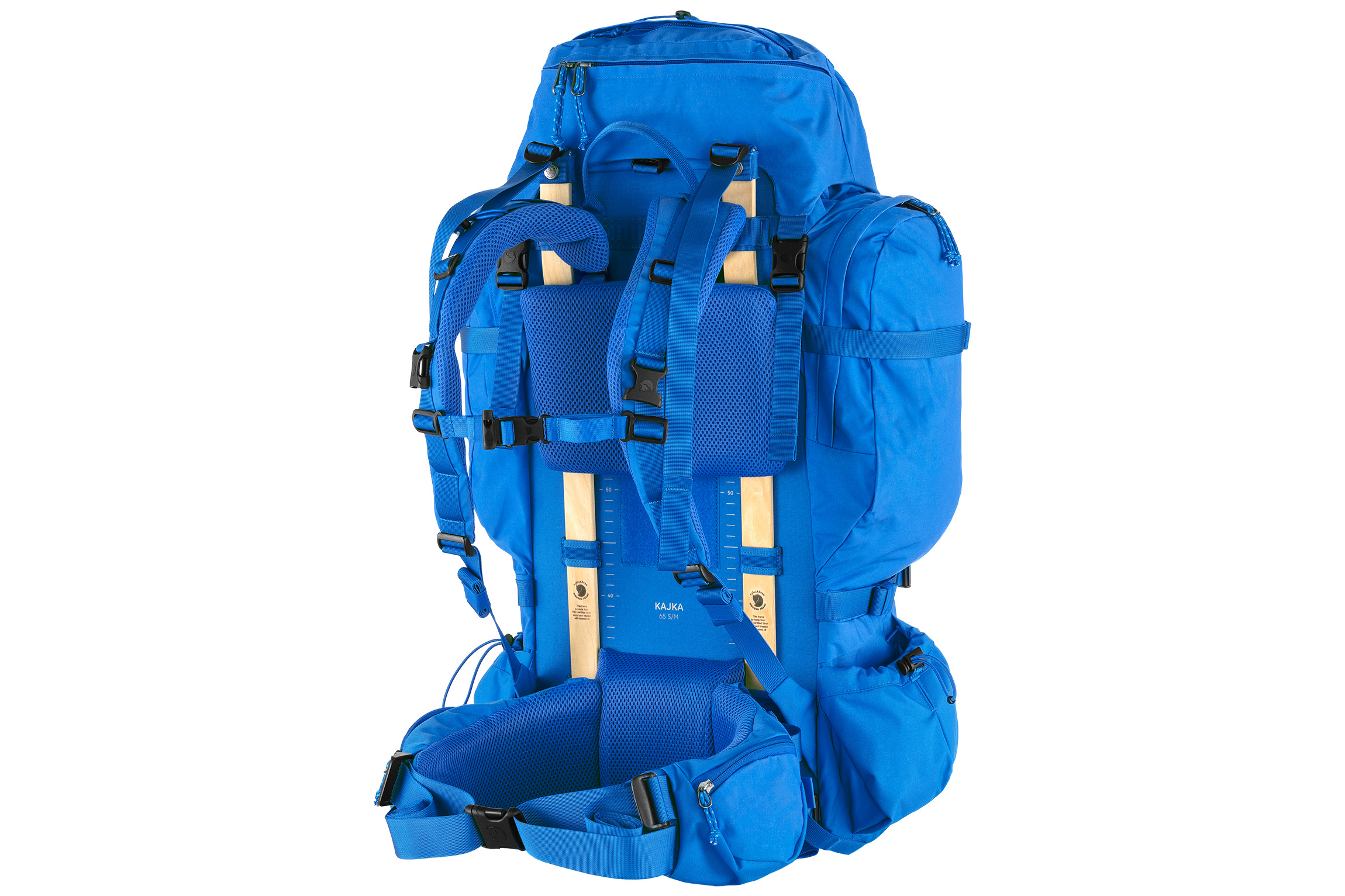
So, with regard to price and durability, top-end heavy-duty and ultralight packs are in fact broadly similar. Where they differ is in load capacity. The Kajka and other comparable packs have a sophisticated back system that is designed for heavy loads. They feature a frame and supportive harness and padding to distribute the load comfortably from the shoulders to the hip belt.
To keep weight to a minimum, ultralight packs have little padding, basic back panels and simplistic removable frames – or in some cases no frame at all. What this means is that the 15–20kg gear load put into the Kajka cannot be carried with the same degree of support and comfort in an ultralight alternative. In my experience, ultralightweight packs tend to be comfortable carrying half the load capacity of their fully framed gear-hauling counterparts of an equivalent volume. Case in point: Kajka: 55l, weighs 3kg, comfortable with 12–20kgs; Atom Pack: 50l, weighs under 1kg, comfortable with 6–10kgs
Ultralight packs require trampers to commit fully to the ultralight ethos by shedding weight in all aspects of their gear, not just the pack. Everything that goes into an ultralight pack must be as light and trim as the pack itself. Farewell 2kg synthetic sleeping bag, hello 500g down quilt; farewell extra drink bottles, hello LifeStraw; farewell stove and gas, hello cold soaking and so on.
The reason I went with the Kajka is because it’s a comfortable, aesthetically pleasing master of carrying heavy loads, which (I hope) will last a lifetime. It’s worth pointing out that there are of course many middle grounds – packs that offer supportive back systems and a lower weight. Osprey’s Kestrel/Kyte and Rab’s Exion are examples of this. For me, those packs make sense and they’re very good, but I like the Kajka.