

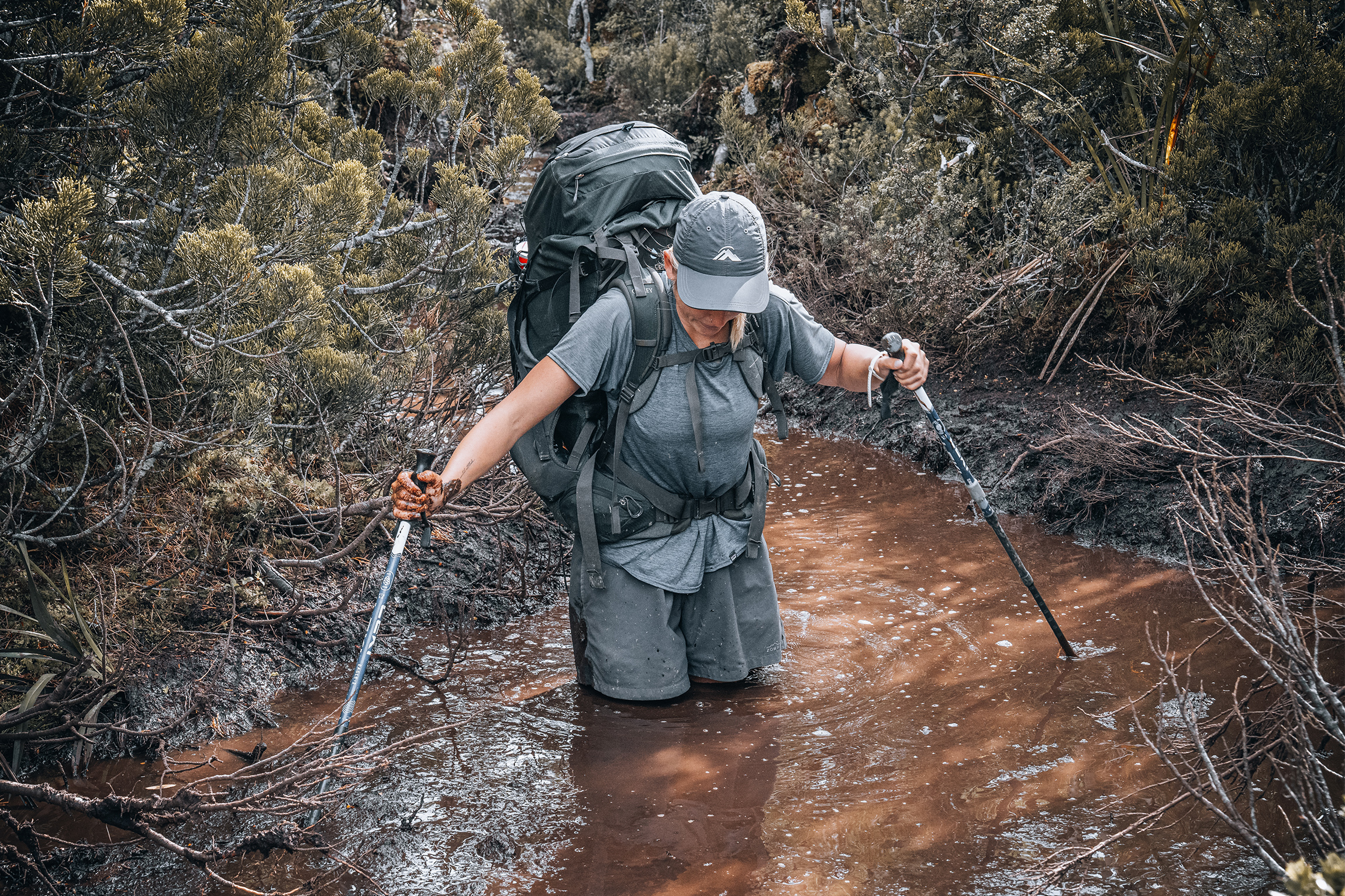
Some walkers appear to have had moments where they wondered whether they would come out of them at all.
“I recently heard about a female who fell over in the mud and her pack shifted up over her head, holding her face in it,” Wilson says. “There was a bit of panic, but her friends grabbed her and pulled her out.”
Wilson, who walked Te Araroa in 2024, says it’s not the entire 32km track that is at issue, but a few kilometres that are “bloody terrible” and can slow progress to a crawl.
Speaking from her home near Nelson, Naomi Arnold recalls that the mud seemed to create such suction on each step that she often had to use her hands to physically lift each foot out. On one such step, the foul-smelling muck claimed her shoe.
“It felt quite dangerous,” she recalls. “There was a risk of falling, and because you were being held in a funny way it seemed your body would just twist and your tendons and ligaments would snap. It was also psychologically distressing to feel like you’re stuck in quicksand for most of the day.”
Arnold ended up not reaching her accommodation on her second day in the Longwoods and had to endure a second night, and then a third day, on the range.
When Daniel Radford walked Te Araroa southbound in 2015/16, he was also caught out by the Longwoods and ended up walking to Colac Bay in the dark.
A decade later, he’s the one working on a solution to what many consider Te Araroa’s muddiest track.
Since 2022 Radford has been trail manager for Te Araroa Trust, responsible for solving issues on the country’s longest trail.
The Longwood Forest section has now become a priority for the trust.
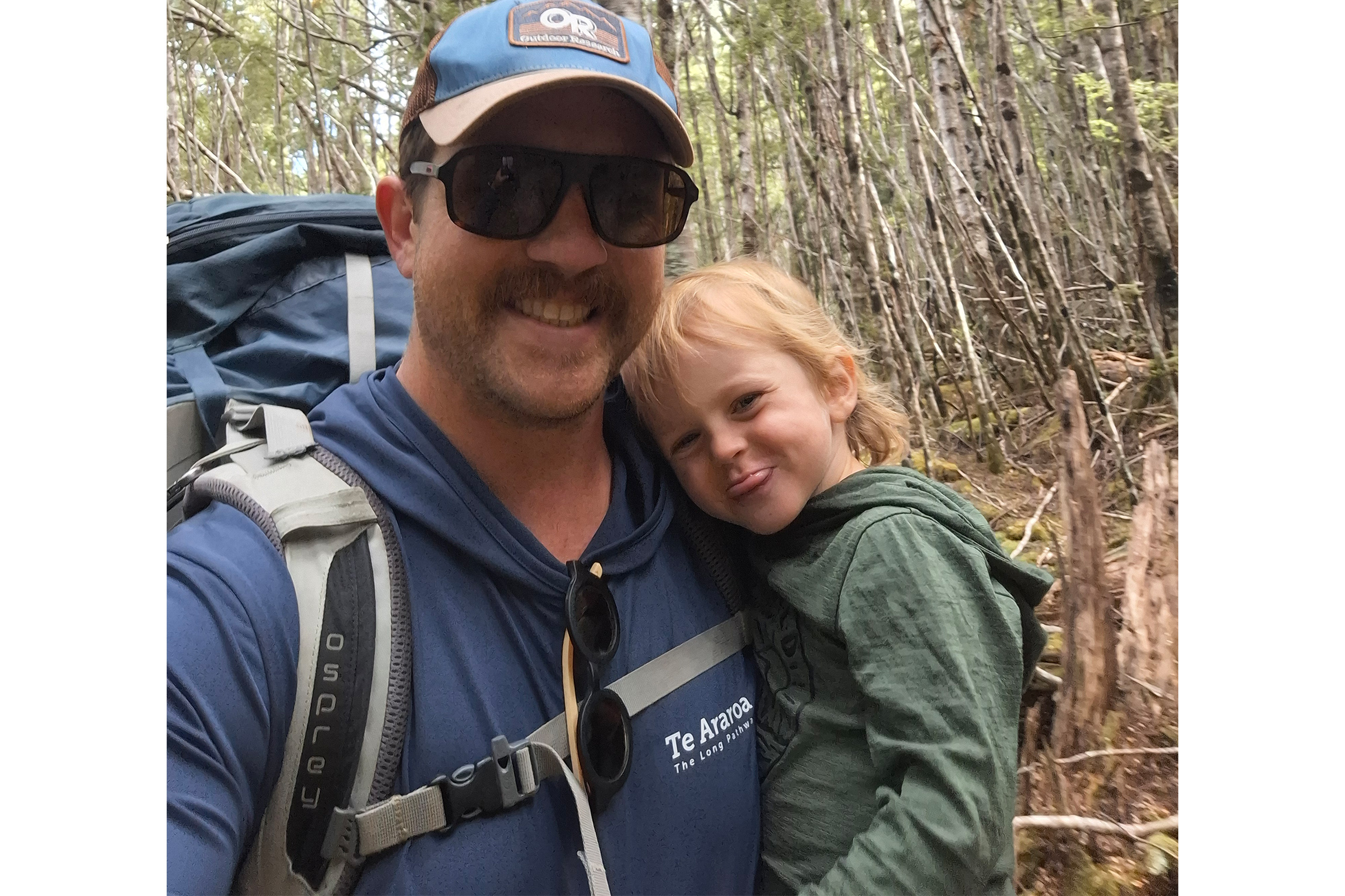
Radford says that while the section was challenging a decade ago, he has since walked it several times and finds that the rising popularity of Te Araroa is resulting in further degradation.
“With more people going through, it seems to have this yearly cycle of getting churned,” Radford says. “It’s at the point where it’s not about just getting through a section of mud for 50m and then cruising again for a while. It’s continuous, deep mud for long periods.”
As trampers attempt to skirt around wet sections, they end up spreading the damage, he says, turning parts into “massive bogs”.
This season’s Te Araroa cohort could be the last to recount such tales, however.
The trust plans to reroute the trail away from the muddiest sections on the tops of Longwood Range, which Radford says are too long and degraded to be able to upgrade.
“The damage has been done there and the cost of fixing it is beyond our capabilities. There’s a better alternative.”
The trust is negotiating with the owners of a private forest on the eastern side of Longwood Range for an alternative route between Bald Hill and Martins Hut, a recently restored 121-year-old four-bunker.
One option would be to descend the range to the Pourakino Valley and follow the Pourakino River Track, which is regularly maintained by Southland Tramping Club, before ascending the range again.
“It’s a beautiful bit of beech forest and there’s a really cool historic tramline there, so it’s very solid underfoot,” Radford says.
Te Araroa Trust executive director Matt Claridge says they hope a new route will be finalised in the coming months.
The trust then plans to install boardwalks on sections between Martins Hut and Turnbulls Hut.
“With the increasing numbers on the trail, we’re trying to be responsible,” Claridge says. “As it is now, it’s not a trail, it’s a mud pit, and it’s irresponsible for us to continue to think it’s okay for people to walk through that.”
The boardwalks will be prefabricated offsite by inmates at Invercargill Prison, with which DOC has an existing relationship, and will be flown onsite to be installed by volunteers from the Backcountry Trust.
Te Araroa Trust hopes to install up to a kilometre this year, with work starting in late March and continuing for a couple of weeks.
The goal is eventually to install 4km of boardwalks, but at an estimated cost of around $100,00 per kilometre it will be a multi-year project that continues as funding allows.
“It’ll be ongoing until it’s done,” Claridge says.
To help pay for the work the trust has launched a fundraiser and aims to raise $30,000. More than $20,000 has been donated to date.
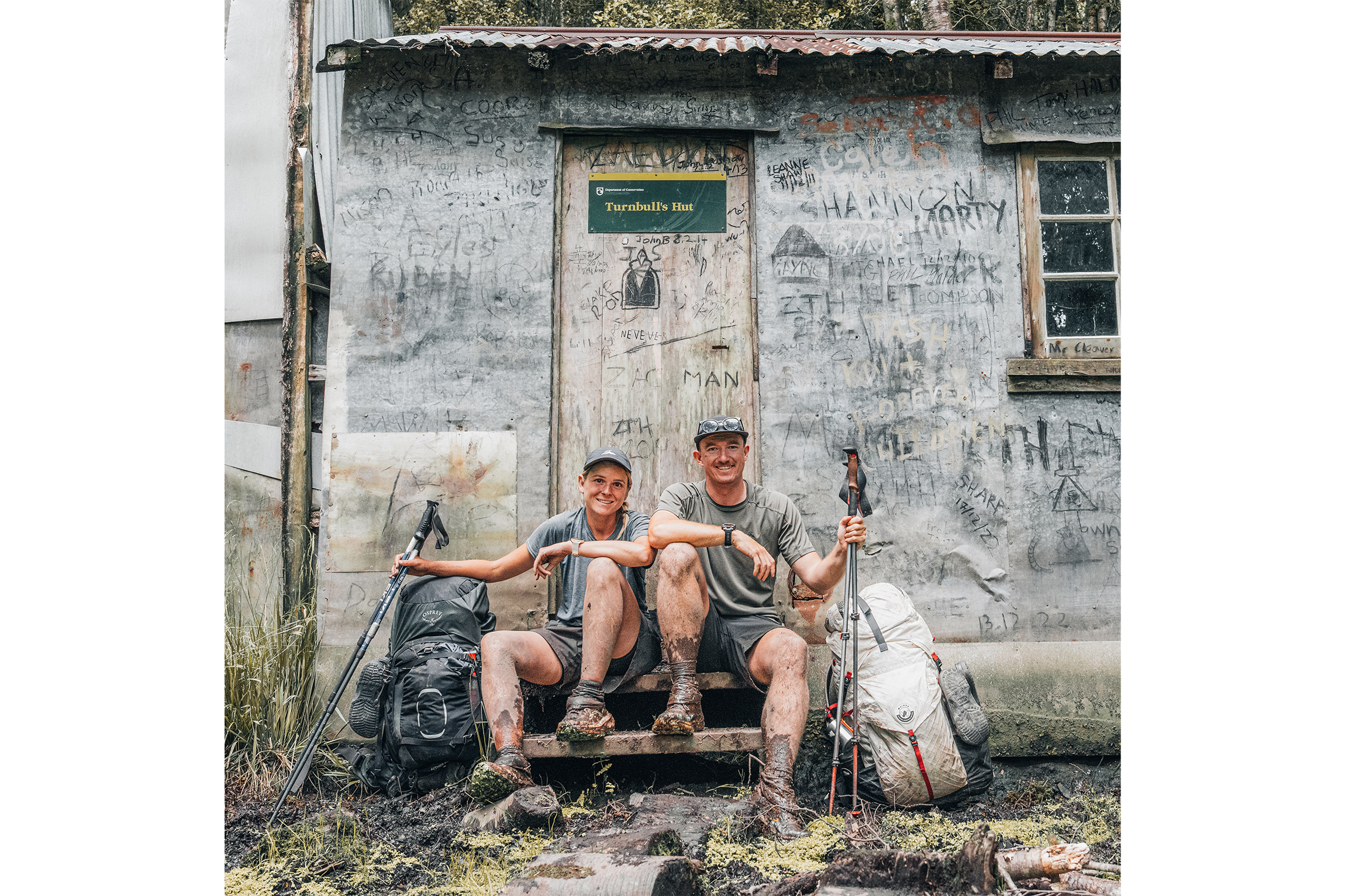
DOC also plans to renovate the historic two-bunk Turnbulls Hut, following the restoration at Martins Hut in 2024.
DOC Murihiku heritage ranger Jono Airey says they plan to weatherproof the hut and increase the bunk space, while keeping it as original as possible.
“We are also considering introducing a deck area and a separate shelter to increase the usable space available at the site,” Airey says.
Not everyone is enthused about missing the mud, however. Numerous Te Araroa walkers have posted on Facebook that, despite the challenge, the mud of Longwood Forest was one of their favourite parts of the 3000km trail.
“The mud is what makes it one of the best sections,” one Facebook user wrote. “Don’t fix what ain’t broke.”
“Honestly it was one of my favourite days on the whole trail,” another said. “I hadn’t laughed that hard in so long. It’s a long day, but it is what you make it.”
For Arnold, it was one of the most formative moments on her nine-month journey.
After hours of raging against the mud, she describes having what she calls a “voice of God moment” – a voice which told her to stop fighting the track and to calm down and walk on.
“It was character building, because that ‘voice of God’ actually stayed with me for the whole trail,” she says.
“It was a really important moment for me and my personal growth on the TA.”
Arnold says she doesn’t harbour any nostalgia for the mud of the Longwoods, however. She donated $100 towards the boardwalk on the day she heard about the fundraiser.
“The damage people are doing to the trail is not worth it and I think boardwalks are great,” she says. “There are other moments for personal growth on the TA.”
Radford says that, over time, the tops may recover enough to allow work to be done to restore the original route, but right now the mud is not only a safety issue but also an environmental one.
“It’s a safety concern only in that it slows people down so much they’re sometimes unable to reach their destination. It put me in a position where I was walking in the dark, and that’s not safe. But for me, a lot of it is an ecological issue. When a metre-wide track goes to six-metre-wide sections of muddy bog, eroding and pouring off down the mountainside, that just ends up damaging more and more of the forest.”



