If you intend to melt snow, it is important to bring a lot more fuel than for a warm-weather tramp. Snow also has a much higher volume than water and melting it in a large pot saves a lot of hassle. Always start with a small puddle of water in the pot, since it transfers the heat into the snow more efficiently. It took me over an hour to melt enough to provide around 5 litres of water. In winter, everything is slower.
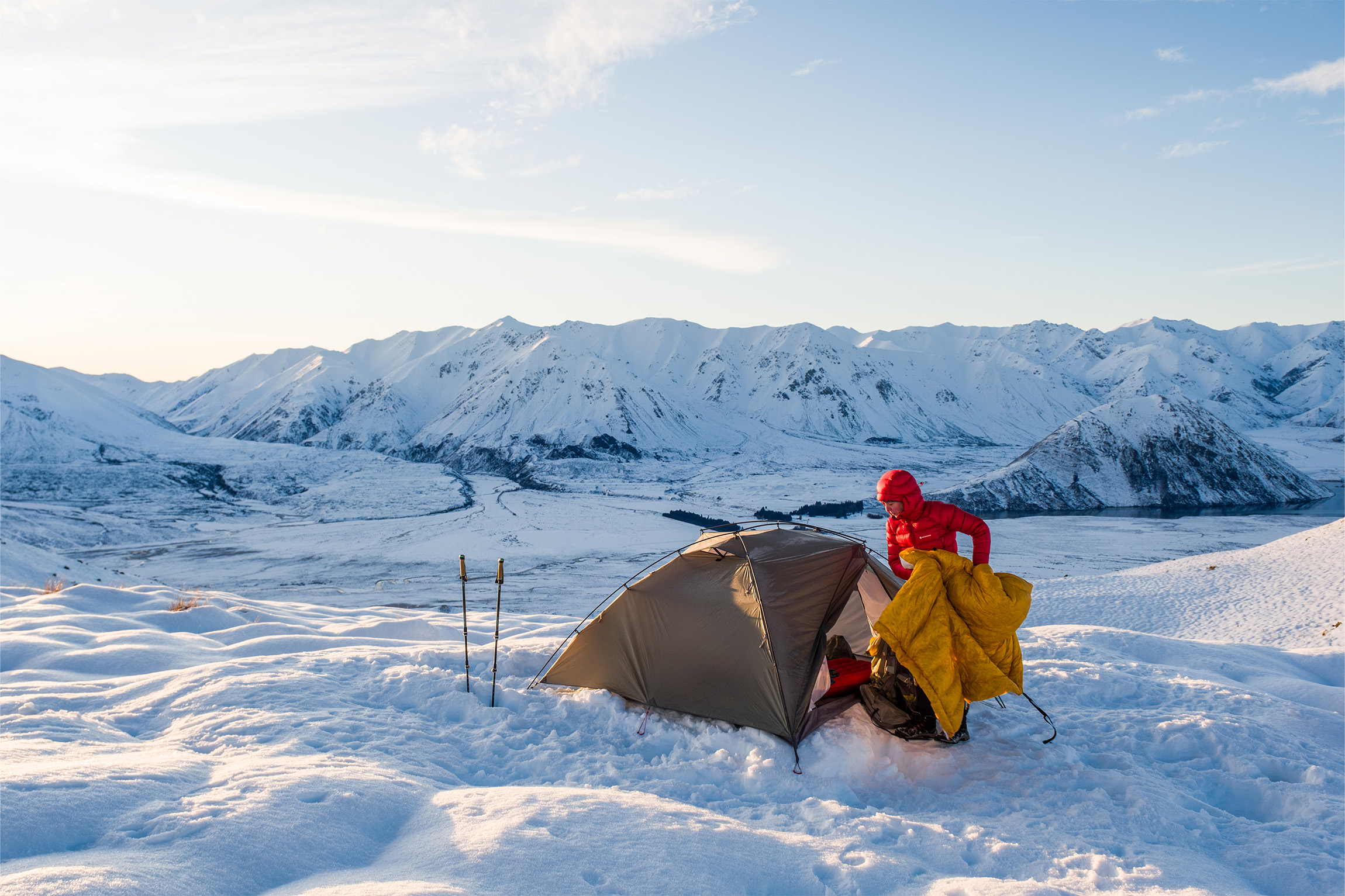
Meanwhile, sunset was dipping the landscape in the purple hue so unique to winter camping. Wrapped in our warm down jackets, all hardships of the day were forgotten. The ethereal scene before us was so different compared to my summer stay that we might as well have been in the Arctic.
Our final challenge for this trip lay in our lack of winter sleeping gear for two people, but with a little ingenuity we managed to boost what we had. We augmented the warmth of a three-season sleeping mat with a cheap foam underlay. Wearing insulated tights and with our jackets still on, we found our three-season sleeping bags warm enough to get us through the night in reasonable comfort. Spare layers and emergency bivvy bags provided an additional safety buffer.
With the sun warming us in the morning, we headed back on a slightly different route. Snow conditions were the same as on our way up, which was both a blessing and a curse. We had avoided overly icy conditions that would have required us to wait for the hill to warm up, but there was still no shortage of snowy potholes to fall into.
Thinking in worst-case scenarios allowed us to adjust to circumstances and have an amazing time that could only have been improved upon with snowshoes. Next time, I will add them to my pack list, filed under ‘P’ for paranoia.
Clothes: Will they be warm enough in freezing windy conditions? Get creative with warm and waterproof layers for camp and breathable layers for exerting yourself.
Sleep: Can you extend the warmth of your gear? Consider layering up and adding a liner or foam underlay.
Water: Consider your water sources and how to access them in freezing temperatures.
Terrain: Decide what hardware you need to bring and know how to use it. A snowcraft course is a good starting point.
Warmth: Chemical heating pads or hot water bottles provide additional warmth at night.
Start easy: Pick a short trip with easy exit options in case of trouble.
Safety: Go with people who have experience. When in doubt, make the most conservative decision. Leave your intentions. Bring a PLB. Monitor avalanche risk and weather conditions.