Seddonville, 6am, a klaxon sounds to start the race and lights from 286 headlamps bobble into the dark forest. Ghost-like fiddle music echoes through the trees as fiddler Boatwright serenades the field that includes 150 first-timers, 40 internationals, 40 locals and five ‘originals’, who are running their tenth Ultra.
As dawn breaks, Helicopter Charter Karamea pilot Glen Kingan lifts us above the Mōkihinui River gorge. We can see runners like ants on the rocky track below.
At Specimen Point Hut, the first aid station, tables are laden with snacks, water and hydration drinks, and volunteers, resplendent in their orange LandSAR tops, await the runners. Most of them biked in the night before, but Mira Schwill walked in with her eight-month-old baby. “I wanted to help for the tenth anniversary, and everyone said they’d be happy to hold the baby,” she says. “It shows the community spirit here; everyone chips in and you blend into this awesome energy.”
This is Schwill’s seventh year helping, always at Specimen Point. “Here, everything happens early, the runners are still close together so it’s very intense and it has to be a fast, efficient service.”
And so it is. Runners start arriving at 7.20am and all hands pitch in to remove their now redundant headlamps and fill their flasks. A few victims limp in – two twisted knees, a swollen ankle – and volunteer nurse Rebekah Fell swings into action.
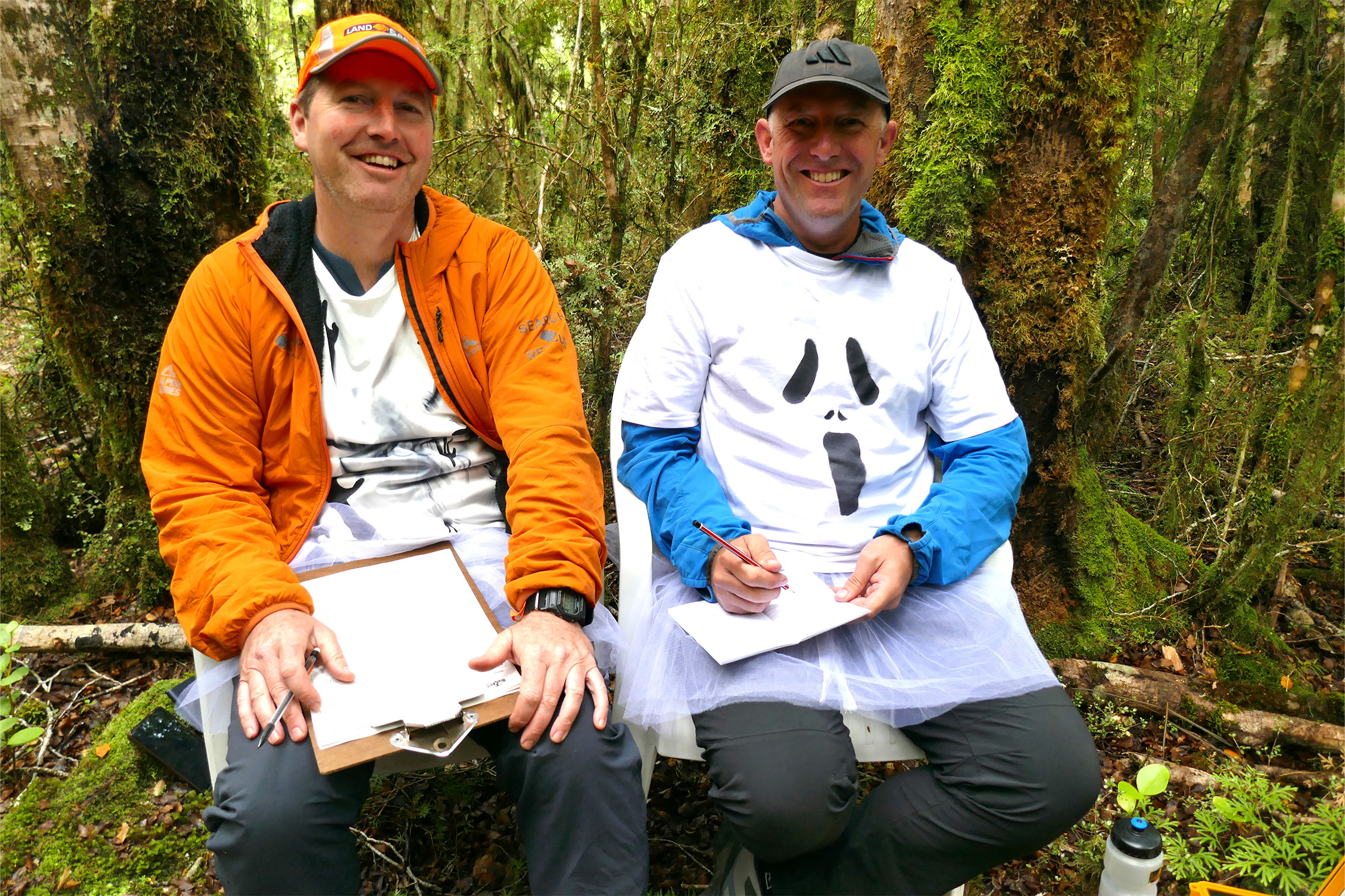
At our second stop, Stern Valley Hut, a bunch of people in white tutus are bustling around the aid station. “We are the ghosts of the Old Ghost Road!” LandSAR volunteer Sue Walsh explains.
Walsh, a veteran helper at all 10 Ultras, is now the volunteer coordinator. “I work with the logistics manager to provide marshalls and medical personnel,” she says. “We start in September, allocating people to stations, though many have become regulars at one particular hut. For the first race we had 62 runners and three people at the aid stations. This year we have 13 helping at Stern Valley alone, including two doctors, and those two ticking off runners as they pass.” She points down the track to where chair of Westport LandSAR Sam Taylor and local police constable Jim Marsh are looking cute in their tutus.
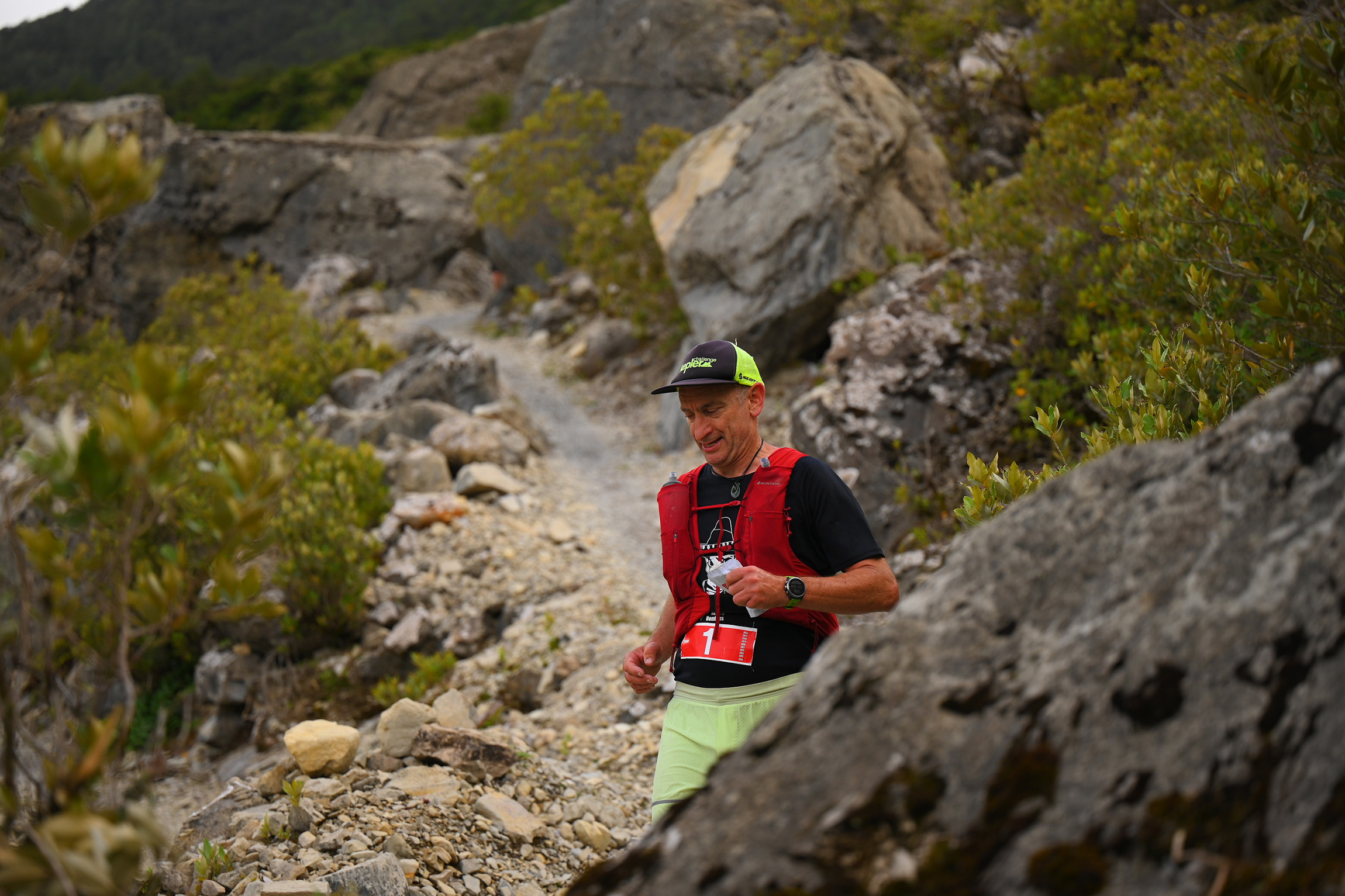
Each aid station has its point of difference. At Stern Valley, our second stop, there is Little Biddy Gin on offer, and a few brave runners earn a cheer when they chance a nip of the sponsor’s product. Local runners are greeted like the mates they are, and Boatwright plays his fiddle. It’s like a party in the bush.
The tempo slows at Ghost Lake, unsurprisingly after the 13km, 800m ascent from Stern Valley that ends with a gritty climb to the hut. Some just run on, though a few have a wee lie down. They’re in good hands. The volunteers here include local GP Nina Stupples. “We’re mainly here for the falls, gashes and hydration,” she says. “The amount of actual doctoring we do is little. These people are skilled, they’ve taken control of their physical and nutritional needs for this race. From a medical point of view, it’s pleasing to see.”
Stupples says she’s inspired by the runners pushing their boundaries, bodies and minds. Resilience is something she understands. She recently completed the Iditarod Trail Invitational, a 350km fat-tyre bike race on snow and ice across Alaska in minus 40°C temperatures, billed as one of the most challenging experiences on the planet.
That’s the thing about these volunteers: they understand endurance, they know the backcountry and they love the OGR. Allan Cropp, who helped build the OGR, was a hut warden and has been an Ultra volunteer for every one of its 10 years. What motivates him? “The runners, they are in pain and distress but you can still see the joy in their eyes because they are out here, on the Old Ghost Road. They say thank you to us but we say, no, it’s thank you from us for letting us share this place with you.”
Stupples agrees: “The OGR has become part of the fabric of this place in which we live, and the Ultra has become a huge community event for us. It’s really good for the town. And so many more runners are locals now, my colleagues and friends, all stepping up, doing what they don’t normally do. That’s really special.”
Pilot Kingan lifts us away again, over the Ghost Lake tops to the finish line at Lyell, where Emily Lucas of West Coast Pies offers me a venison pie. As an event supporter, she’s supplying 400 pies and 300 sandwiches from a big marquee. “This event is so inspiring,” she says. “Every year I go home thinking I’ll run it next year, my barista Alexia is running today.”
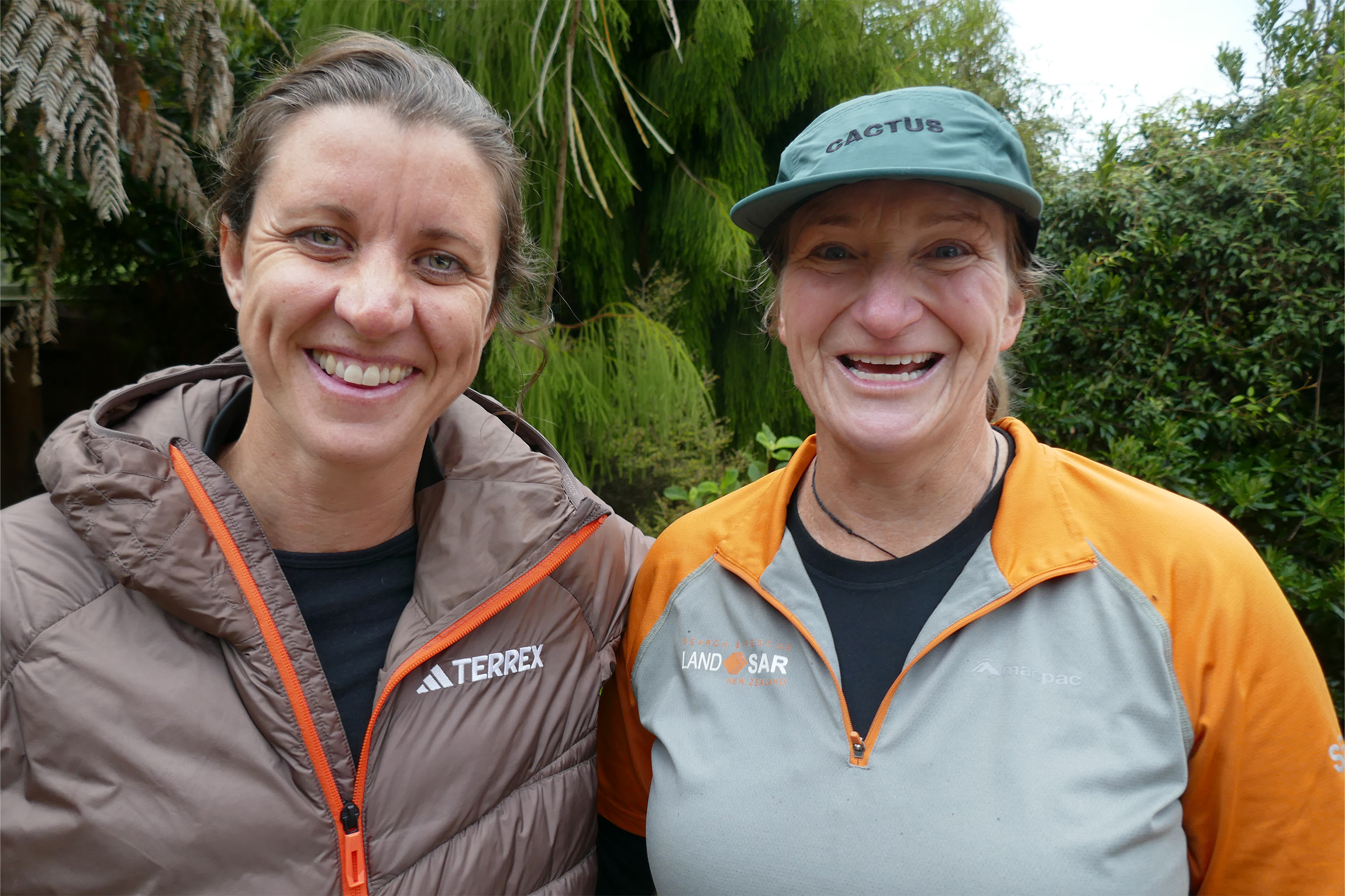
Sponsors are competitors, volunteers are sponsors, locals are competitors and volunteers – all these interconnections, everyone working together. This, I learn, is the real essence of the Ultra.
As the runners begin to stream in, jubilant, teary-eyed or both, MC Kevin Grimwood (himself a veteran of three Ultras) introduces not only the winners but all the runners. There are so many stories.
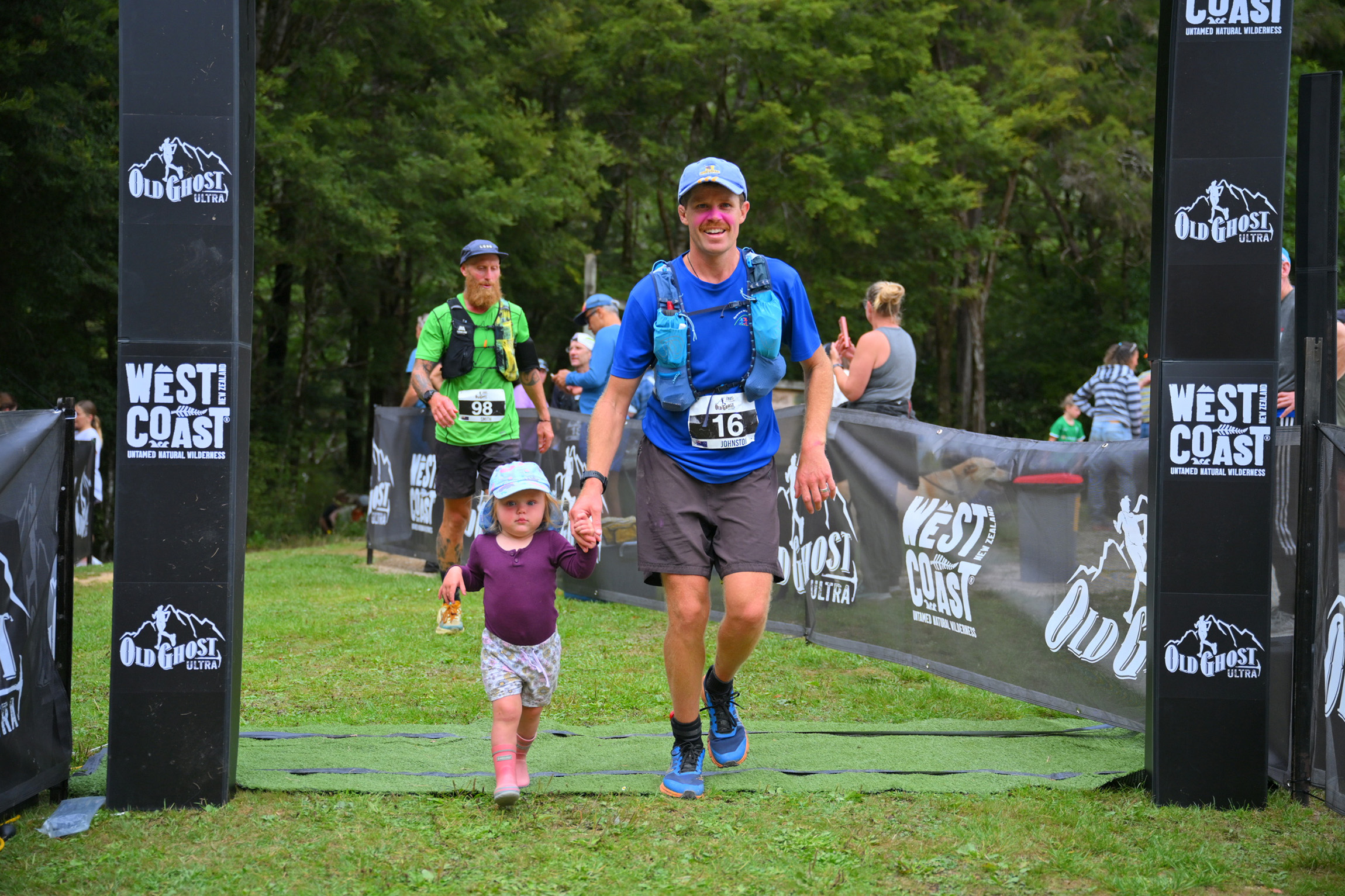
Like Nelson’s Luke Johnston, running in his fourth Ultra, who just last September gave part of his liver to his one-year-old daughter. Some anxious time at Starship Hospital ensued. “That put life in perspective,” he says, after crossing the line with his daughter.
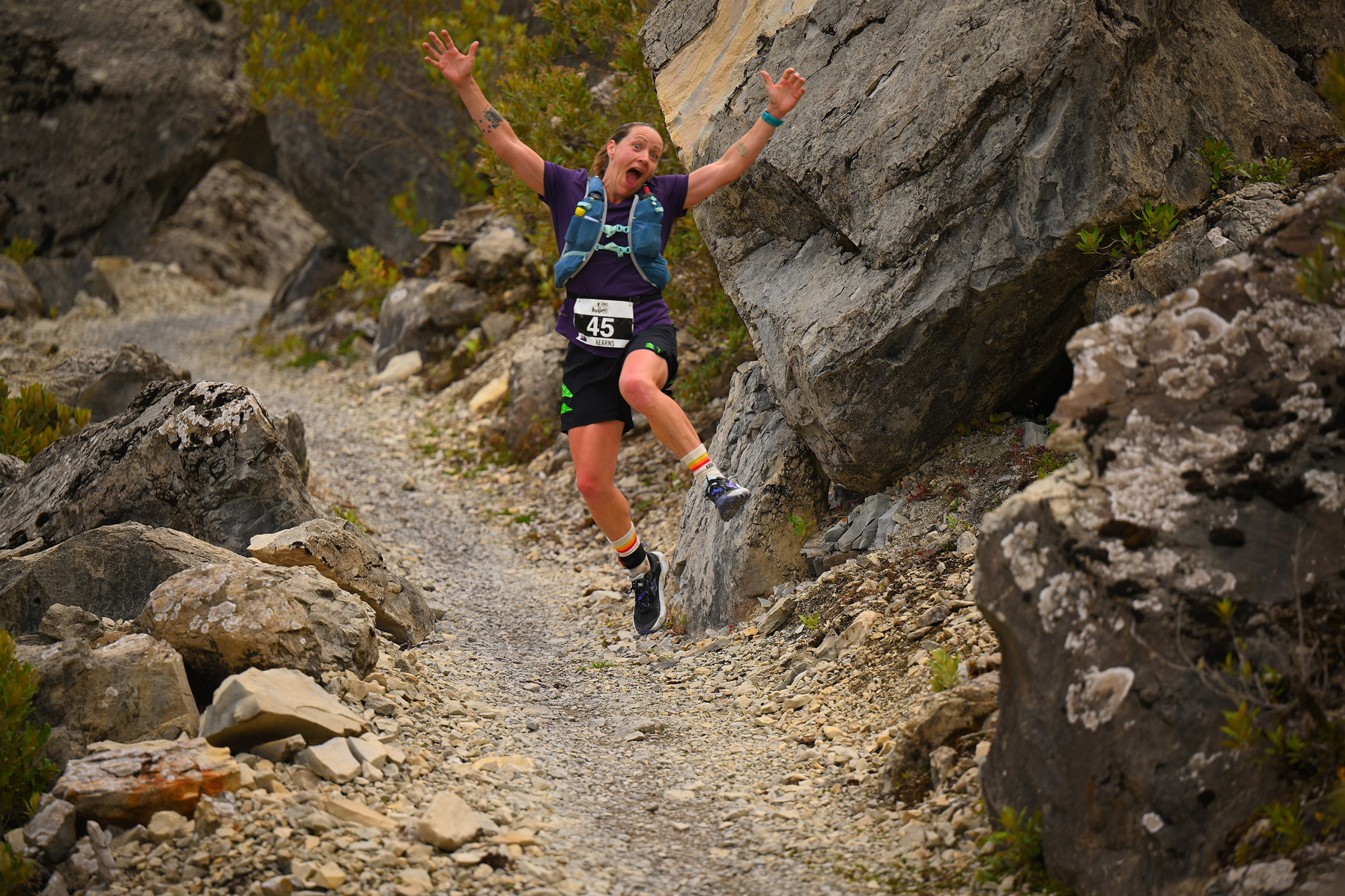
There are extra cheers for locals like Silas Carey, of event sponsor Coast Physio and the first Westport man in. Sarah Kearns, the first local woman, is known for her night training over the OGR – from Seddonville to Lyell Saddle and back on one occasion. “The ruru were literally following us along the track,” she laughs. This was Sarah’s seventh Ultra. “The community feeling is mostly why I keep coming back. So many locals are either running, volunteering or are sponsors. My boss gives me time off to help at the registration desk.”
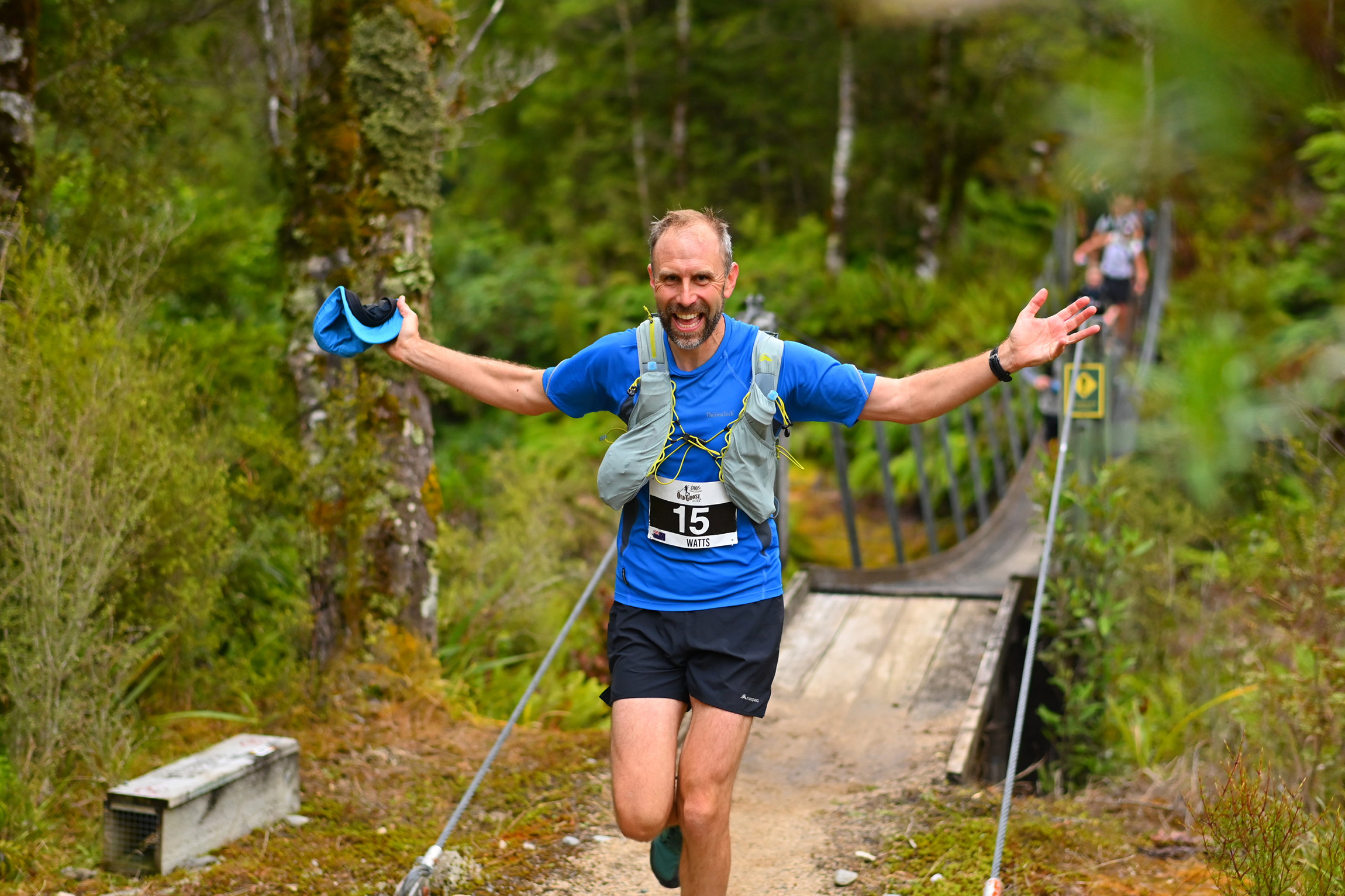
Westport’s Anglican vicar Matt Watts runs in and sinks onto a bench. There will be no church tomorrow suggests MC Grimwood, but he is corrected: church will be at 8am, Ultra prizegiving 9am, second church service at 10am, Watts says.
Ali Pottinger is now at Lyell, filming for her podcast. She enjoyed the Tail End Charlie run with Croft. “We managed to get the last few up to Ghost Lake before the cut-off time, we egged them along, they were so thrilled!”
This also fulfilled Rossiter’s promise, made at Friday’s briefing: “Tomorrow, I guarantee that you will all beat Ruth Croft to Ghost Lake Hut.” Meanwhile, Croft is still out on the trail, but makes it to Lyell in time to hug the last ones in.
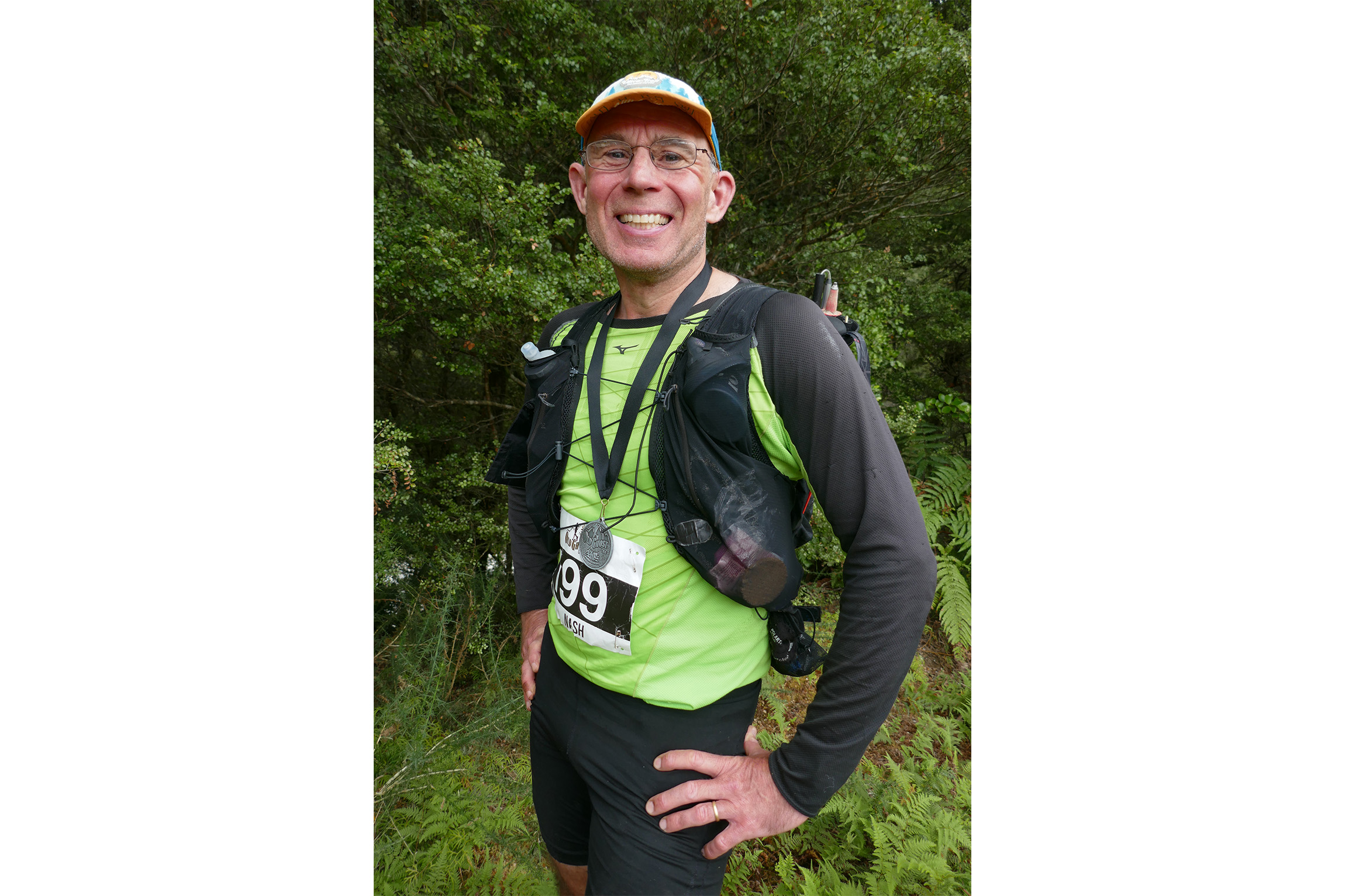
In Edinburgh, back in June 2025, Scotsman Graham Nash (57) set his alarm for 2am the day entries opened for the February 2026 Ultra. He didn’t want to miss out. Nash has run the ‘Ramsey Round’, considered the pinnacle of Scots Fell Running (24 peaks in 24 hours, including Britain’s highest, Ben Nevis) not once, but six times. “I’ve raced all over the world and this has been one of the best events ever,” he says. “What really makes it are the people organising it, the people at the aid stations – such a community.”
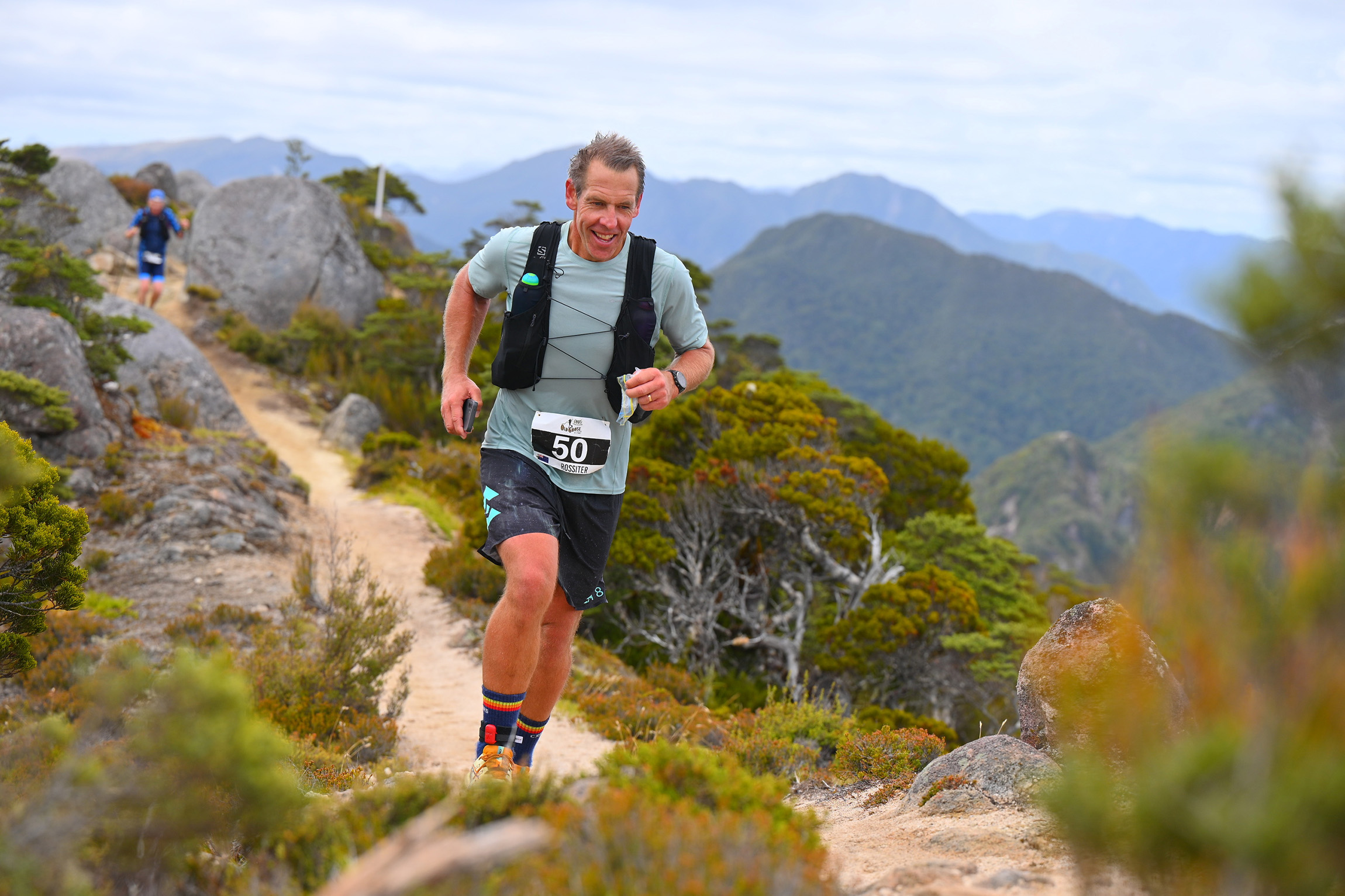
By far the biggest cheer comes when Rossiter arrives, hand in hand with his daughter and son. There’s a lot of emotion, and it’s not just from Rossiter at the end of his 11-hour endeavour. Everyone is happy for him, the modest, thoughtful guy who drives this phenomenon called the Old Ghost Ultra.
“You know OGU is a well-oiled machine when the big boss can step back, actually run it for the first time, and everything still operates seamlessly,” says Croft. “That speaks volumes – not just about Phil’s leadership, but also about the strength, trust and dedication of the entire team behind the event.”
Sunday morning’s prizegiving epitomises the Ultra. It’s thoughtful, and it’s not just about the winners. Families are thanked for their support, and prizes are awarded for ‘The Big Day Out’ (acknowledging the efforts of the last 20 finishers), the Maturity Award (Toby Nielson, aged 71) and the Immaturity Award (Harriet Arnott, aged 18). There are prizes for mums, youngest local, most improved and an international award. The five ‘originals’ are each presented with engraved pounamu, a fitting gesture from this place of Tai Poutini, says Rossiter.
One of the ‘originals’ is Ben Kepes. His company, Cactus Outdoor, is a major event supporter. Kepes says that over 10 years of running the Old Ghost Ultra he’s had time to ponder what the run is really all about.
“For me it’s about interconnection, the way disparate strands, when woven together, become something far stronger and more beautiful than they are on their own. If I were to stretch the metaphor a little, I see the entire project, the Old Ghost Road and everything that has flowed from it, as a kind of korowai woven by Phil [Rossiter]. It gathers together countless threads: volunteers, runners, landowners, donors, locals, visitors. Worn across the shoulders of a community, it has shifted something fundamental, not loudly, but profoundly, and left the place better for it.”
I’m reminded of a woman who was standing at the finish line. I’d asked if she was waiting for someone. “No,” she’d replied. “I’m a local, I just like to be here, to be part of it. Aren’t we blessed to have this on our back doorstep?”