

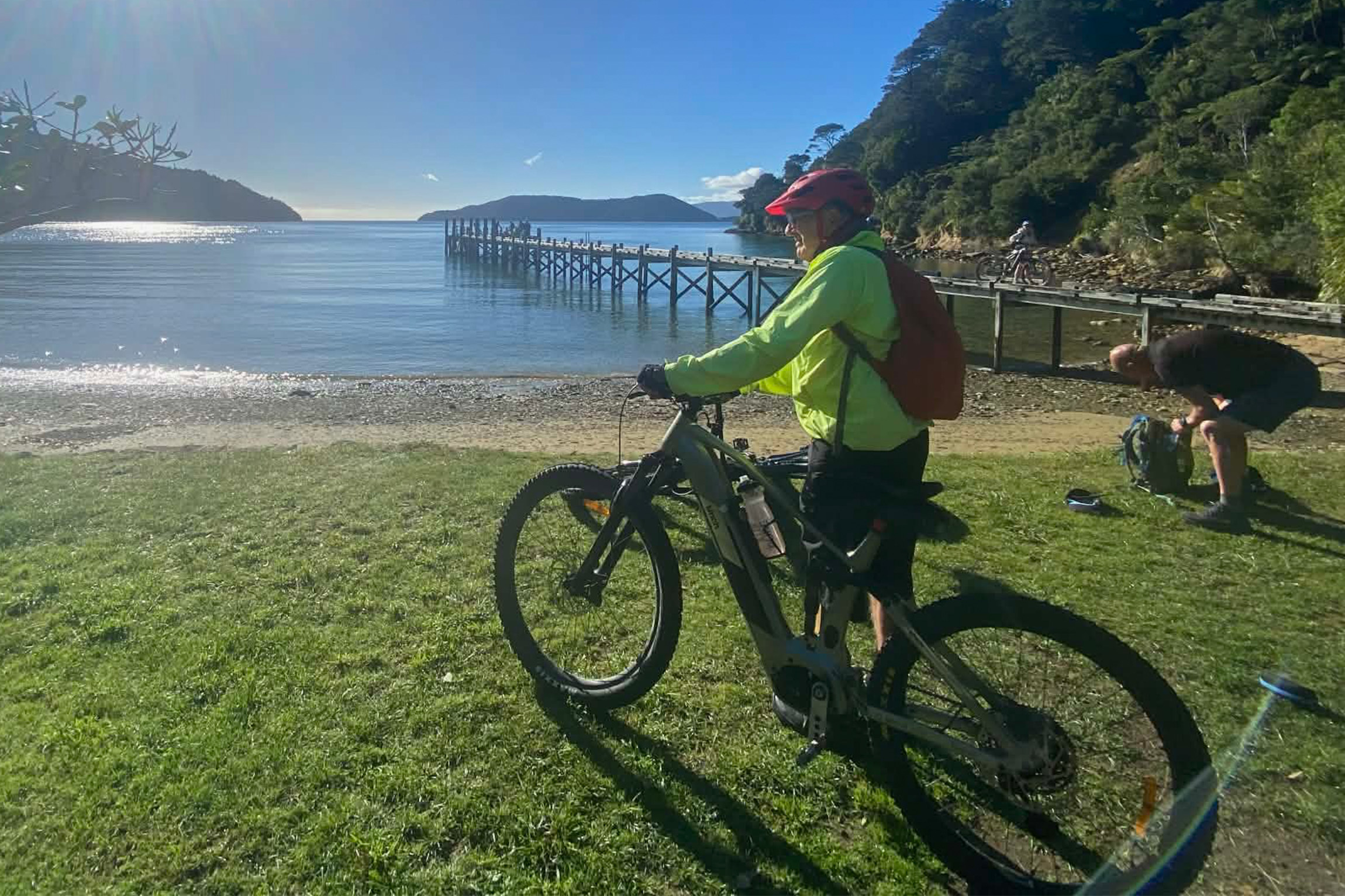
The octogenarian
Geoff Horne (81) took up cycling in his early sixties after a swimming career was cut short by a shoulder injury. He has a prosthetic leg that provides balance but no power. None of that has slowed him down. Thanks to Brian Gilbert, designer of adaptive bikes for the New Zealand Paralympics team, Horne has been riding e-bikes for eight years now. In that time he has clocked up around 25,000km, and he has just returned from cycling the Queen Charlotte Track.
“It was hard work,” he says. “At the end of the day I was completely wrecked, but that’s part of the fun.”
Horne owns two e-bikes: a workhorse for his “regular Wednesday rides” and a higher-spec machine for longer adventures. He and his wife have navigated almost all of New Zealand’s Great Rides. They recommend Otago Rail Trail for beginners, the Timber Trail for those wanting something more demanding, and the Queen Charlotte for those ready to push harder still. The Old Ghost Road remains unfinished business for Horne.
What the e-bike has given him, beyond kilometres, is confidence. “An e-bike winds back the clock,” he says. “It enables you to tackle much more. I don’t think anything now of climbing hills, where, on an ordinary bike, I’d be giving it a second thought.” He’s pragmatic about the technology, though, and warns buyers against chasing the latest model: “E-bike technology is a master class in planned obsolescence. Know what you want to use it for and buy accordingly.”
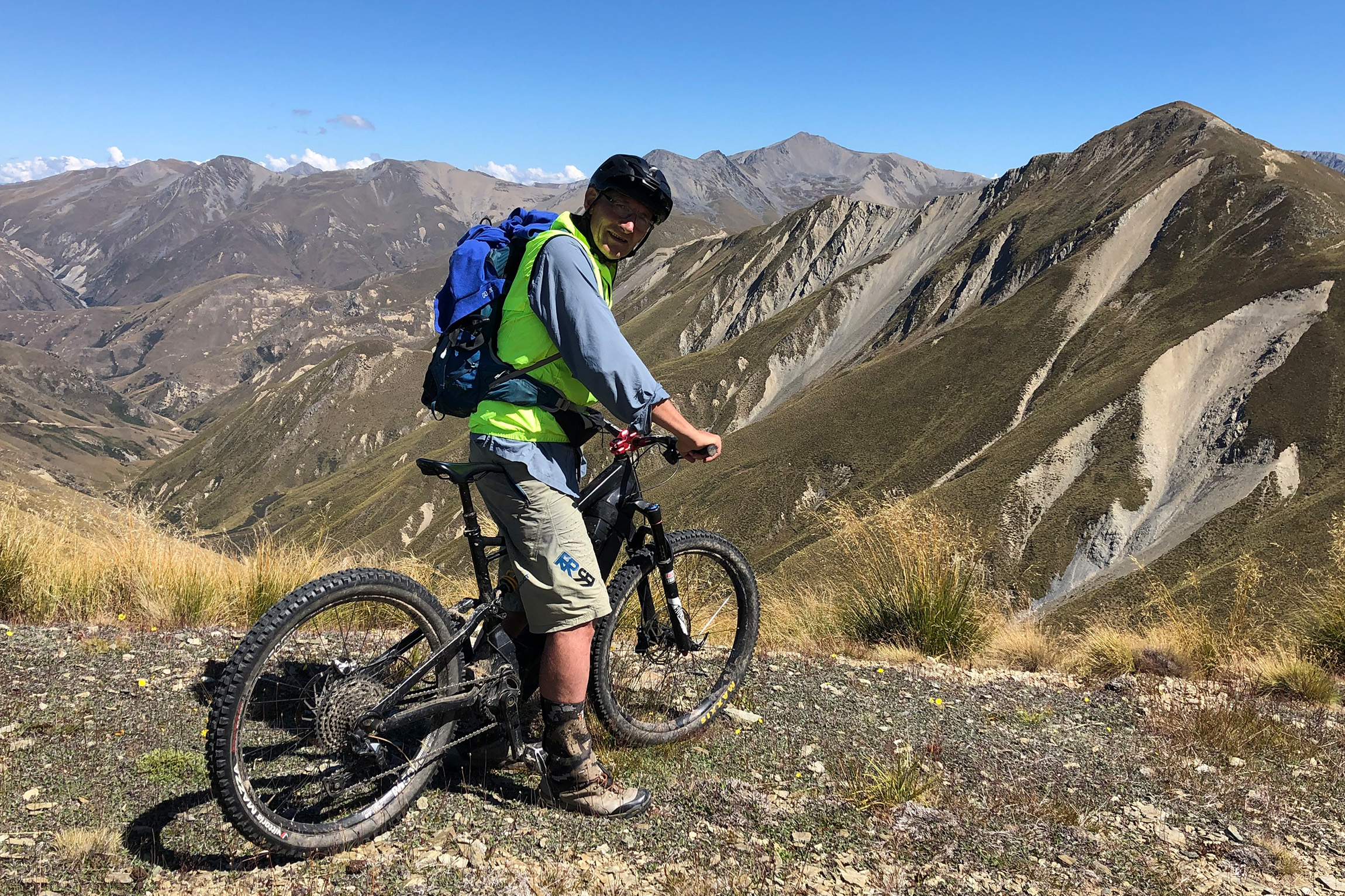
The former cycling champ
Ross Ward rode his first e-bike in a small Dolomites village in 2015. He was intrigued by elderly locals pedalling effortlessly up the steep hillside village. As a former Southland road cycling champion and competitor in the Tour of Southland, he wasn’t exactly looking for an easier ride. But one day out on that Italian e-bike and he was sold.
A year or two later, when Specialized released what he considers the “first genuinely capable electric mountain bike”, Ward was among the early adopters in Christchurch. That bike – now a decade old – is still going strong. Today he owns a mixture of regular and lightweight e-bikes split between his home in Christchurch and holiday homes in Wānaka and Castle Hill Village.
For Ward, riding e-bikes is about recalibrating the effort that he puts in. He still watches his heart rate climb and rides at the lowest assist level he can get away with. “It’s a bit like having a tailwind behind you,” he says. “It’s a good feeling, while still getting a workout.”
That recalibration has opened up terrain that would otherwise be off the cards. A recent ride in the Lindis Pass area took him to nearly 2000m on a rough backcountry track, an effort that would have been unthinkable on a conventional bike at this stage of life. “E-bikes open up riding these trails for old fellows like myself,” he says. “And the greatest gift is that my wife rides with me, too. We can match our power levels, and all the frustration (from both sides) is now gone.”
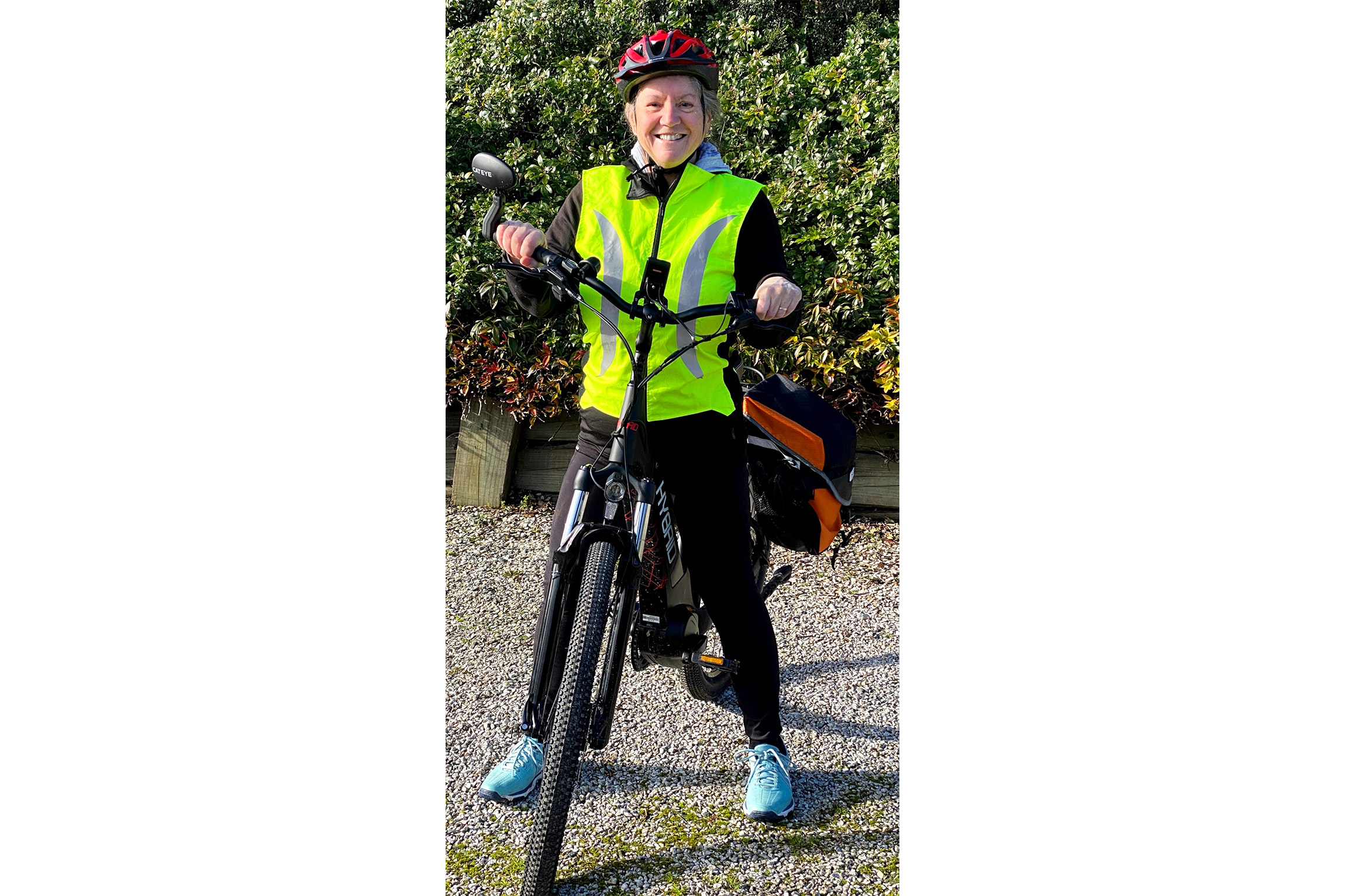
No longer a balancing act
When Ann Wheatley came home with a serious infection after a work trip to Papua New Guinea in 2018, the doctors tried several antibiotics before one finally worked. “The medication saved my life, but left me with permanent damage to the inner ear, and severely compromised balance,” she says. Walking on uneven surfaces became difficult and exhausting, so tramping slipped out of reach, and she was afraid to get on her bike.
During the Covid lockdown, Wheatley watched passing cyclists with envy. Inspired, one day she wheeled her bike to a nearby field to find out if she could ride. “I jumped on the bike and was amazed,” she says. “The balance problems disappeared.”
Balance while walking depends on constant corrections from the inner ear system. Balance while cycling relies on the brain’s ability to use feedback from motion, steering, vision and contact through hands, feet and seat.
Since then, Wheatley has been making the most of biking, with e-biking becoming her “go-to”.
“En route to the Otago Central Rail Trail, I decided to trade in my normal bike for an e-bike, and haven’t looked back,” she says.
She has since completed Alps 2 Ocean, the Little River Rail Trail, Kawatiri, West Coast Wilderness and Tasman’s Great Taste Trail. She’s now on her third e-bike, a lightweight model designed by Nelson engineer Frank Witowski. “I chose the Hybrid for its long range, and because I can lift it onto the bike rack by myself.”
A keen photographer, Wheatley mostly rides solo and enjoys the meditative pace. “It brings together all the things that I love,” she says. “And it helps keep my balance from getting worse.”
For Wheatley, e-biking truly has become a gateway to exploring the outdoors again.



