

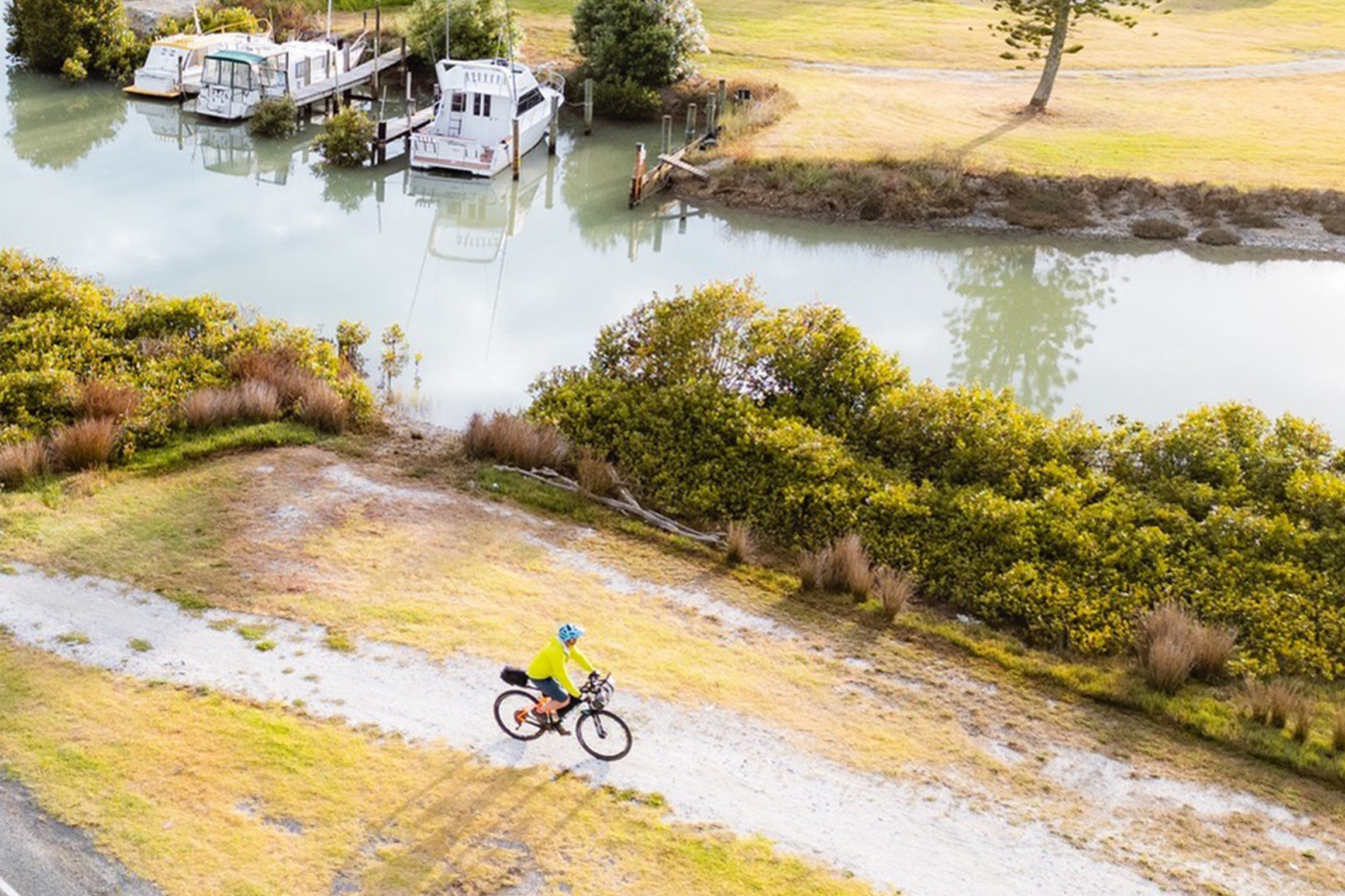
Hauraki Rail Trail is perfect for first-timers, with most of the 191km between Kaiaua and Matamata rated Grade 1. The trail can be completed in 3–5 days, and shuttle options make day rides easy. The most scenic section is Paeroa to Waihī, which wends through Karangahake Gorge and a 1.1km tunnel. Learn the gold history along the gorge’s Windows Walk, or ride the Goldfields Railways vintage train between Waikino and Waihī. Other highlights include Pūkorokoro Miranda Shorebird Centre and bird hides, the gold mining sites of Thames (the School of Mines, Thames Goldmine Experience and Bella Street Pumphouse), Te Aroha Mineral Pools and Mōkena Geyser. A short detour can include Wairere Falls.Numerous operators service
Otago Central Rail Trail (Grade 1), providing shuttles, bike hire and packages that make life easy for 1-day or 3–5-day rides. This mainly flat trail runs between Clyde and Middlemarch on a 152km journey through countryside peppered with small towns, goldrush-era stone buildings and old railway stations. You’ll go over viaducts, through tunnels and across plains. Take time out of the saddle and hire a car for a drive to Naseby to try curling, or visit St Bathans’ haunted Vulcan Hotel. Taieri Gorge Railway runs to Middlemarch on occasion, so once finished, connect with local operators to hop aboard the train to Dunedin.
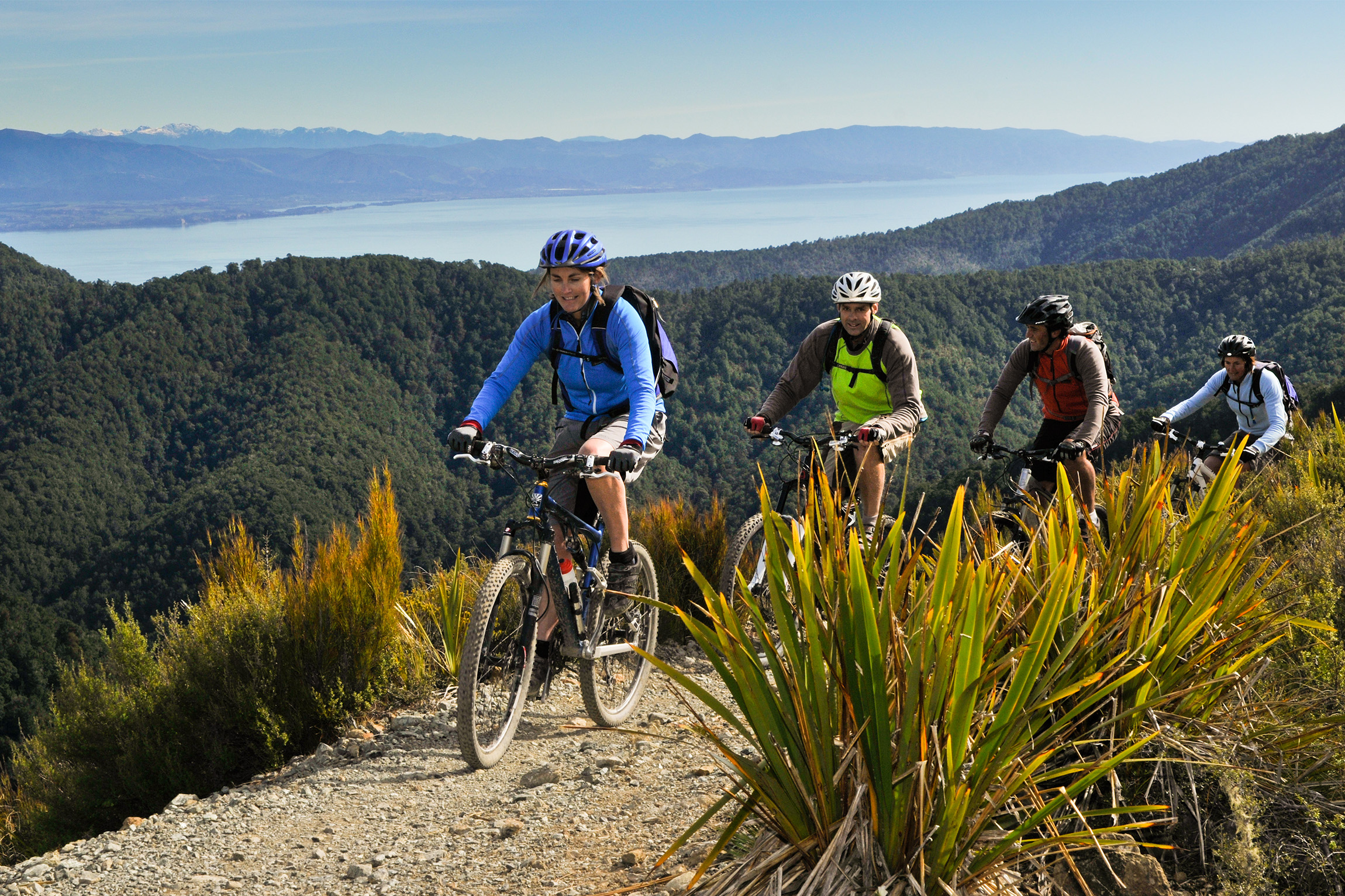
St James Cycle Trail is a roughly 90km loop with some heart-hammering climbs: Maling Pass (1308m) is the highest point. Gravel roads, some extremely rocky trails, drop-offs, river crossings and numerous hills will challenge riders on this Grade 3–5 traverse of the former St James Station. You may well end up pushing your bike at times, especially if you are carrying gear for overnighting. Follow Clarence River, cross the Waiau and view Lakes Guyon and Tennyson. Cow Stream’s natural hot pools, slightly off trail, may tempt you, but beware of the sandflies. You’ll feel sandfly-sized yourself in this immense landscape of stunning valleys and ranges.
The 38km Coppermine Trail (Grade 3–4) starts at the Brook Street trailhead on the outskirts of Nelson with a 17.5km climb through beech forest, which offers views of Nelson and across Tasman Bay. Information boards explain the Dun Mountain Railway, which the trail follows, an 1861 horse-drawn tramway built to access chromite and copper mines above Nelson. Vegetation changes to alpine and views to green rugged valleys and ridges, and orange and red-tinged Coppermine Saddle (878m) is eventually reached. Grit your teeth and clench the handlebars for a steep, rocky descent with drop-offs and zigzags for around 9km before the trail flattens out near Maitai Dam. The challenge over, tarsealed Maitai Valley Road is a level-ish ride back to Brook Street.
The Old Ghost Road (85km), open to cyclists and hikers, can be white-knuckle cycling. At Grade 4 and occasionally Grade 5, it is advanced riding along narrow trails with steep drop-offs. From Lyell on SH6 in the Upper Buller Gorge, follow this purpose-built trail to Seddonville and the mouth of Mokihinui River. On the 2–4-day ride you’ll pass the sites of old gold-mining towns sprinkled with relics, hear Lyell Creek flowing, ride through beech forest draped in moss, and view the often white-capped Southern Alps and bush-covered ranges. Tussock areas, lakes, alpine bogs, damp forest, white-bouldered areas and ridgelines keep it interesting. Fern-fringed creeks, gorges with turquoise water, suspension bridges … the trail is forever changing, picturesque and challenging.
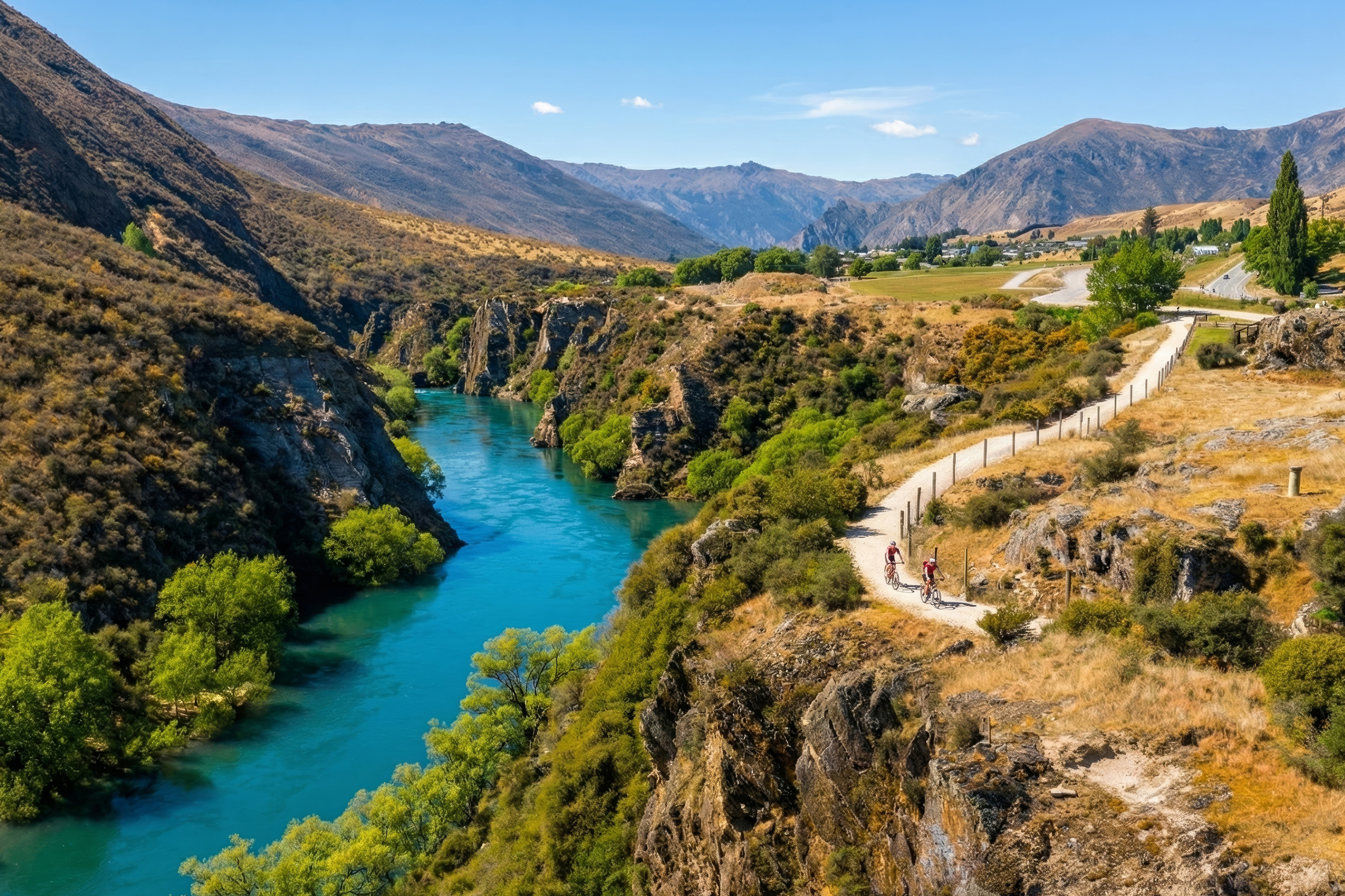
The Grade 2–4 Queenstown Trail threads through the Wakitipu Basin following rivers, skirting lakes and traversing countryside, and delivers cyclists to some great food stops. Head out via Frankton for some of the trails and fill up on breakfast delights at Boat Shed Bakery on the lakefront. In Arrowtown, breakfast at Dishery near the historic Arrowtown Chinese settlement, or Provisions of Arrowtown, a café housed in a former miner’s cottage. Hit the Countryside Trail to visit Ayrburn, a food and wine venue with restored late-1800s farm buildings accommodating restaurants, an ice-creamery, bars and a bakery. At Arthurs Point, lunch at the 1863 stone-built Gantley’s Tavern, or select a pizza next door. Alternatively, head out on the spectacular Arrow River Bridges Trail to join Gibbston River Wine Trail, where wineries abound. Gibbston Valley Winery offers a restaurant, a store with artisan cheeses and local produce, and a wine cave.
The Hawke’s Bay Trail network includes a number of rides. The Grade 1 Wineries Ride, along flat trails and country roads, will keep wine lovers happy. From Hastings this 36–47km ride through the Gimblett Gravels, the Ngatarawa Triangle and Bridge Pā passes almost a dozen wineries.
Also Grade 1, the 35km Water Ride loops through Napier and Taradale and also passes a number of wineries, including picturesque Mission Estate, New Zealand’s oldest.
The 53km Landscapes Ride (Grade 1–2) includes Te Mata Estate Winery, Black Barn Vineyards and Elephant Hill Winery, the latter situated on the coast with views of the Pacific Ocean and to Cape Kidnappers/Te Kauwae-a-Māui.
Perfect for a weekend wilderness escape, the two-day Timber Trail (Grade 3) covers 85km through Pureora Forest Park. Starting from Pureora, approximately two hours’ drive from Taupō, the first 14km is a steady ascent through virgin rainforest, regenerating bush and verdant cloud forest to reach the trail’s 971m high point. Mostly downhill from here, there’s a multitude of bridges to cross, the highest suspended 53m above the ground and spanning 141m. At Piropiro Flats, the 40km mark, there are options for accommodation within a kilometre or so. Day two to Ōngarue undulates over 45km with a couple of climbs. Information panels detail the area’s timber industry, and the Ōngarue Spiral – part of a bush tramway built to cart timber – takes cyclists over a bridge and through a deep cutting and a curved tunnel.
Mountains to Sea Ngā Ara Tūhono links Tongariro National Park, a dual World Heritage area, to where Whanganui River disgorges into the Tasman Sea. Riders can pick from more than 300km of trail that range from accessible day rides to remote backcountry adventures. On the Ohakune Old Coach Road, ride through tunnels and over historic viaducts. New Te Ara Mangawhero and Te Hangāruru sections have opened up fresh Grade 2 riding through volcanic landscapes, bush tramway corridors and regenerating native forest. In Whanganui National Park the Mangapurua and Kaiwhakauka tracks pass through abandoned settlements founded by returning WWI soldiers; and near the picturesque Bridge to Nowhere, a jet-boat ride along the Whanganui River will take you to Pipiriki. Following the river, scenic Whanganui River Road leads through historic Jerusalem and other small settlements before a final descent into Whanganui, New Zealand’s only UNESCO City of Design.
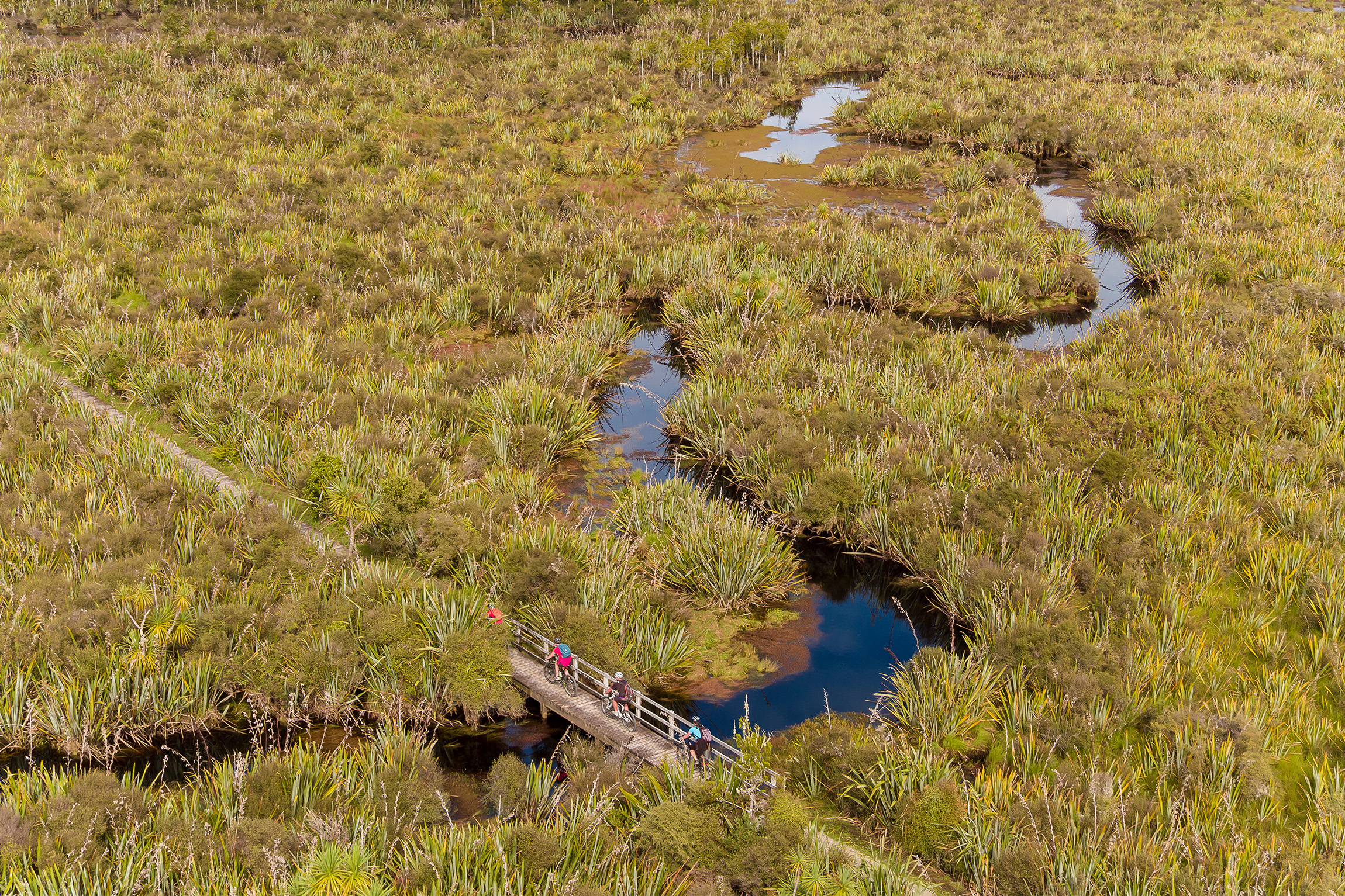
The 133km West Coast Wilderness Trail (Grade 2) stretches from Greymouth to Ross. Pedal in the footsteps of goldminers in Greymouth, Kumara, Hokitika and Ross, and enjoy the late 1800s architecture. Riding through rainforest and rural landscapes, you’ll come across water races, bush tramlines and relics, learn of coal-mining and saw-milling history and, at Grey and Hokitika river mouths, read of early shipwrecks. At Greymouth’s Pounamu Pathway Experience Centre explore the history of Poutini Ngāi Tahu and the Māwhera Pā. Delve deeper into the region’s history by visiting the Ross Goldfields Information and Heritage Centre with its replica of the country’s largest gold nugget ever found.
Start Lake Dunstan Trail (41km, Grade 2) at Cromwell Heritage Precinct where old stone buildings house modern businesses, and an original barn, stable, blacksmith’s forge and cottage display artifacts. Around 7km from Cromwell, just off trail, the goldrush-era Bannockburn sluicings – towering spires of dirt, gullies and a mud cottage – take around an hour to explore on foot. Back on the cycle trail along Lake Dunstan, en route to Clyde, the ranges are scarred by water races from the goldmining days. Clyde’s delightful main street is graced with late-1800s stone buildings. Continue to Alexandra via Otago Central Rail Trail to join the Roxburgh Gorge Trail (Grade 2–3) to cycle to Roxburgh following Mata-au Clutha River. The 21km ride includes a 13km jet-boat leg in the schist gorge, during which you will see stone huts, a circa-1862 cottage, water races and supply paths and hear tales of the goldrush.
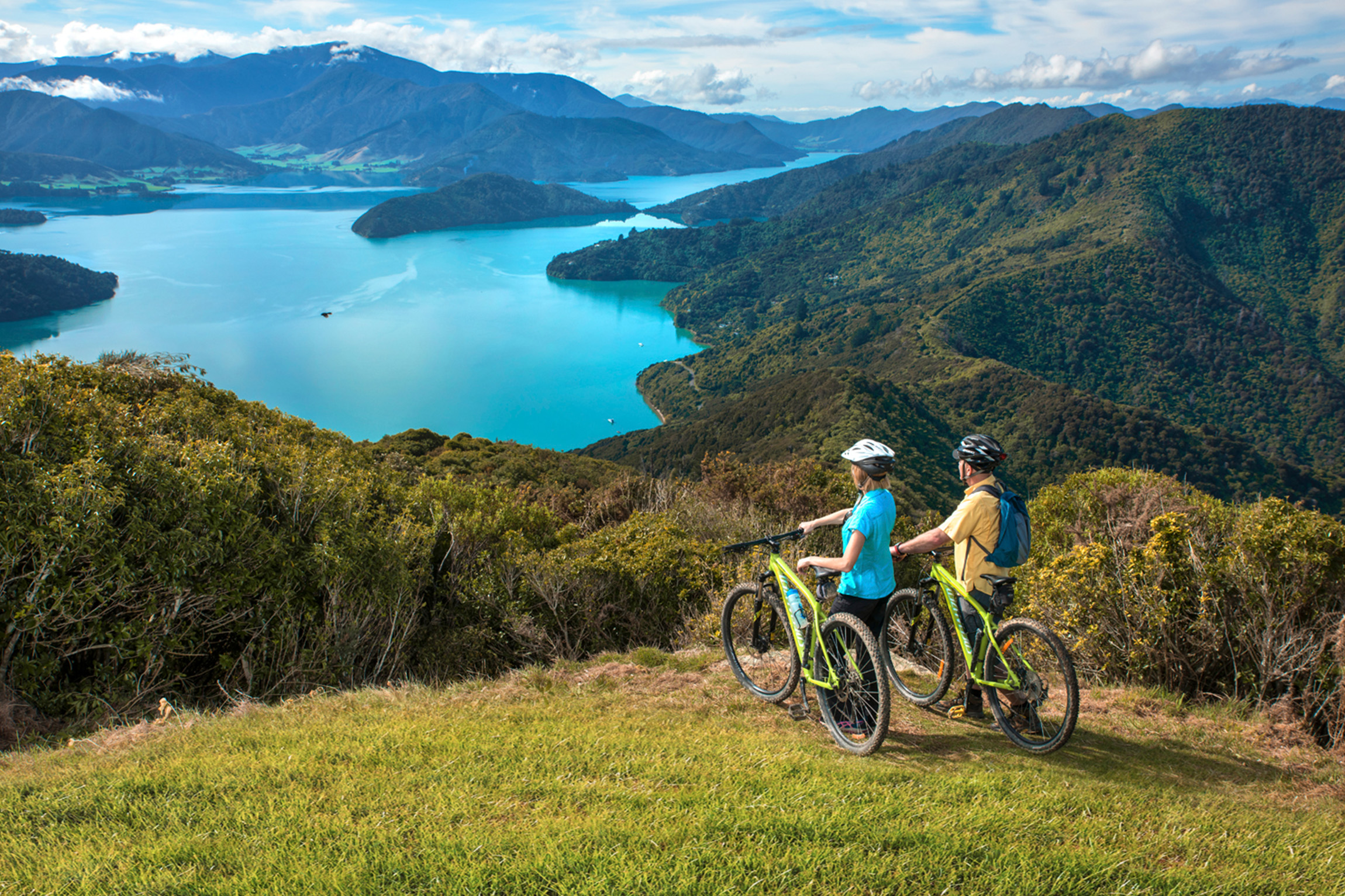
Steep climbs are worth it. The 73.5km Queen Charlotte Track (Grade 3) traverses ridgelines that look down on bush-clad coves hugging azure water and skirts the shorelines of deserted bays. The journey takes 2–3 days (some sections have seasonal closures), and there are choices between DOC campsites or more upmarket accommodation. Picton is the gateway to the start at Meretoto Ship Cove, where Captain James Cook spent over 100 days during the 1770s. Take time out in this paradise to swim, or kayak from Bay of Many Coves/Miritū Bay or Portage.
The Alps 2 Ocean Cycle Trail (Grade 2–3) offers ever-changing scenic landscapes over its 315km. From Mount Cook Village, a short helicopter flight gives spectacular views over the area. Alternatively, start at Lake Tekapo. The trail takes in turquoise Lake Pūkaki, brilliant blue canals and tawny tussock plains hemmed by mountains. A climb from Lake Ōhau offers a panorama over the Mackenzie Basin. Take in the other-worldly spires of Ōmarama’s clay cliffs, lake views of Benmore and Aviemore, the limestone Elephant Rocks, and Ōamaru’s Victorian white-stone buildings and harbour. Spectacular.



