You’ve read the online forums, done your research and selected your kit, and now it’s time to tramp. But where? Almost by design, Great Walks are the perfect testing ground for your first ultralight setup.
“You packed a different block of cheese for each day?” my partner exclaims as we check our food inventory for a four-day Kepler circuit.
There are many reasons for going ultralight. Carrying less weight is easier on your body; streamlining your gear keeps packing simple and intentional; less weight allows you to cover more ground and see more. I go ultralight in order to pack more cheese.
Dedicating weight to stuff like food and games means more fun, too. We were about to do the Kepler over the winter solstice; with almost 16 hours of darkness each night, that’s a long time to spend in the huts.
Despite the cheese, extra warm layers and a small board game, our packs were still well under 10kg each. Tramping with light packs would allow us to travel faster and lessen the likelihood of tramping in the dark.
If you’re new to ultralight tramping, getting started can be intimidating. What to cut? What to keep? And the big one – how much coin are you willing to dish out?
Anyone who’s gone through the process knows that it pays to do your research. There is low-hanging fruit that can save weight right off the bat, like doing a thorough pack analysis to remove unnecessary items. Then swap out some big items – pack, sleeping bag, tent – for lighter models as your budget allows.
The next step is a field test. By getting out there and actually using your gear, you’ll learn more in a few days than in months of forum research. It will also help you hone your gear list for future trips.
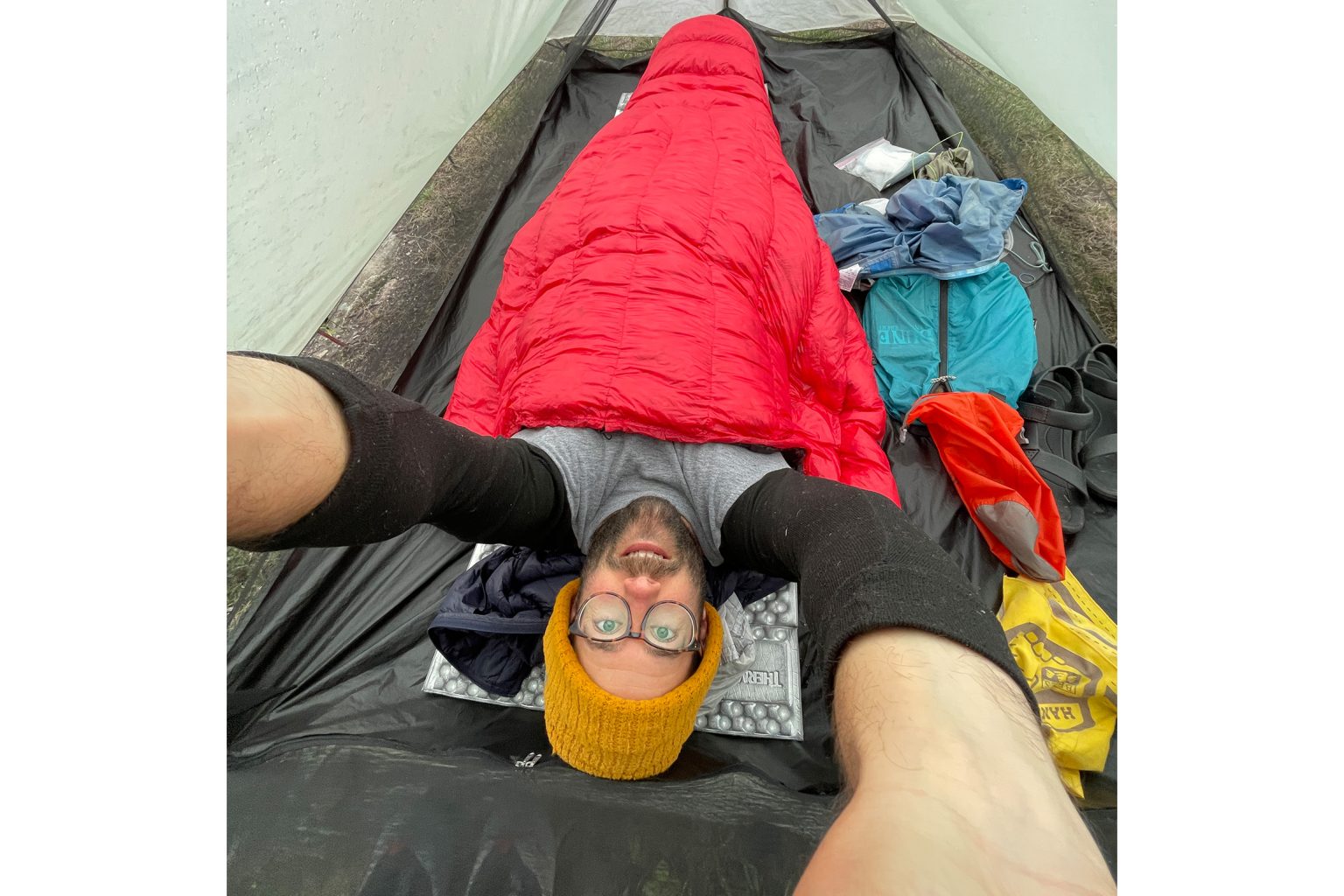
Thanks to many field tests, I knew that my sleep system could handle the -5℃ temperatures forecast for our trip. There is no way I would strut to Iris Burn Hut without having done that test closer to home.
But where to go? The idea of heading into the New Zealand backcountry with a pack that feels suspiciously empty may make you nervous. Go somewhere too remote and you might be in trouble if your setup fails.
Turns out the Great Walks are some of the best trails in Aotearoa for an ultralight field shakedown.
The terrain is serious enough for a solid test, but forgiving enough that miscalculation shouldn’t become a crisis. With predictably maintained tracks, it’s easy to plan with some certainty what can be covered in a day. And while going ultralight shouldn’t mean going underprepared, by their nature the Great Walks offer a bigger safety net than other tracks. They are more travelled, better signposted and, in season, there are wardens at the huts.
Although I wouldn’t recommend an off-season trip for your first go at ultralight tramping, the good news is that camping is allowed on nine of the 11 Great Walks. Many of the campsites are located near a hut, which adds peace of mind; others are spaced a little farther apart than the huts, making the ultralight gear even more worth it.
The obvious bonus here is that campsites fill up much more slowly than huts. You’ll get the same world-class scenery, avoid the booking queue stress, and come home understanding how your ultralight kit performs in the elements.
Once you’re confident with your gear choices, you won’t look back. Hiking with less weight is freeing and allows you to move faster with fewer aches and pains at the end of the day. Maybe you’ll also wow your tramping partner with your ability to pack almost a kilo of cheese.
Routeburn Flats – an idyllic first ultralight overnighter
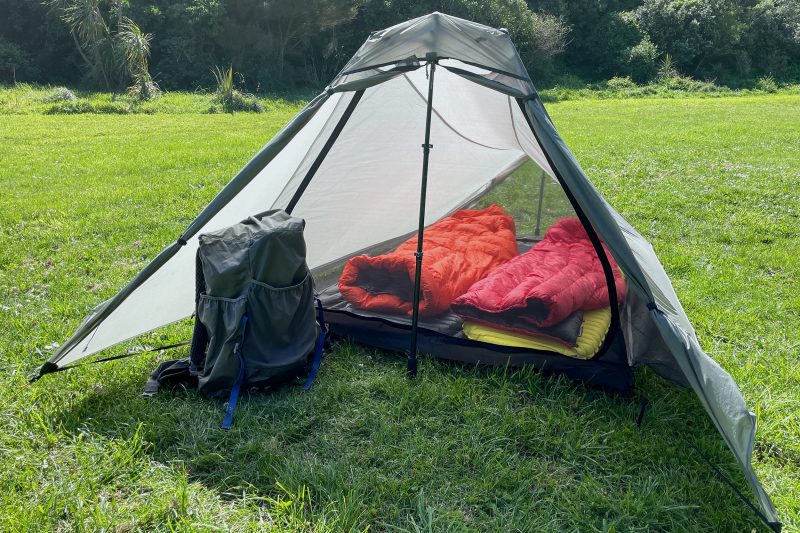
Routeburn Flats campsite makes a near-perfect first ultralight trip. It’s short enough to knock out the hiking in just a couple of hours, which gives you time to fuss with setting up that new trekking pole tent (which in my experience involves a small learning curve). If you can’t master it, the car is only a short tail-between-the-legs walk away. The views from the campsite are possibly the most stunning of any campsite on the Great Walks, and there are ample options for side missions.
Kepler Track – the long-haul proving ground
For those wanting to test the theory that going ultralight will expand their range, the Kepler makes a worthy challenge. With just two campsites on the 60km circuit track, you’re in for some big days. Day one from the control gates to Brod Bay campsite is just 5.6km, making this a good warm-up. Day two to Iris Burn is 23km with around 2000m of climbing. Day three is mostly downhill or flat, but still you’ll be grinding out 31km. A burger is (almost) mandatory after finishing this testing session.
Starting at Rainbow Reach car park would even up days one and three.
Abel Tasman Coast Track – a camper’s dream
There are 18 campsites along this 60km trail. Some hold up to 100 campers, so you’ll almost surely be able to scoop up spots last minute. The good news about going ultralight is you’ll be ultra-flexible in how to break up your walking. Short days, easy. Long days, no sweat; you’re carrying half the weight of a traditional tramper. Moving faster will give you time to relax on Abel Tasman’s famous golden beaches.