

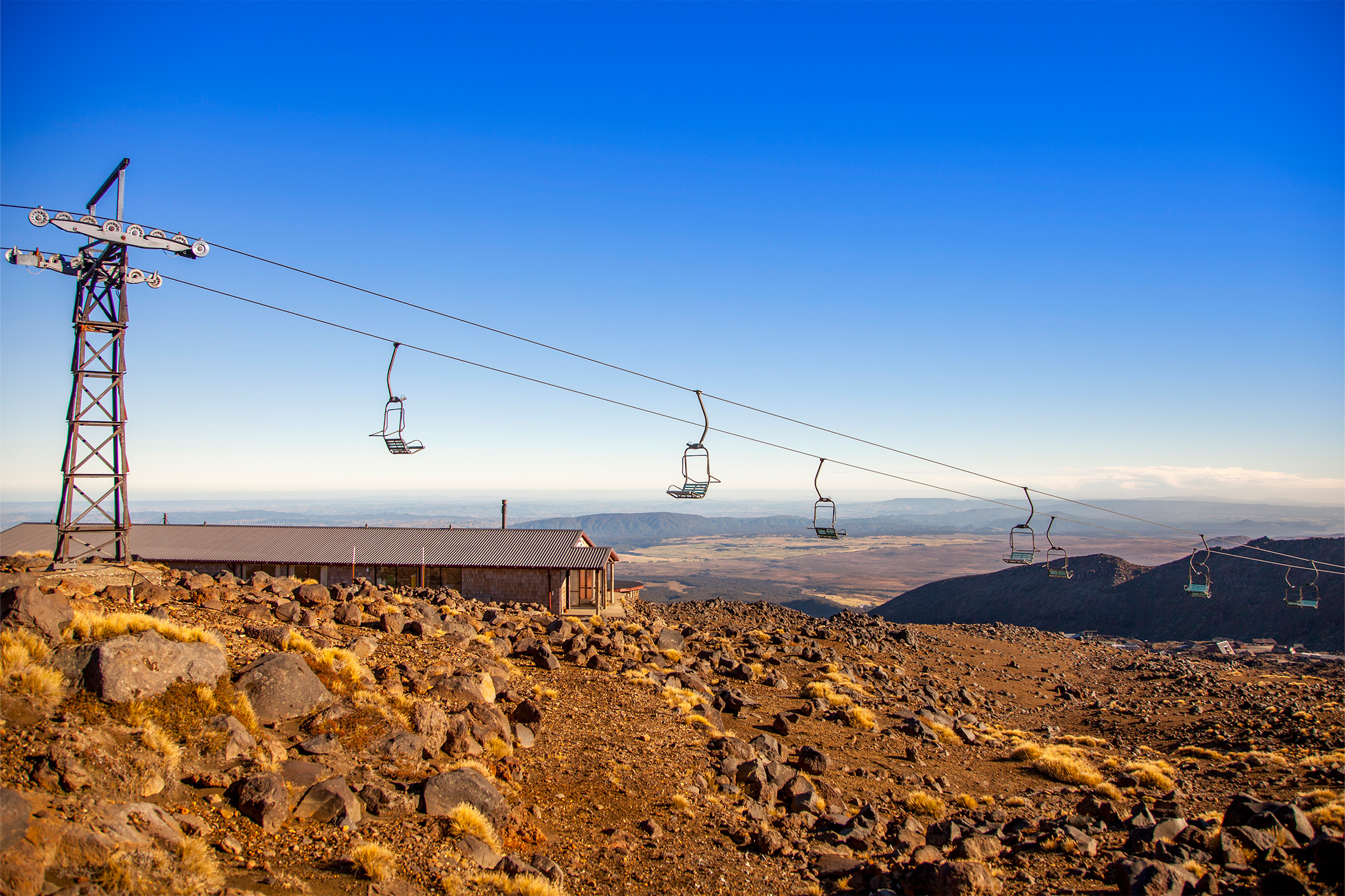
It sat right in the snow, offering true ski-in, ski-out and, when the snow gods smiled upon Ruapehu, even ski-right-over access.
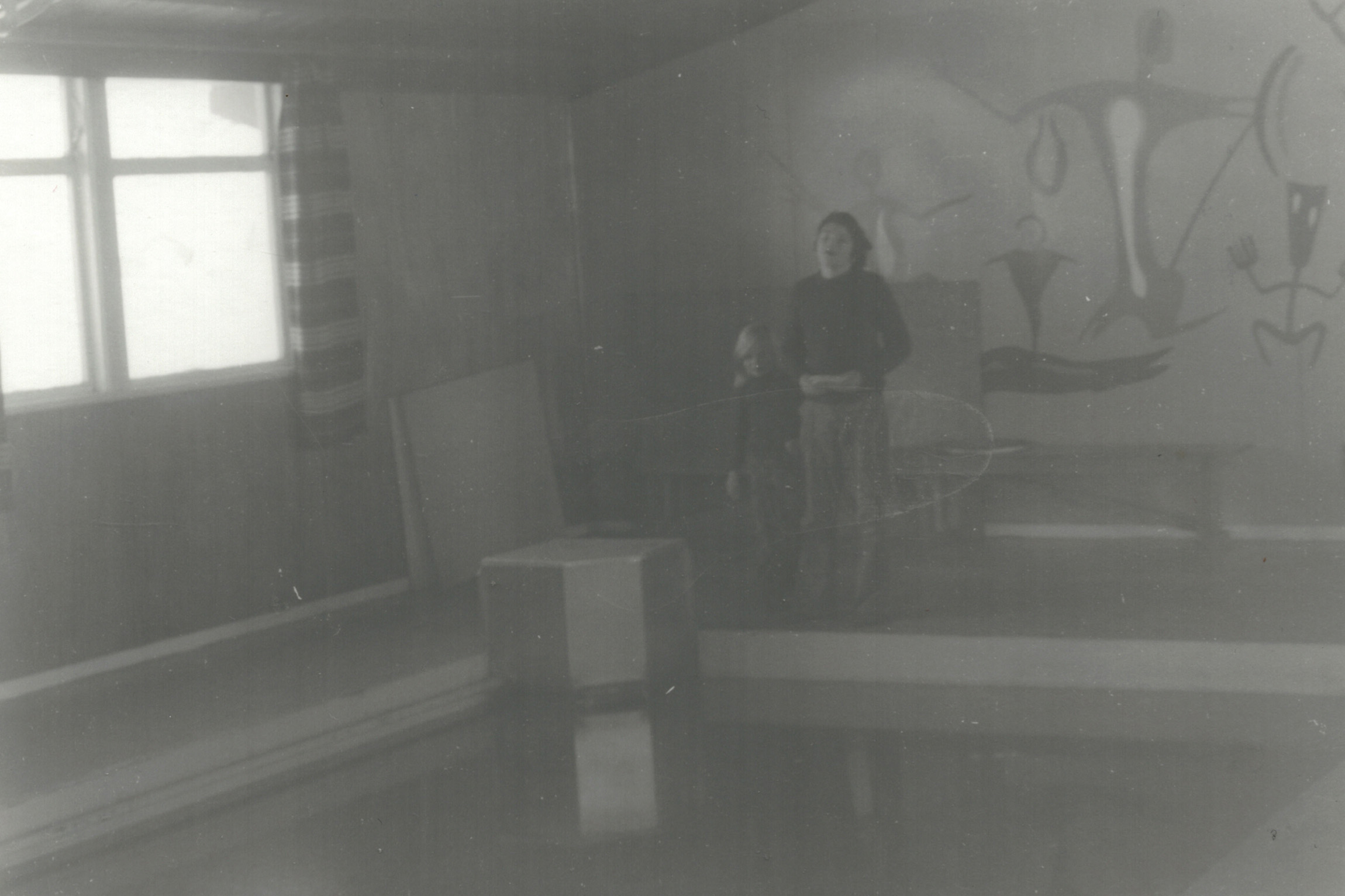
Former president Mike Fitzmaurice first came to the lodge in 1969 aged five. The photos say it all – an open living room, dining tables snug beside the pool. “A few people fell into the pool when coming out of the bunkroom area,” Fitzmaurice recalls. In his first year a boiler pipe burst and the pool was filled with antifreeze – unusable, but unforgettable. Another year the diesel-fired boiler was set too high and members escaped the heat by rolling in the snow.
The club took its name from the nearby National Downhill lift line, operated separately from Ruapehu Alpine Lifts (RAL) by Ski Enterprises’ Roy Turner. There was talk of big development – a road pushing towards the west area – and Downhill’s lodge would sit at the heart of it. Old maps show a shop, a restaurant, a ski patrol base, even a flying fox.
In 1975 RAL took over and cleared the area – rope tows, T-bars, buildings: gone. Downhill’s lodge was the last one standing, an island of concrete in a frozen white desert.
For all the lodge’s architectural pedigree, the pool had a feral flaw: condensation. The ceiling dripped constantly, all over the scones and cream. The oil crisis of the 1970s hit hard, and the pool was decommissioned in 1973 and boarded over to create a floor for a games room. The cavity of the pool remained and was used for firewood storage.
And that, perhaps, was the beginning of the end of a golden age of ski glamour.
Downhill’s demise
In 1989 the club bought a lodge in Waimarino (National Park) for members to ski Tūroa more easily, and sparing them the long trudge up to the mountain lodge. Fridays became Waimarino nights; Saturdays began with a ride on the long slow National Chair, backpacks tossed off at the mid-station, then long days of skiing and evenings of drinks and dinner. The ski-in, ski-out magic lived on.
But by the 2010s the pattern had flipped. Around 95 per cent of the club’s bednights went to the Waimarino lodge, while the mountain lodge still cost more than $15,000 each year in fixed expenses. The warning signs were unmistakable.
When the Department of Conservation required lodges to remove waste from the mountain, Downhill installed a Stornburn Eco-John incinerating toilet. At over $60,000, it cleaned out the club’s coffers.
In 2013, after a spill at Tūroa, Conservation Minister Nick Smith ordered a review of fuel tanks in national parks. Downhill had to remove its diesel tanks, once used to heat the pool – another $15,000 gone.
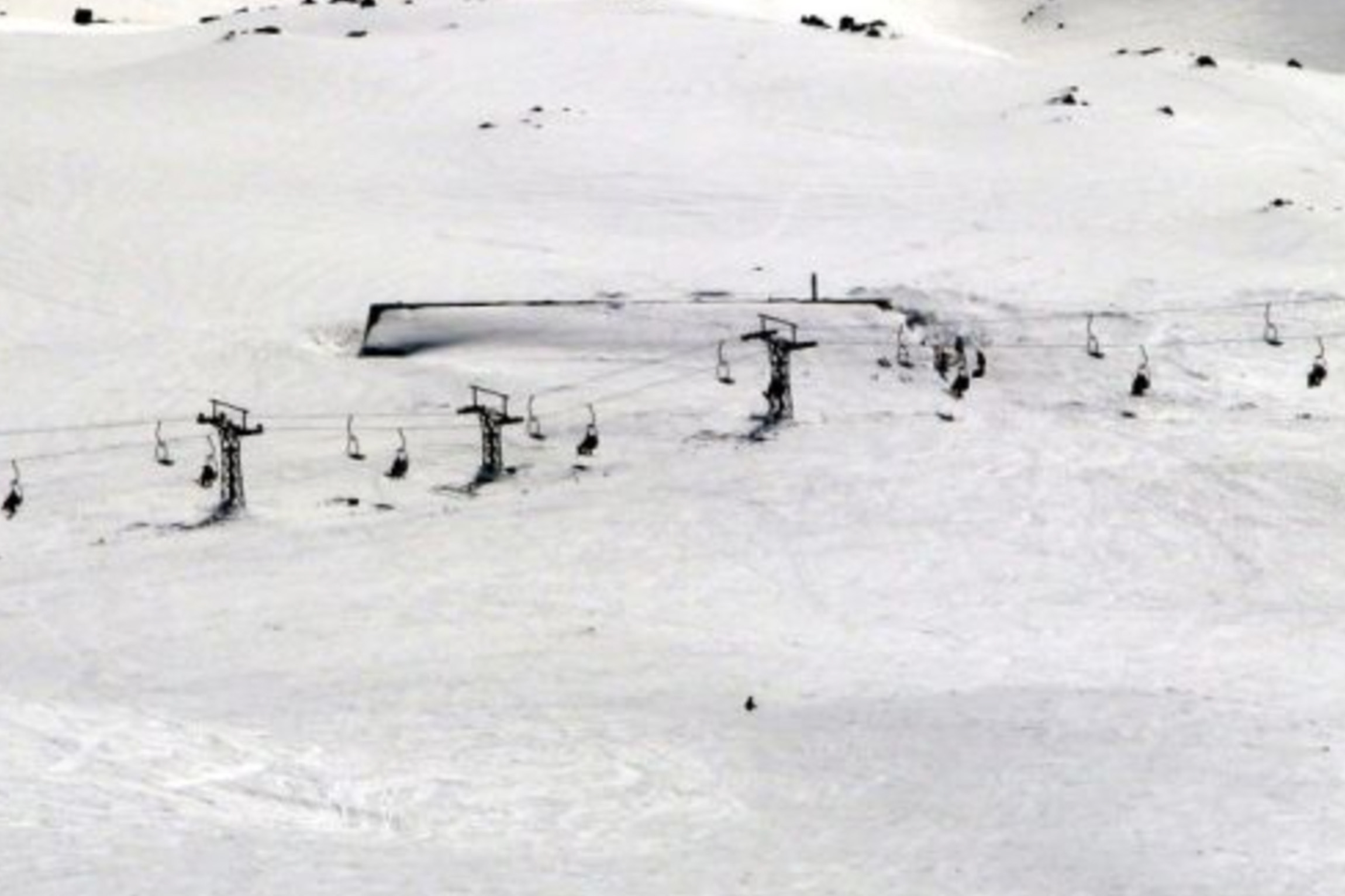
Then RAL stopped running the National Chair. In the summer of 2015–16, everything but its concrete tower bases was removed; they are still there today. Reaching the lodge required hiking up or skiing down from higher up, and skiing out was often impossible due to the lack of snow.
The once sparkling Downhill lodge began to lose its shine. And it wasn’t alone; ski clubs all over Whakapapa had been bleeding members.
In 2017 Downhill put the mountain lodge up for sale. No bites. The price, just $1, earned it the nickname ‘Dollar Downhill’. In 2019 members overnighted for the last time.
The club estimated that removing the lodge could cost $650,000. With no way forward, in February 2020 Downhill informed DOC that it was surrendering its licence.
DOC gave Downhill four options: transfer the lodge to another club; remove it and restore the site; demolish the building and foot the bill; or abandon the site and face debt collection. Downhill replied: only the last option was feasible.
Downhill asked DOC to adopt the lodge into its own hut network but DOC declined, feeling the hut was more of a liability than anything else. As one staffer said in an internal chat, “We currently struggle to maintain the 12 huts we want, let alone a hut that’s been abandoned.”
Ultimately, DOC saw an opportunity to have the hut removed and shrink its footprint on the maunga – a long-held goal.
To help offset costs for Downhill’s lodge, DOC turned to the club’s remaining asset: its Waimarino lodge, valued at $295,000. It was sold in 2022 for $325,000, and after liquidation of the club, DOC received $242,000.
A struggle shared
Whakapapa has 45 lodges scattered across its slopes. Downhill hasn’t been the only club to falter, and it’s not the only one struggling.
Victoria University Ski Hut was gifted to RAL in 2009, and in 2018 Auckland Tramping Club transferred its lodge to Central Plateau Schools Alpine Charitable Trust, made up of five schools from the Taupō–Tūrangi area.
It’s all good if you can find a new owner. Those who can’t – those whose lodges are in undesirable locations – will have to fold. Lodge costs run high; Downhill, by the time of its last financial statement in 2020, posted $17,000 in expenses and $21,000 income (its best year on recent record, 2009, was $58,000 expenses and $73,000 income). Compare that to Ruapehu Ski Club, arguably the biggest, which reported costs of $261,000 for 2024, but a decade ago used regularly to report income/expenditure figures of around $400,000–$500,000.
That’s a lot of bednights to break even. And concessions forbid clubs from earning commercial revenue: no renting to tourists, no Airbnb salvation.
Downhill wasn’t the first to hand a lodge over to DOC. Kristin School Charitable Trust surrendered the licence for its lodge in Rehua Place in October 2019. DOC initially thought it could be repurposed for a club that wanted to relocate to Whakapapa Village, freeing up more culturally sensitive areas higher up on the mountain, but nothing came of that. DOC took control of the building and used it as an office until 2024.
Skotel owner Sam Clarkson and Whakapapa Holdings both expressed interest in using the building for staff housing, but the Tongariro National Park Management Plan was a hurdle – it states that new applications to provide staff accommodation in Whakapapa Village should be declined. Under the management plan, DOC has to remove facilities that aren’t required any more, so the lodge was demolished in April 2025 at a cost of $113,000. The site is now a taped-off patch of soggy earth, left to heal.
Removing the rust
In 2023 Cabinet approved up to $8.5 million to remove leftover infrastructure from old RAL developments – the Ruapehu Redundant Infrastructure Removal project. Anything not optioned by Whakapapa Holdings or Pure Tūroa was up for the list. Downhill’s lodge isn’t part of that project, but it could be removed as early as this summer.
The price tag for removal has grown; once forecast at $680,000, it’s now $855,000. DOC sits about $613,000 in the red from the club’s closure.
It’s not just about the money, though. The lodge is a logistical beast – huge steel girders, a heavy concrete base, and that swimming pool adds even more tonnage. It’s also, former members say, ‘riddled with asbestos’.
Leave the concrete slab? Not ideal. Dig it out? You’re left with a crater.
True restoration means removing everything – water tanks, septic tanks, soak pits – then replanting natives that may take decades to return.
George Taylor, DOC operations manager Ruapehu Projects, said the $8.5m was focused on leftover RAL infrastructure and didn’t include the Downhill lodge, but DOC is aiming to remove as much as it can with the funding available.
“Working with Ngāti Hikairo ki Tongariro, we’ve determined that each site will be assessed according to the potential impact,” Taylor says. “Obviously, we don’t want to leave a huge hole in the ground, but we are focused on removing as much as we can. There will be sites where we’ll apply a pragmatic approach, and we’re trying to do the work to anticipate restoration occurring naturally, as has happened at other sites in the past.”
(Several invitations to Ngāti Hikairo ki Tongariro to comment and kōrero for this story went unanswered.)
Inside the ghost lodge
Before walking away, Downhill’s remaining few members did what they could. They shut off power, emptied fridges and freezers, cancelled fire inspections and closed off the rates account. The building was left uninsured, and the club wound up via a special general meeting in November 2021.
But the lodge isn’t entirely empty: now, in 2026, there’s a fridge, a freezer, couches, tables, a TV. Newspapers are scattered beside the fireplace and firewood is stacked in the old swimming pool. Food in the cupboards is more than a decade past expiry. Two brand-new Eco-John toilets are still in their boxes. DOC neither sold nor redistributed any of it, but says that could yet happen.
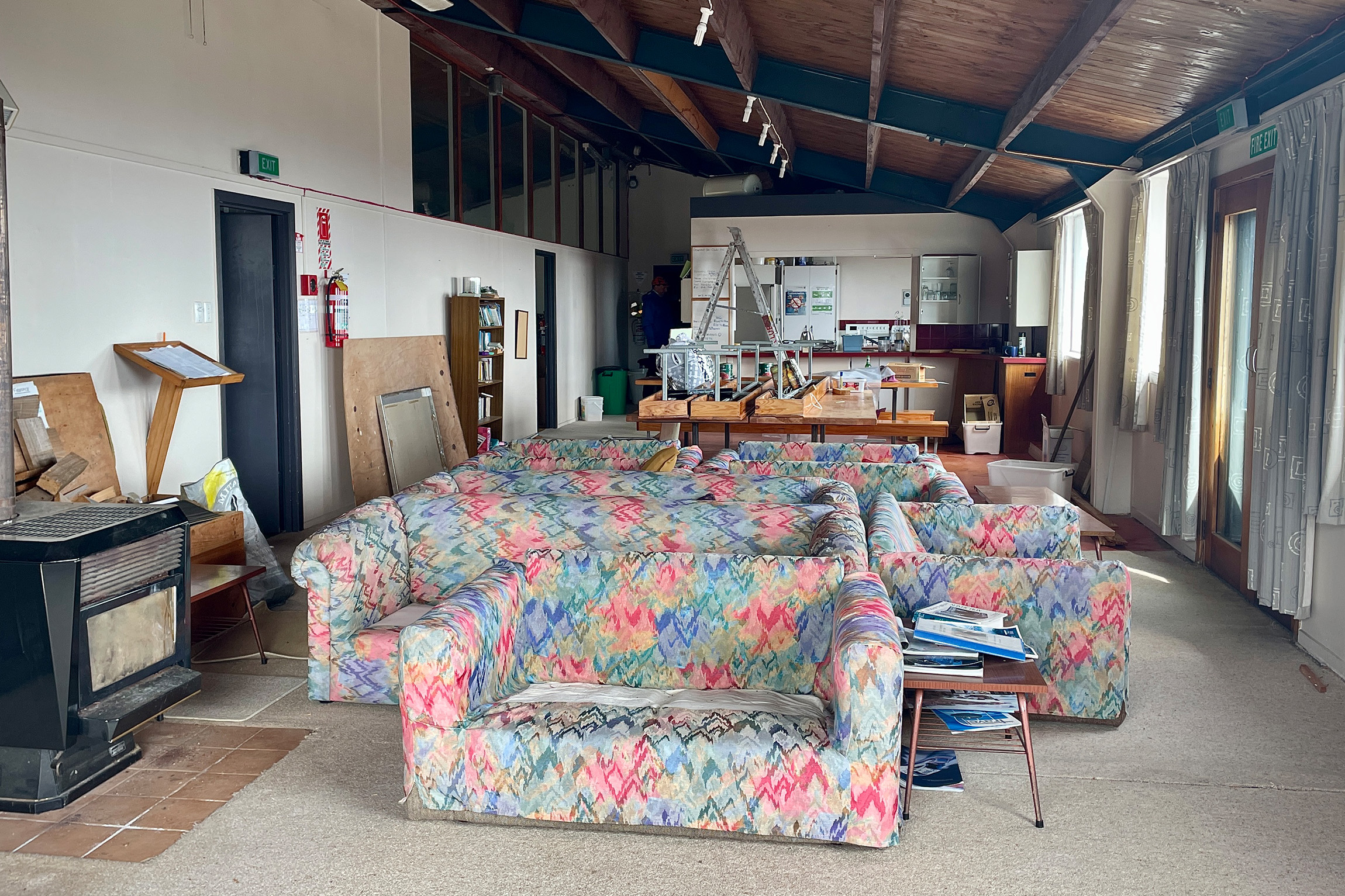
The infamous (some would say hated) $60,000 incinerating toilet – a symbol of the club’s final flushing – still sits there. It’s unlikely it can be relocated and used anywhere else.
Visitors sometimes gain access. They’ve rifled through the contents of members’ lockers and scattered bottles across the back end of the lodge. A smoke alarm chirps periodically. An exterior generator room houses drums of hazardous chemicals and a tangle of wires and fuses. To die-hard Ruapehu lovers, the abandoned lodge is kind of a ghost story.
The building sits abandoned, derelict-adjacent and, some say, haunted by the good times. It’s rotting from the outside in and the inside out.
DOC has no dedicated fund or solution for the slow collapse of ski club lodges; cases are handled individually. But the rule, at least on paper, is simple: if a club walks away, it has to remove its lodge and restore the land.
Internal DOC correspondence from 2020 made the frustration clear. One staffer warned about ‘parties being able to just walk away after decades of private use on public land and leave the financial problem to DOC … how many other third-party structures are in this area that could also become a financial liability?’
A good question, but there is no good answer.
Downhill Ski Club is the canary in the coalmine, its presence a warning note for every lodge still clinging to the slopes. It sings of rising costs, fading memberships and infrastructure slowly succumbing. Its melody drifts across the ridges and valleys, uneven and off-key, carrying a caution for the next to follow: that luxury can turn to liability, glamour to decay and ambition to abandonment. The song lingers, fragile but insistent, echoing a truth that Ruapehu already knows: nothing built on snow can last forever.
– Hazel Phillips is the author of Fire & Ice: Secrets, histories, treasures and mysteries of Tongariro National Park. Her next book, Great Hearts: First ladies of Aoraki Mount Cook, will be published in September.



