Walking downhill puts high loads on our joints, particularly our knees. What can we do to prevent the pain of punishing descents?
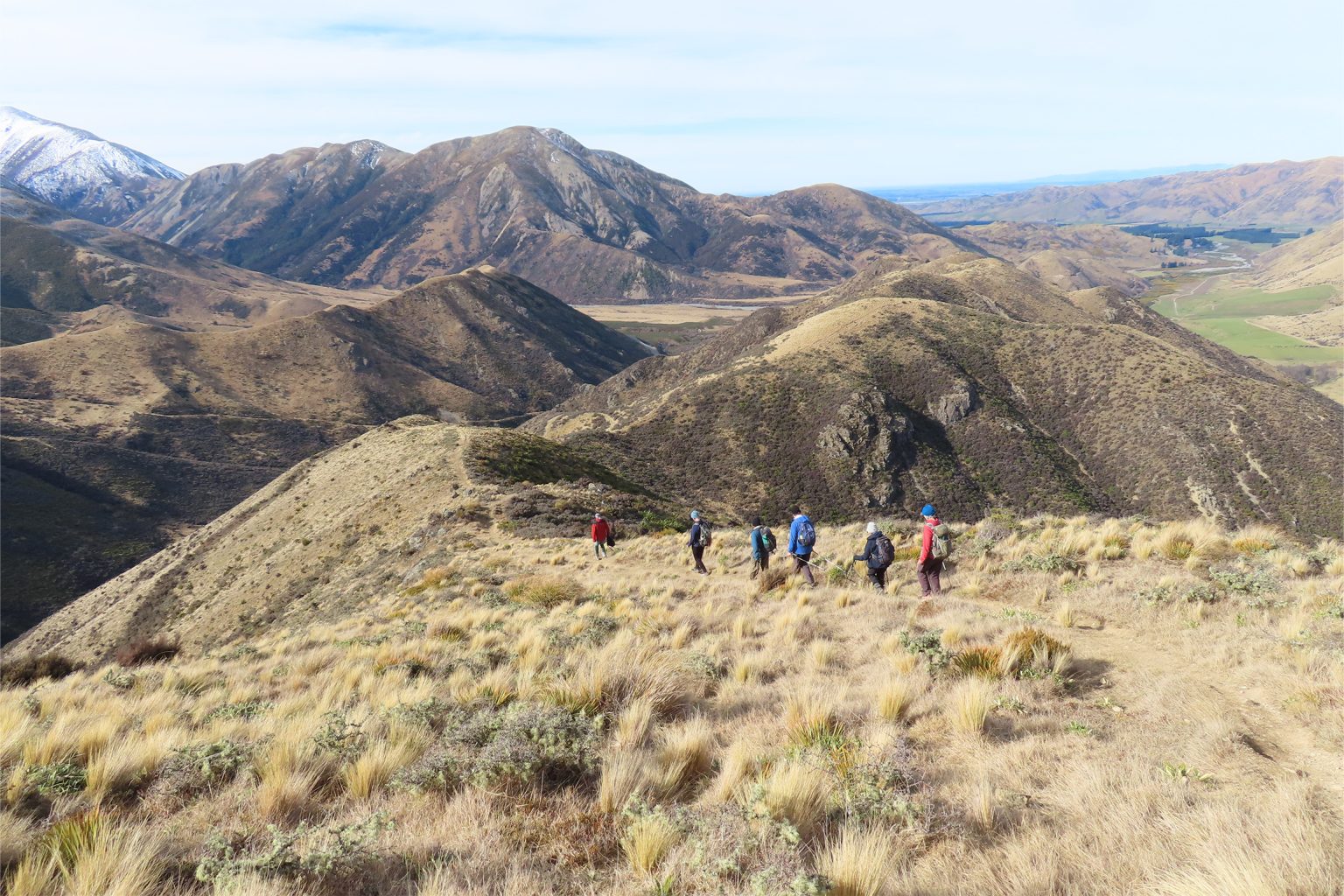
Walking downhill comes with a hefty hidden price-tag on our bodies. The loading on our leg muscles and joints increases dramatically, and our knees in particular cop much of it. In fact, the forces in our knees are about six times greater on a steep descent than on flat ground. On longer tramps these stresses can cause knee pain, muscle damage, fatigue and overuse injuries. (In 2025, over 85 per cent of tramping-related injuries reported to ACC were soft-tissue injuries, most commonly involving knees and ankles.)
There are several things you can do to reduce the shock absorbed by your joints and muscles in downhill terrain.
Strengthen your leg muscles
Building leg strength before tramping is crucial.
“The stronger your muscles are, the better they can absorb the impact of walking downhill, taking some of the strain off your knees,” says Otago physiotherapist Laura Due, who regularly treats tramping-related injuries.
She singles out the gluteus medius (glute med), the muscle that stabilises your hips, as an important point of focus, although quadriceps, hamstrings and calves all need to be strengthened too.
“Your glute med is the one that controls your knee position as you step. If you’re weak here and in your hip stabilisers, often you’ll get a different loading into your knee joint that can cause pain going downhill.”
To strengthen your glute meds, she recommends side-lying straight-leg raises, clamshells or, her favourite, standing wall clamshells. A band can be added for extra resistance. Banded squats and bridges also target the right muscles.
For the exercises to be effective, Due suggests thinking carefully about what you’re doing. “I always say to people: think about squeezing your glutes to start the movement, rather than just doing the movement.”
Add downhill pre-conditioning
Short, low-intensity preparatory downhill walks help to protect against the damaging effects of downhill tramps, and don’t have to be long to be effective. A Japanese research team showed that a 5-minute roughly 110m descent one week before a tougher downhill challenge (40-minute ~900m descent) reduced muscle damage and pain by around 50–65 per cent.
Step lightly as you descend
How you walk downhill also matters, Due says. “Often people are going downhill and it’s like, thump, thump, thump, and they’re not really controlling the movement. It puts a lot more load through your joints if you’re heavy-footed.”
Her advice is to “be as light as possible with your footing”. Plant your heels, sit back a little and land softly as you walk. “If you think about walking lightly and trying to be as quiet as possible going downhill, you’ll naturally use your muscles more effectively and have better control over each step.
“It might feel a bit strange because it’s not how most people naturally walk downhill, but it’s a simple way to help protect your knees.”
Take shorter strides
Shortening your stride can also help to reduce the forces in your knees. This is backed by an Austrian study which showed that reducing your stride length by one-third decreases knee loading by 68 per cent on a moderate downhill slope.
Remember your poles
There is also a robust case for using poles. Not only do they reduce the compressive forces in your knees by 12–14 per cent in downhill terrain, but they also help with balance and stability. Due is a firm advocate: “I find [poles] take the pressure off. They help your balance, and you can use your upper body to control movement.” They may help to avoid slips and falls too.
Putting it all together
Building leg strength and some downhill preconditioning go a long way when preparing for mountainous descents. When you are eyeing up a steep downhill slope, think about how you move. Your knees will thank you for stepping softly and using your poles.