

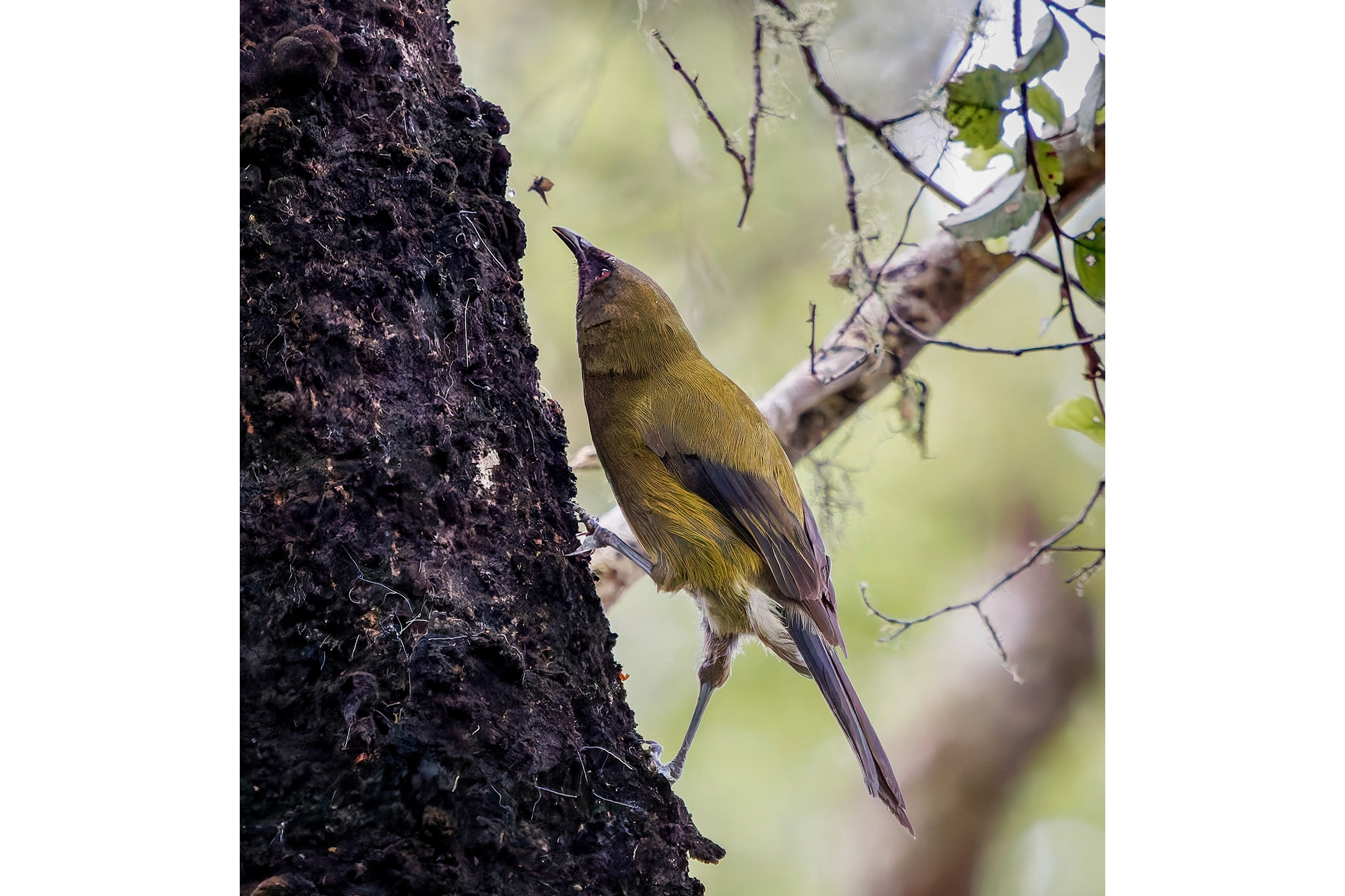
Korimako bellbird
Listen for the melodic notes of the korimako in bush around the lake in summer, especially on the western side from Waiharuru Hut to Waiopaoa Hut. If you hear one, look to the tops of the tallest trees for a medium-sized yellowish-green songbird – hopefully you’ll see it before it flies off.
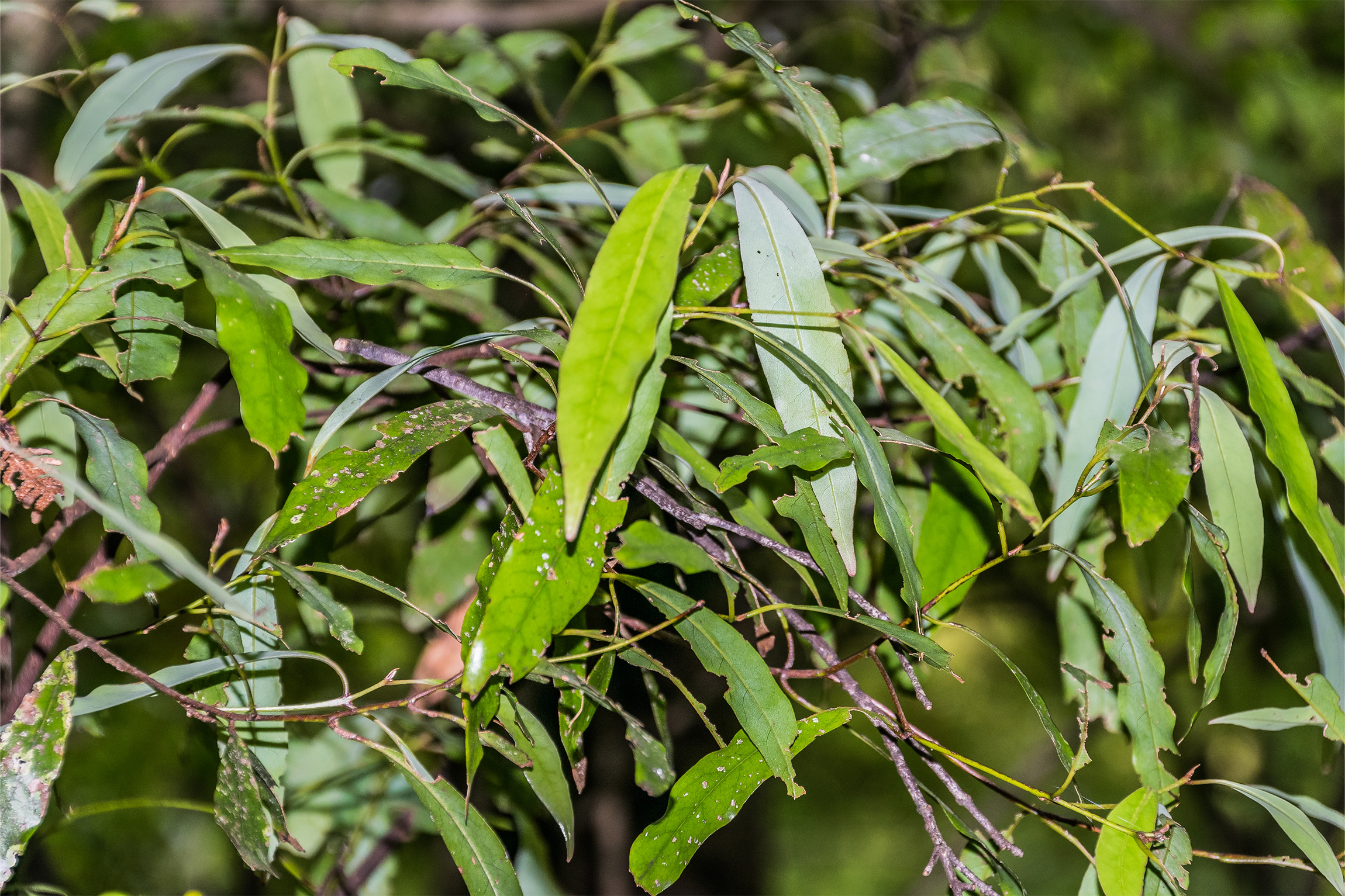
Tawa (Beilschmiedia tawa)
Tawa’s honey-green canopy, so characteristic of Te Urewera, cloaks the forested shores of the lake, often alongside rimu (Dacrydium cupressinum). The kernels of the midnight-violet drupes were an important kai for Ngāi Tūhoe, while the straight trunks and branches made excellent tools and battens.
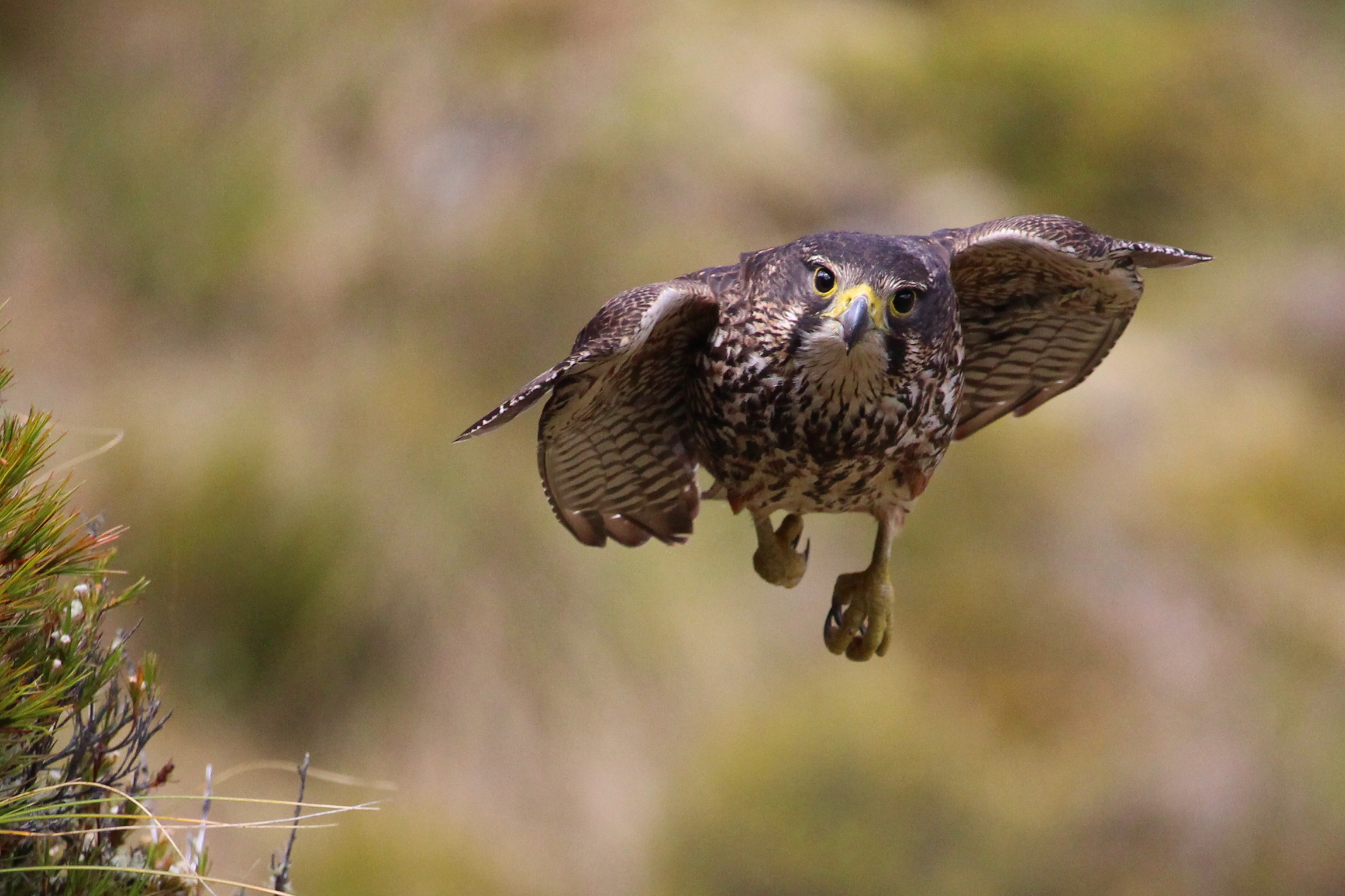
Kārearea New Zealand falcon
Aotearoa’s fastest-flying bird, this bold medium-sized bird of prey likes to perch high on treetops so it can survey the surrounding area. In summer, listen for its unmistakable rapid kek-kek-kek calls and watch for it perching on treetops between Mangatepopo and Soda Springs, or in fast direct flight anywhere.
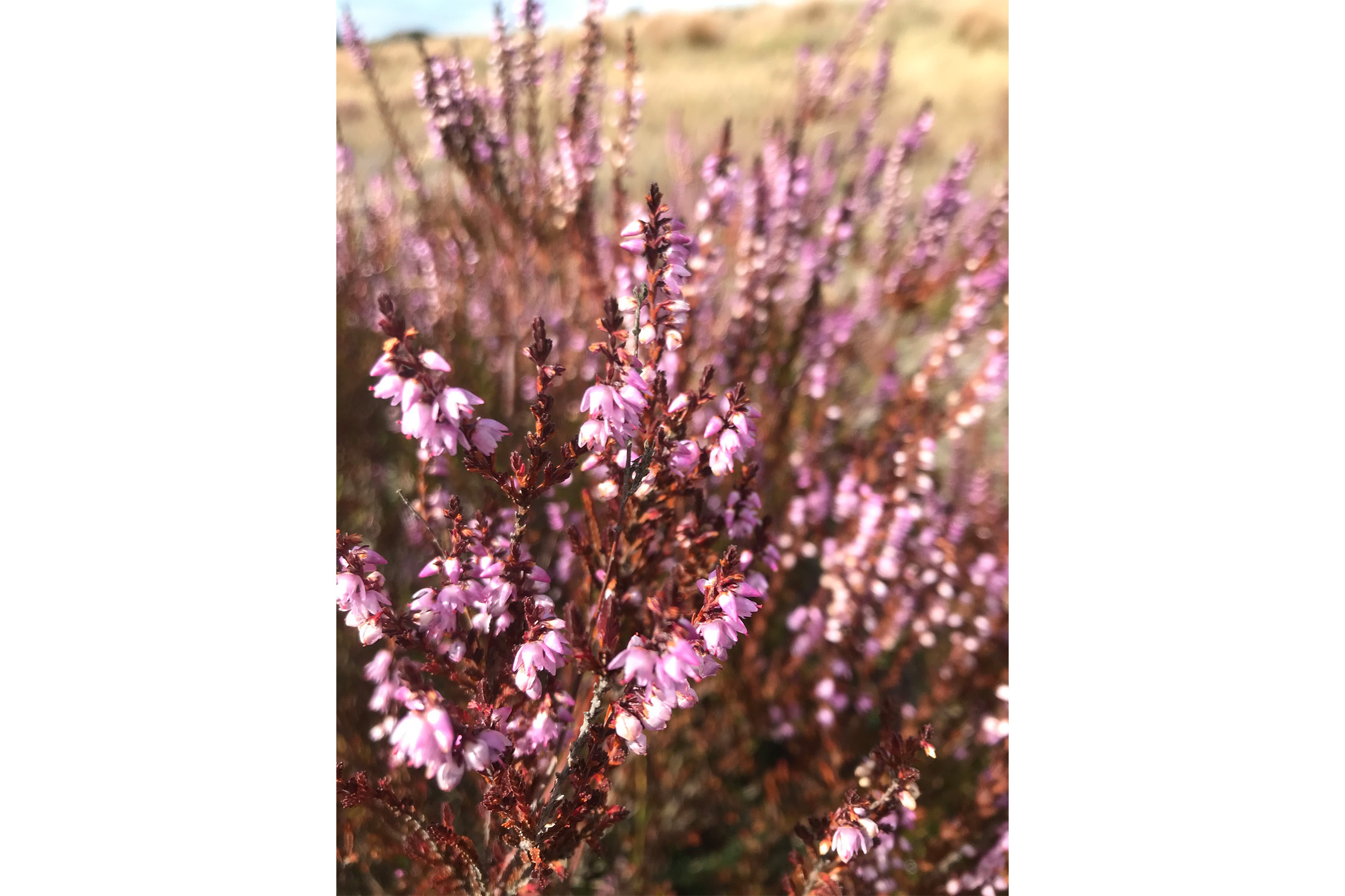
Heather (Calluna vulgaris)
A prolific weed in Tongariro’s scrublands, heather is now part of the landscape. The wiry shrub was introduced in 1912 to feed the Scottish grouse and spread quickly – unlike the grouse. The heather beetle (Lochmaea suturalis) feeds on the plant’s fresh foliage and was introduced in 1996 to combat this spread. The tide may yet turn on this mauve-flowered invader.
Koekoeā long-tailed cuckoo
The koekoeā is slightly smaller than a kārearea and migrates annually from its Pacific wintering grounds to breed in Aotearoa, arriving in November. In summer, watch out for it in flight over the river or above the forested slopes along the 2km stretch upstream and downstream of Pipiriki.
Mamaku (Sphaeropteris medullaris)
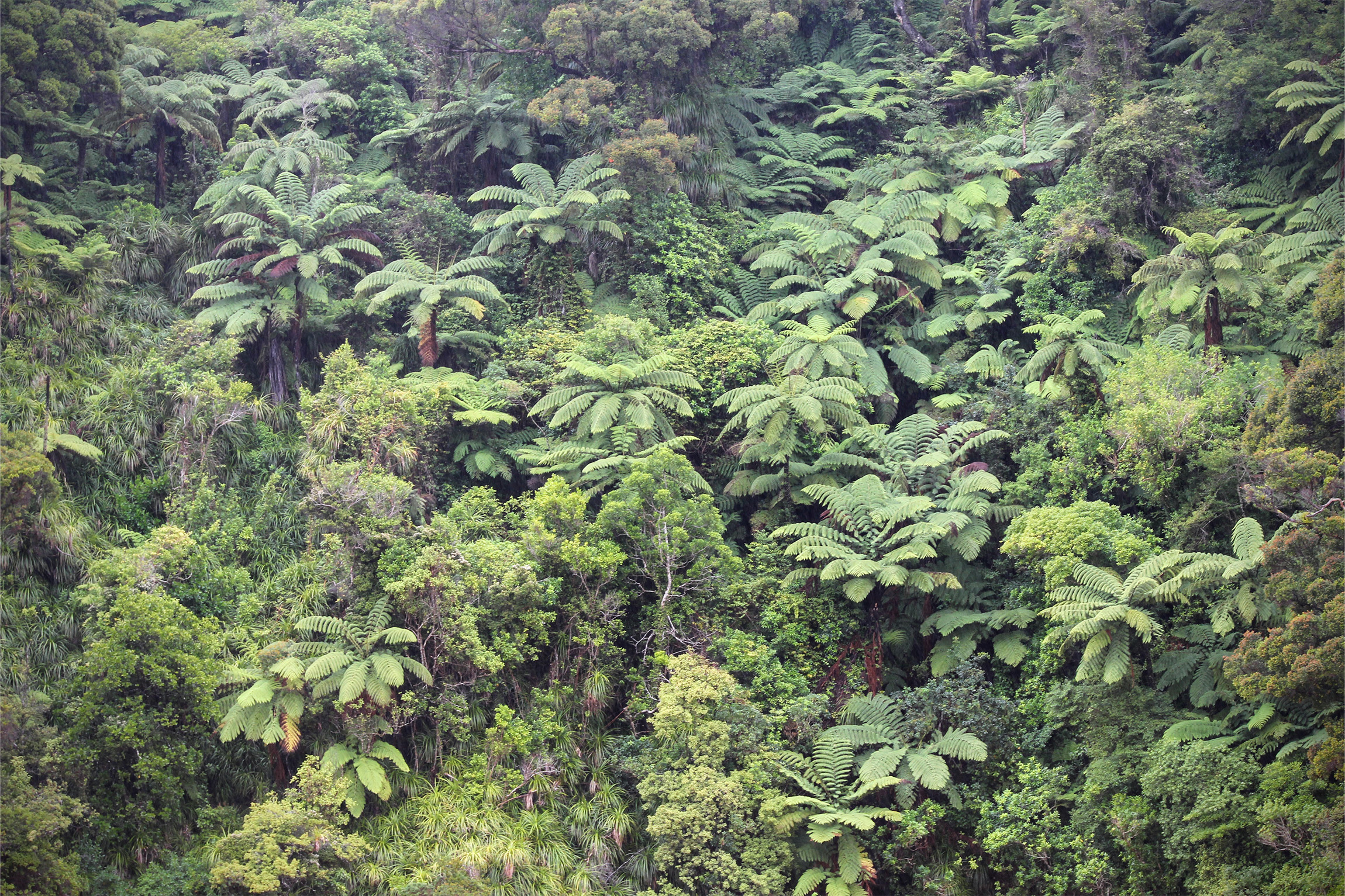
The banks of the Whanganui River are overhung with mamaku, the black tree-fern giants that give the river its Jurassic feel. Their trunks are patterned with hexagonal frond-scars and topped with stout black stipes that support fronds up to 6m long. Mamaku’s famous cousin ponga (Alsophila dealbata), with its silvery under-fronds, is also common here.
Kawau tikitiki spotted shag
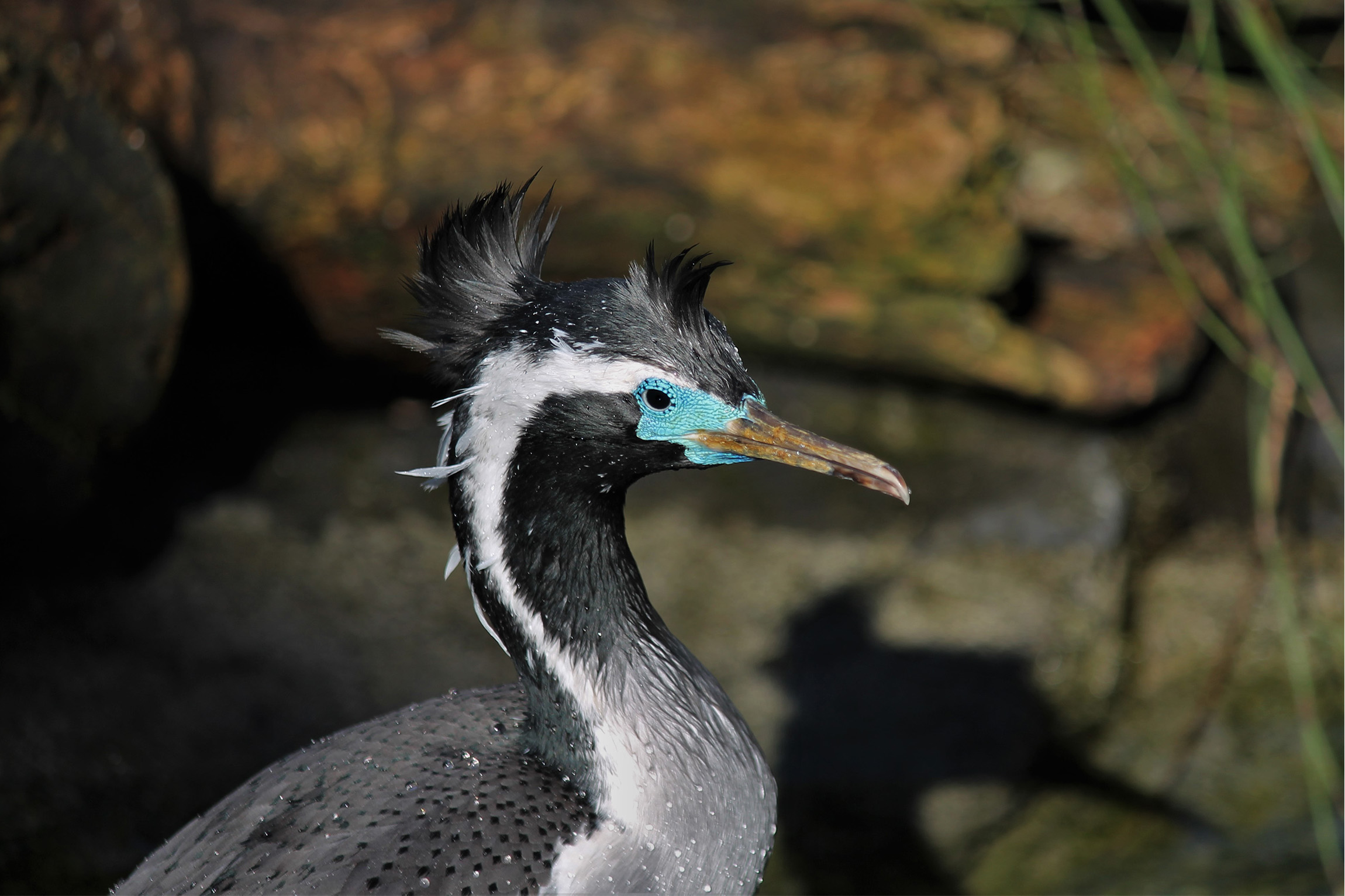
This strikingly flamboyant shag has pale blue-grey breeding plumage with small black spots, double crests, bright green-blue facial skin, blue eye rings, and yellow legs and feet. In summer, look for them along the coast, either resting on rocks or swimming offshore, especially between Observation Beach and Mārahau.
Kānuka (Kunzea ericoides)
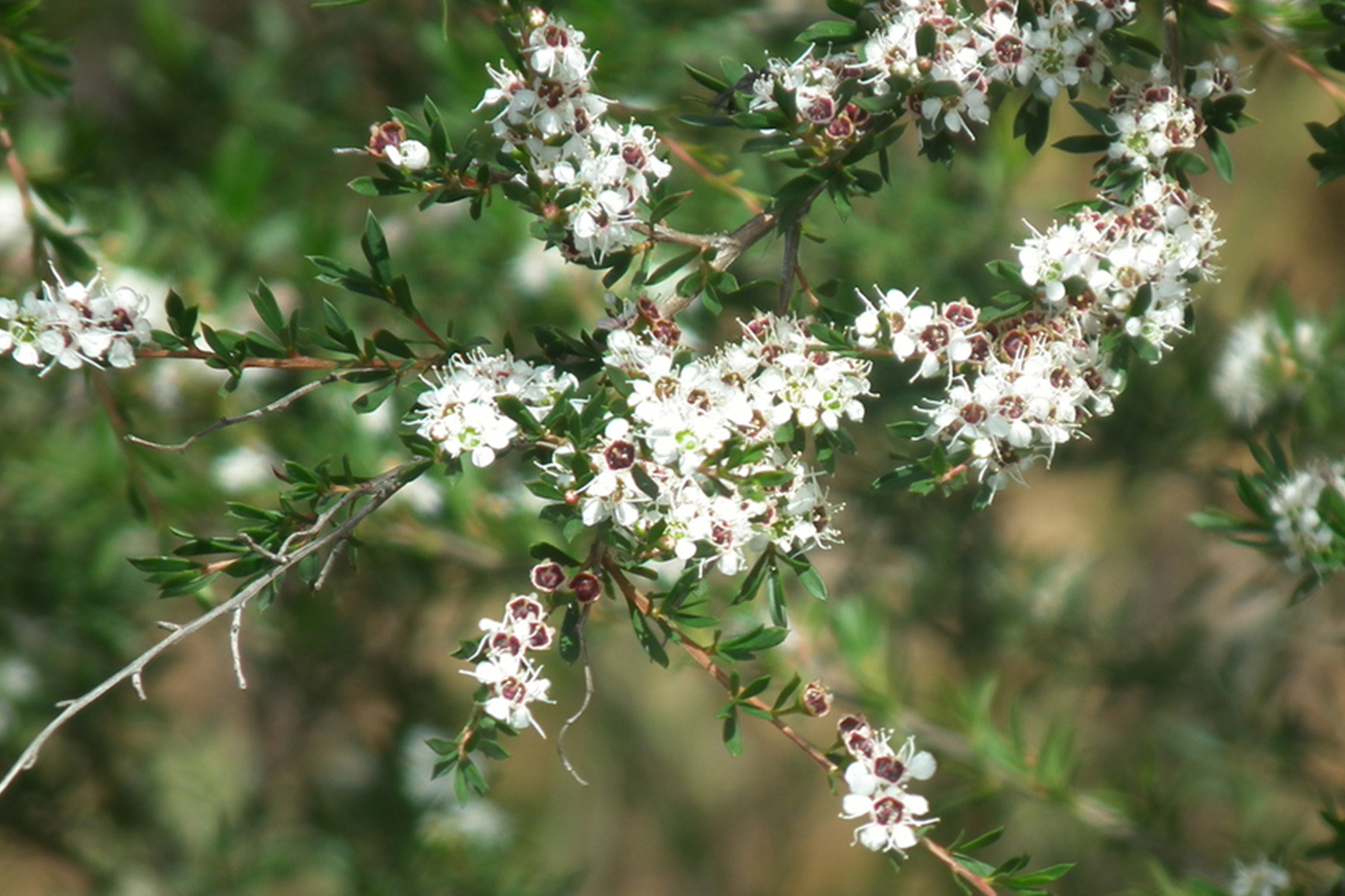
Kānuka is emblematic of the coastline’s history of deforestation and fire. To walkers, it represents recovery and provides dappled light on a track. Tawhairauriki black beech (Fuscospora solandri) is slowly replacing it on ridges that drop gently to the sea. Kānuka leaves make a delicious tea for a billy stop on the beach.
Kākā
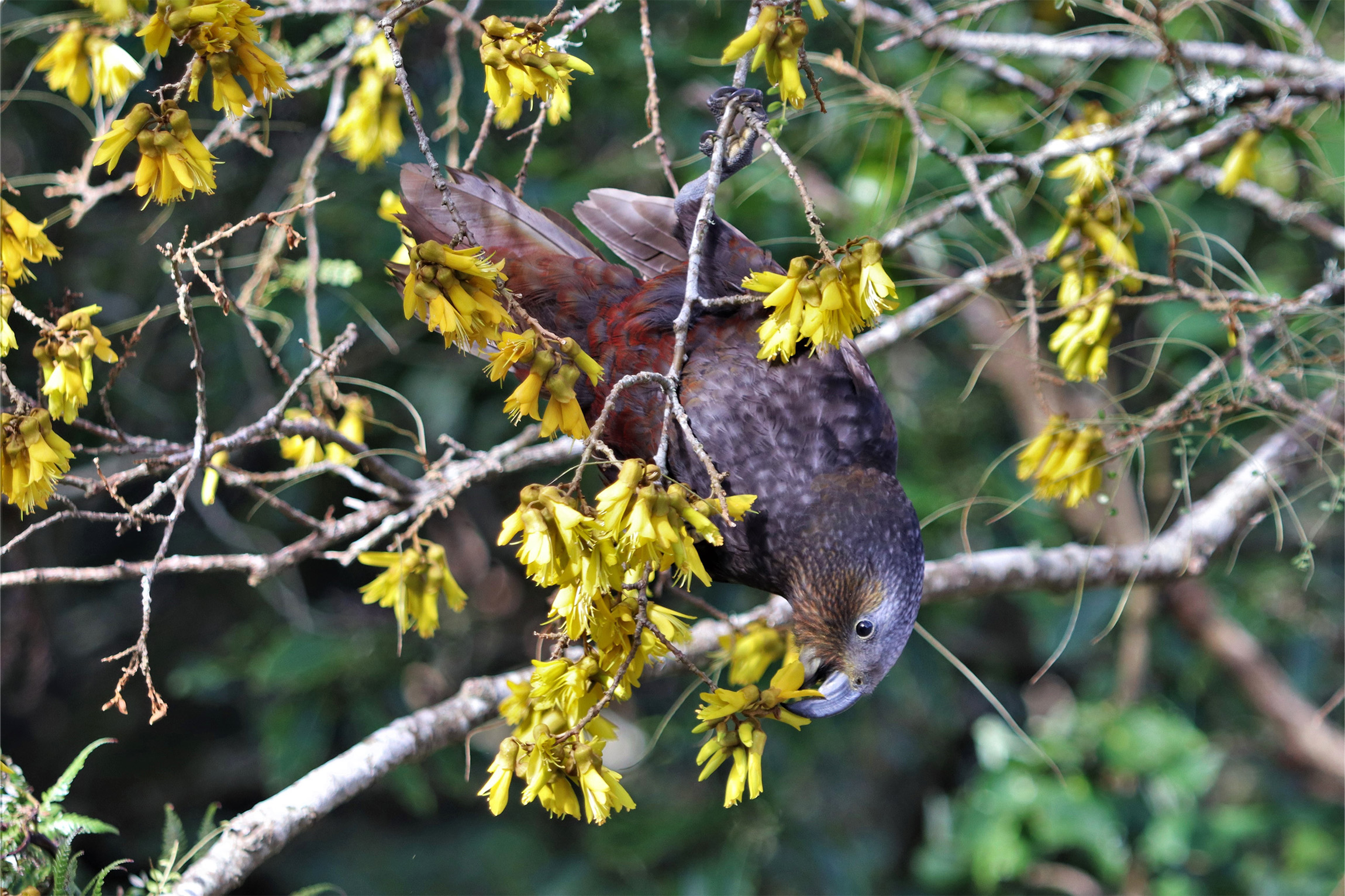
This large olive-brown forest parrot with a grey-white crown and red underwings uses its strong bill like a third foot when climbing around in trees. In summer, listen for its loud whistles or the raucous ka-a and kraak calls of a flock in flight, especially from Heaphy Hut to Brown Hut.
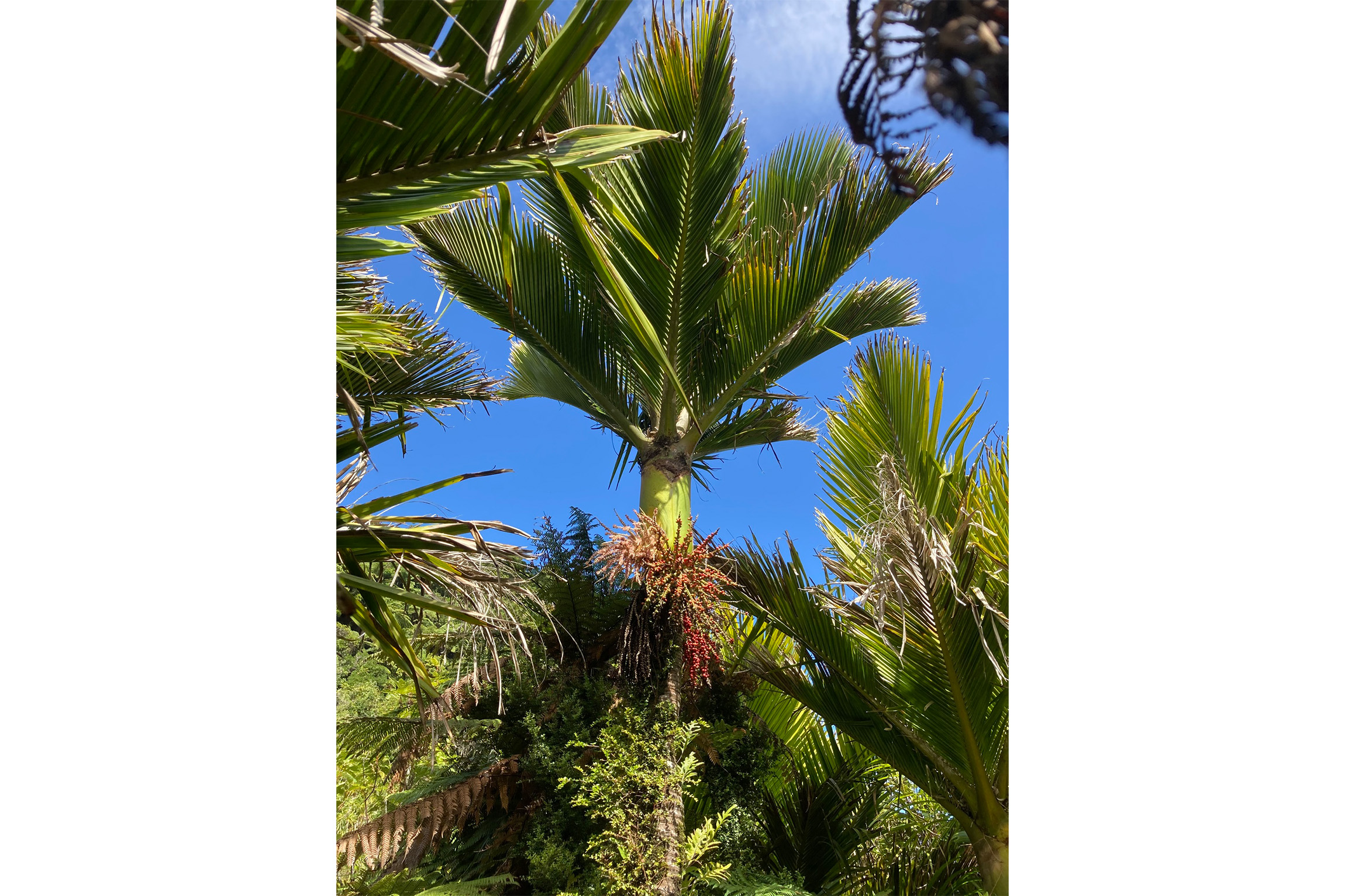
Nīkau (Rhopalostylis sapida)
Swaying stands of nīkau are synonymous with the Heaphy Track’s western end, where they are buffeted by sea-spray. These palms can take over 20 years to produce a visible trunk; those on the Heaphy can be over 200 years old. Up high on the Gouland Downs, nīkau steps aside for neinei (Dracophyllym traversii), an impish mountain tree worthy of Dr Seuss.
Roroa great spotted kiwi
This large nocturnal kiwi has shaggy brown-grey feathers with white mottling, a long pale bill and big claws, and is mostly heard or seen at night along the first 10km to Pororari Hut. Wait quietly if you hear one approaching and you may see it on the track, but only use the red light on your headlamp.
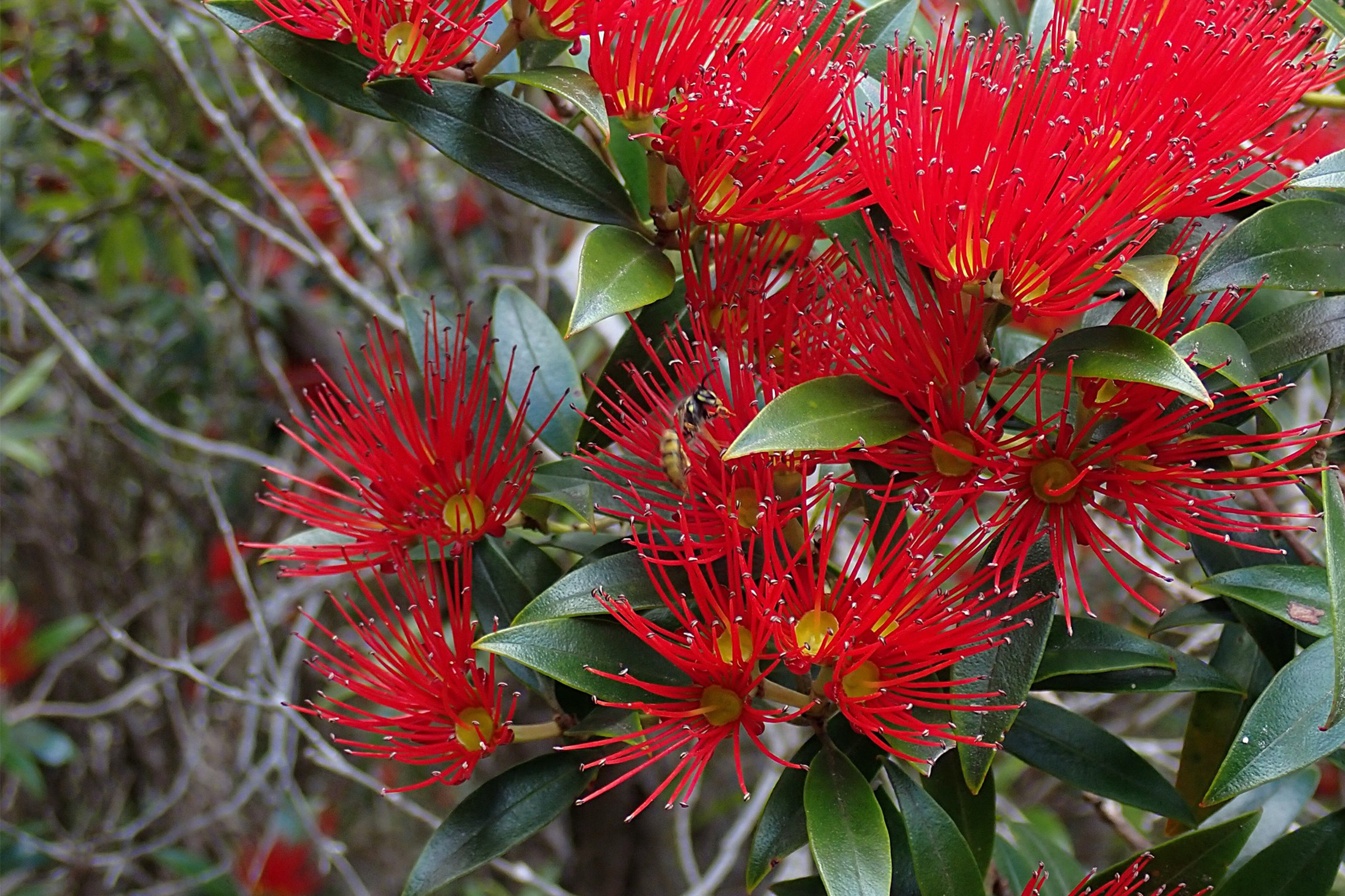
Southern rātā (Metrosideros umbellata)
A central feature of West Coast walking, southern rātā enflames the Pororari Gorge and the Paparoa Range in summer with eruptions of red flowers. One of few non-epiphytic Metrosideros species, it can be distinguished from northern rātā (Metrosideros robusta) by its tapered and pointy leaf tips; northern rātā is its blunt sister.
Mohua yellowhead
This sparrow-sized golden songster is a luminous feathered jewel of the beech forest. Listen for its melodic song and watch for it climbing trunks, tearing at bark and grabbing grubs, often high up with kākāriki and pīpipi brown creepers, by the short nature walk next to the eastern end of the track.
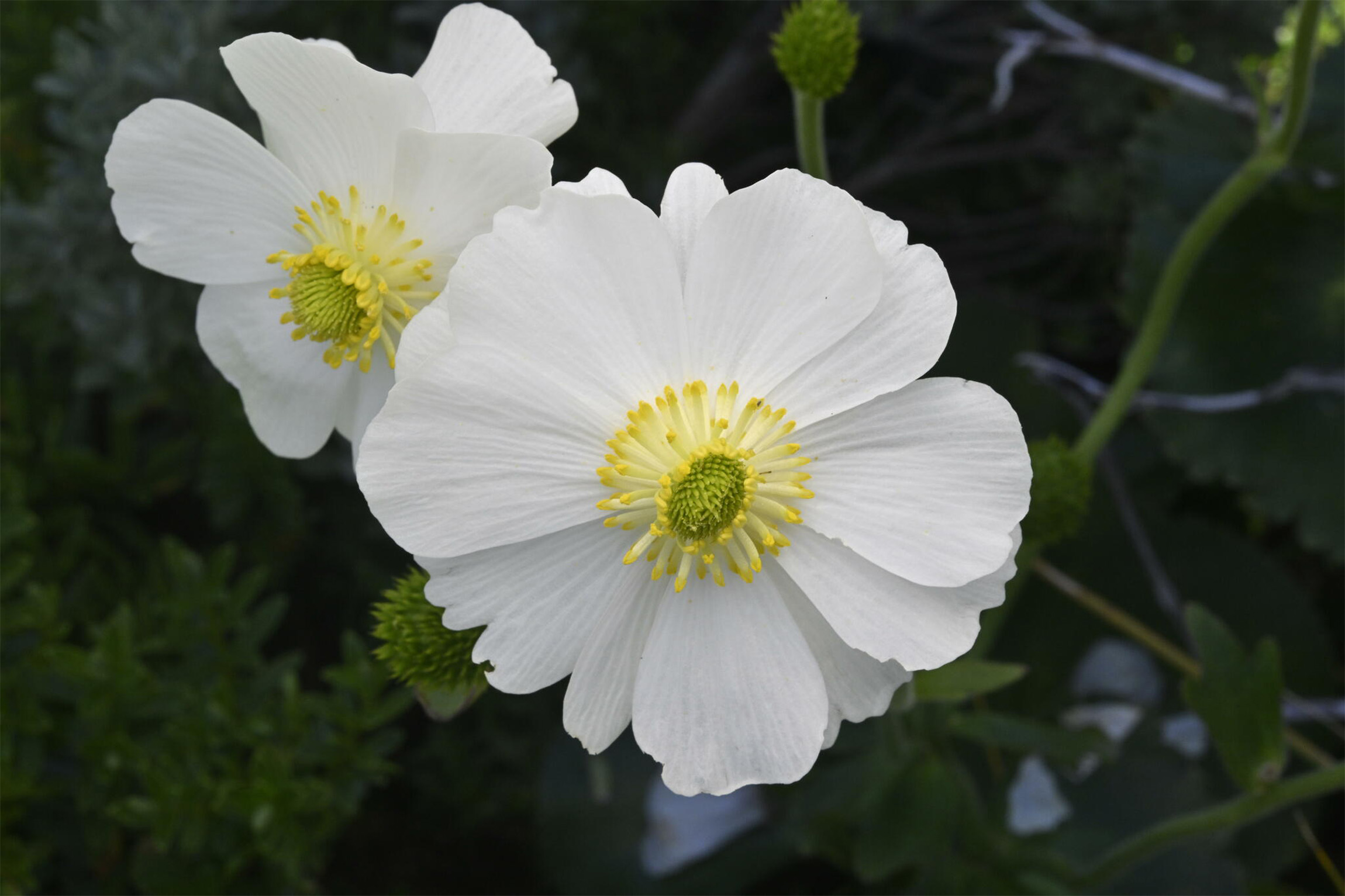
Mount Cook buttercup (Ranunculus lyallii)
Famously peppering the Routeburn’s tops, the world’s largest buttercup (once erroneously called the Mount Cook lily) flaunts its large white petals, cradling a sunny centre of pollen-laden stamens. Its peltate leaves can be larger than your handspan and form a shallow green bowl that catches rainwater. Look for these on a hot day to quench your thirst.
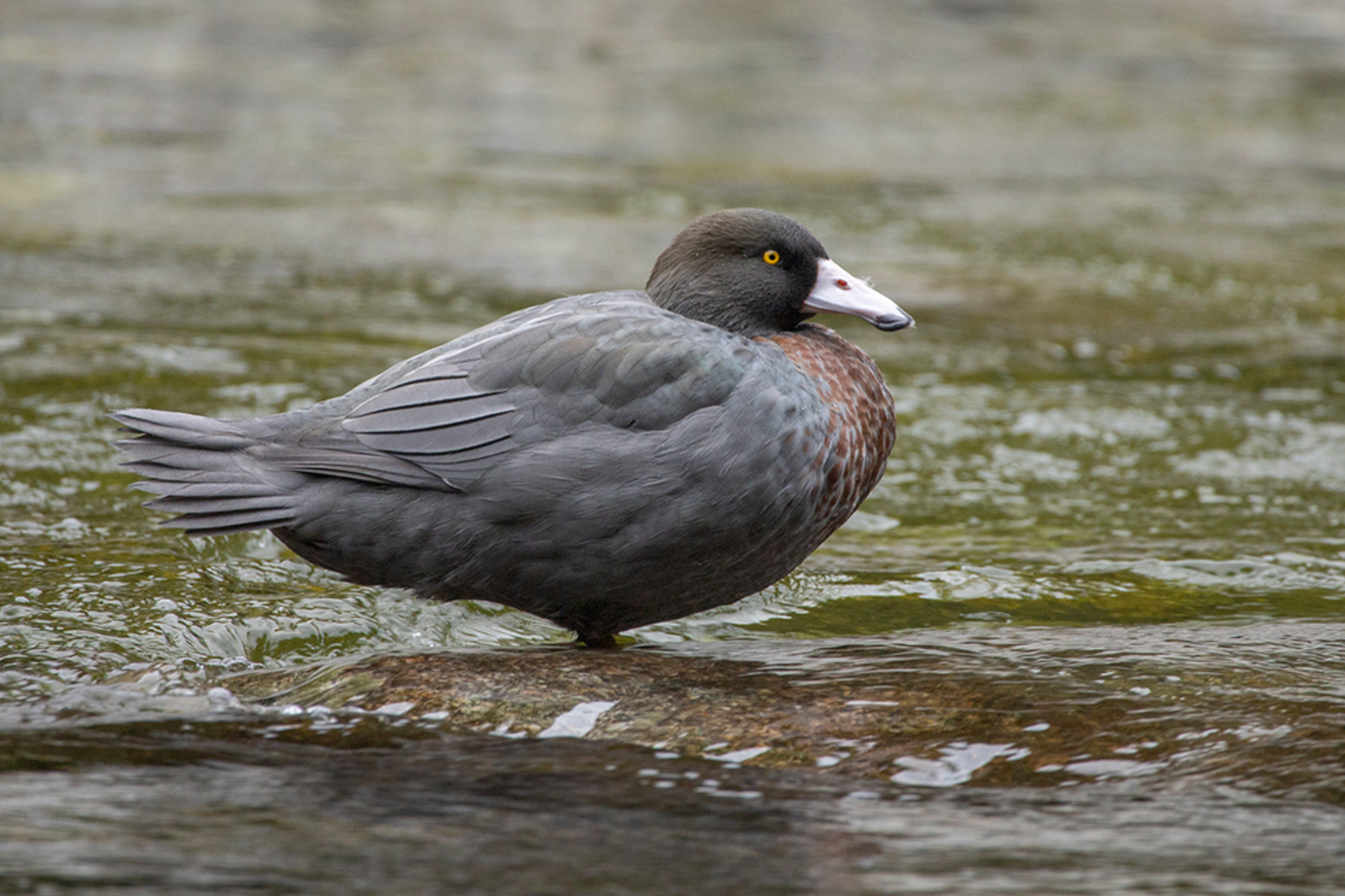
Whio blue duck
This big blue-grey ‘whistling’ mountain duck has a dark chestnut breast, golden eyes and a pale pinkish bill with dark rubbery ‘baffles’. Watch for them on Clinton River in the vicinity of Clinton Hut and on the lower reaches of Arthur River down to Piopiotahi Milford Sound.
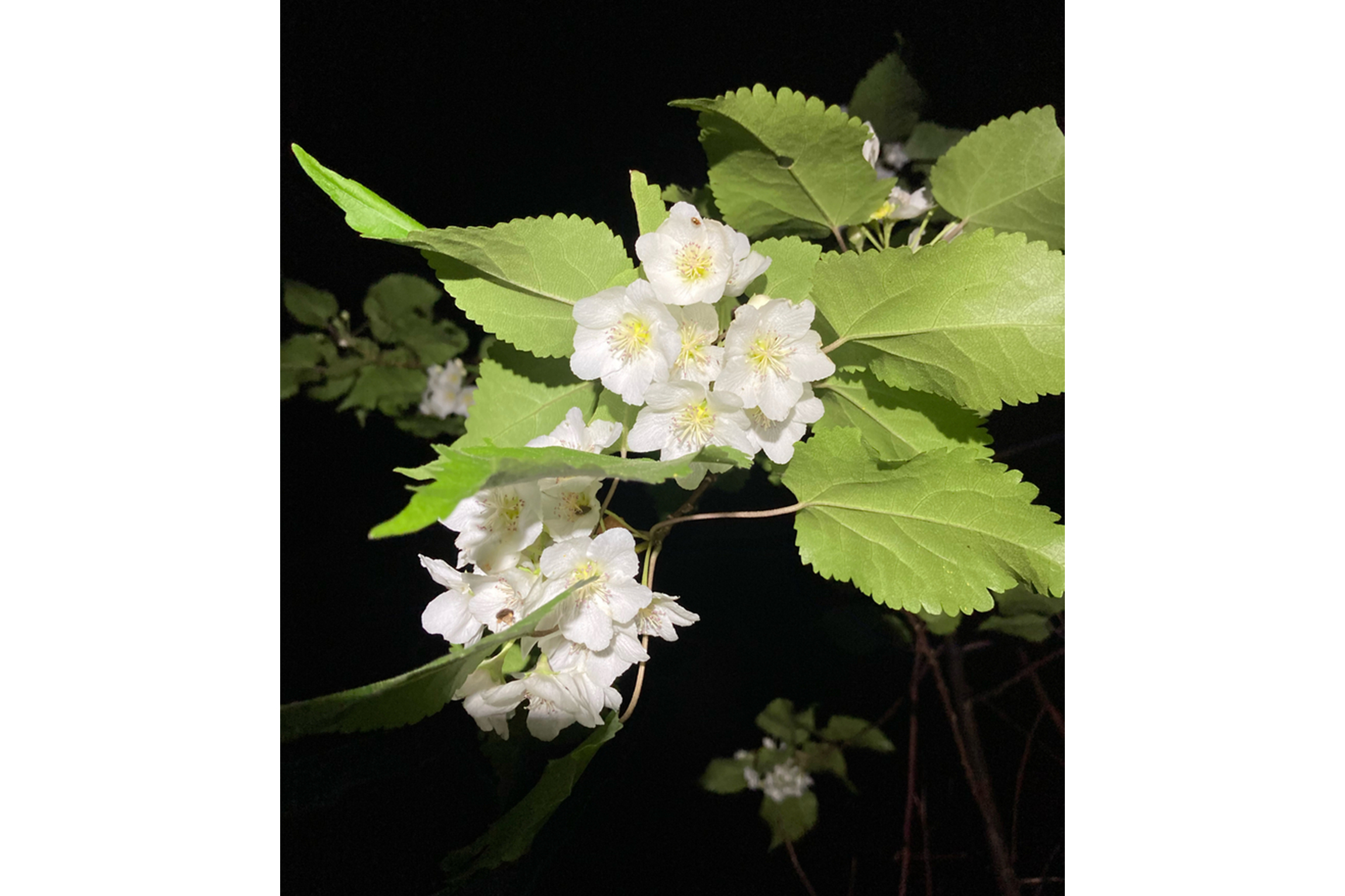
Mountain lacebark (Hoheria glabrata)
Aotearoa has few native deciduous trees, but this is one. The Milford Track offers a rare chance to see its autumnal display; in summer, look for the stark white displays of five-petalled flowers. Mountain lacebark forms dense stands in disturbed areas of the Clinton and Arthur valleys.
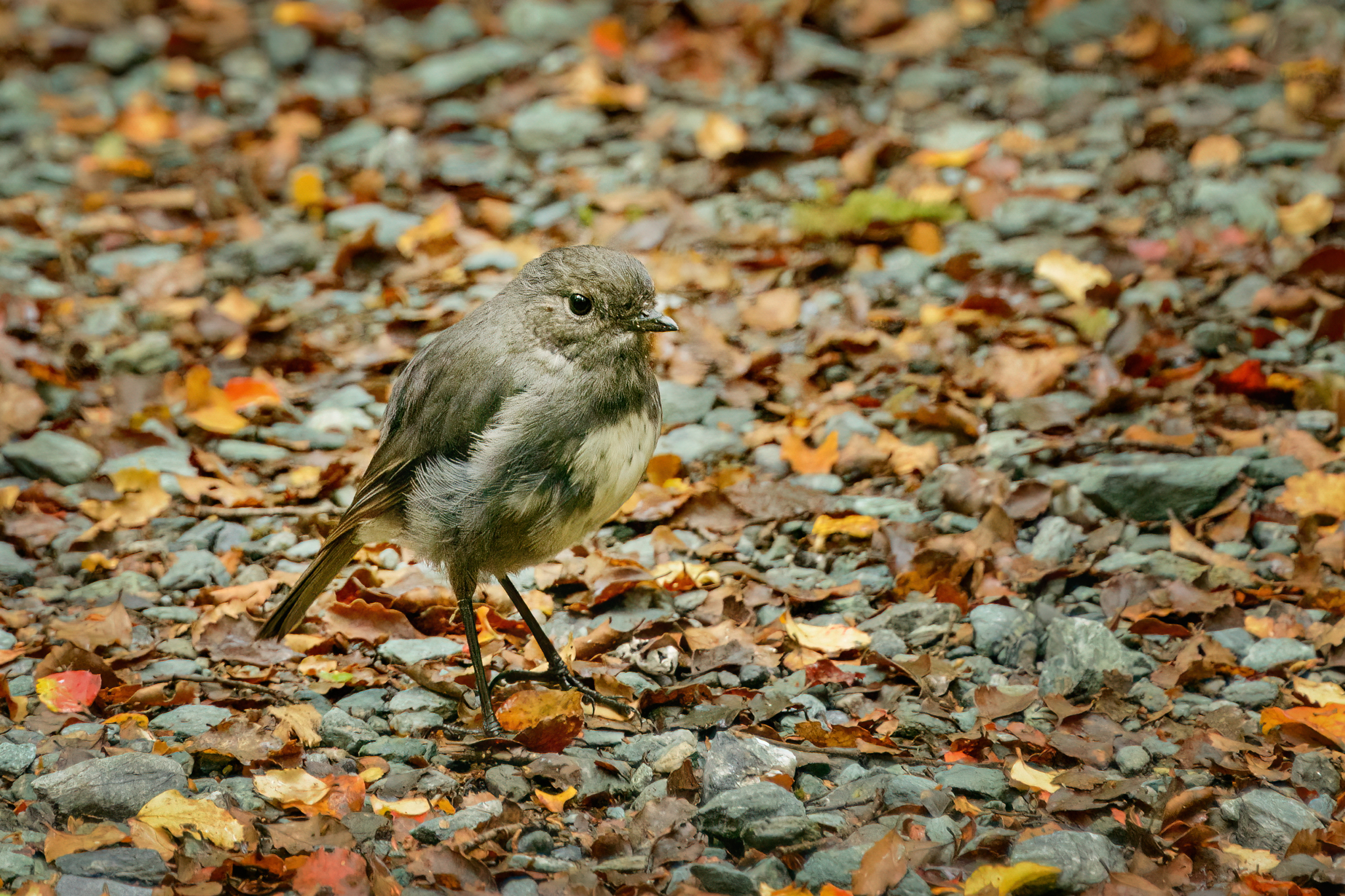
Kakaruai South Island robin
This bold black-and-white songbird stands upright, 18cm tall, and is well known for doing big leaps propelled by its long and springy ‘matchstick’ legs. Present year-round, listen out for their complex melodic song and watch for them feeding alongside the track inland from Flat Creek to Okaka Lodge.
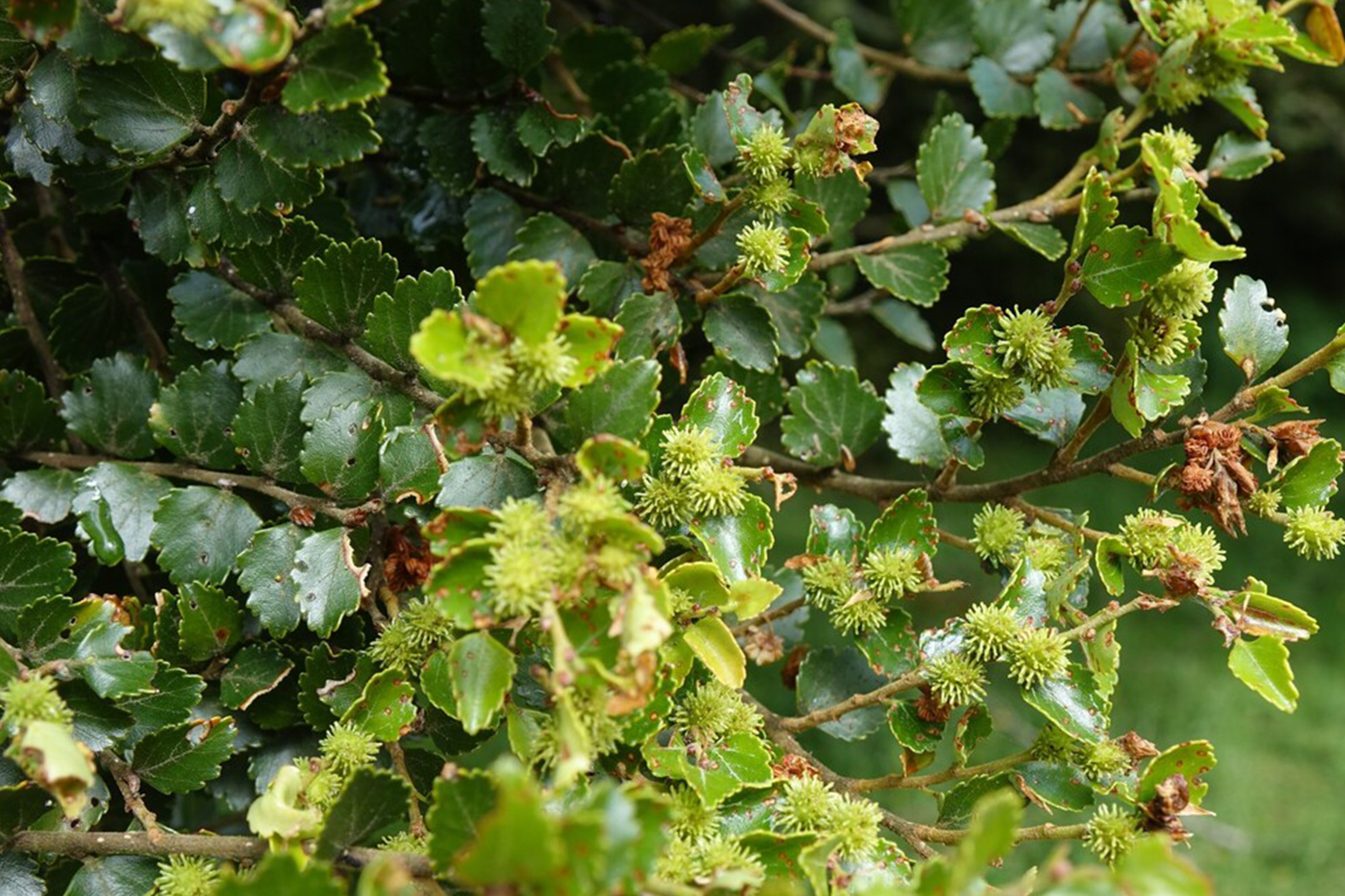
Silver beech tawhai (Lophozonia menziesii)
The forested ridges of the Hump Ridge feel otherworldly with their goblin forests of moss-draped squat tawhai. Tawhai is of an ancient Gondwanan lineage, the only beech of its genus in Aotearoa. Look out for the beech strawberry fungus (Cyttaria gunnii) clinging to its branches or lying beneath the trees. Resembling a pitted orange, this fungal lineage is found on no other tree.
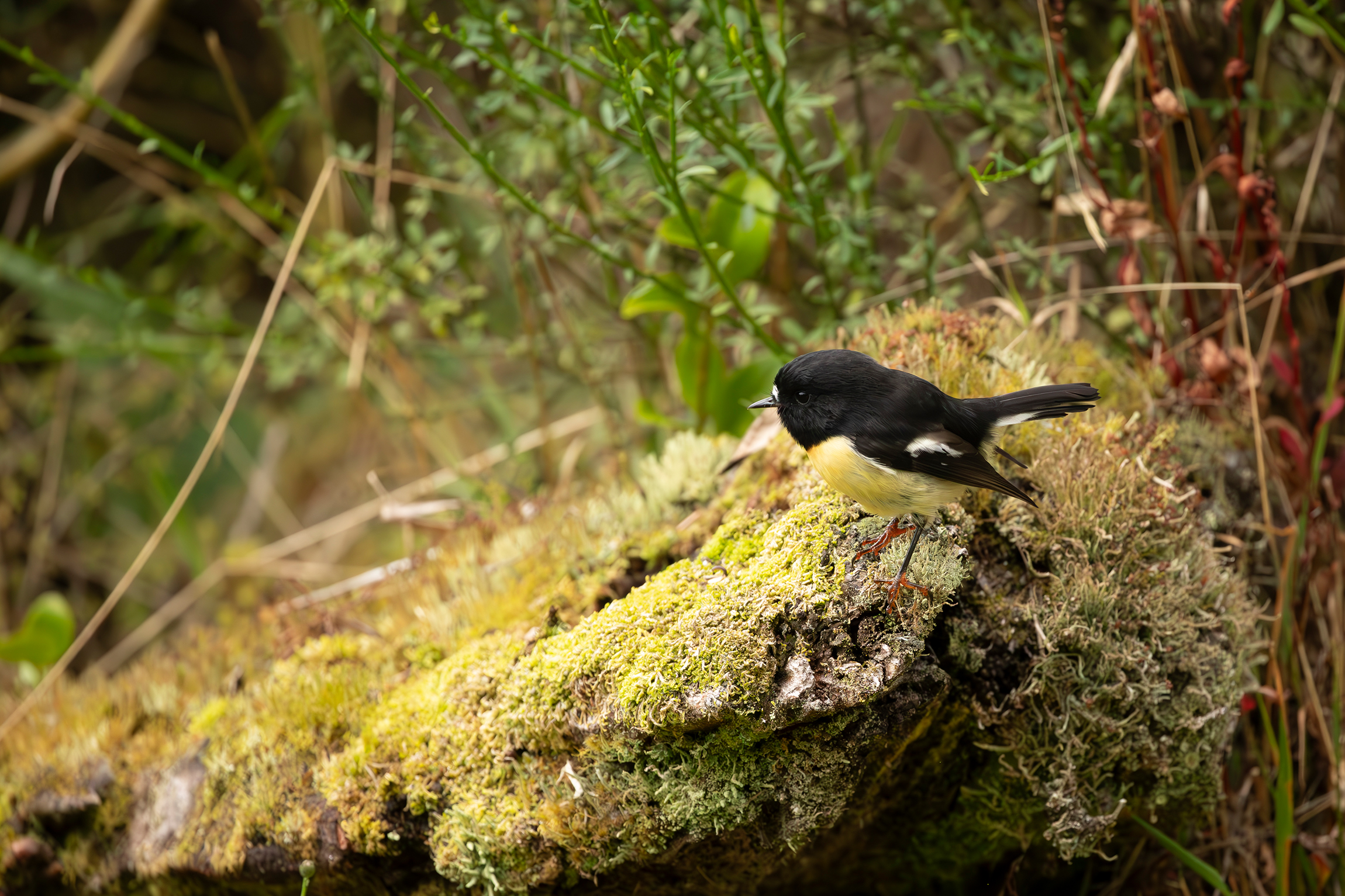
Ngirungiru tomtit
This lively little songbird has a large black head, a small black tail and dark legs with orange on its feet. South Island males have a yellow colouring from the pale top of the breast onto the belly. Widespread here, listen and watch for them in the bush between Lee Bay and Maori Beach campsite.
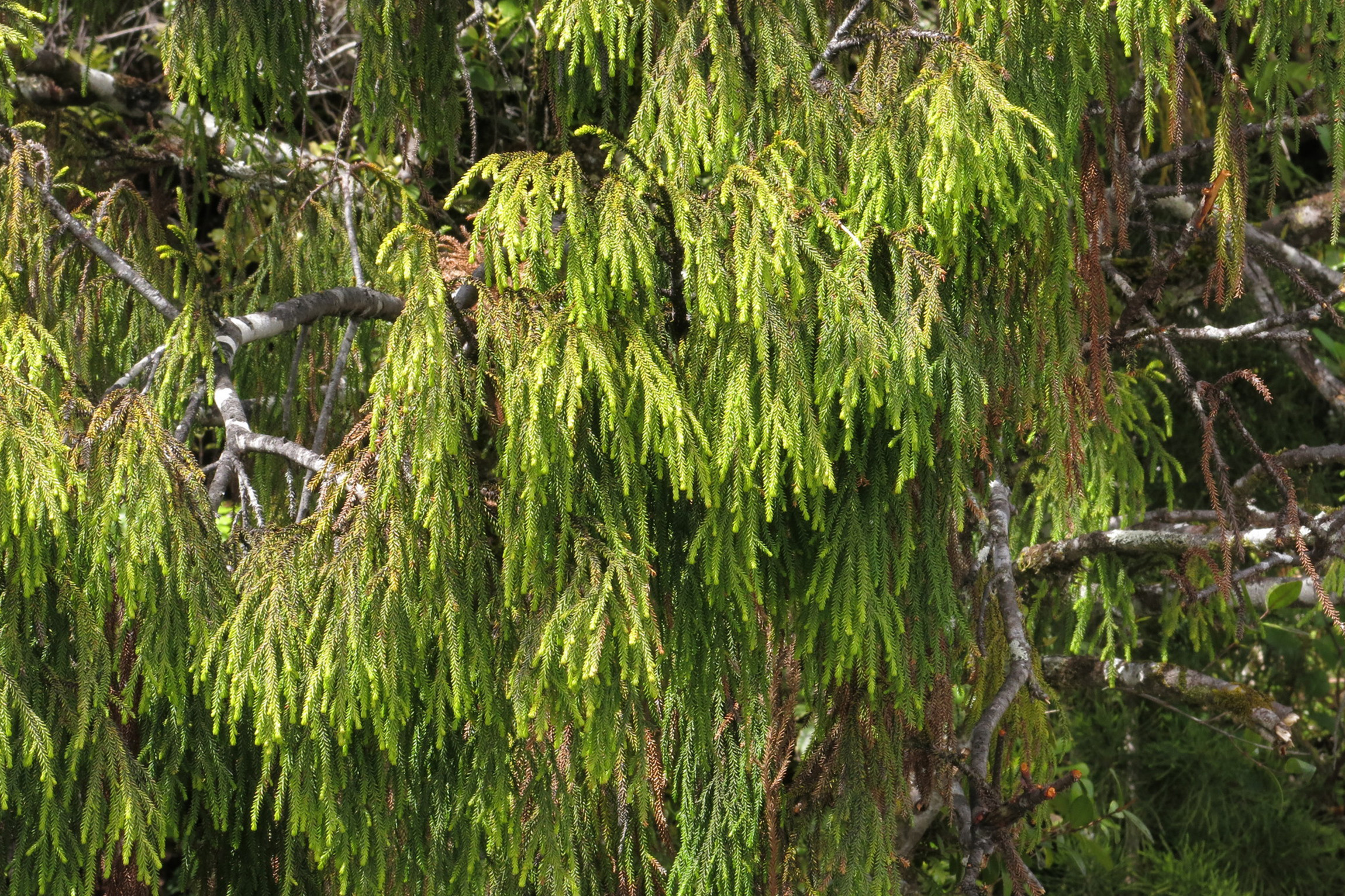
Rimu (Dacrydium cupressinum)
After Pleistocene glaciation, Rakiura’s isolation meant that it was never re-populated with slow-to-spread beech trees. Among other trees, rimu stepped into that void. Tied inextricably to kākāpō survival, Rakiura and rimu together supported the last natural wild population of these birds before they were rescued and relocated in the 80s and 90s to escape feral cats. Kākāpō exist today thanks to Rakiura and rimu.




