Wilderness attends an outlandish concert at Powell Hut, all in the name of conservation.
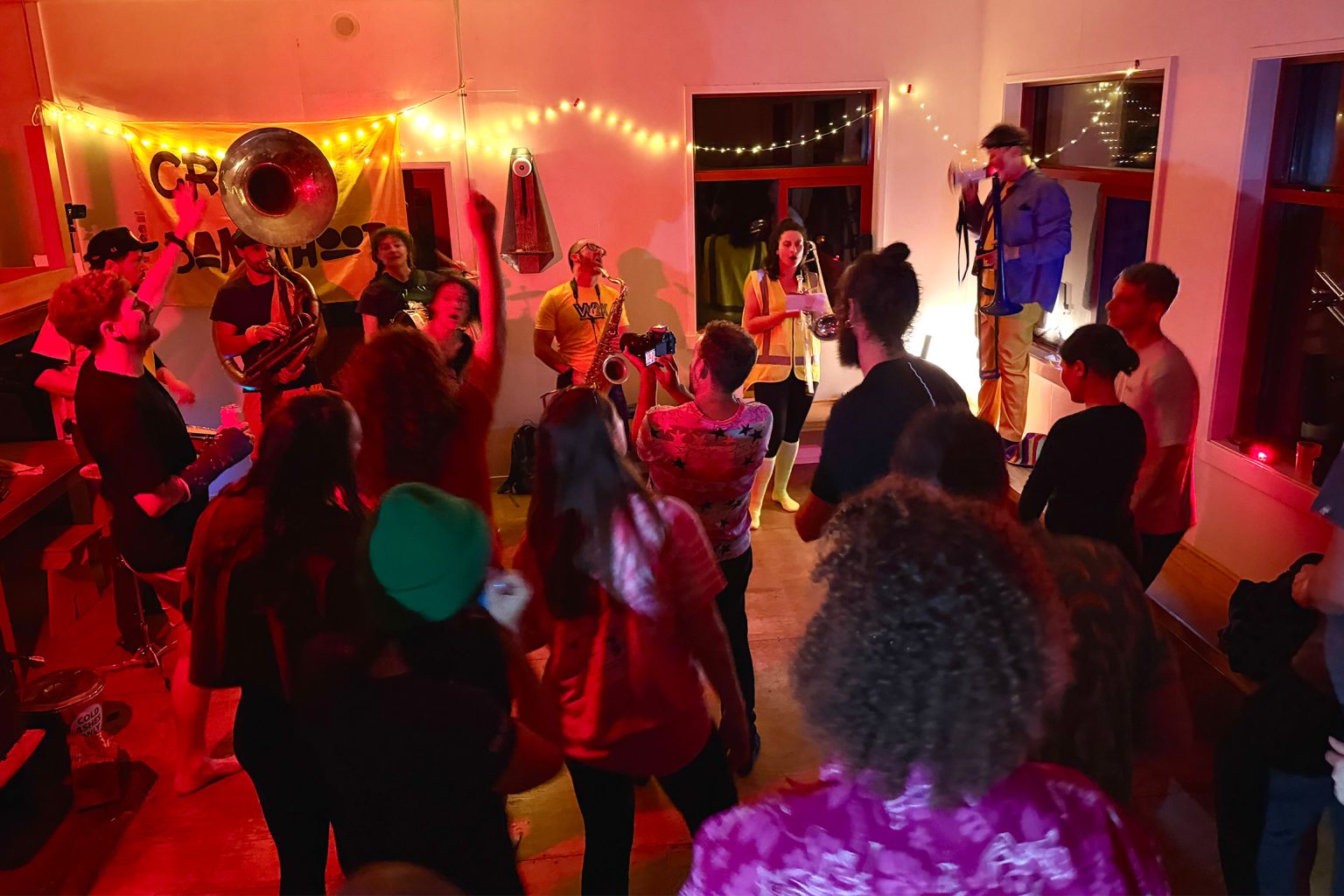
Most trampers try to go light, but not members of the band Crash Bandihoot. They took a 13kg sousaphone, a bass drum and full horn section to Powell Hut, where they played a concert to raise money for Forest & Bird. And this is the second time they’ve done it.
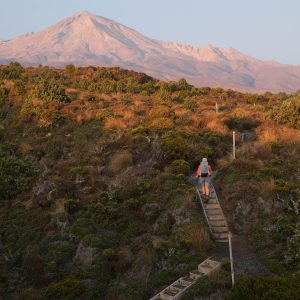
The journey to the hut took the band just under six hours. “We didn’t try to rush, we wanted to enjoy the process,” band member Michael Pi says. The faces of trampers they passed on the trail were “absolutely priceless”.
The band had booked all 32 bunks in the hut months in advance to avoid any issues with unsuspecting hut users. “Imagine someone wanting a bit of peace and quiet and a brass band shows up!” says Pi. After beds for the band were accounted for, the remaining 25 spots were snapped up within hours of the band posting on social media, and they even started a waitlist in case a bed opened up.
Tickets aren’t sold; the band asks concertgoers for a reimbursement for the hut fee, along with an additional donation for Forest & Bird.
Getting to the hut is only half the challenge, however: playing a show once you’re there is another.
The gig was in two parts. The first was a sunset pre-show on the helipad. It was a classic Tararua evening of misty drizzle with the temperature hovering around freezing point. NIWA claimed a wind chill of -6℃.
The band put in a solid 15-minute effort, playing until their hands turned white from the cold. It was hard to tell if the crowd was dancing or shivering (I was in the latter camp). Then it was inside for warm cups of tea and a meal before the main event.
By the time the band played again, the feel in the hut had shifted. We had all tramped the same journey, were sharing the cooking space and battling the cold together. The usual separation between performer and audience had disappeared somewhere on the trail.
“The shared challenge of getting there, the remoteness, the intimate nature of the numbers and small space change the feel and the experience. It creates such a communal feel,” Pi says. “For me, it also felt like a break from the world, surrounded by great vibes and awesome people up in the clouds.”
Conservation fundraising tends to lean on urgency and loss: species declining, ecosystems under pressure, an exhausting list of things we’ll lose if we don’t act. Pi and his bandmates offer another way to do it.
“I think people are much more likely to stay engaged if there’s some joy and celebration, even when the issues are very serious,” Pi says. “It feels like a wholesome rebellion. Conservation can often feel like an overwhelming task or problem. Any situation where you get together and make it communal makes things feel more manageable and like you’re part of a team.”
The hut gig, he argues, does something a traditional donation link can’t. “The feeling of actually being in the wilderness that you’re raising money to help protect connects you, for sure.”
Beyond the $920 raised, there’s a PR ripple effect. A brass band hauling a sousaphone up a mountain generates a story. Videos and photos get shared online. Concertgoers talk about it. Pi thinks conservation needs more of this kind of PR. “I think it’s easy to think of wild places as separate, but really they’re connected in so many ways, especially in Aotearoa, where nature is always so close.”
The show itself lasted about an hour. There was manic dancing, a round of trombone limbo, and many in the crowd wore Forest & Bird-themed costumes. The full-body felt tree costume put my flamingo shirt to shame. After the band had finished, an acoustic guitar appeared and a group sing-along went on late into the night.
There are no plans for a third event yet, but Pi encourages others to develop their own creative ideas to build connections outdoors. “Why not bring a book club to a hut and discuss a scary book by candlelight with a glass of wine? A little yoga class with friends? Just go for it.”