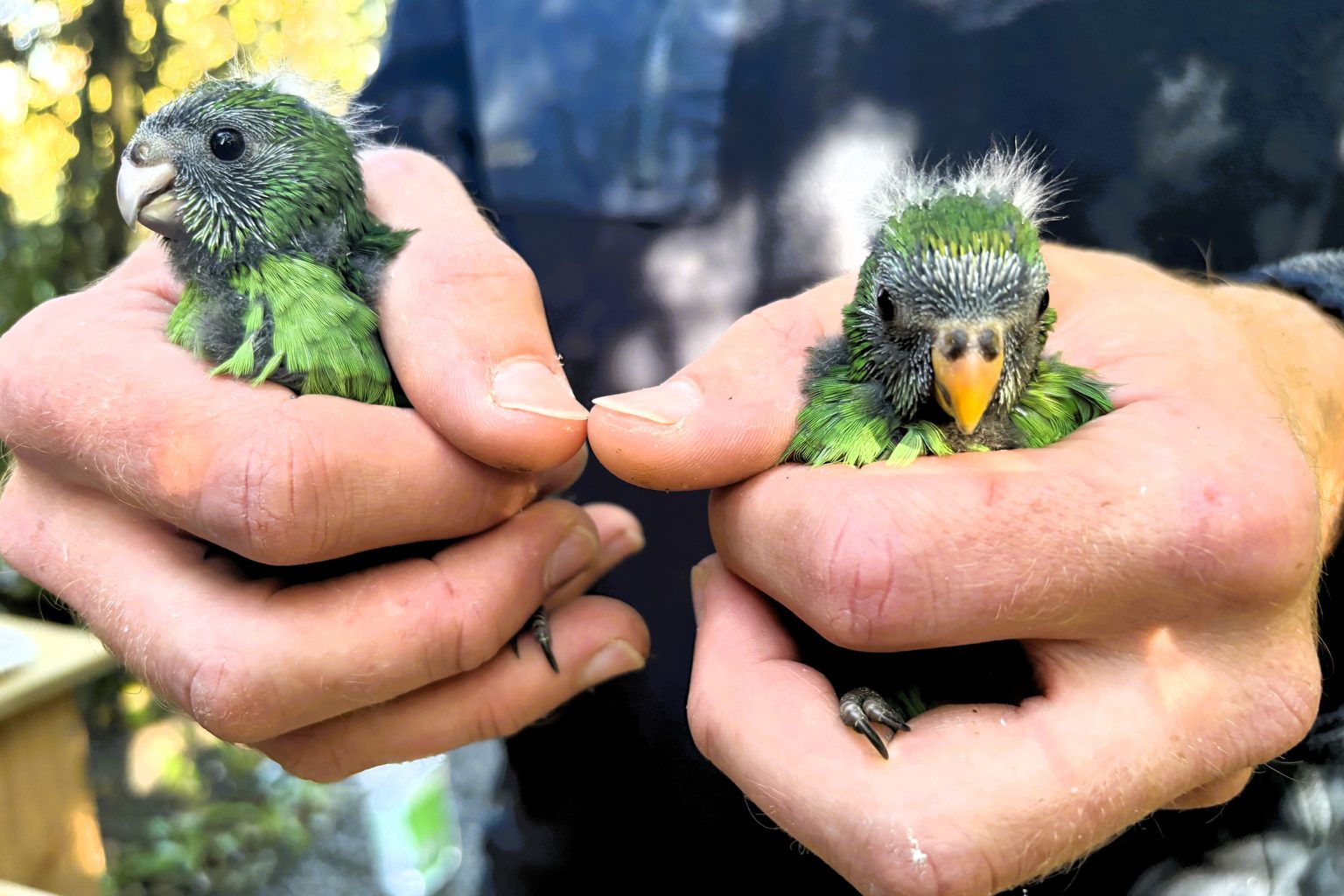
A pair of kākāriki karaka orange-fronted parakeets have produced 55 chicks – 33 in this season alone – boosting the critically endangered species considerably.
Nacho and Trixie, a mating pair since 2024, are part of the captive breeding programme at the Isaac Conservation and Wildlife Trust in Christchurch.
According to wildlife manager Leigh Percasky, Trixie is a ‘super-mum’: “The breeding season has ended and yet she’s still producing eggs and raising chicks. Ideally, we’d prefer her to stop so she can have a rest, but she shows no signs of that, with another seven chicks in her most recent clutch.”
Trixie came from an egg in the wild, and she’s breeding larger-than-normal chicks with Nacho. These offspring have been translocated to boost kākāriki karaka populations on offshore islands and in other locations in the wild. Male kākāriki karaka play a crucial role in chick raising, with Nacho finding food for Trixie and the chicks.
Kākāriki karaka are Aotearoa’s smallest and rarest parakeet. The species has twice been declared extinct and then rediscovered, and the majority of the 450 remaining birds live in predator-free sanctuaries. There are also two wild populations in Canterbury: roughly 50 in the Hawdon Valley near Arthur’s Pass and 60 up the south branch of the Hurunui River.
Trixie and Nacho have been helping their species’ revival. “We’re hoping they will decide to have a well-earned break after this clutch. I’m not sure where they get all their energy from,” Percasky said.
About the author
Samantha Mythen
Walk Shorts writer Samantha Mythen is currently adventuring around the world, writing, hiking and cycling. She studied law but is now a journalist. She has worked for RNZ and freelanced for global publications, including Japan Today.
Each issue of Wilderness celebrates Aotearoa’s great outdoors — written and photographed with care, not algorithms.Subscribe and help keep our wild stories alive.