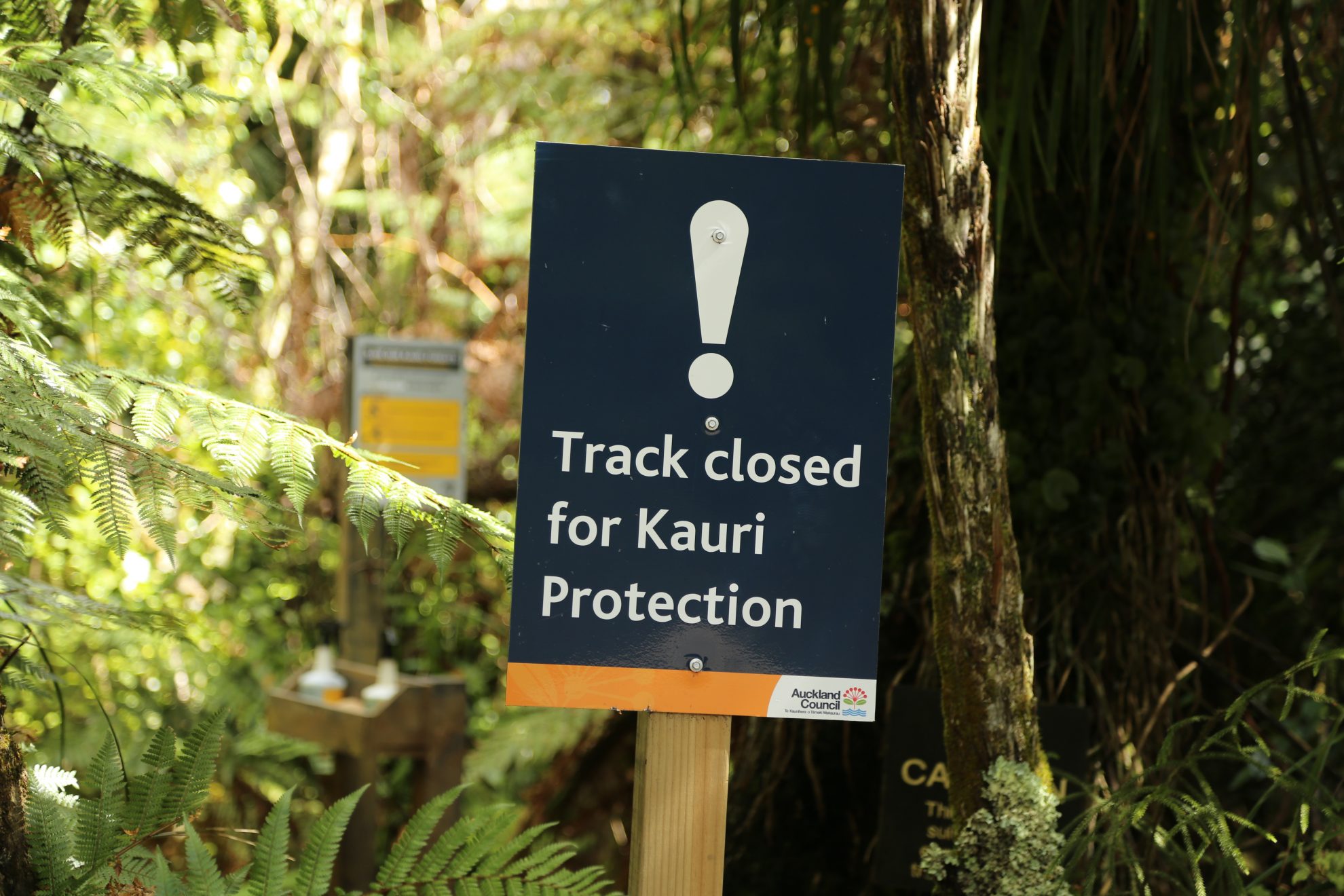
DOC has released a list of 35 tracks that it is proposing to close, or partially close, throughout the upper North Island and is calling for feedback.
In total, 23 full closures and 12 partial closures are being considered, including 11 tracks in the Hauraki district, seven in Tauranga and five in Whangarei.
The proposal is slightly scaled back from an earlier plan to close 45 tracks.
Submissions close on July 31. A full list of the tracks and information on how to have your say can be found here.
The consultation document said most of those were low-use tracks and upgrading them would be costly.
The news comes a month after Auckland Council closed all but a handful of tracks in the Waitakere Ranges and three weeks after DOC closed the popular Okura Bush Walkway north of Auckland.
DOC said no muddy tracks near kauri trees will be allowed to remain open on conservation land.
“Track upgrades and closures will ensure that muddy track surfaces are eliminated and won’t be a risk to the spread of kauri dieback through soil movement,” the spokesperson said.
DOC has upgraded 54 high-priority tracks and closed 15 tracks and two reserves to prevent the spread of dieback.The department has also surveyed all 735km of tracks through DOC-managed kauri forest and it is part-way through a programme to close or upgrade 186 tracks in Northland, Auckland, Waikato and Coromandel.
It is also installing 20 new high-tech cleaning stations.
People are believed to be the main vector spreading kauri dieback disease. Track closure, upgrades and walkers cleaning their footwear before and after entering a kauri forest are the best hope of curtailing its spread for now.
The NZ Recreation Association is calling on DOC to spend more to develop alternatives to encourage people away from kauri forest and to make up for the loss of tracks.
NZRA CEO Andrew Leslie has called kauri dieback the biggest public access issue New Zealand has ever faced and said developing more recreation opportunities needs to be an integral part of preventing the spread of kauri dieback.
“There’s been a lack of long-term planning and the Government hasn’t sat down and looked at this from a recreation perspective,” Leslie said. “If people can’t go into these forests for a long time, we need to find other areas for people to recreate.”
Developing other options would also encourage people away from kauri forests, which would reduce the risk of spreading dieback, he said.