Lizards generally prefer a warm climate, but some New Zealand species live high in the mountains – a fact that fascinates scientists.
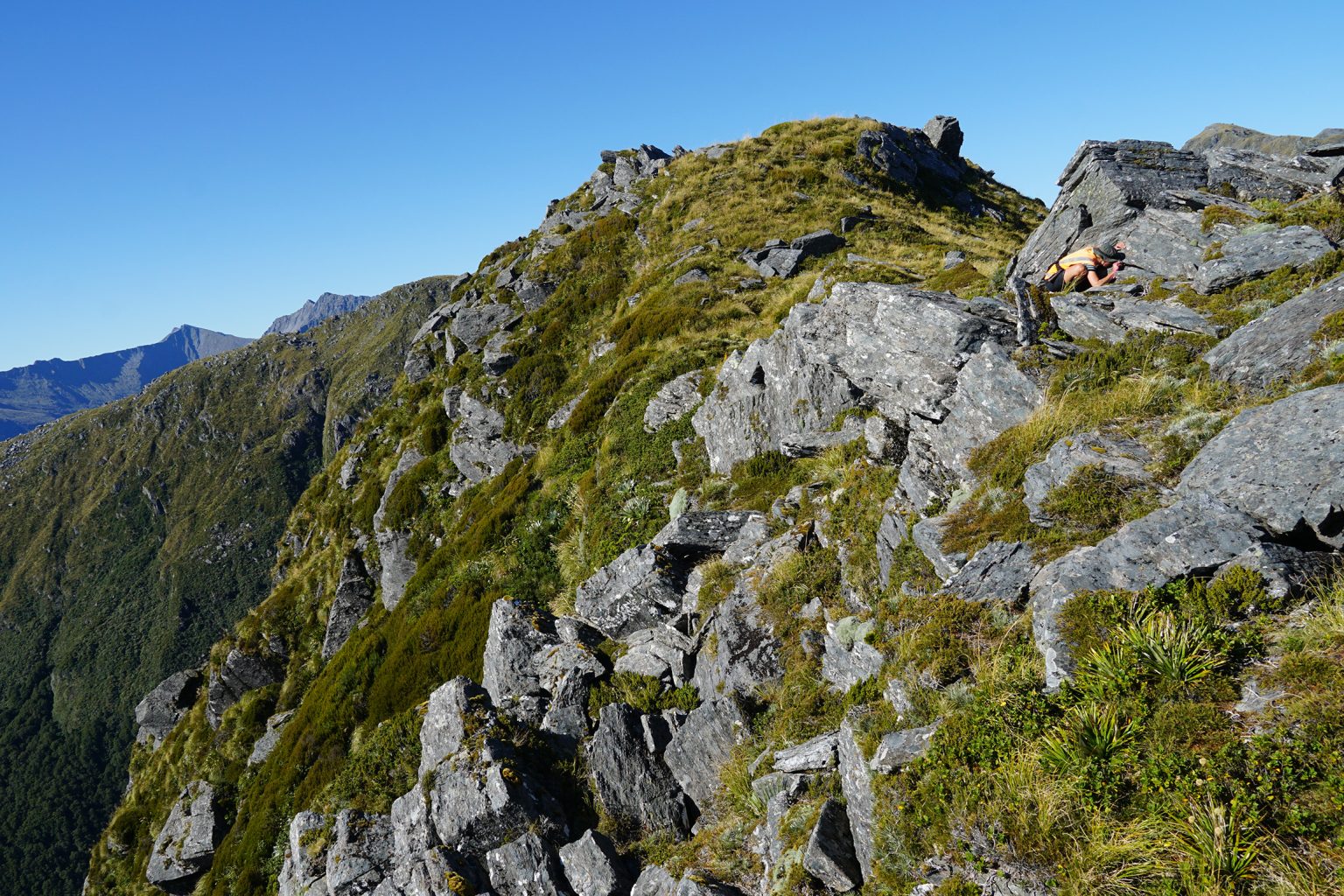
In 2005, alpine rock climbers Bronwyn and Murray Judge spotted some large lizards on the north face of Barrier Knob in Fiordland, about 1600m high. They photographed them, and the photos were passed around New Zealand’s lizard scientists. No one could identify them.
Two years later the Judges guided several scientists to the site, and within minutes they had a previously unknown lizard in their hands – the Barrier skink. It was over 20cm long with gold flecks down its black back and long, strong toes.
Around the same time, 20km to the west on a towering granite wall in Sinbad Gully, three more species of lizard were found.
Scientists were fascinated. Lizards are ectotherms, meaning they get their body warmth from the environment rather than having an internal heating system like mammals. They’re common in the tropics and sub-tropics, but here in Aotearoa we have a unique situation: communities of lizard species living high in the mountains, 45 degrees south of the Equator, in far-from-sunny Fiordland.
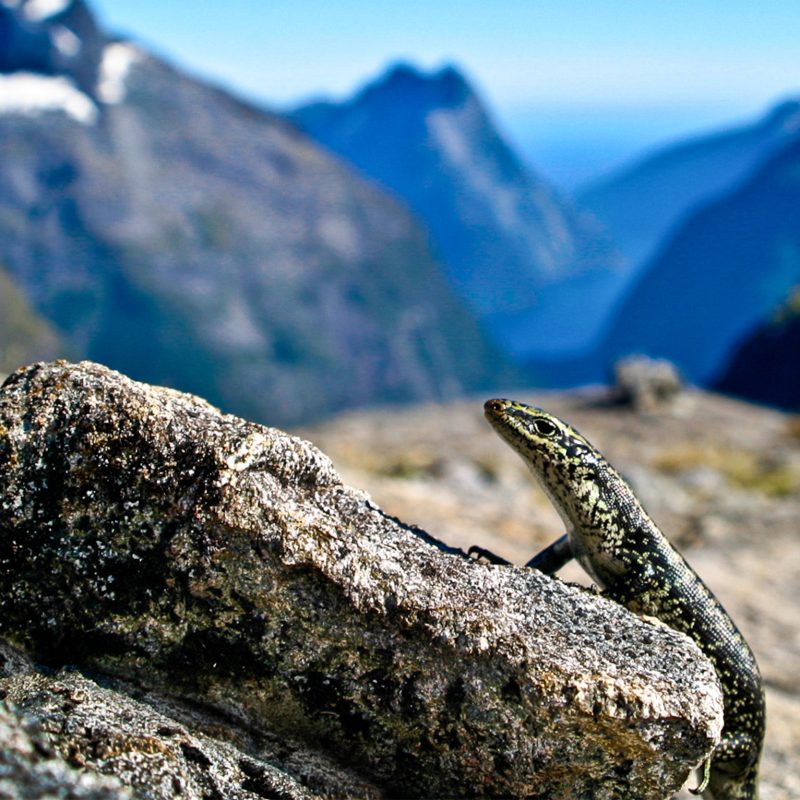
Relative to its land area, Aotearoa has more lizard (or mokomoko) species than Australia. The reason for this is that mammals never made it to Aotearoa; in their absence, geckos and skinks became major players in the varied landscapes, from the rocky shoreline to alpine herb-fields. As New Zealand drifted south and the climate cooled, these lizards evolved to do things a bit differently from their tropical relatives.
There are two broad types of lizard here: geckos and skinks. A gecko has velvety, baggy skin, big eyes, a wide head and an obvious neck. Skinks are all the S-words: they’re shiny and smooth, with small eyes and slim heads.
There are currently 125 known endemic lizard species on the books, with more being discovered all the time. I can’t begin to describe them all, but high in the Southern Alps you might see a Cascade gecko (mokopirirakau, literally ‘lizard that clings to the bush’) with a lichen-patterned back and splashes of orange, maroon or mustard-yellow on its back. In the dry mountain ranges further east live large, gold-coloured scree skinks and alpine rock skinks. Black-eyed geckos are elusive residents of the Seaward and Inland Kaikōura Ranges, and forest geckos, with their delicate, bark-like patterning, live in the northern forests.
Over many summers crawling around boulder fields and searching scree slopes, scientists are gradually documenting the unique lives and habits of our mokomoko.
With limited sunshine and warmth on offer, these lizards do everything slowly. They take many years to reach breeding age, and they live a long time – certainly into their fifties and sixties, and quite possibly decades longer.
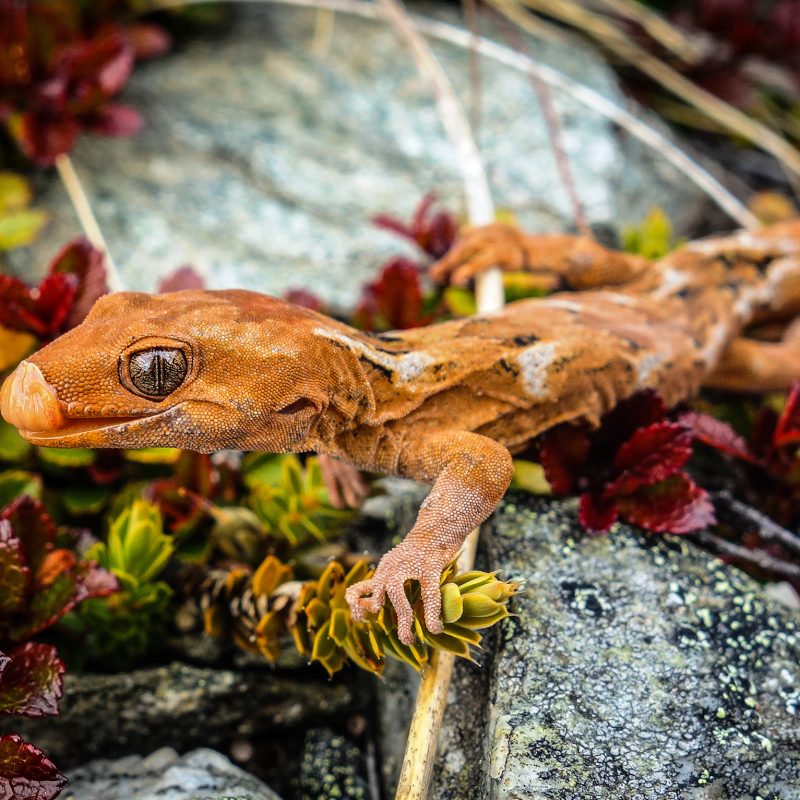
The southern, mountain-dwelling gecko species appear to have extremely long pregnancies – just how long is still being determined, but think upwards of two years.
It’s a remarkable existence for a lizard – to spend a large part of the year under the snowpack, also being beset by rain, gales, rockfall and avalanches, with only a brief summer season to do more typical lizardy things like basking in the sun, catching bugs, mating and having babies. It’s a tightrope existence.
The rules of the game changed dramatically when predators like stoats, weasels, cats, rats, hedgehogs and mice arrived. Aotearoa’s lizards can’t handle this type of predation, and around 90 per cent of species are now threatened or at risk. Conservation efforts are critical if they are to be saved.
The Department of Conservation wants to hear about lizard sightings in New Zealand’s backcountry. If you see one, please don’t disturb the lizard, but take clear photographs, notes and GPS coordinates and report these on the DOC website (search: report a sighting).
– Anna Yeoman is a science communicator and is the author of Geckos & Skinks: The remarkable lizards of Aotearoa.