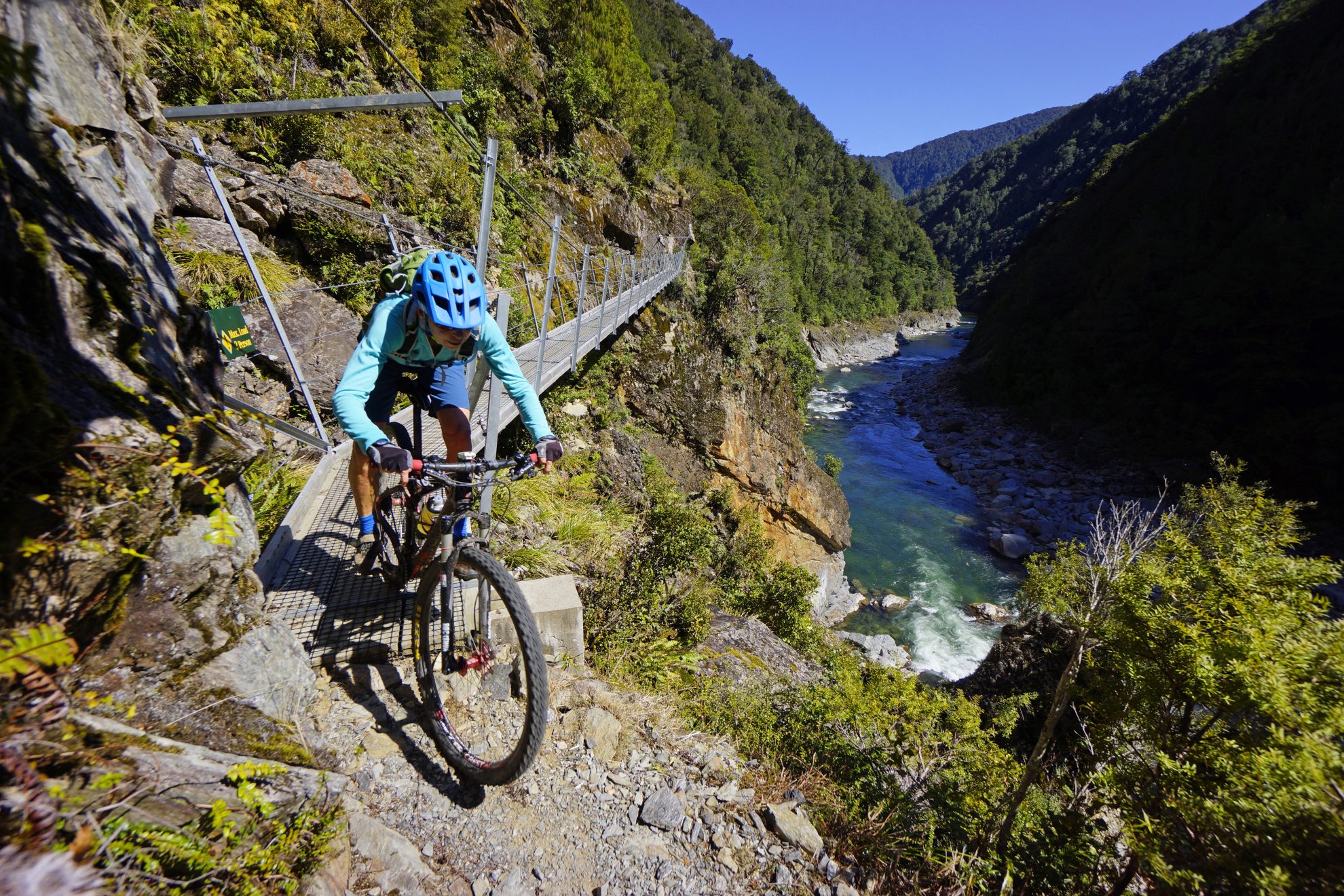
1. Lyell Camp to Lyell Saddle Hut, 18km
Because of the nature of the climbs and descents, the Old Ghost Road is best done from Lyell to Seddonville. From Lyell, the track immediately crosses a swingbridge and commences a gradual climb towards Lyell Saddle Hut.
The track passes through many old mining claims and settlements with rusting relics and stone walls to inspect. At Lyell Saddle Hut, riders can take in the view, stay the night if they had a late start or refuel for the climb onto the open tops.
2. Lyell Saddle Hut to Ghost Lake Hut, 12km
From the hut, pedal a series of zigzags onto the main ridge before heading towards the open tops. Uninterrupted views sweep across to Thousand Acres Plateau, Mt Owen, the Glasgow Range and a boundless ocean of green and grey shades of hillsides and deep valleys.
A narrow, rocky and technical section runs from Rocky Tor Ridge to Heavens Gate and should be traversed with caution or, if in doubt, hop off and push. From there it’s mainly downhill to the perfectly positioned Ghost Lake Hut. This is a great place to stay, soak up the view and enjoy a starry night on the tops with your buddies.
3. Ghost Lake Hut to Stern Valley Hut, 13km
The track from the Ghost Lake Hut is stunning, rocky, narrow and technical. It initially descends a tight series of switchbacks then passes through gnarly beech forest before following the ridge top to the Skyline Steps. A new piece of track to bypass these steps will soon be built.
Flowing singletrack under a high canopy delivers riders to Stern Valley Hut. The hut has been positioned in an ideal spot below the towering ends of the Lyell and Matiri ranges and next to the energetic Stern Creek.
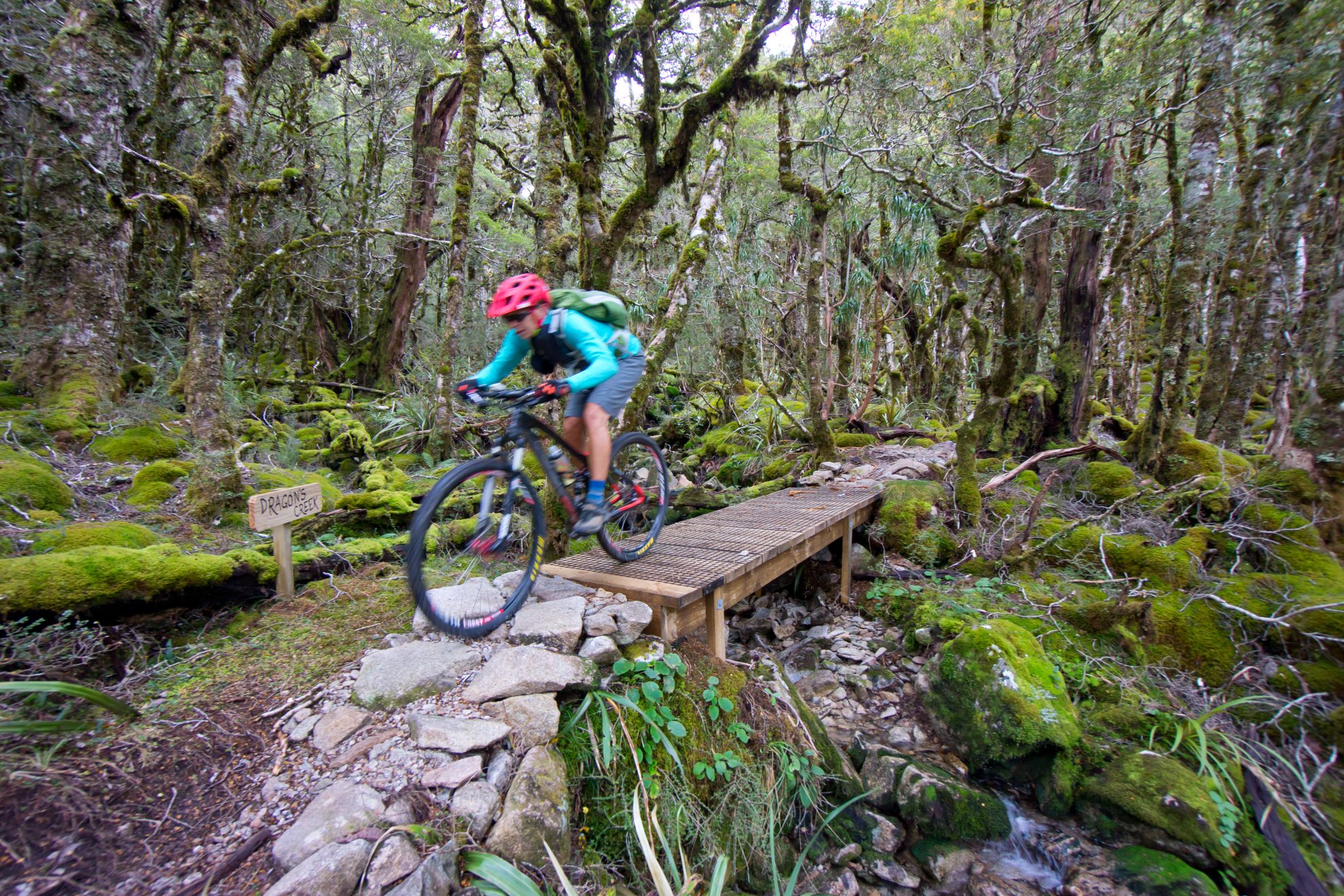
4. Stern Hut to Goat Hut, 14km
The trail then climbs gradually up Earnest Valley, passing between two beautiful rockfall tarns before ascending a steep slope of earthquake-strewn boulders.
This is the amazing Boneyard section to Solemn Saddle. From the saddle, it’s a beaut downhill trail to the historic Goat Hut.
5. Goat Hut to Specimen Point Hut, 11km
From Goat Hut, cross a massive swingbridge that spans the Mokihinui River South Branch. Flowing singletrack then weaves its way through the tall forest to the renovated Mokihinui Forks Hut and three-kilometres further on to the newly-built Specimen Point Hut.
This is perched high above the Mokihinui River where the north and south branch meet and our track heads west. A great place to spend the night, relax on the deck and maybe do a bit of fishing before sunset.
6. Specimen Point Hut to Rough and Tumble Lodge, 17km
The ride out is by no means an easy downhill. There is a tonne of short sharp climbs, technical singletrack and sections of real exposure, so at the end of a long day caution is advised.
Safety fencing has been installed on many of the challenging sections. A final trail leads from the forestry road-end to the Rough and Tumble Lodge for a well-deserved hot shower, good food and beer on tap.
More information
Huts, private sleep outs and tent sites can be booked online at www.oldghostroad.org.nz. The trust’s official partners, found on the website, can provide transport/shuttles, accommodation and food, bike and equipment hire, guiding and ride packages.