

Travelling to our destination by car we tend to whizz through small towns and countryside that appear to have nothing to offer. Signposts point to sights that we know nothing of and because they’re seen too late we don’t bother turning back. Travelling by the fastest route, so many places have a history we never learn and locals we rarely meet.
How about slowing down and exploring some of those places by riding New Zealand’s Cycle Trails? You could be surprised at the number of out-of-the-way spots that are waiting for your visit.
Many cycle trails follow disused railway lines, tramlines or logging roads, through forests and countryside far from the usual tourist sights. There are relics of gold-mining and sawmilling, cobblestoned paths, spectacular engineering feats such as viaducts and railway spirals, abandoned farm equipment, remains of old stone buildings, disused tunnels and railway stations, some of those little more than a tin shed. Then there’s the landscapes unseen from a car.
I discovered canals when cycling the Hauraki Plains, and old boats, some coated with green slime, camouflaged in mangroves near Waitakaruru. I’ve driven that area for years, totally unaware. Small towns, many once-bustling settlements built for dam workers, by gold prospectors, for the timber industry, or a farming community, today have attractions such as museums, wetland walks, historic buildings, antique shops, quirky cafés, or just plain different stuff that flies under the radar.
The Mountains to Sea Cycle Trail, from Ohakune to Whanganui, takes riders to Horopito, location of Horopito Motors, believed to be Australasia’s biggest, and only, vintage car dismantlers. It’s different and well worth seeing. Along roadsides there are treats you’d miss or not bother with if you were driving – like the wild plums to feast on or the many swims to be had in the lakes along the Alps 2 Ocean Trail.
Slow travelling by bike allows us to immerse ourselves in our surroundings. Part of that is discovering the history of the area. I have learned so much about New Zealand by riding the trails, stopping at information panels and discovering the heritage of an area. The Otago Central Rail Trail showed me the area’s gold history. On the Alps 2 Ocean, I learned of high-country settlers, the building of dams and formation of lakes, and when riding through Weston, I explored New Zealand’s largest war memorial – the North Otago memorial oaks. Planted along roads in 1919, a white cross at the base of each bears the name of a lost First World War soldier.
I read of railway construction joining Auckland to Wellington on the Mountains to Sea, of land so hard to farm it was abandoned by returned servicemen as I rode to the Bridge to Nowhere, of riverboats on the Whanganui and the Māori legend of the river’s formation.
Did you know Lieutenant James Cook travelled up the Waihou River by longboat where the surrounding grassy paddocks of the Hauraki Plains were once covered by kahikatea trees?
Waitakaruru, almost non-existent now, was once a booming town with a blacksmith, fish factory, school, church, barber shop, billiard hall, community hall and several stores. At Mangungu, the endpoint of the Twin Coast Cycle Trail, 70 chiefs and a crowd of 3000 gathered at the Mission House for the third signing of the Treaty of Waitangi on February 10, 1840.
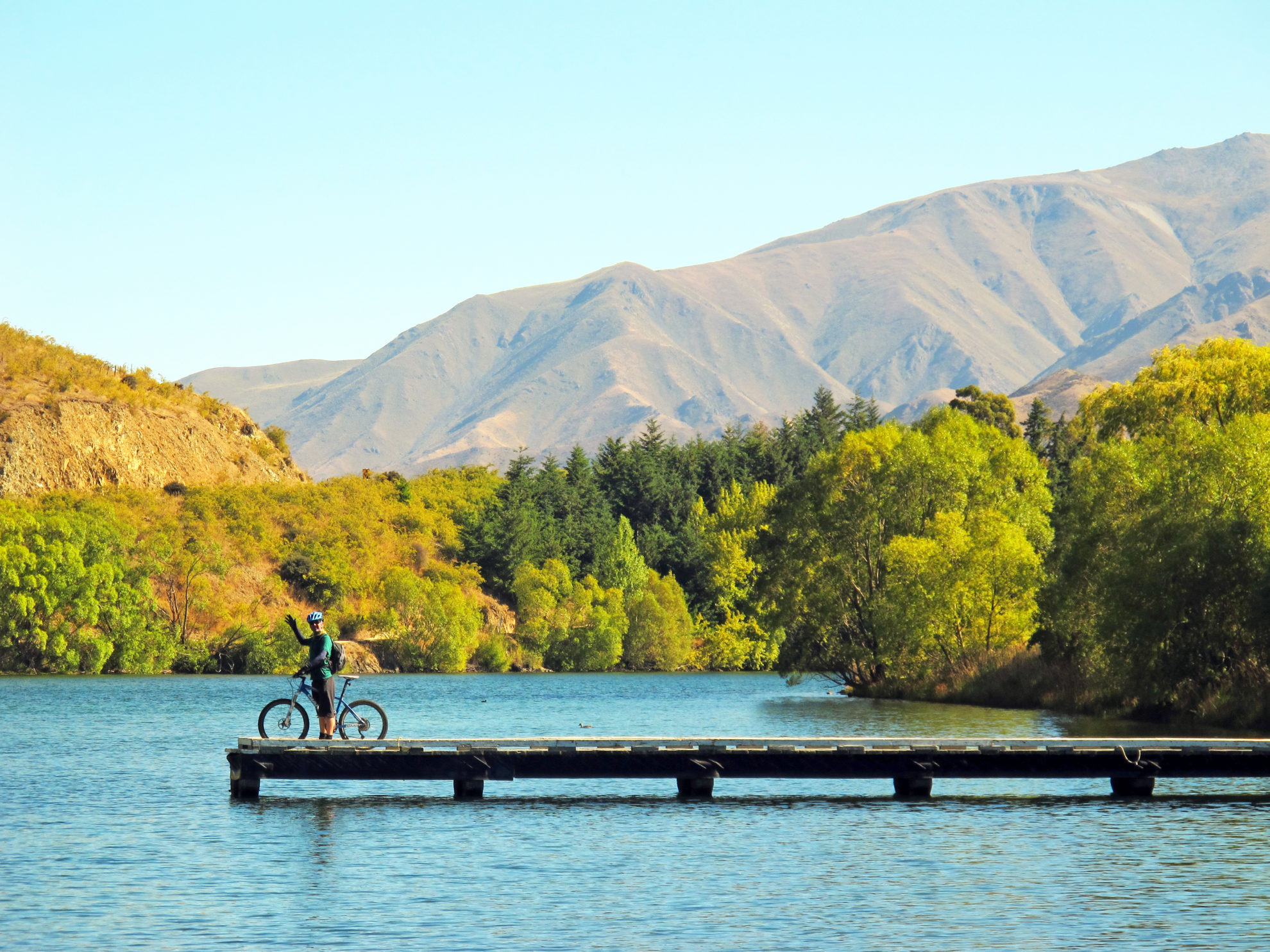
I had the Mission House to myself, and so too many of the trails, proving they’re a wonderful way to get away from the crowds. Some trails are popular around a particular section, usually those with easy access such as the Hauraki Rail Trail’s Paeroa to Waihi section, with car parking available at Karangahake Gorge, or the Twin Coast Cycle Trail’s Opua to Kawakawa section which is a short flat ride handy to Paihia. But trails such as the Motu and Te Ara Ahi Thermal by Bike were deserted despite riding one during mid-January and the other in school holidays. Spending eight days mid-summer biking the Alps to Ocean, I saw only two other riders. Foreign tourists, they were riding New Zealand’s length, bikes loaded with belongings and tents. Given that the cycle trails are free to ride, it’s a cheap way to travel.
There’s an easy option, too, with luggage transported to each night’s accommodation.
On occasion, I’ve hired panniers to take clothing and food for up to five days, but luggage shuttles are available for many of the trails. Official trail providers can also provide return transport to towns or accommodation on isolated legs, organise bike hire or provide packages including all of this. With their local knowledge, they’ve given me some memorable stays. I’ve slept in the legendary Barry Crump’s renovated hut in the Motu wilderness, glamped in Tekapo, had five-star accommodation and meals at Kokonga Lodge in the middle of nowhere on the Otago Central Rail Trail where I also woke to a stunning landscape at Wedderburn Cottages.
There’s also great memories of locals met. Bob, at Toatoa Homestay on the Motu Trail entertained us with local tales and his homebrew while his wife cooked us dinner. Heading our way the next morning, he gave us a lift up a tortuous hill in the back of his ute, where we sat on hay bales. Motu School’s principal told us of a local swimming hole and gave one of our party a ride when the going got too tough. I chatted to two local farmers coming down Mountains to Sea’s Mangapūrua Track in a UTV, four dogs on the back. They’d been pig hunting. Over New Year, one had been horse riding for several days in Whanganui National Park – a whole different world to my city life. Thanks to a Duntroon farming family, I water skied at Lake Benmore having stopped there for a swim riding the Alps to Ocean. Then there are the riders you meet who all have stories to tell, perhaps with the exception of the unicyclist riding down a steep, muddy trail near Jones Landing by the Waikato River. He was concentrating too hard to chat.
Connection with the outside world is rare with little cell phone coverage on some trails. But that’s part of the charm – it gives a chance to forget about what’s happening anywhere except where you are, living in the moment on an enriching slow journey.
Cycle Trail logistics
Bikes: Bikes, including e-bikes, are available for hire from trail providers. If you’re happy to carry all that you require for the trip, panniers can also sometimes be hired otherwise local operators can shuttle your luggage between accommodation, usually at a cost per bag. E-bikes come with a battery charger, helmets and puncture repair kits.
Food and meals: Not all trails have food establishments along the route. If that’s the case, all supplies, and luggage, may have to be packed or shuttled to the next stop.
Track details: Before beginning a ride, check all trail sections are open. Weather damage or maintenance can force track closures. Check gradients, section lengths and trail grades. A novice probably won’t find an advanced trail enjoyable.
Many trails include points of interest to visit, track-side or nearby. Check opening hours and days they may be closed to schedule your ride around those you wish to visit.
Getting there: Operators can pick up/drop off cyclists along accessible sections of trail. This saves worrying about relocating vehicles and can shorten an overly long section, or enable the riding of more scenic lengths while cutting out those which aren’t particularly interesting.
Accommodation: Many trails have sections ending in towns with accommodation available; others have limited choice. Check that wherever you’re planning to stay is not too far from the trail end, or ensure you book a shuttle to transport you there, and back for the next day’s ride.
Carry: Toilet paper (and trowel) – some trails have few, if any toilets – map, water and food, raingear, first aid supplies, cellphone, bike pump, puncture repair kit, bike lock.
Track your progress: A cycle computer tracks progress and can help determine how far is left to go. Some trails do have distance markers.
34 years of inspiring New Zealanders to explore the outdoors. Don’t miss out — subscribe today.
Questions? Contact us



