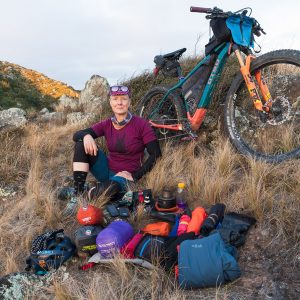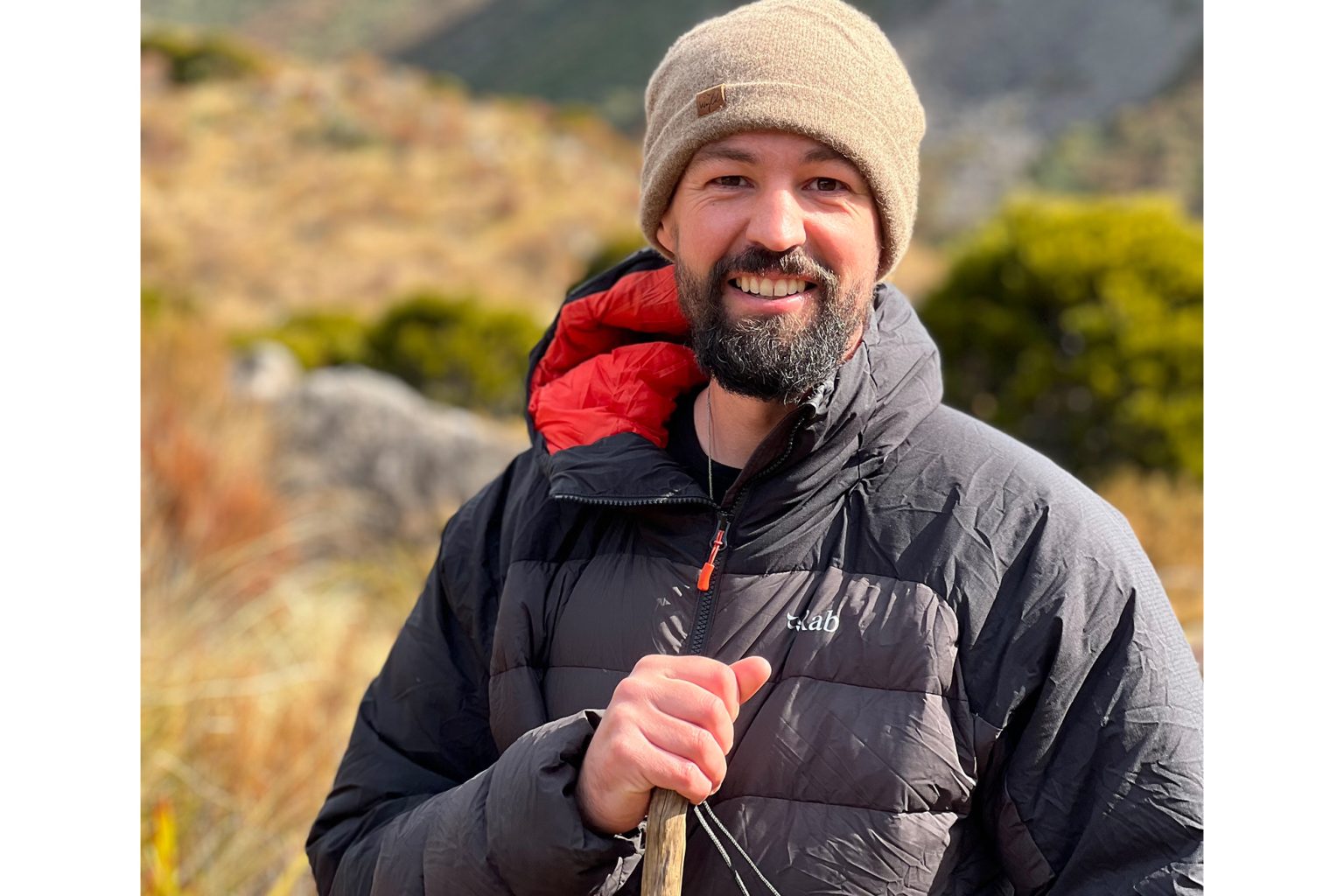
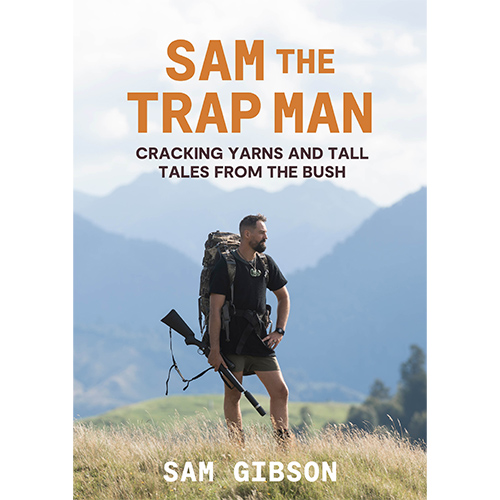
Sam Gibson has lived and worked in the ngahere (bush) from Te Urewera to Fiordland, since he was a teenager. The conservationist, hunter, trapper and educator from Te Tai Rawhiti has just released his first book, Sam the Trapman: Cracking yarns and tall tales from the bush.
In 2019, you founded the East Whio Link, a hunters and fishers-led conservation project. Why and how did you do it?
There were four pairs of whio left in the Waioeka Gorge (near Te Urewera), at serious risk of localised extinction. We set up 250 traps across 25km of river, and in the first year the whio fledged 20 chicks. Over the past four years we’ve expanded the project to more than 1000 traps and 30,000ha. It’s just been announced as a recovery area by DOC, which is a really nice pat on the back. We’ve now got over 100 active volunteers and there are whio everywhere. It’s exactly how I remember it as a kid.
On all our trips we do our traplines but we also go hunting and fishing and foraging. Our orientation is not to put a big trophy on the wall; it’s about feeding ourselves and our whānau. Essentially, we built a bush university where people can have fun and learn ecosystem literacy. We started to use the conservation project as a tool to do positive things in the community, such as hosting school groups and wāhine weekends. People enjoyed that and got behind it.
How do we get people to care about protecting the environment and our endangered species?
To me, one of the most important things in re-engaging our people with the ngahere is to create opportunities to exercise their relationships with our ecosystems. If they feel a strong relationship, people want to protect those ecosystems because they give us so much.
I’ve seen many wilderness areas throughout Aotearoa that have degraded when people aren’t present, because without active management the deer, possums, rats and stoats get out of control. An ecosystem won’t flourish if we leave it alone.
Did you find this approach worked?
It’s a very Eurocentric concept to think conservation is separate to mahinga kai (food gathering). How we were raised on the East Coast is that an abundant ecosystem feeds our people. When the bush thrives, we thrive as people. You can’t separate conservation from mahinga kai, because they’re one and the same.
To go hunting is a mahinga kai practice, just like fishing is. Our pig hunters rely on the tawa fruiting to draw pigs off the farmland and into the bush. And the tawa fruit most where possums are controlled. So our pig hunters are our best possum trappers because they have an added incentive. Our deer hunters are the best people to be looking after our vegetation because we know when there’s no pikopiko shoots, then we need to hunt more deer. As soon as we start thinking about hunters as readers of ecosystems, we start to understand the value they can play in conservation.
In your book, you write about upholding the mana of the predator.
All of those species are taonga to their own ecosystems. So it’s our job as hunters and trappers to whakamana [give mana/prestige to] them through death. These species aren’t ‘bad’; they’re just operating in an ecosystem they don’t fit with. If we give ourselves permission to disrespect these animals, if we’re trapping less than humanely, we’re lowering the standard of the conservation we’re delivering.