Finding a purpose for your walking can help you cover more distance.
Predator control
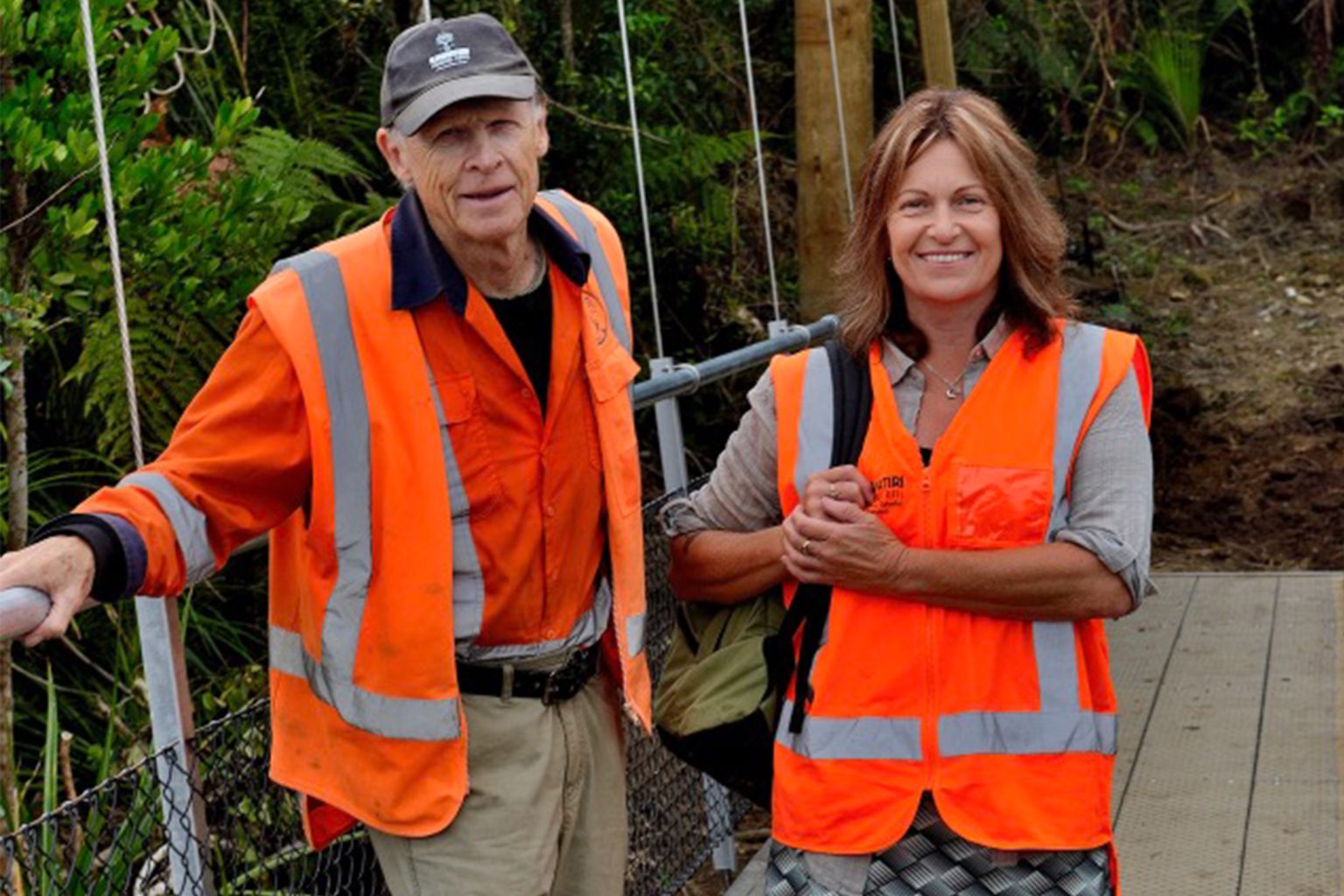
Whole new worlds have opened up for Trudy Ellis since she began trapping on Kawatiri Coastal Trail three years ago. Connecting Westport and Charleston, parts of the trail traverse DOC-managed conservation land, where the access agreement stipulates that trapping is required. Trudy lives at Carters Beach on the trail and is committed to protecting the area’s wildlife. She jumped right in, one of two volunteers at the start. “I couldn’t even set a mouse trap then, but trapping soon became an obsession, especially around the safety of the local roroa great spotted kiwi population.” Last year the by now large team of volunteers caught 350 rats and 45 mustelids in 200 traps.
“Walking goes hand in hand with trapping,” explains Trudy. “Even though the terrain isn’t difficult, you have to be fit, particularly to lug traps. My running used to keep me in good form, but two years ago my interest in it waned. I walked my dog daily on the beach, but it wasn’t enough. Then I discovered Walk1200km. I do better if I have a measurable goal, so the challenge really suits me. I’m a person who needs to walk with a purpose, too. Checking traps provides that and also a reason to spend time in nature.”
Checking traps requires a different rhythm, which has its benefits. Because she’s moving slowly through areas she’s visited countless times, she is able to observe subtle changes that occur with the seasons. “I delight in seeing the intricate beauty of fungi emerging after rain, or the sight of a rimu in full mast, covered with berries.” She regularly stops cyclists – the main trail users – to point out perhaps a tiny native orchid or the call of a mātātā fernbird. “Nature has so much to teach us and I have so much to learn.”
Trudy has become more aware of the relationship between predator movements, trap catches and the wider seasonal changes occurring in nature. “I continue to learn about the interconnectedness of nature and its importance to humans. It has sparked my wish to expand my knowledge of rongoā Māori.”
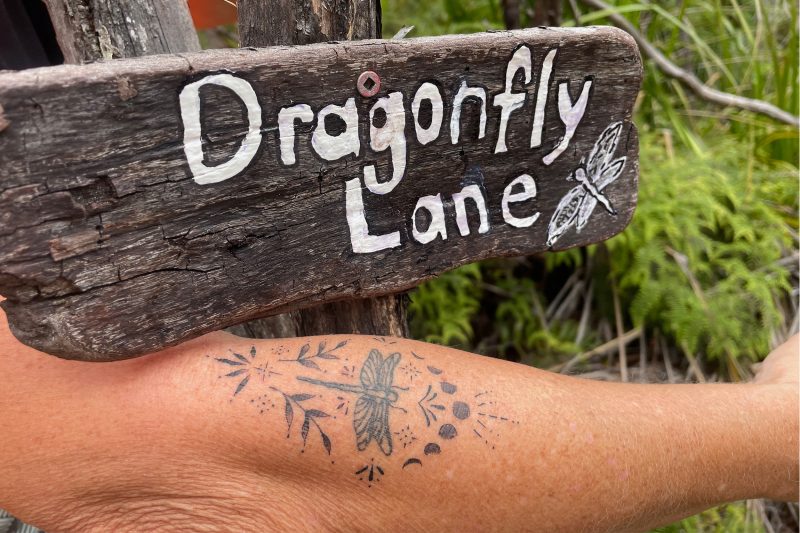
Nature throws up surprises that draw Trudy in. One of her greatest joys was becoming acquainted with the kapokapowai or bush giant dragonfly while trap-checking in an area they frequent. “It has been fascinating to learn about their remarkable life cycle. They begin life as an egg, then a nymph underwater, before transforming into a dragonfly on land.” One crawled onto her hand and remained there for some time, a surreal experience. “Moments like this remind me that we are all part of something much bigger than ourselves.” These encounters have felt so significant to Trudy that she has placed a sign at the spot where kapokapowai can be seen and has one tattooed on her arm.
Native orchids
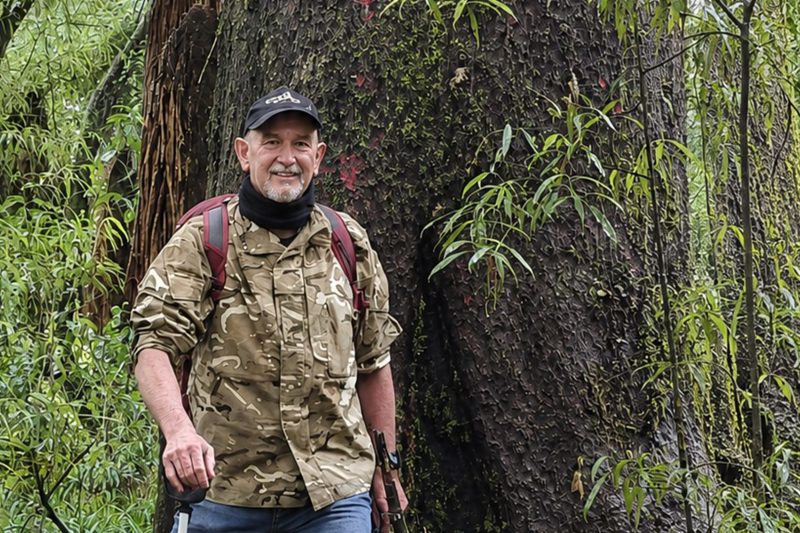
Rob Holloway was introduced to orchid hunting when he met Gordon Sylvester and discovered that Gordon maps the distribution of orchids throughout the country and is a member of the New Zealand Native Orchid Group. As their friendship developed, Gordon asked Rob if he’d like to hike to Okuku Pass Road to see if they could spot any native orchids. “I’d never seen an orchid before so I couldn’t wait. It was a very successful first introduction as I found Corybas trilobus, commonly called the spider orchid, which hadn’t been sighted before in North Canterbury.” Rob was hooked.
That was three years ago, and he’s now an avid orchid hunter and has joined the Native Orchid Group himself.
On last year’s annual field trip members from all over the country converged on the Denniston Plateau in search of a rare species, Townsonia deflexa or creeping forest orchid. They found it, along with many other orchids, but it was not in flower. “As is often the case, we covered many miles in drizzle over uneven terrain, but you have to go where the orchids are, regardless of the weather.”
Though still working in a fairly active job four days a week, Rob knows it’s important for his general health and his orchiding to stay fit and flexible. Fortunately, there’s no heavy gear involved when in the field – a small pack, walking poles, knee pads and camera gear. His fitness programme includes Walk1200km, mainly to keep track of his kilometres.
Since moving to Marlborough he regularly walks the valleys and hills close to Blenheim “just for fun”. Further afield there’s the lure of Mt Robert and Rainbow Valley, which has spectacular orchids. “The thing with orchiding,” he explains, “is that you stop and start all the time, so the kilometres creep up without you noticing.”