Is your heart set on Te Araroa Trail but you’re not sure your legs will hack it? Well, trail legs can turn you into a walking machine – but it takes time.
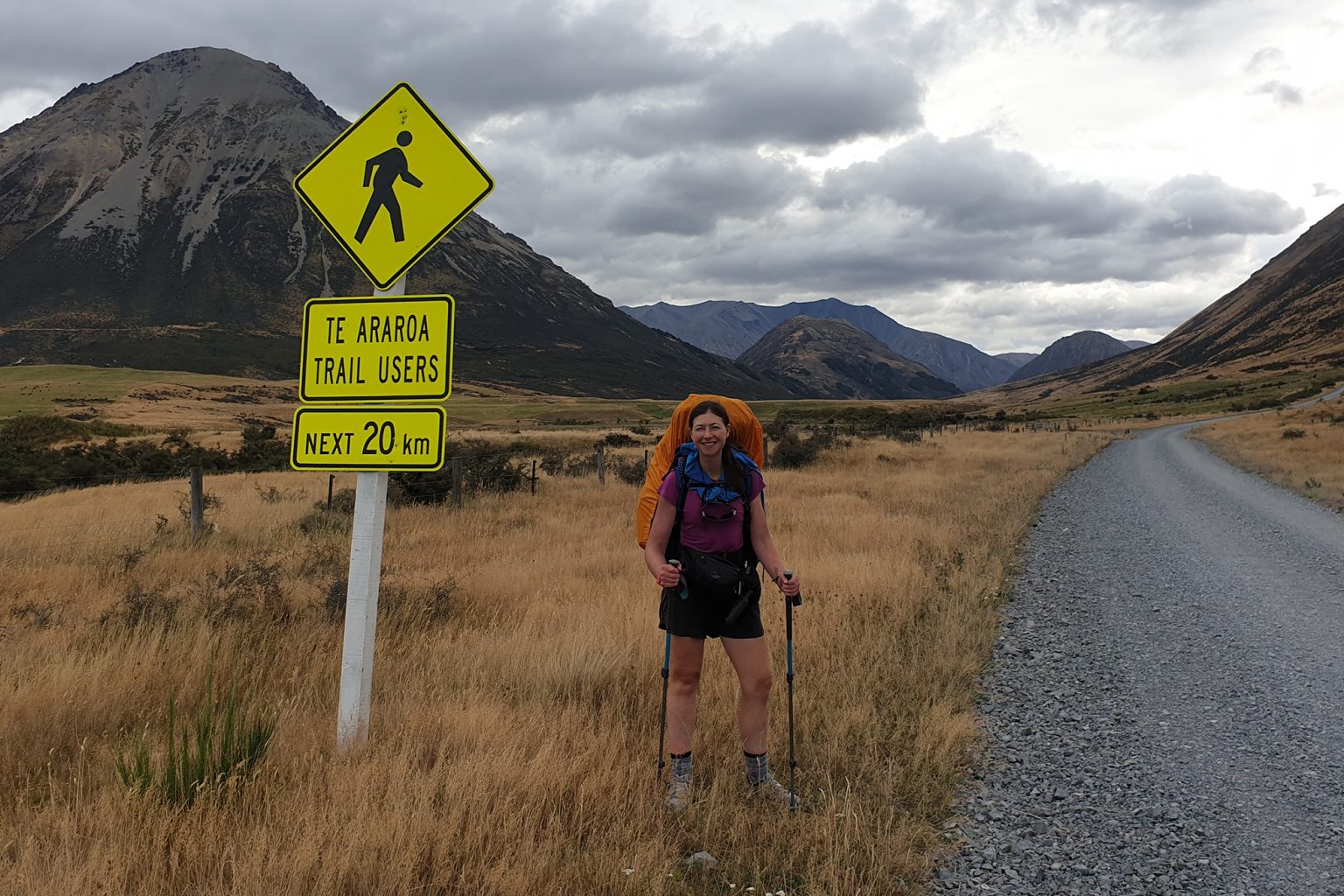
Shadows of dusk were creeping across the ground as I shuffled into the Makahika Outdoor Pursuit Centre at the base of the Tararua Range. Twelve hours and 43km earlier, I’d left my campsite to begin plodding through forest, past a reservoir and over a couple of mountains, with a pack weighing about 15kg.
Other Te Araroa walkers shouted encouragement as I joined them: “You made it,” was the cry from one.
I was surprised. I didn’t think, when I started walking three months ago, that I’d do 40km plus in a day.
I was tired, but next day I walked 18km and climbed a 900m summit. I felt like the Energizer Bunny: I could go on and on and on.
That’s the magic of ‘trail legs’. It’s a transformation from run-of-the-mill walker to tramping machine. From blisters, exhaustion and a ‘what was I thinking?’ mindset to hiking mountains almost in a single bound, pushing superhuman distances, and doing it all again the next day.
Physical therapist and personal trainer Lee Welton says trail legs don’t come from the odd hour in the gym, or even a five-day hike. They come, he says, from time on a long-distance trail and adapting to the physical stressors.
In 2018 Welton set off on the 4265km Pacific Crest Trail in the US. “I trained for about five months before, but it still took about a month to adapt to hiking daily with a pack before I started to feel I was really efficient as a thru-hiker.”
Welton says that, typically, it takes four to six weeks of continued physical stress and demand on the body before trail legs develop. And that comes about from a process known as neuromuscular adaptation.
This is the nervous system and muscle fibres adapting to the rigours of long-distance tramping so the body works as efficiently as possible.
This takes place over the first few weeks on the trail as the body maximises existing muscles by activating ‘dormant’ nerves. It isn’t about getting stronger; it’s about becoming more efficient and using muscles not normally needed for day-to-day activities – trips to the shops or to the office.
It’s not until all available muscle fibres have been activated, with physical stress and activity remaining high, that the body will adapt for strength and endurance by building muscle. “The stressors need to be consistent – as in thru-hiking – to drive these changes,” says Welton. “Weekend warrior hikers don’t typically stress the body enough, so it’s not sufficient to make these changes.”
When the hike ends, and after as little as seven to 14 days of reduced activity, the body trims the neuromuscular adaptations to meet the reduced physical output.
“This is where the ‘use it or lose it’ principle comes in. Your body will only keep as much muscle activated as is needed to meet activity levels,” says Welton.
Steph Booth, who hiked TA in 2018/19, recounts the “amazing” feeling of trail legs. “At the beginning of the trail I found it hard physically, but once I became fitter, I enjoyed every day. I would say my trail legs kicked in after about a month – that’s when my knees stopped hurting. As the hike progressed, my recovery time at the end of the day was also much quicker.”
Another TA walker, Océane Thirion from France, who walked the 180km GR20 trail in Corsica as training for the TA, found after the first week on TA that the going felt easier. “I felt more energetic, motivated and happy on the trail. My bag didn’t feel that heavy anymore. Sometimes I forgot I was carrying this heavy backpack. I realised how strong my body was – even with no sleep, poor weather and not enough food, I was capable of incredible performances.”
Trail legs can indeed be amazing, but Welton sounds a note of caution. Those first few weeks as the body adjusts to the rigours of long-distance walking is also when most injuries occur because the body just isn’t used to that level of physical demand. “If you overdo things, the injury risk increases,” he warns.
Booth attributes her sore knees during the first four weeks to the fact that her leg muscles weren’t used to the constant walking, even though she had done several practice hikes in New Zealand before starting the TA.
Welton recommends rest days every seven to 10 days, depending on mileage, terrain, fatigue, and fitness level. While he sees no significant difference in the development of trail legs between men and women or different age groups, he does say a lot depends on a hiker’s overall physical preparedness.
“You can ‘walk yourself into shape’, but only if the mileage and overall effort is low and is built up over some months,” he says. “Being unprepared physically increases the injury risk since the body can’t handle the huge demands in activity when compared to a trained hiker. Training beforehand gives the body an opportunity to adapt, which makes the transition easier because the body incurs less stress as it adjusts to the demands.”
Welton says muscles benefit from three to six months of training beforehand, while tendons and ligaments need more than seven months of continuous stress to generate more robust tissue. “I generally train long-distance hikers for four to six months before a hike. This is enough to maximise the neuromuscular adaptations, boost tendon/ligament resiliency and improve overall fitness.”
Training by replicating the trail is also the best form of preparation, he says.
The build-up to trail legs can be hard work and painful, making the trail a grind, but once you reach walking-machine status, the trail takes on a new life. And suddenly, those first few painful weeks were all worth it.