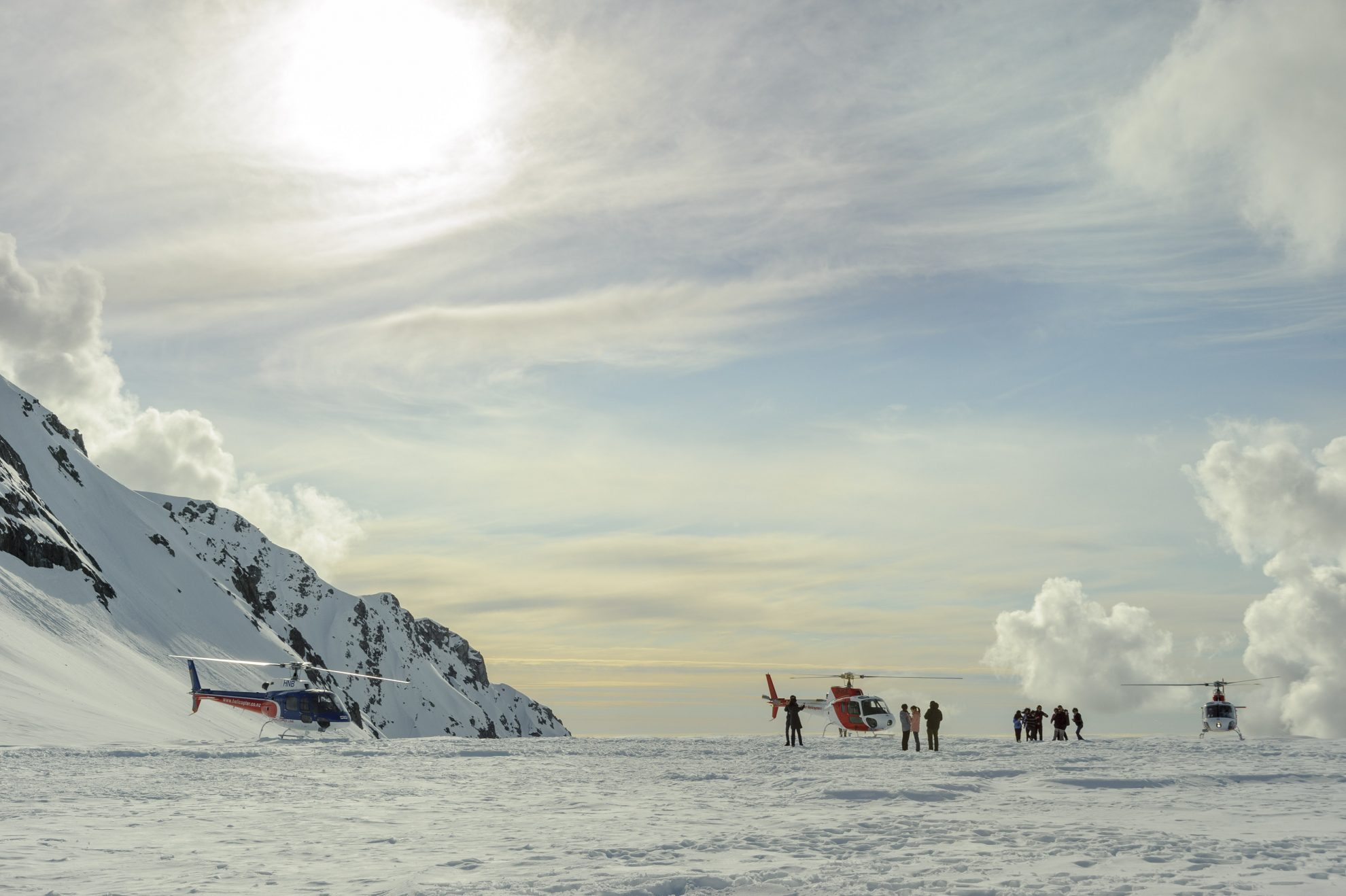
But the big thing to address, in this big country, is the lurching landscape; the increased incidences of storms, rock falls, erosion and glacial recession, and how to manage all this in terms of infrastructure and visitor safety.
“We are using GNS Science modelling to look at where the hazards are and where the safe areas are, so we can make informed decisions about park development and emergency response,” says Costello.
Having worked as a geologist in the mountains for three decades, and a principal GNS scientist, Simon Cox is closely involved. He says the South Westland mountains form probably the most active landscape anywhere in the world.
“We have very steep topography from uplift of the Alpine Fault with regular earthquakes about every 300 years. The last was about 1717AD, so yes, we’re due for the next one. On top of that, we have the long-term effects of precipitation, with the highest rainfall occurring on the western side of the mountains.”
Then there’s climate change. “As we go into more warming, the ice withdrawal leaves behind a lack of hillside support, so the mountains tend to fall down, and that increases the rate at which the landscape evolves.”
Interestingly, Cox says that despite trying, there is not yet sufficient statistical data to officially prove the link between climate change and rock avalanche events. “That said, we are continuing to lose ice, and that is increasing the rate material is washed down the valleys.
“So we have a highly active landscape, the dangers are escalating and we are putting more people into these places, for example on the glaciers, thus there is increased risk to life, and also to infrastructure.
“We are trying to quantify and mitigate the risks. We’re looking at landscape hazards and at infrastructure such as car parks and huts that attract people to a place. At a minimum, you have to ensure you are not increasing the chances of people getting hurt.”
There is also uneasy awareness of the looming Alpine Fault. A proposal to move Franz Josef/Waiau township away from potentially devastating rock falls, floods and fault rupture in the event of a major quake, is currently being considered.
Cox says that DOC is becoming much more aware of the risks and has done a good job in a difficult situation. “What we are doing now is looking at how they can be more prepared, have processes in place and manage situations.”
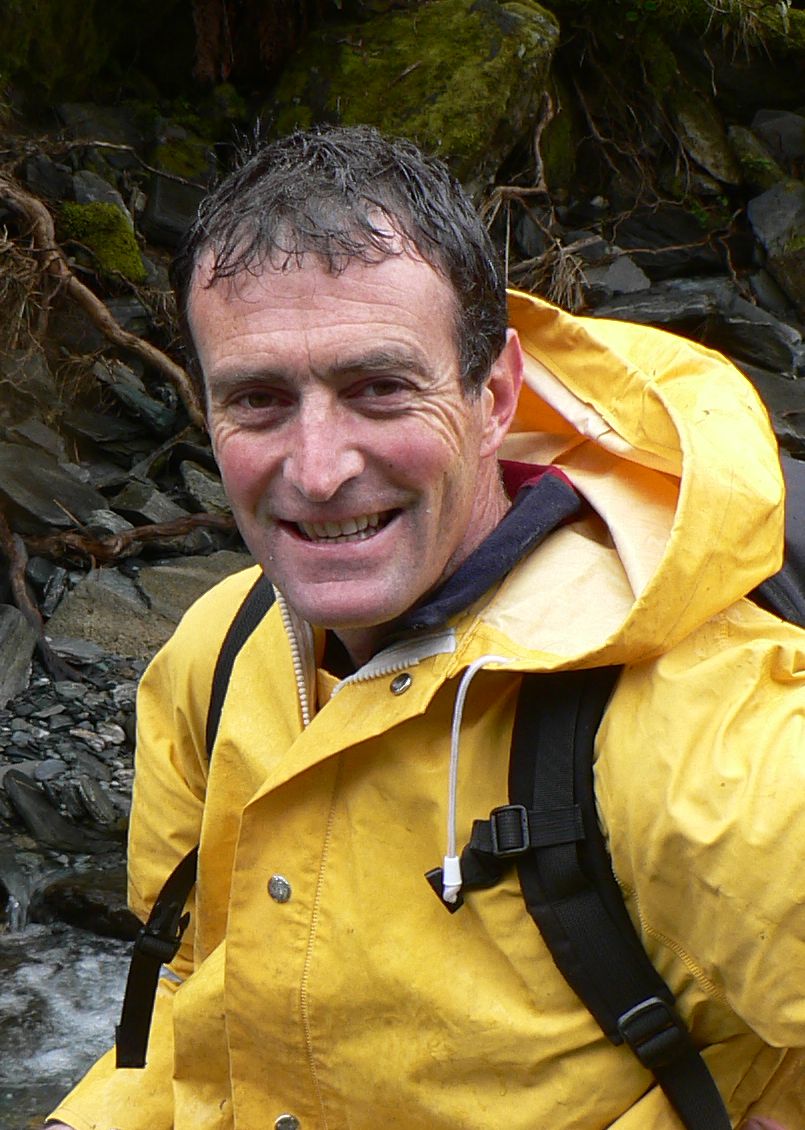
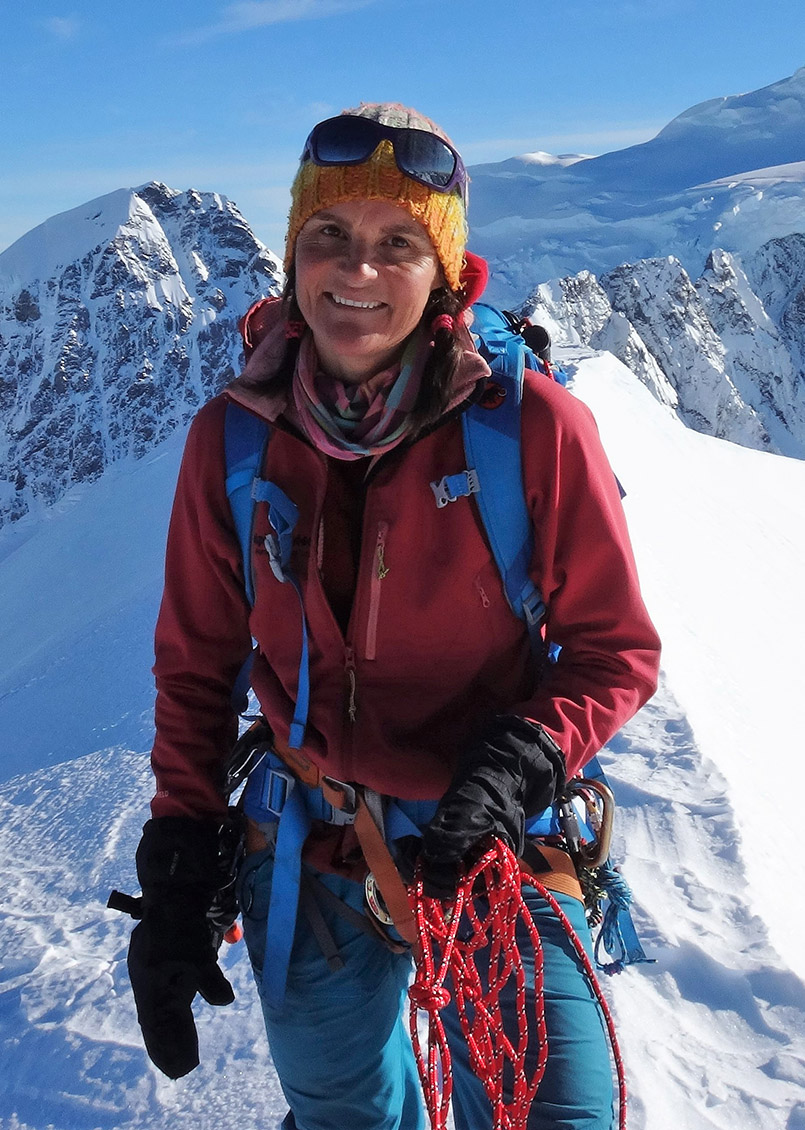
In this evolving landscape, mountain guiding is also undergoing a ‘seismic’ change, says Jane Morris, NZ Mountain Guides Association president.
“Access has suffered the greatest,” she says. “Many climbing routes now have a very narrow window of ascent opportunity. Glaciers have become too broken to negotiate outside of a few months and schrunds (the gap between the glacier and solid mountainside) have become too open to cross. Climbing beyond October to December can no longer be guaranteed.”
Rockfalls have become a significant hazard, she adds. “The snow and ice is the scaffolding that holds the mountains together and as this down-wastes, more rock is exposed and flakes off. Rock debris littering the snow slopes seems to increase every season, as whole flanks of hillsides collapse.”
If there is a plus side, Morris says the demand to ‘go guided’ has increased, as climbers seek greater safety. “These include both international and Kiwi climbers. More clients say they’d rather pay a professional to help mitigate the risks and manage the logistics. People also have more money than time these days, so it’s more convenient to pay a guide.”
The tourism boom has also had an impact on the local guiding industry, she adds. “Soft adventure trips, like glacier heli-hikes, alpine trekking and shorter, ‘mellower’ outings have become hugely popular, and the demand is there for more. Guiding companies are expanding their product ranges to offer trips that cater to this market.”
Fox Glacier Guiding is one such company, says CEO Rob Jewell. After 44 years guiding visitors on the glacier, the company recently added a heli/hike/climb to Chancellor Dome; either a day trip or an overnight option, staying in historic Chancellor Hut high above the glacier. These trips offer a spectacularly scenic introduction to the world of climbing; glacier travel, crossing crevassed snowfields and scaling rocky bluffs, with guided support. In 2016, the company also hopped across the Divide and started a new glacier guiding operation on the Tasman Glacier.
The Aoraki/Mt Cook guiding scene has arguably benefited from the Coast’s changing glaciers; with three companies now offering heli-hikes on the Tasman says Morris. “The Tasman is more forgiving and will be around longer than the Fox and Franz.”
Jewell, who is also chair of Glacier Country Tourism Group, also sees benefits in promoting other lesser-known local attractions. “There are some wonderful experiences here; white heron tours, horse trekking, cycle trails and biking or kayaking on Ōkārito Lagoon.”
These are worthy thoughts given that, glacial recession aside, visitors continue to arrive. DOC staff spend an inordinate amount of their time managing traffic in the glacier car parks. Last year saw a 12 per cent visitor increase to the Franz Josef Glacier car park. Park and ride systems to both glaciers from their respective towns are under consideration. Last summer, holiday parks in the glacier towns were crammed full and camping areas such as Gillespies Beach and Ōkārito were overflowing. And it’s not just budget campers passing through. According to MBIE figures, in the year to February 2018, the West Coast region had the largest increase in tourism spend in the country.
Yet aggressive tourism marketing continues; in January, Tourism New Zealand singled out the West Coast for a targeted $1 million, three-month campaign in Australia to promote the shoulder season.
What, then, of the draft management plan about to be released? How can DOC prepare for this escalation, of both tourists and geological dramas?
Costello says the intensity of aircraft movements will certainly be addressed. Skyline Enterprises believes it has a solution: to build a gondola in the Franz Josef Valley.
The company is investigating the feasibility of the gondola. It says it would reduce reliance on helicopters and offer a more affordable, wider-weather glacier viewing option.
Skyline Enterprises CEO Mark Quickfall says the feasibility study is multi-stringed. “Gondolas are currently not permitted in national parks. We are engaging with DOC to include in the draft management plan, for public discussion, a proposal for an ‘amenities area’ in the Franz Josef valley to allow the gondola development. Should that be granted, the next steps are getting a concession and resource consent, so from a planning point of view, we have a long way to go. We are also talking with local iwi,” he adds.
“The other consideration is geotechnical. It is a geologically dynamic area, so we are working with geologists and two of the world’s leading aerial lift builders, Doppelmayr and Poma, to determine if the idea is even feasible. We’re still on track, but there’s no guarantee a red flag won’t be raised.”
The proposed gondola would not go on the actual glacier, he explains. “It would run parallel to the glacier and people will get fantastic views. Also we don’t intend to put any infrastructure at the top, just a viewing platform and interpretation. We anticipate a lot of people, not just tourists but also climbers would use the gondola for access.”
Quickfall seems a tad surprised that feedback has so far been positive. “We’ve never assumed we’d put a gondola there. If people had been absolutely opposed we would have had second thoughts. However, since 2012, when the glacier face collapsed, the only way to see the glacier close up is by helicopter and half the time the weather is such you can’t fly up there. This would provide an opportunity for all those people travelling up the coast to see a glacier.”
So, the perfect solution? Or a visual eyesore and engineering folly in unstable country? The proposal will no doubt attract polarised views in draft management plan submissions. That said, two people who understand this environment well express cautious support.
Geoscientist Simon Cox believes there could well be potential for something to be engineered that would reduce the reliance on helicopters and mitigate many of the hazards faced by visitors.
Guide Jane Morris says “outrageous” was her first reaction. “But then thinking about the noise pollution that now exists on the Coast due to tourism, and helicopters specifically, a gondola would be a far less intrusive way of having people engage with the mountains.” In Europe, infrastructure is set up to get people efficiently, cost-effectively and quietly into alpine spaces, she adds.
DOC’s draft management plan is expected to be released later this year.
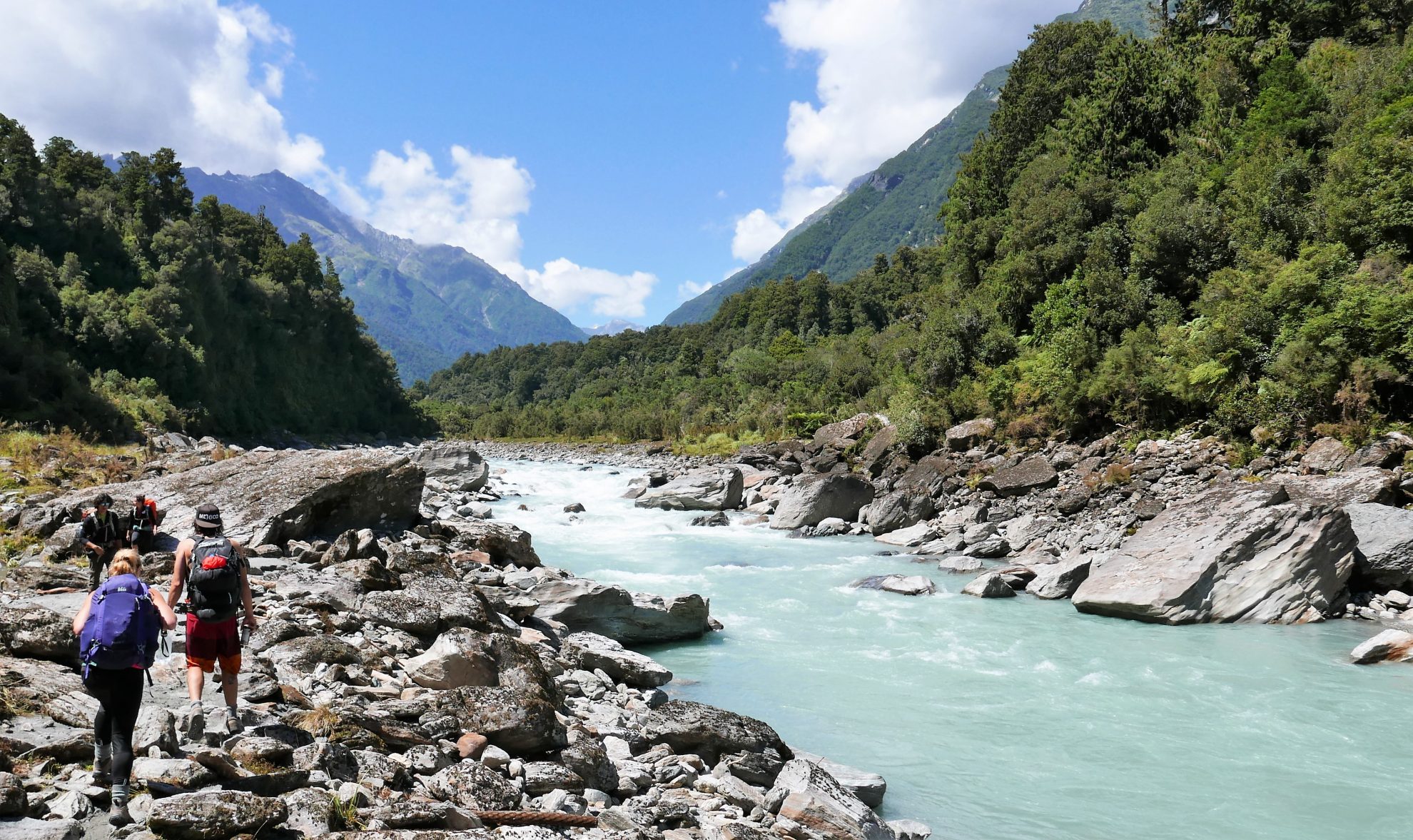
Copland Track Kiwi partnership
Hinetamatea Valley, also called the Copland, is of huge significance to the local Makaawhio, a hapu of Ngāi Tahu. Greater iwi involvement in management could take the form of a commercial venture based around Welcome Flat Hut. DOC records show 5500 people walk the Copland Track each year; about half from overseas, and it is popular with school groups as an introductory tramping experience.
New two day walk over Mt Fox
A possible private/public partnership to develop a two-day circuit, including a new hut and taking in Mt Fox and Mill Creek, near Fox village. Mt Fox is already a popular, albeit it staunch, day trip. According to Costello, the summit is one of the most amazing viewpoints around. He should know, having carried his paraglider up the five-hour climb to fly off it.
Te Ara Pounamu
A proposal to extend the West Coast Wilderness Trail south from Ross to Fox, taking in Whataroa, Ōkārito, Gillespies Beach, Lake Gault and Lake Matheson via old coastal and lagoon tramways, and forest roads and trails. The proposal, spearheaded by the South Westland Wilderness Trail Trust, is supported in principle by DOC, NZTA, Ngāi Tahu and Makaawhio. Management plan approval is being sought to allow access through national park areas.