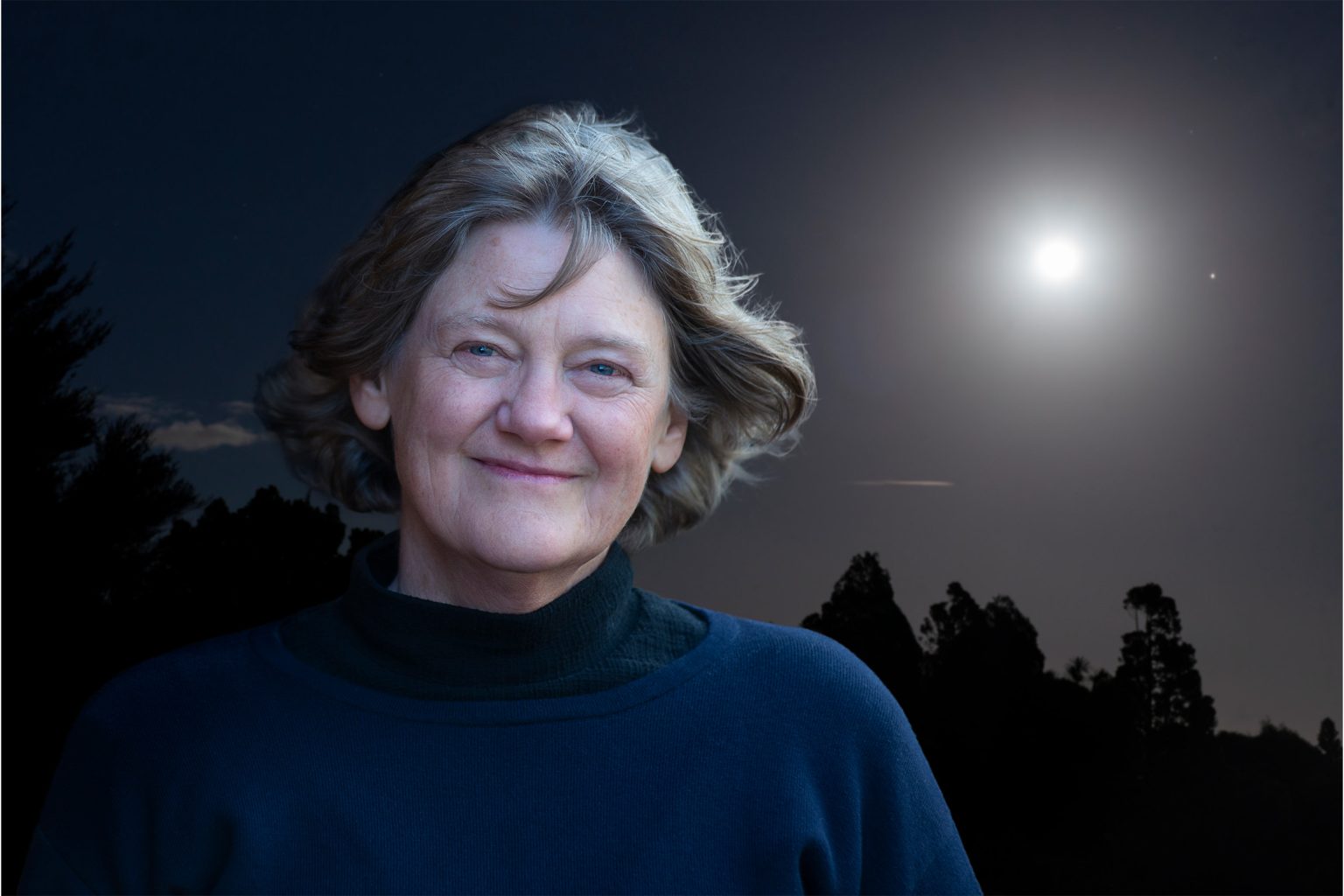
Strategist and author Annette Lees shares the three trips that have had the greatest impact on her.
Annette Lees has been an outdoor and natural world enthusiast since childhood. “My writing explores the connections between people and place,” she says, “and seeks to encourage lifelong respect and care for the natural world.” Two of her books, After Dark: Walking into the nights of Aotearoa and Swim: A year of outdoor swimming in New Zealand, were longlisted for the Ockham New Zealand Book Awards.
1. The first tramp by map and compass
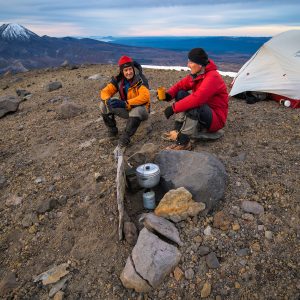
I grew up tramping in Te Urewera, Ngā Hapū o Tūhoe tūrangawaewae and a place saturated with wairua. The old tracks follow Ngai Tūhoe pathways along deeply forested ridges and rivers. Over the years, we returned to the same catchment time after time until I knew every bend in the creek there, every swimming hole, every ferny bank. I remember the first time we set off with just the topo map and compass – the extraordinary feeling of adventure and freedom, walking into remote bush country and then, after several days, emerging exactly where we planned to. Feeling skilled and self-reliant enough to do this set me up with a lifelong confidence about being in the bush.
2. Discovering vulnerability
When we were in our twenties, my husband Shane and I spent two years in South America carrying just a few items of clothing in our old Mountain Mule packs. By the time we got to Patagonia in the far south I felt invincible. Towards the end of a five-day tramp there we were crossing a pass and walked straight into a blizzard. I had on an oilskin raincoat, running shoes with plastic bags over my socks and a pair of socks on my hands. That felt pretty organised. Eventually we found ourselves on a glacier with almost zero visibility and were so cold it was getting hard to walk. The freezing wind was strong enough to blow a contact lens clean out of my eye. After some reckless exploration in the wrong direction, the sky cleared briefly so we could zero in on the bushline and then walk blindly in that direction when the blizzard enveloped us again. It wasn’t until I was in the tent that night that I started to shake. The life-changing aspect of this trip was the discovery that you could die of stupidity.
3. First experience of alpine plants
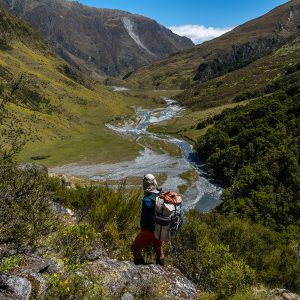
When I was 18 I chose Canterbury University to do an ecology degree because I’d never been to the South Island. Professor Colin Burrows introduced us to alpine plants on a botany field trip to Cass, and from that moment I was smitten: the exquisite forms of alpine plants adapted to the wind and cold, delicate flowers among broken rocks, the thin air, the karanga of kea. I fell in love with the space between bushline and permanent snow and ice and have been visiting it ever since.
About the author
Annette Lees
Annette Lees has been an outdoor and natural world enthusiast since childhood. “My writing explores the connections between people and place,” she says, “and seeks to encourage lifelong respect and care for the natural world.” Two of her books, After Dark: Walking into the nights of Aotearoa and Swim: A year of outdoor swimming in New Zealand, were longlisted for the Ockham New Zealand Book Awards.
Apply for the 2027 Shaun Barnett Memorial Scholarship
Boundary Creek Track, Hāwea Conservation Park
Which private walk is for you
Orson Hopper Pro 2 Tent review
Circling the sleeping giant
Subscribe!
Each issue of Wilderness celebrates Aotearoa’s great outdoors — written and photographed with care, not algorithms.Subscribe and help keep our wild stories alive.