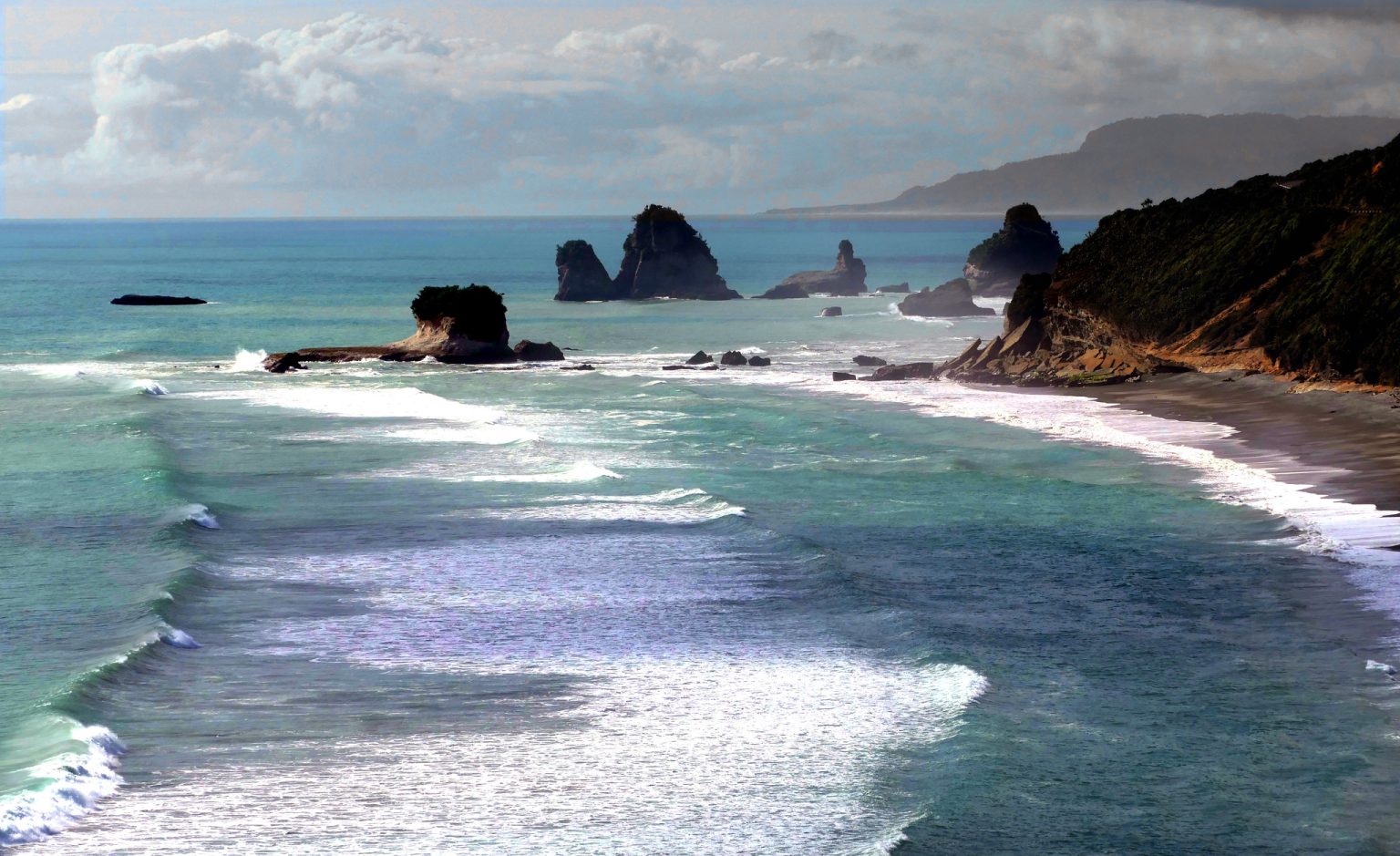
In December of last year, in a move he said was “a long time coming”, Minister of Conservation Tama Potaka issued final decisions on the future status of 576 parcels of West Coast land.
Conservation groups want to know why it was decided not to extend protected status to 365,000 hectares of West Coast land, including national park expansion.
Forest and Bird and the Environmental Defence Society say Potaka needs to explain why he overwhelmingly rejected proposals to expand national park status to West Coast land, especially in cases where the majority of advice Potaka received – from his ministry and two expert panels – was in favour of doing so.
Gary Taylor, from the Environmental Defence Society, is seeking answers from Potaka. “The judicial review seeks a ruling from the High Court that he must give reasons,” says Taylor.
Forest and Bird’s Nicky Snoyink says the final decisions were “a bit of a shock” and leaves the land open to industries including mining, even if the land blocks’ natural qualities are indistinguishable from a national park. Read more from Newsroom.
‘Spectacular’ 189-metre bridge emerging on Hooker Valley Track
Construction of a massive 189-metre bridge spanning the Hooker River is reaching a major milestone, despite a brutal winter of “unseasonal” snow and 130kph winds.
The new structure, located on the upper section of the Hooker Valley Track, replaces an existing swing bridge that was forced to close in April 2025 following significant riverbank erosion near its supports.
Work began in August last year, and Aoraki/Mount Cook operations manager Sally Jones said the team faced extreme weather and adverse sub-alpine conditions.
“Despite this, the team is making good progress with the completion of the large backstay anchors. The massive steel cables which will span the river have arrived from Italy and will be hung in the next few months.”
Once finished, the bridge is expected to become a landmark in its own right within the national park. Read more from Stuff.
Backcountry to be turned into historic reserve
Work has started on a management plan for the new culturally significant stewardship land area, Tarahanga e Toru Historic Reserve.
The 181,000ha reserve includes three main pounamu trails that were vital for Poutini Ngāi Tahu and incorporates much of the Hokitika backcountry. Landmark decisions on stewardship land classifications were announced in December by Conservation Minister Tama Potaka.
In an update to the Westland District Council last week Department of Conservation Hokitika operations manager Tim Shaw said the stewardship land review had identified the Hokitika backcountry to be gazetted as a historic reserve — Tarahanga e Toru.
‘‘We’re really excited about that and the potential that has to celebrate that area and tell those stories,’’ Mr Shaw said. The historic trails through the reserve were used as trading routes for pounamu and kai, serving as lifelines for Poutini Ngai Tahu.
Iwi representative and Te Runanga o Makaawhio chairman Paul Madgwick said the creation of Tarahanga e Toru Historic Reserve was the ‘‘major gain’’ to come out of the stewardship land decisions for iwi. Read more from the Otago Daily Times.
The unlikely appeal of barefoot hiking
A small but growing number of hikers are hitting the trail unshod. But what happens when you feel the ground beneath your feet?
When Gen Blades set out to hike in South Korea, she didn’t expect to be slipping her boots off, but in Seoul, more than 150 parks feature designated barefoot walking areas – known as “hwangto.”
“There’s something about that direct contact of the sole of your foot in the clay. It almost feels like mud,” she says. “But then you realise, ‘Oh yeah, it’s oozing up between my toes!’” Luckily for Blades, the slippery clay stretch was fitted with foot-washing stations, as well as shoe lockers and a safety handrail.
In Australia, Dale Noppers, a health and safety superintendent, has been barefoot hiking for seven years. What began as a curiosity linked to bush survival skills has since become a regular hobby. “It makes you feel quite primal,” he says.
His early barefoot hikes lasted little more than half an hour. These days, he can go for seven hours. Noppers says his feet have adapted well. “The bottom of my feet are nice and soft and supple … it’s almost like they’ve had a pedicure,” he says.
Podiatrist Dr George Murley says the science is mixed. “It’s really person-specific,” he says, noting that both overly cushioned footwear and going barefoot without conditioning can lead to injury. Murley suggests easing in gradually. “You’ve got to be slow and progressive,” he says. “Almost like treating it as a gym session for your feet.” Read more from the Guardian.
One NZ apologises to tramper after she was unable to connect to satellite network
A 66-year-old Nelson woman needed several tramping trips, while on holiday, to show One NZ that her new phone was not satellite-enabled, despite being advertised as such.
Chris Frentz bought the new Samsung Galaxy S26 from One NZ in the knowledge it was compatible with One NZ Satellite. Frentz told Stuff she bought the phone for the satellite access, as she is a keen tramper.
It was only then, while out tramping in Fiordland in March, that she was unable to connect to the satellite network with her new phone. “It actually had the information about satellite service on it. And it had a note saying that it was satellite-enabled, but it wasn’t.”
“I explained the situation… they said I needed an upgrade on my brand-new phone, which I’d had for a couple of weeks, that had been set up by One NZ.” But on her next trip on the West Coast the phone still wasn’t connecting.
It was only after Frentz spoke with a technical support person via email that One NZ identified that her particular phone was not listed as an approved device for satellite network compatibility.
One NZ told Stuff there was an issue during the registration process, which meant Frentz’s phone didn’t connect to their satellite network “as it should have”. Read more from Stuff.