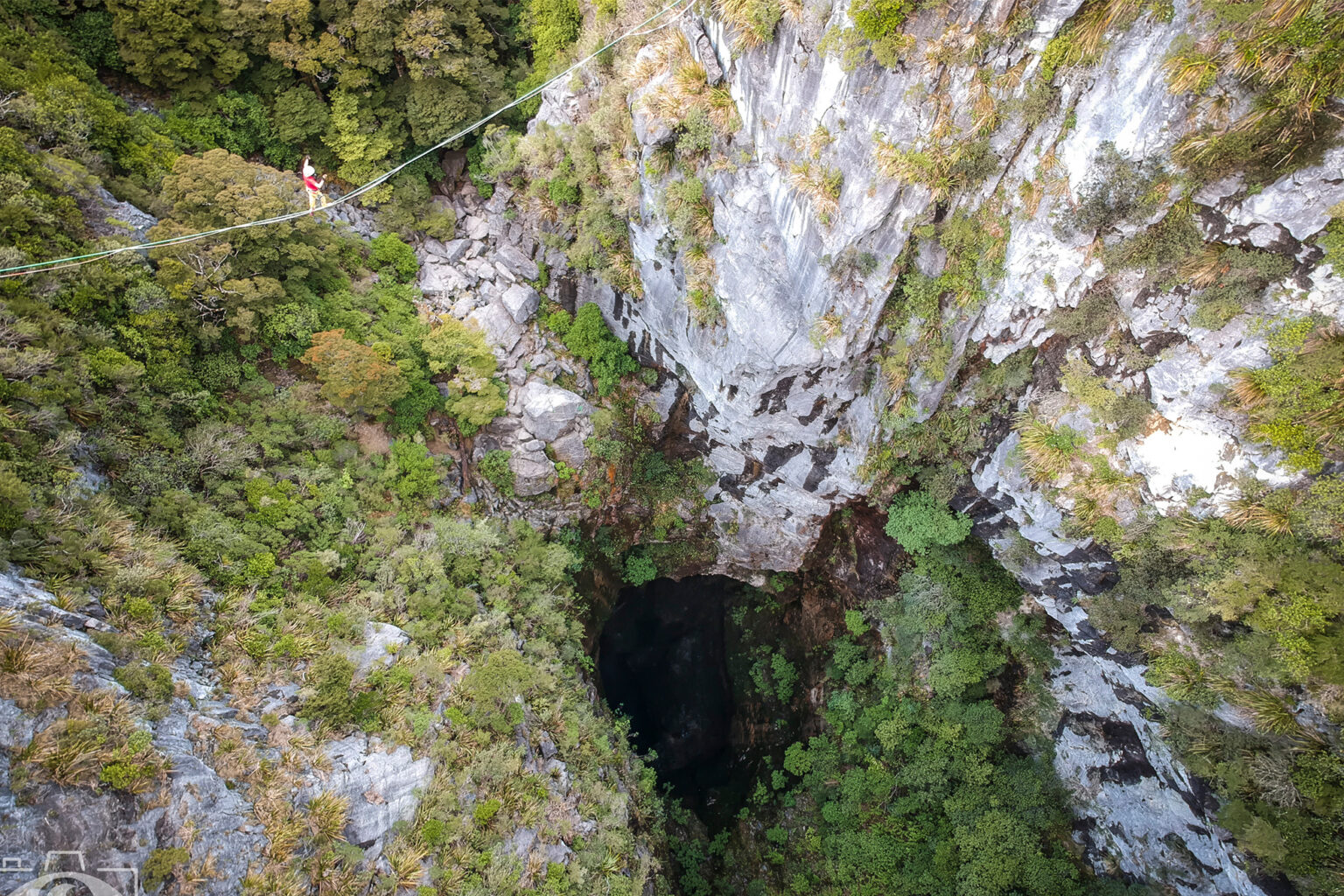
Federated Mountain Clubs of New Zealand (FMC) has confirmed that, despite Department of Conservation (DOC) signage and its website listing the track to Harwood’s Hole as closed, DOC has acknowledged the track is not legally closed and the public can still access the area.
DOC has confirmed in correspondence with FMC that it has been decided to cease maintenance of the track to Harwoods Hole, not to formally close it. However, as of today, closure signage remains in place at the site and the DOC website continues to list the track as closed.
FMC President Megan Dimozantos said it reflects a wider pattern of inappropriate track closures across the conservation estate.
“Legislation sets the bar for closures on public conservation land quite high for a good reason, and that is to prevent inappropriate closures or loss of public access.
“This example, and others we have currently flagged with DOC, set a dangerous precedent for broad and illegal closures across the conservation estate.
“We are calling on DOC to replace closure signage with accurate risk warnings, both on-site and online.
“We understand DOC’s concern about the risks at Harwoods Hole, and misinformation circulating on social media about it. But closure is not the answer. Given DOCs concerns, its lack of consultation with the local tramping, caving and search and rescue community prior to its actions is also a real concern”.
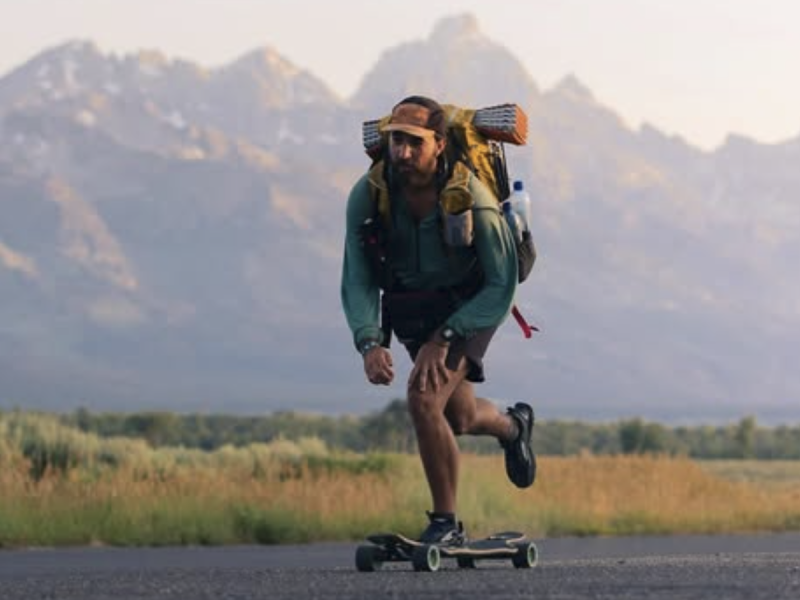
World first: Man skateboards from Mexico to Alaska
Justin Bright’s packing list looks like a typical thru-hiker’s: a fully loaded, beat-up backpack, a sun hoodie sporting its fair share of holes, Lone Peaks hanging on by a thread, and a freestanding tent.
Except for the skateboard and helmet strapped to his pack.
In 2025, Bright became the first person to skateboard from Mexico to Alaska. From June to September, he travelled north alongside the spine of the North American Continental Divide, covering roughly 6750 km.
It took nearly two months for him to reach Canada, the halfway point. From that point on, there was no room for rest. To have a chance at finishing before winter set in, he needed to average 70km a day.
Bright’s route followed the Continental Divide through places like Yellowstone, Grand Teton, Glacier National Park, and the Icefields Parkway. He pushed his board up high mountain passes, filtered water from glacier-fed streams, and watched the northern lights dance across the Yukon sky.
“At the end of the day, skating is still fun,” Bright said. “It’s honestly kind of the worst way to thru-travel, but when it’s good, it’s really good.” Read more about Justin’s journey from The Trek.
Old photos reveal changes in West Coast marine environment
Newly discovered historic photos are shining a light on dramatic changes in the West Coast marine environment.
West Coast Marine Ranger Don Neale was given the photos, which show coastal areas from the 1960s and the 1970s, revealing significant changes that would otherwise have gone unnoticed.
“The photos show changes in life in the intertidal area, which is the area between the sea and shore where water comes and goes,” Don says. “Some of the changes in sea life we’ve seen on the rocky coasts include loss of bull kelp, mussels, seaweeds and barnacles. In some places, the seaweeds inhabiting some areas have changed entirely.”
DOC would like to hear from anyone who has other examples of coastal photography that might help to add to the stories that these photos tell. People can contact Hokitika@doc.govt.nz and reference this article if they have photos to share or are interested in contributing. Read the full press release from DOC.
Second oil spill in Akaroa Harbour in two months sparks concern for wildlife
A wildlife expert has serious concerns for dolphins and seabirds after a navy ship spilled hundreds of litres of oil into Akaroa Harbour. About 200-300 litres of lubricating oil leaked from the HMNZS Te Kaha on Sunday morning, due to a defect to an oil cooler on the ship’s starboard engine.
Otago University professor of zoology Liz Slooten said seabirds could have their feathers covered in oil, causing them to lose their insulation, sink, drown or be unable to catch fish.
She said bottlenose dolphins had been seen to lose teeth after swimming in contaminated waters in the Gulf of Mexico.
Slooten said it was concerning this was the second spill in the Harbour in the past two months, with more than 2000 litres of marine diesel fuel spilling from the Black Cat Cruises boat on 31 January.
Canterbury Regional Council coast and harbours manager Guy Harris said teams had successfully cleaned up most of the oil through absorbent booms. Read more from RNZ.
Banks Peninsula property becomes regional park
A new regional park is under development and will offer access to some of Banks Peninsula’s stunning southern bays.
The previous owners of the more than 500ha property wanted to ensure the land would be publicly accessible and conserved for generations to come, and have sold it to Christchurch City Council.
“The property includes one of the country’s most well-preserved historic whaling sites, the coastal headlands and cliffs serve as sanctuaries for native seabirds, and it offers significant potential for natural regeneration and restoration initiatives,” council head of parks Rupert Bool said.
In partnership with Wairewa Rūnanga, council staff will develop a reserve management plan and operational guidelines that will be open for public consultation this year. In the short term, Bool said staff will build stiles and create poled routes to support and guide limited public access until the plan is completed.
The property provides habitat for a diverse range of native invertebrates, lizards, birds, moths and cicadas, and predator control is being undertaken to protect native birds. Read more from Wilderness.
Person dies on popular walking track near Wānaka
A person has died on a popular hiking track near Wānaka. Emergency services were called to the Skyline Track, which runs along the ridgeline between Roys Peak and the Cardrona Valley, just before 3pm on Tuesday.
The body was recovered by a helicopter. Police will not say what caused the death, but it will be referred to the coroner. Read more at RNZ.