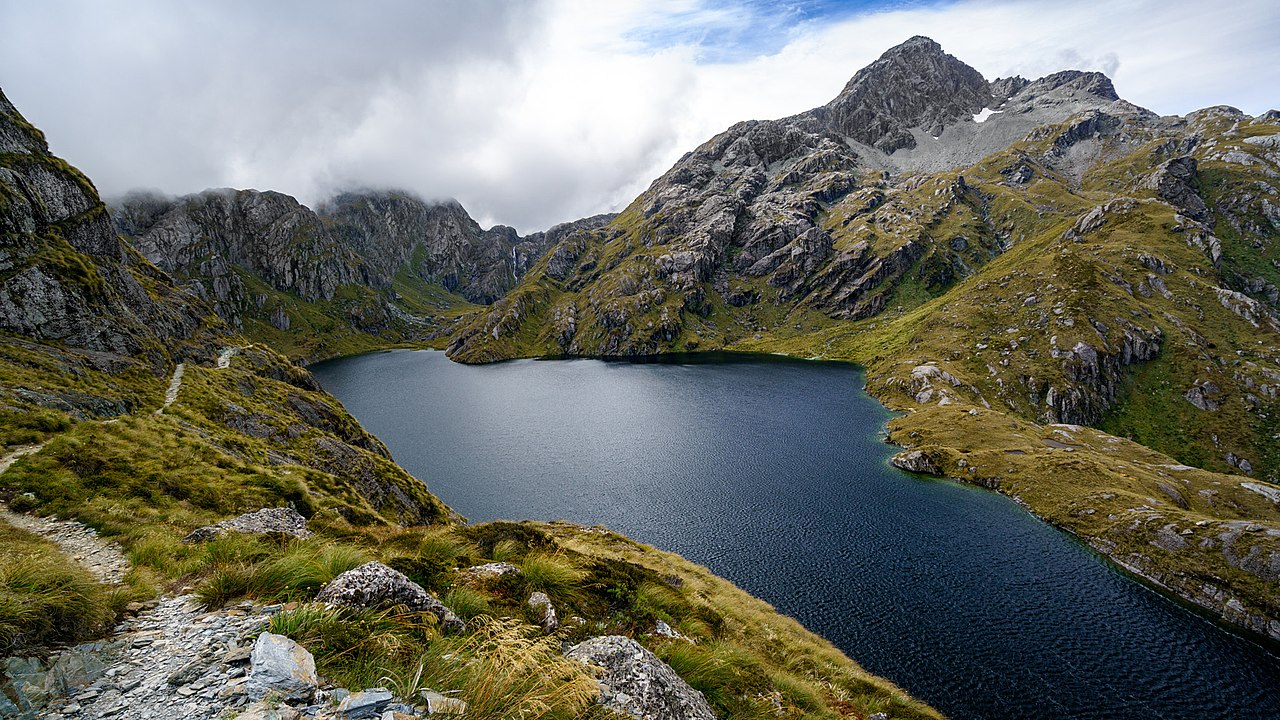
A wrap of the biggest stories and best writing about the outdoors from New Zealand and around the world.
From July 1, the Department of Conservation is increasing the price of all the Great Walks.
“It has been more than four years since prices were reviewed and upkeep costs have risen significantly since then,” said DOC’s director of heritage and visitors, Cat Wilson. “Great Walk hut and campsite prices will increase by 18% except for Paparoa which will increase by 6%. While Great Walk fees don’t cover the full costs, the revenue raised contributes to maintaining, repairing, and improving the huts, campsites, tracks, and structures and balances the cost burden between users and taxpayers.”
Fees for international visitors remain at a 50% premium to NZ resident fees on most Great Walks.
As well as the price increases, DOC has scrapped the kids-go-free approach. Those aged 5 to 17 years will be charged 50% of the adult fees. “Data shows the ‘youth go free’ approach adopted in 2008 did not noticeably increase children and youth participation on the Great Walks.
Opening dates for booking huts, campsites and Great Walks for 2024/25 will be announced in April. See the new pricing details here.
Department of Conservation ‘spread too thin’ according to director-general
During its annual review, presented to Parliament’s environment committee, DOC director-general Penny Nelson told the committee, “The department is not currently financially sustainable for what we’re being asked to do.”
The warning comes as environmental groups warn the government’s fast-track legislation is an “unprecedented assault on nature and democracy”. The National government intends to cut the Department of Conservation’s budget by 6.5 percent, and Nelson said it would be looking for direction from ministers about what to prioritise later this year.
She said the money going into the department made up 0.44 percent of government spending. “Over the last decade, DOC’s role and the expectations of us have increased, but there’s never been a comprehensive look at what is our role, and what’s the funding that you need to have to address that role.”
With visitor numbers returning to pre-COVID-19 levels congestion in DOC facilities and national parks is impacting nature and the department is struggling to keep up. Read the full story from RNZ.
Two metre long wasp nest discovered by students
A large German wasp nest was found underneath a fallen pine tree by students on a field trip. According to Victoria University of Wellington entomologist Phil Lester it managed to survive for two summers.
He said due to low rainfall, warmer summers, and warmer winters, we can expect to see more of these large wasp nests in the future. “A normal nest might contain 10,000 workers. This nest was 100,000 to 200,000 workers,” Lester told 1News.
“One of the really interesting things about this is ‘how do these nests get to be so big?’ and ‘what are the conditions?’ and ‘what is the population genetics associated with getting to be such a large size?'”
The nest measured approximately two metres long, roughly 1.5 metres high and has since been removed. Read the full story from 1News.
Man caught on camera with chainsaw found guilty of cutting illegal track
Stuart Biggs denied a charge of wilfully damaging vegetation in Wakefield after he was caught on a forestry company security camera with a chainsaw near a locked gate.
Stuart Biggs said he had parked his blue vehicle at the gate to clear a fallen tree further back down the road having earlier managed to “squeeze” under it and scrape the cab of his vehicle while on his way to inspect a property that was for sale.
His story didn’t convince the judge in the Nelson District Court who said the police had proved the charge of intentional damage to Tasman Pine Forests’ vegetation, and therefore Biggs was guilty.
Security camera footage played to the court showed Biggs drive up to the gate, which had signs saying it was private property, turn around and then get out of the vehicle and grab an electric chainsaw.
Biggs was convicted and ordered to pay $1366 in reparation to cover the cost of a digger used to re-block the access plus the cost of the investigation. Read the full story from the NZ Herald.
Pierce Brosnan pleads guilty to trespassing in Yellowstone
Pierce Brosnan pleaded guilty to illegally leaving a trail in a restricted area in Yellowstone ending a multi-month saga. The 70-year-old actor received a $500 fine; additionally, a federal judge ordered him to pay $1,000 to Yellowstone Forever, a nonprofit organisation supporting the park.
On Instagram, Brosnan offered his “heartfelt apologies to all for trespassing in this sensitive area.”
“As an environmentalist, I have the utmost respect for and love of our natural world,” he wrote. “However, I made an impulsive mistake – one that I do not take lightly – when entering a thermal area covered in snow in Yellowstone National Park to take a photograph. I did not see a ‘No Trespassing’ sign posted that warned of danger nor did I hike in the immediate area.” Read the full story from Backpacker.
Opinion: access to nature is a necessity
The editor of The Great Outdoors magazine in the UK has written an opinion piece on the necessity of nature for all people in today’s “weary world” using history as a guide. Mary-Ann Ochota finds inspiration from a Second World War association of walkers who stuck steadfastly to their vision to help pass an act to establish national parks and trails.
In 1935, writer and walker Tom Stephenson published ‘Wanted – A Long Green Trail,’ a lyrical call for tramping routes that ‘meet the needs of the growing army of young folk attracted to the healthiest form of recreation’. He envisioned a Pennine Way, following the upland spine of Britain south to north from the Peak District to the Cheviot Hills.
In 1938 an association formed to advocate for the proposed Pennine Way. After the Second World War, the Government saw that a war-weary urban population needed and deserved access to the countryside for health and recreation. In 1948, Tom Stephenson took a group of MPs for a three-day walk along the proposed Pennine Way route, trailed by press photographers. The National Parks and Access to the Countryside Act became law in 1949 and in 1951 the Pennine Way was formally approved.