

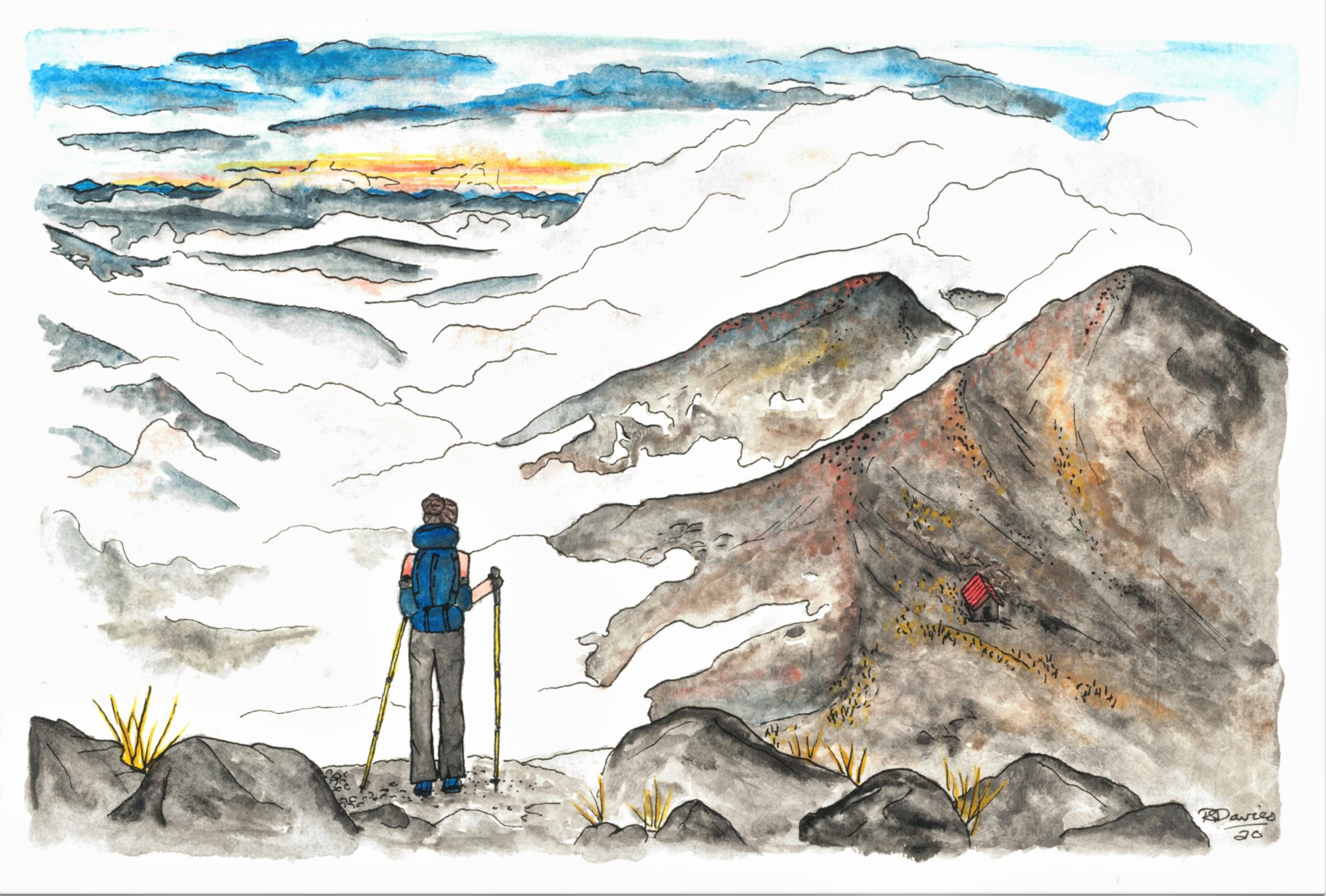
I feel cold as raindrops seep through my hair onto my neck and, with icy fingers, I grip my hiking poles tighter. I’m watching the sun flare red with the last light of day, illuminating the clouds rolling over the peaks but I’m not seeing the hut I’m so desperately searching for.
“Just over the next peak; it’s just over the next peak,” I tell myself and push on, trying not to stumble from the cold and exhaustion, and also from the beautifully distracting sunset.
What got me here? I’m not injured or lost but potentially close to both. I’m an outdoor guide and teach decision making and risk management for a living. So which choices led me to be in such a potentially hazardous scenario?
The decision-making processes we go through in the wilderness can seem logical. We reflect on influences of risk such as time of day, weather, energy level, terrain, experience, and group members. If these pieces start going wrong – when they become what guides call ‘lemons’ – we have to decide how many can be juggled before the situation becomes dangerous. James Raffan, a Canadian adventurer and author, introduced the Lemon Theory in 1987 as a tool for measuring risk, and it can be helpful for quantifying very subjective factors.
Hiking along the ridgeline, I was juggling the late time of day, rain and cold, decreasing energy, the steep and rough trail, and being by myself. Just as juggling is a precarious art, so is deciding when these risk elements become too much to handle.
My experience has taught me how to balance many outdoor elements; I’m competent at navigation, know how to properly dress for adverse weather, and how to move through difficult terrain safely. But rewind a few hours, and as I sat on a mossy stump, halfway to the treeline at 4pm, there were two key elements that factored into my risk assessment: my experience itself and being alone.
People are used to making choices with others. We debate where to eat dinner with a partner, what project to push forward with colleagues, and who to be dating with our friends. While we all make small choices by ourselves, we conference with others for big decisions. The same is true in the outdoors. If you’re used to tramping with a group of friends, a tramping club, or your partner, it’s unlikely you’ve ever made many decisions alone on where to go or when to turn back. We all huddle around the map and gab about how hungry we are and how much our feet hurt. Where was that next hut? Or we stop at a trail junction, convincing our friends “we just have to get to that peak today”. Your practise in weighing the options could be very limited if you typically go along with the pack, letting others lead the way.
But because I’m always the leader and make all the decisions, I suddenly realised I might have a false sense of my own ability. I’m an outspoken group member when I’m with friends and I’m employed to be in charge when working outside. I went into the mountains with a sense of security in my expertise, but had failed to realise I’m not used to making decisions by myself, for myself.
So, why is it so different? Well, to start, there’s a whole different crop of lemons – the lack of help in a medical emergency being the big one. If I stared at the sunset too long and tumbled off the ridgeline, it would be a long time before I was found. But while risk itself is heightened when solo, it was the change in the decision-making process itself that I did not anticipate.
Making decisions for a group of people requires balancing others’ needs. When I lead a group, I’m constantly thinking of how everyone is feeling, if they’re tired, hungry, or upset. How have they managed terrain like this in the past? Are they a slow-moving group or fast-paced? I think about how they’ve faced adversity before and whether they’re likely to deal positively with more risk. But I rarely make decisions based on my own well-being. If I’m tired, I push through for the group. If I know I can make a summit, but the group can’t, I turn around.
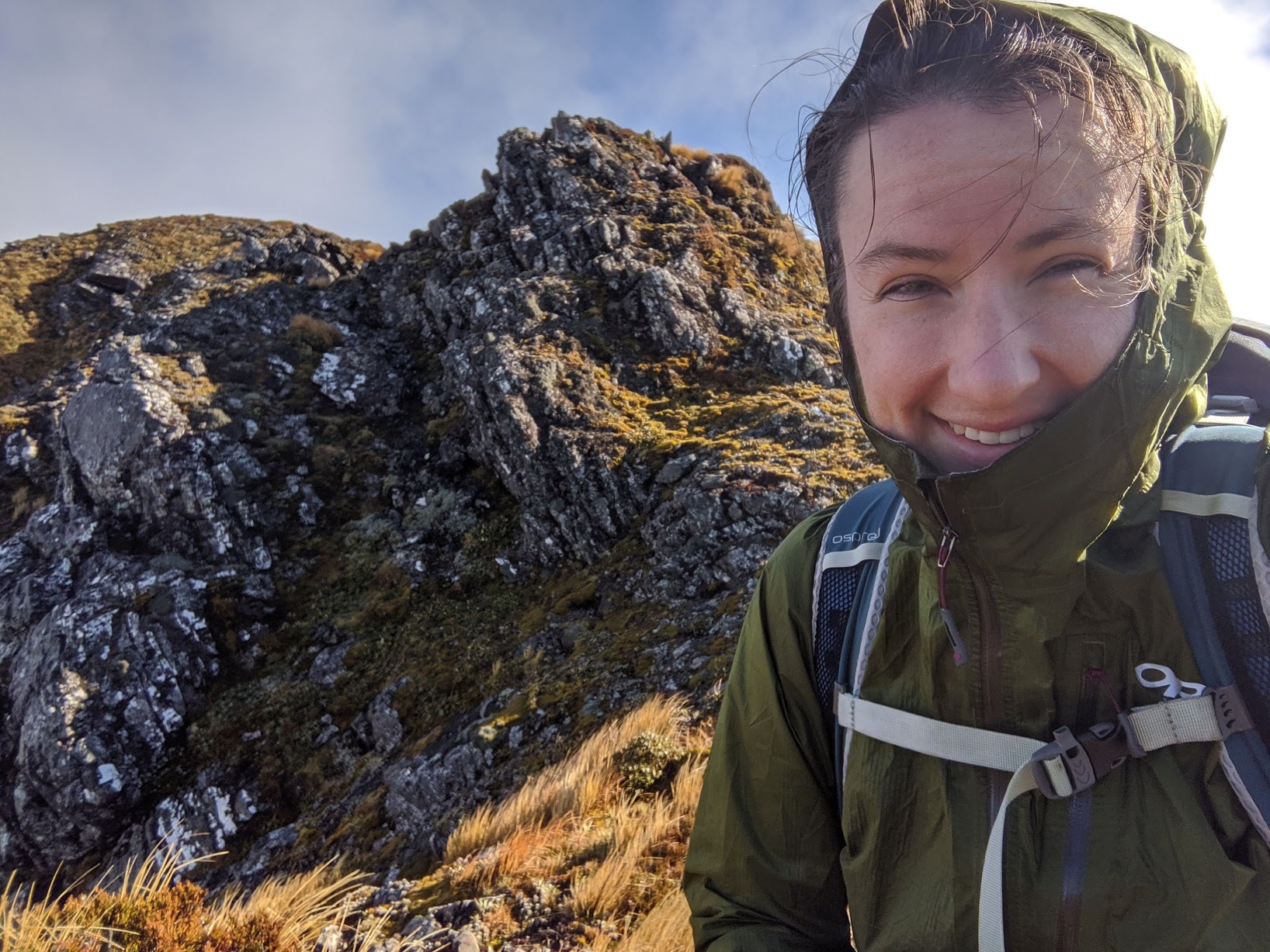
Sat on the mossy stump, contemplating forging ahead to the ridgeline or turning back to a hut in the valley, I found myself feeling uncertain. If I was leading a group, I would turn around, no questions asked. It was getting far too late and damp, and I was in unfamiliar terrain. But since I was by myself, the temptation to push my limits outweighed those risks. I’d had friends do this tramp in a day, why couldn’t I? There was the ego.
Chatting with an old colleague and long-time solo tramper, Keegan Plant, he agreed that ego is often the biggest challenge for his solo decision making. “No one’s there to keep me in check, to tell me that what I’m doing is dumb,” he told me.
He also observed how experienced trampers can get into trouble when complacency kicks in.
The hut eventually materialised and a wave of relief warmed through my body.
There is heightened risk when alone in the wilderness and the decision-making processes are challenging – so why do we even bother? There’s certainly an air of romanticism and drama about going out alone and toughing it in the wild, but also great fear. That’s why stories like Wild, 127 Hours, and Into the Wild gain so much popularity but also criticism when things go wrong.
It’s easy to criticise the decision-making of those who go out alone, but there is so much to learn from doing it. Many outdoor programmes teach young people how to balance risk by putting them out by themselves. Outward Bound, one of the oldest outdoor education programmes in the world, still keeps solo time as a part of every course to teach reflection and comfort in solitude. Learning to make decisions by yourself is a valuable skill not only for the wilderness but in everyday life.
The safe outcome of my solo tramp was a mixture of a little luck and the skills I have. I feel much more comfortable in the backcountry than the city, but I have been reminded that there is still an incredible amount to learn when I’m out there by myself.
34 years of inspiring New Zealanders to explore the outdoors. Don’t miss out — subscribe today.

Questions? Contact us



