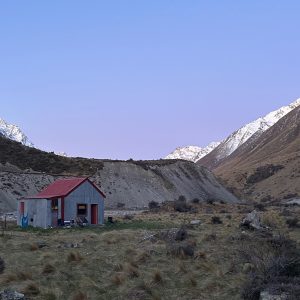
Te Whare Okioki – meaning ‘The Resting Place’ – opened in October 2019 after a massive effort involving many organisations and volunteers.
The hut’s position along the southern part of the Kaimai’s North South Track adds another option for those wanting shelter as part of a day walk, overnight tramp, or multi-day adventure.
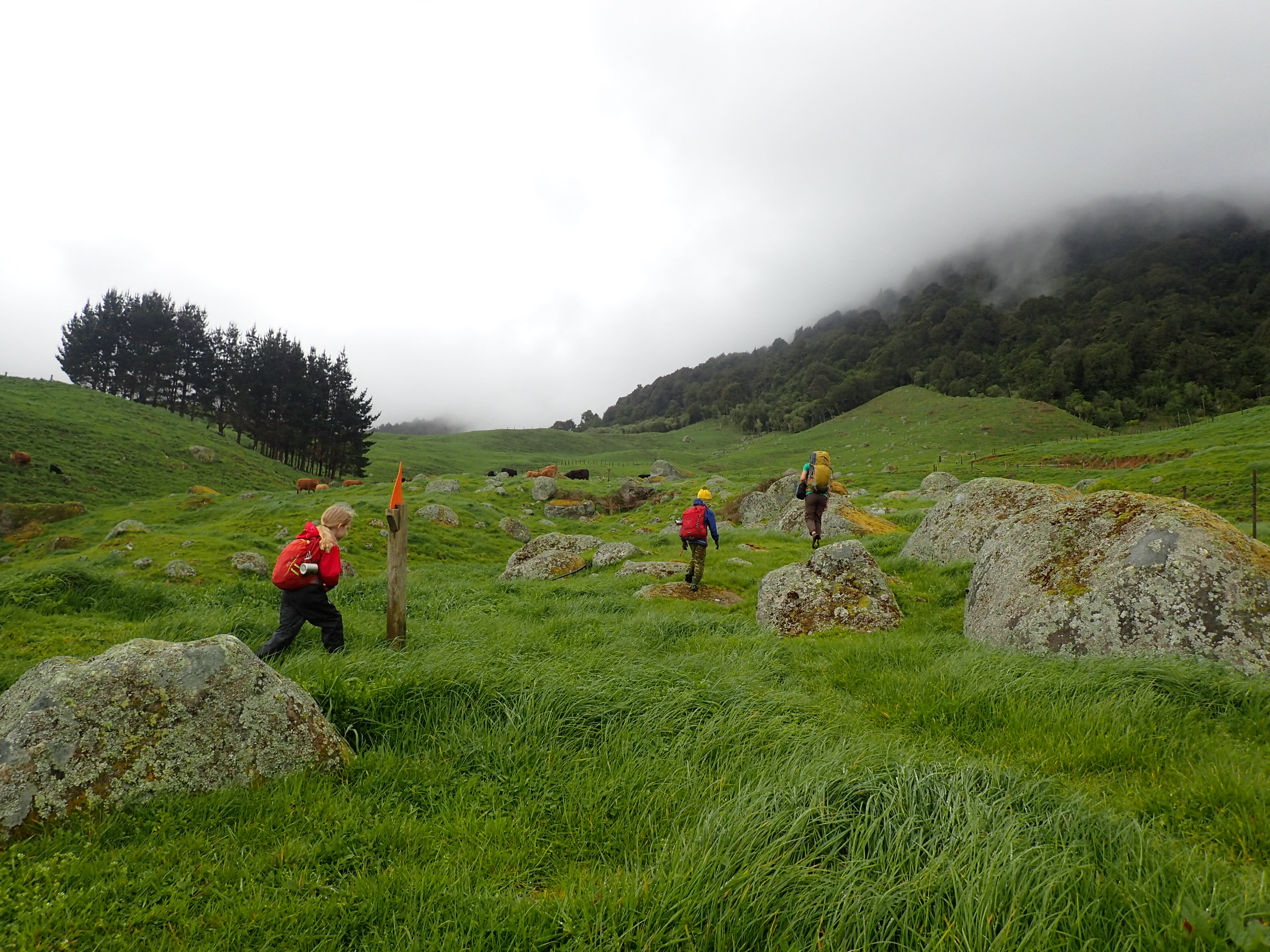
There are multiple routes to the hut, but in consideration of the little legs in our party (children aged six and nine) and recent heavy rainfall, we hiked in along the Te Tuhi Track because it’s the shortest route and doesn’t have any large river crossings.
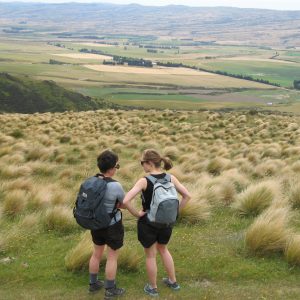
The track begins on private farmland – rolling, electric green hills with climbable boulders scattered along the way, numerous electric fences to go over or under, and a couple of small streams to rock hop.
On entering the bush, there’s a stream with a rope spanning the two sides to help guide trampers when the water level is running high.
Then the glorious Kaimai mud fest begins. For the next hour, the track leads up the ridgeline. It’s fairly steep and slippery in places, but there are always tree roots to grip and haul yourself up by.
At about the halfway point is the junction with the Mangamuka Hut Track. Past here, the trail continues in an easterly direction and crosses several streams before reaching the North South Track. By this point, our boots were already soaked with mud so the water went mostly unnoticed. From the North South Track, the trail turns south for the final section to the hut.

The hut gives the distinct feeling of being different to most other huts. There is a large covered porch big enough for multiple picnic tables, a row of wood-drying cupboards, and a sink. One of the key features of the hut is that it’s fire-proof. Inside, we felt the difference on our feet. Most huts have wooden floors, which are warm compared to the cold concrete floors of Te Whare Okioki. We now know fire-proof means bring your slippers.
Other fire-proof features include solar-powered lighting, steel beams, and concrete walls.
The fire was going when we arrived, started by one of the three hunters we would share the hut with. The hunters were pleased with the meat locker and kennel facilities available.
Te Whare Okioki is a fine place to spend the evening. From a family tramping perspective, it is another on the list of family-friendly huts in the Kaimais, which also includes Dalys Clearing, Waitawheta, and Te Rereatukahia huts.
– Meg Drive
34 years of inspiring New Zealanders to explore the outdoors. Don’t miss out — subscribe today.

Questions? Contact us