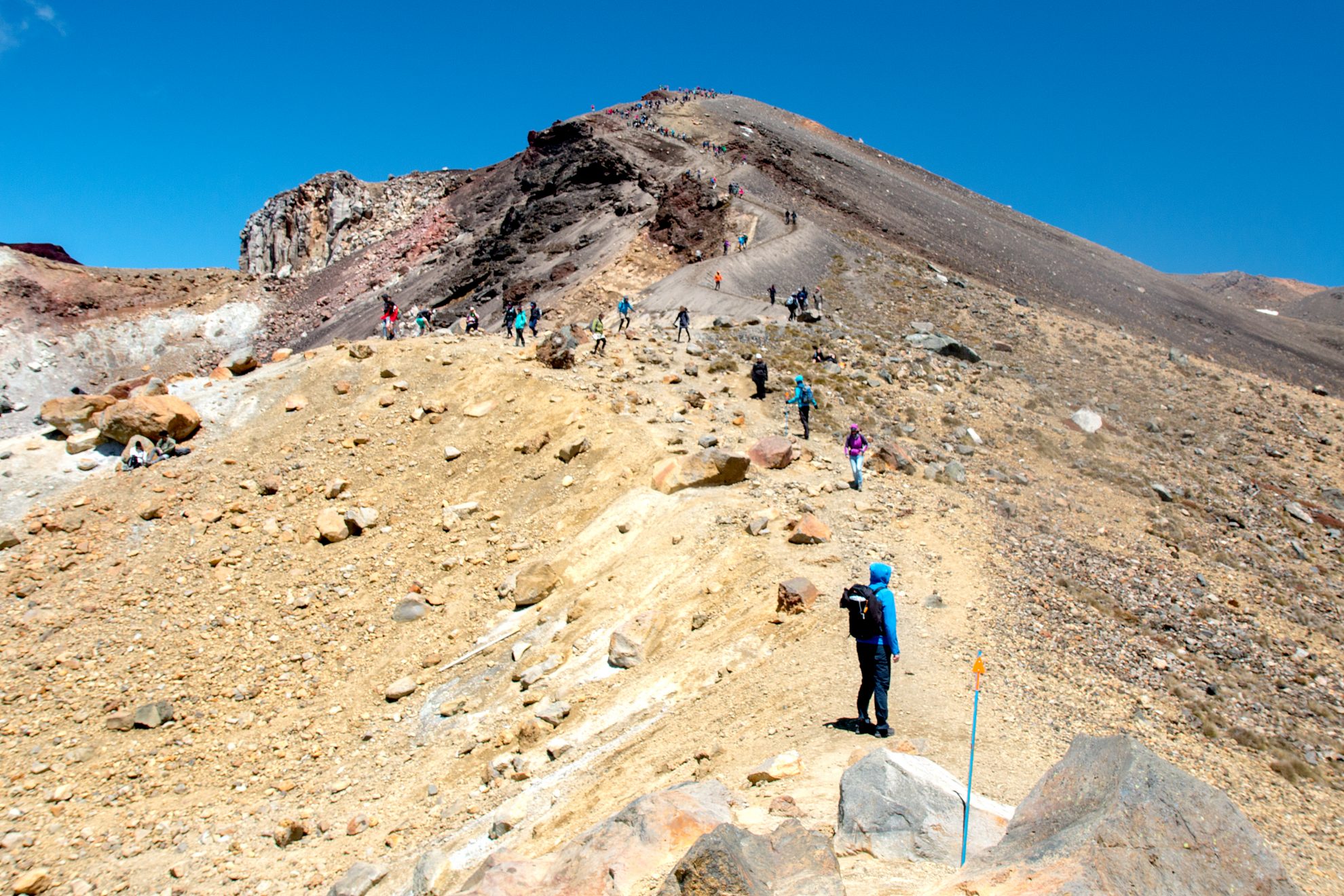
On the one hand, DOC is to be applauded for doing something to control the traffic woes and congestion found at the road ends on the Tongariro Alpine Crossing. The situation, with hundreds of vehicles often lining the roads, had grown dire.
DOC has been signalling changes are coming. Many meetings have been held and talk of parking restrictions have been mooted for at least a year now. But the implementation of those restrictions, which came into effect on October 21 and run through to April next year, seem to have been rushed. DOC announced a four-hour parking limit at Mangatepopo Road end, to be enforced around the clock under threat of clamping or towing, less than two weeks before the date the restrictions came into effect. Now, to walk the Tongariro Alpine Crossing this summer, or even explore the area around Mangatepopo Hut for more than four hours, walkers will need to use a shuttle service or park at Whakapapa Village and walk at least three hours on the Mangatepopo Track.
It is not apparent DOC consulted anyone other than, presumably, iwi, who have, rightly, stepped up pressure on DOC in recent months to do something to manage the crowds and resolve issues such as walkers toileting beside the track.
“It’s a game changer but not much input from local transport operators,” said one shuttle service concessionaire who did not want to be named because his concession application was still being processed.
FMC president Peter Wilson said his organisation had been “blindsided”.
“It’s indicative of a cultural problem in a department that sees itself as the department of tourism,” he said.
With the TAC, it seems DOC has swapped the chaos of congestion for the chaos of uncertainty.
October was a poor month generally for DOC. It also came under fire for adding Brewster and Siberia huts to the online booking system. While many trampers agreed it was necessary, others pointed out concessionaires are allowed to book up to half of Siberia’s 20 bunks on any given night for private use. Again, the outdoor community, at least those represented by the FMC, were taken by surprise.
Maybe DOC is getting more hard-nosed and intent on making decisions rather than spending time planning meetings or talking to those affected. It’s a poor showing, though, to make decisions of such consequence with little to no consultation.
As tourism ramps up to a peak of nearly five million international visitors by 2023, I’m sure we’ll see more unilateral and sudden decisions being made to deal with problems that have been years in the making.