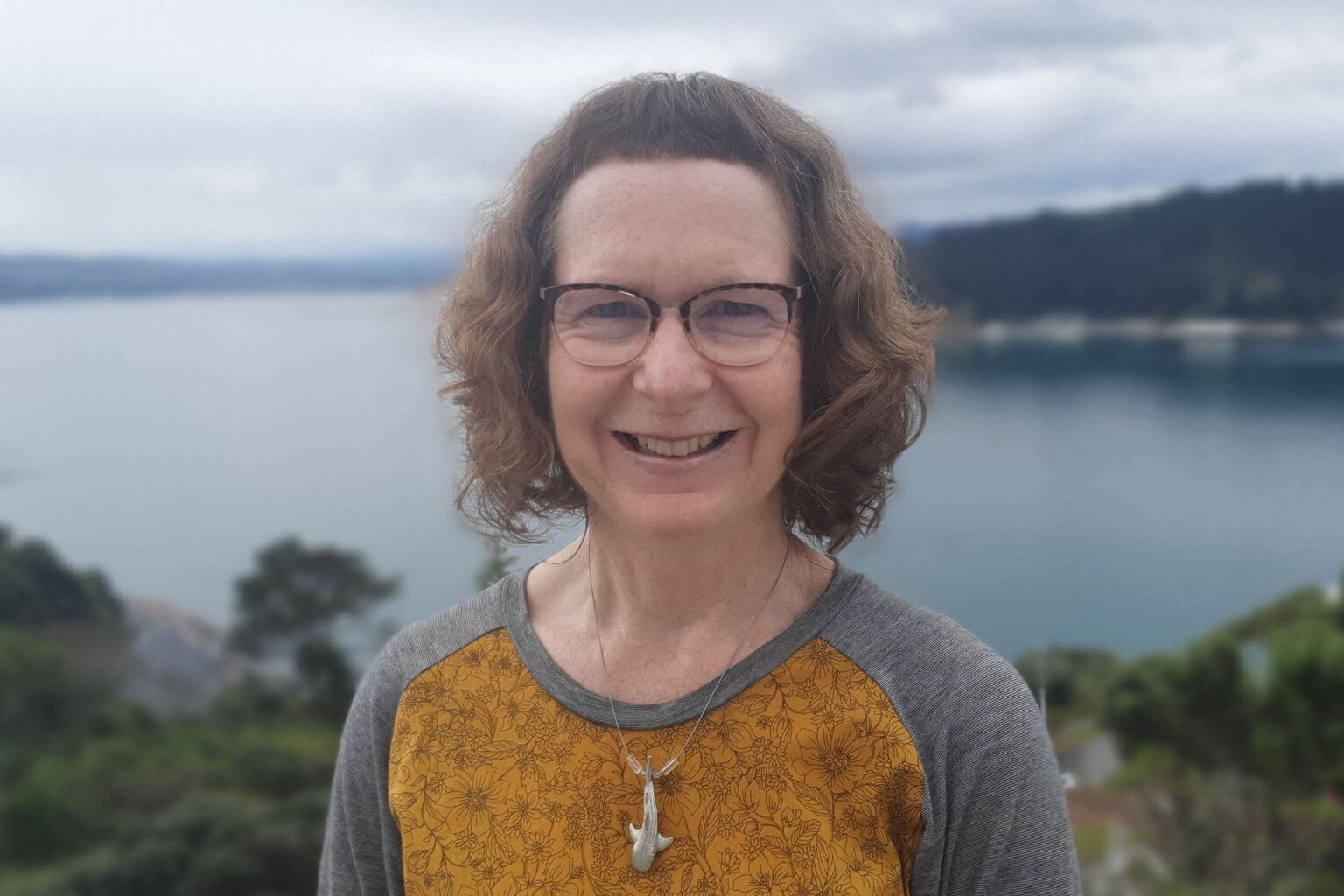
Author Alison Ballance claims she managed to fall from one amazing job to another after gaining her zoology degree, eventually becoming a director and producer of wildlife documentaries. Takahē: Bird of Dreams tells the definitive story of one of the world’s greatest conservation success stories.
What drew you to natural history and research?
I worked on summer holiday programmes in national parks which was just a delight, meeting people who shared their knowledge. So it was two things, being fascinated by the natural world and developing a love to tell stories.
It was a logical step to end up at the TVNZ Natural History Unit, becoming a documentary director and producer, and travelling all around the world.
Did you grow up in a tramping and outdoors environment?
My father was a geologist, and my mother was a geographer and so, as a family, we did field trips. We spent time in the outdoors and we learned to observe. At university, I joined the tramping club, and I still like to call myself a tramper, although I don’t do as much these days.
What was your main purpose in writing Takahē: Bird of Dreams?
I think the takahē is a greatly overlooked bird, somewhat eclipsed by its more famous flightless giant relative, the kākāpō. But the takahē story is just as magnificent, and I think that one of the standout successes of the takahē conservation programme has been to share this bird with New Zealand. They are quite easy-going birds. They’re very happy having people hang out with them, and that’s a real treasure.
And what does your subtitle ‘Bird of Dreams’ refer to?
That is what the man who famously led the rediscovery team in 1948, Geoffrey Orbell, called them. He was about 10 when his mother took him to see a stuffed specimen in Otago museum, and he was appalled by the idea that you could lose an entire species. For the next 20-30 years of his life, he dreamed about finding this bird and it was a dream that came true for him.
What made you decide to incorporate the fictional chapter about the life of an imagined takahē mother?
I like delving into the lives of these birds and telling a story from their point of view, and this was a way of writing about the biology that I find much more interesting. If you create a character-driven narrative, that can be an absorbing way of approaching the natural world.
Everything in that chapter is based either on scientific papers I’ve read or information I’ve been told. So it was an opportunity to bring them to life so that you could really feel the jeopardy these birds face out there.
And why do you think New Zealanders are so enraptured by the takahē story?
If you were setting out to write fiction, you would probably dismiss the takahē story as unbelievable, but it really happened. It just defies logic that a bird as big and bright and colourful as the takahē could have disappeared from sight for over 50 years. This bird really was making its last stand on a single Fiordland peninsula.
So what do you hope readers will gain from your book?
I hope it will add to the growing understanding of our remarkable and unique natural history. Until now there hasn’t been a book that tells you everything about the takahē and I hope that people will come away realising how close we came to losing them.

Takahē: Bird of Dreams is released on June 1 and is available on the Wilderness store. Subscribers get a 10% discount.