Packed with insider knowledge plus wisdom from mana whenua, Michael Szabo’s new book, Wild Wellington, is a practical guide to exploring the region’s wild places.
What wildlife can readers find in Te Upoko-o-te-Ika (Greater Wellington) that they’re unlikely to see elsewhere?
It’s the rich diversity of the wildlife and the ability to see it so well that stands out for me. You can see birds like tūī, kākā and New Zealand falcons flying over city parks, and I’ve watched orca and leopard seals along the waterfront. Three sites have takahē and there are three species of kiwi in the wider area. There are also incredible wildlife spectacles, such as watching rafts of little blue penguins gather before coming ashore, fur seals’ winter haul-out at Sinclair Head, and all the albatrosses off the south coast.
When it comes to bringing back species from the brink of extinction, what is one of Wellington’s success stories?
Many threatened species have been brought back to the Wellington area. In the past, saddleback, stitchbird, kōkako and weka were lost as breeding species here, and others such as kākāriki, New Zealand falcon and rifleman only persisted at the periphery. They have all returned now, thanks to the conservation work described in the book. Kāpiti Island is the stronghold for the little spotted kiwi, and birds from there were used to establish a new population at Zealandia. Until recently, Mana Island had the largest takahē population outside Fiordland and the surplus of young takahē were being sent for release at other sites. Mana is also being used as a source population for a new rowi Okarito brown kiwi population near Fox Glacier. Since the release of 14 kākā at Zealandia between 2002 and 2007, 1300 chicks have been banded and are now frequently seen in city parks.
Where did the idea for Wild Wellington come from?
When I moved to Wellington over 20 years ago I couldn’t find a book like it, so I set out to explore the area for myself. When I took up digital photography, I thought I might one day produce a guidebook. After writing Native Birds of Aotearoa for Te Papa Press in 2022, we started to discuss the idea and it evolved into Wild Wellington.
You’ve been involved in environmental protection for much of your life. What sparked your interest?
I grew up about an hour outside London with a passion for my local wildlife and wild places. My parents bought me books about wildlife, especially birds, when I was a child, which has given me a lifelong interest in nature. As I travelled further afield that passion grew. Working for Greenpeace and sailing on Rainbow Warrior II opened my eyes to the amazing marine wildlife we have here, from mammals and seabirds to sharks and seahorses.
Some readers may not know you started the Bird of the Year competition in 2005. Twenty years on, has it achieved what you hoped it would?
Yes, because it has been hugely successful at raising awareness of the plight of our special birds. My involvement was from 2005 for the first few years when I worked for Forest & Bird. Since then it has grown from several thousand votes a year to more than 290,000 last year, which is incredible. I knew birds like tūī and kākāpō would be future winners, but was blown away when the rock wren won in 2022. It’s such a cool ‘underbird’.
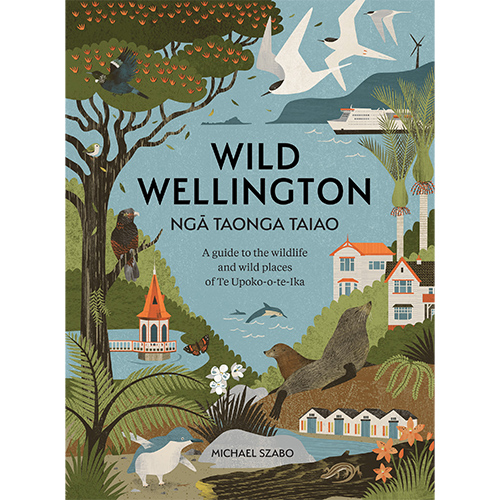
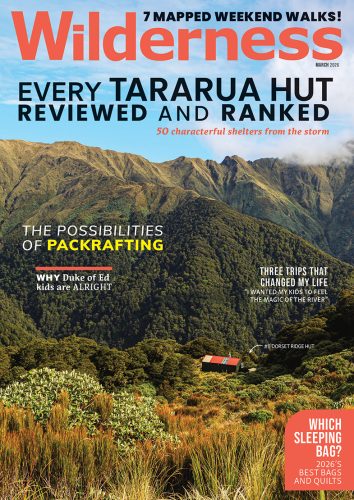
Wild Wellington is available in the Wilderness bookstore. Subscribers get a 10% discount.