

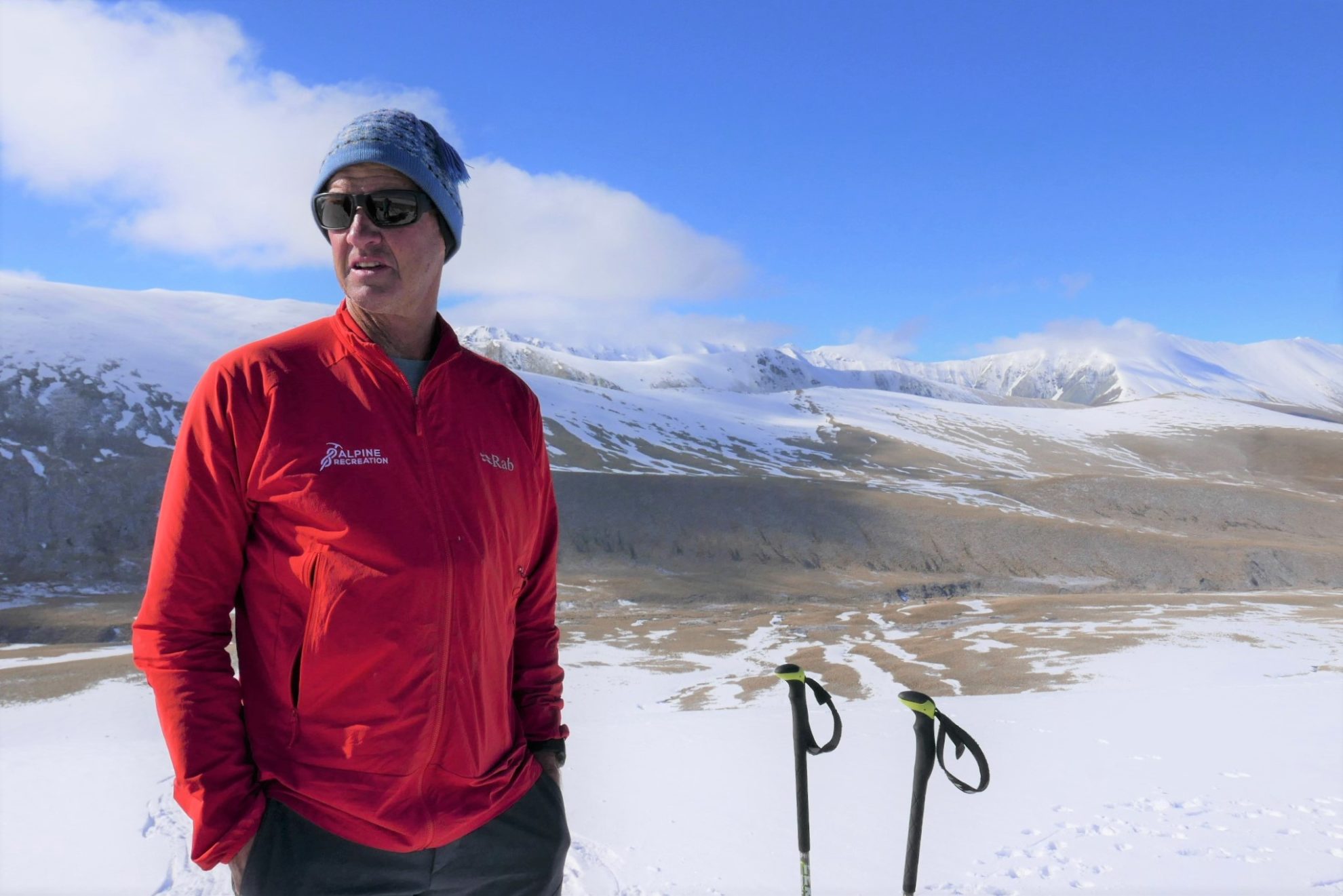
If it’s a hut you prefer, he suggests heading to historic Camp Stream Hut. Munro is a member of the Mackenzie Alpine Trust, which cares for this character-filled former musterer’s hut and other historic huts in the region.
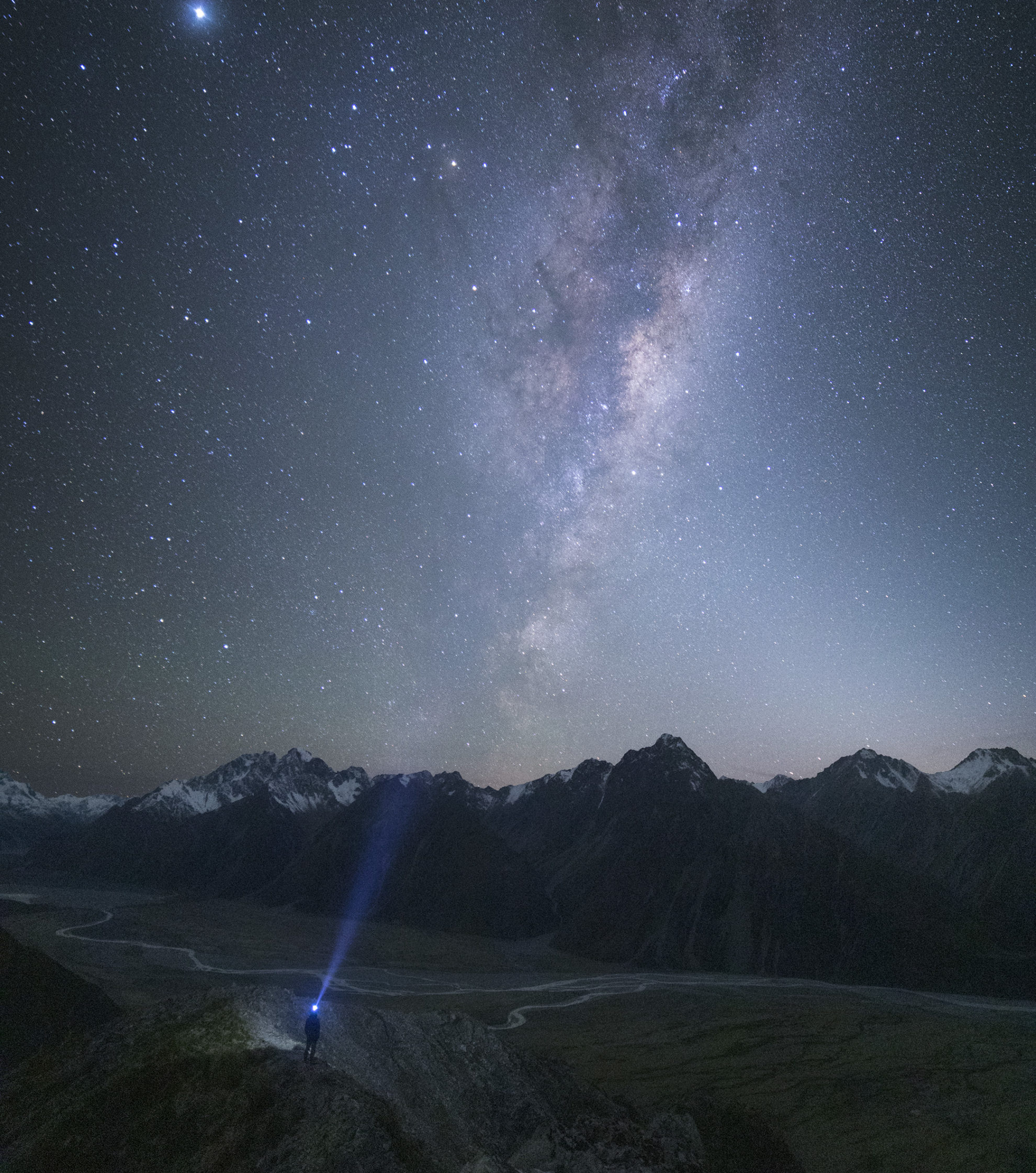
“While the full vista might be obscured by the surrounding hills and mountains, the night sky is still incredible.”
The Two Thumb Range is easily accessible from Tekapo. It’s a four-hour walk to Camp Stream Hut or to a great camp spot, says Munro.
Much of the Two Thumb Range is encompassed in Te Kahui Kaupeka Conservation Park.
“Te Araroa Trail goes through this area and a visit to see the stars could incorporate a great two to four-day tramp,” says Munro. If it’s a hut you prefer, he suggests heading to historic Camp Stream Hut. Munro is a member of the Mackenzie Alpine Trust, which cares for this character-filled former musterer’s hut and other historic huts in the region.
“While the full vista might be obscured by the surrounding hills and mountains, the night sky is still incredible.”
The Two Thumb Range is easily accessible from Tekapo. It’s a four-hour walk to Camp Stream Hut or to a great camp spot, says Munro.
Much of the Two Thumb Range is encompassed in Te Kahui Kaupeka Conservation Park.
“Te Araroa Trail goes through this area and a visit to see the stars could incorporate a great two to four-day tramp,” says Munro.
His suggested trip includes four huts and crosses the Two Thumb Range from Bush Stream, in the Rangitata Valley, to the Round Hill Ski Field near Lake Tekapo.
On Rakiura, whether you’re a highly experienced tramper or just want a stroll out of Oban township, there’s some mighty stargazing, says DOC ranger Phred Dobbins.
Dobbins has worked on the island since 1984, largely in a biodiversity role that has taken him from remote coast to mountain top. He’s waged war on rats and feral cats which frequent the mountain breeding grounds of the critically endangered southern New Zealand dotterel.
“There’s lots of bush on the island so anywhere coastal is best for clear views of the sky,” Dobbins says. “Even just out of town there are some good open spaces. The street lights are dimmed and face downwards. That’s all part of achieving our Dark Sky status, so there are great views of the stars. The golf course is also a good spot.”
He says views of the night sky can be had on the coastal tracks, on the beach at Port William or anywhere along the North West Circuit.
“We had a stunning night at Mason Bay recently,” he recalls. After a three-hour electrical storm, “the stars came out and then we saw an aurora”.
“Big Hellfire Beach is one of my all-time favourite places; you get stunning sunsets then an uninterrupted view of the night sky and the stars.”
Note, it’s a 200m grunt up a massive sand dune back to Big Hellfire Hut, if that’s where you’re staying.
For experienced trampers, the Tin Range is out in the open, says Dobbins. “It’s all sky, but it’s definitely a challenging trip, plus the range is also prone to cloud.”
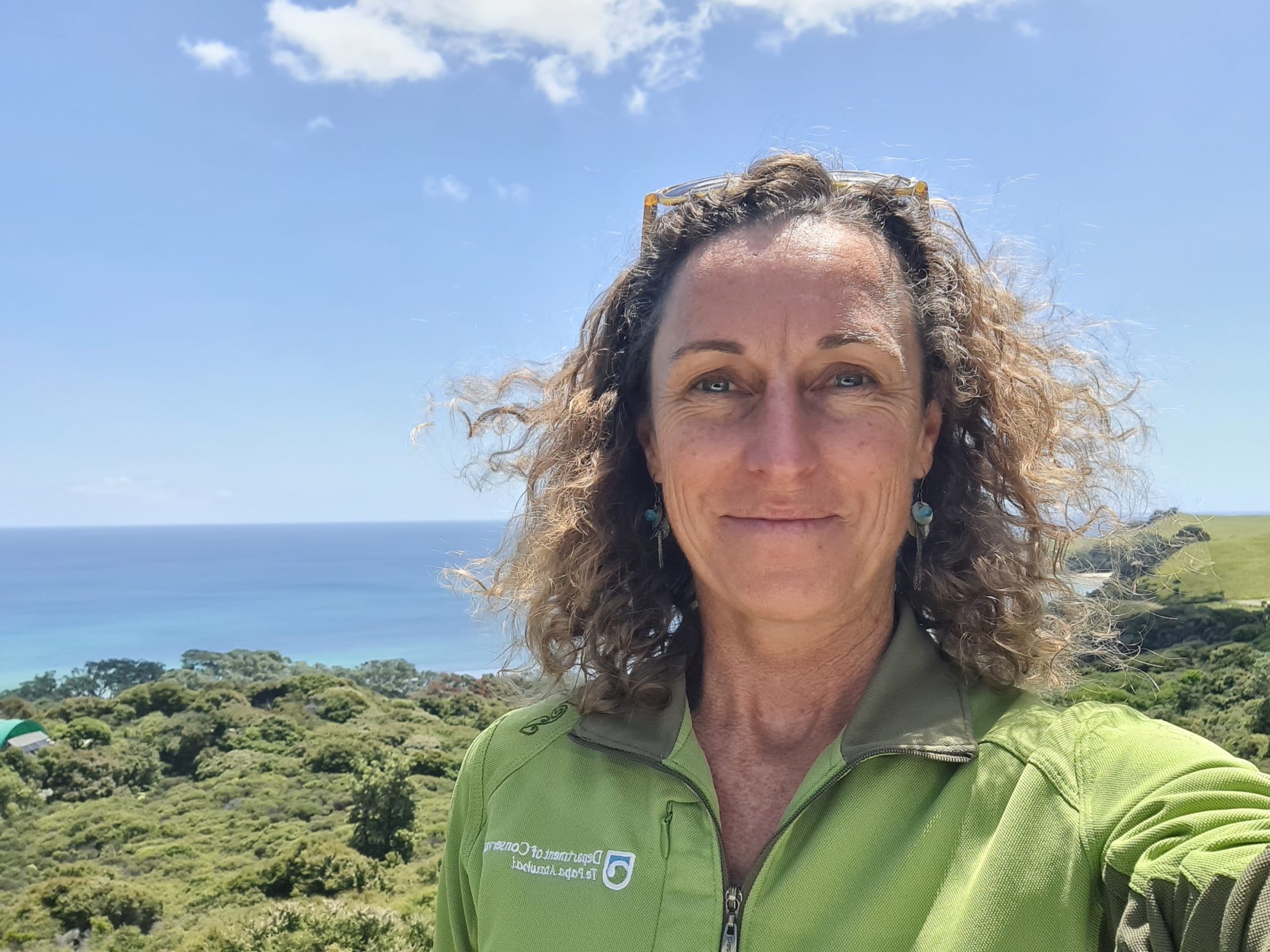
Mt Heale Hut is the place to go on Aotea / Great Barrier Island, says DOC operations manager Kirsty Prior.
“The hut sits in the open, right on the edge (of the ridge) and there’s a big verandah with a great view. We went up there last winter. It was awesome; it got dark really early, it was crystal clear and all the stars came out. It was like we could reach up and touch them.”
The night sky was so bright and clear, some visitors stayed inside the warm hut and viewed the stars through the hut windows.
Prior says it’s also worth walking to the viewing platform on the summit of Hirakimata / Mt Hobson. It takes about 30 minutes from the hut and there’s a good track, though it’s mostly in the bush so take a torch. Also, she warns, watch out for crashing black petrels.
Aotea hosts the larger of just two remaining breeding colonies for the once prolific black petrel. The birds nest on the summit and have been known to crash into star-gazers. “They do that; their burrows are around the summit and they come in just on dark, crash through the trees, rest a bit and then head off to find their burrow,” says Prior.
The summit platform was built so people wouldn’t stand on their burrows. The birds are present during the breeding season, which is from October to May.
Prior says Mt Heale Hut is easy to reach via Windy Canyon on Palmers Track (3-4hr).
“It climbs through the bush, steeply through the sheer rock canyon, then you get views to the north over Okiwi Basin and Whangapoua Beach.
“It’s a good workout, up lots of steps, then more reward as you reach the spine of the ridge and get views to the east and south to Medlands Beach and Tryphena Harbour.”



