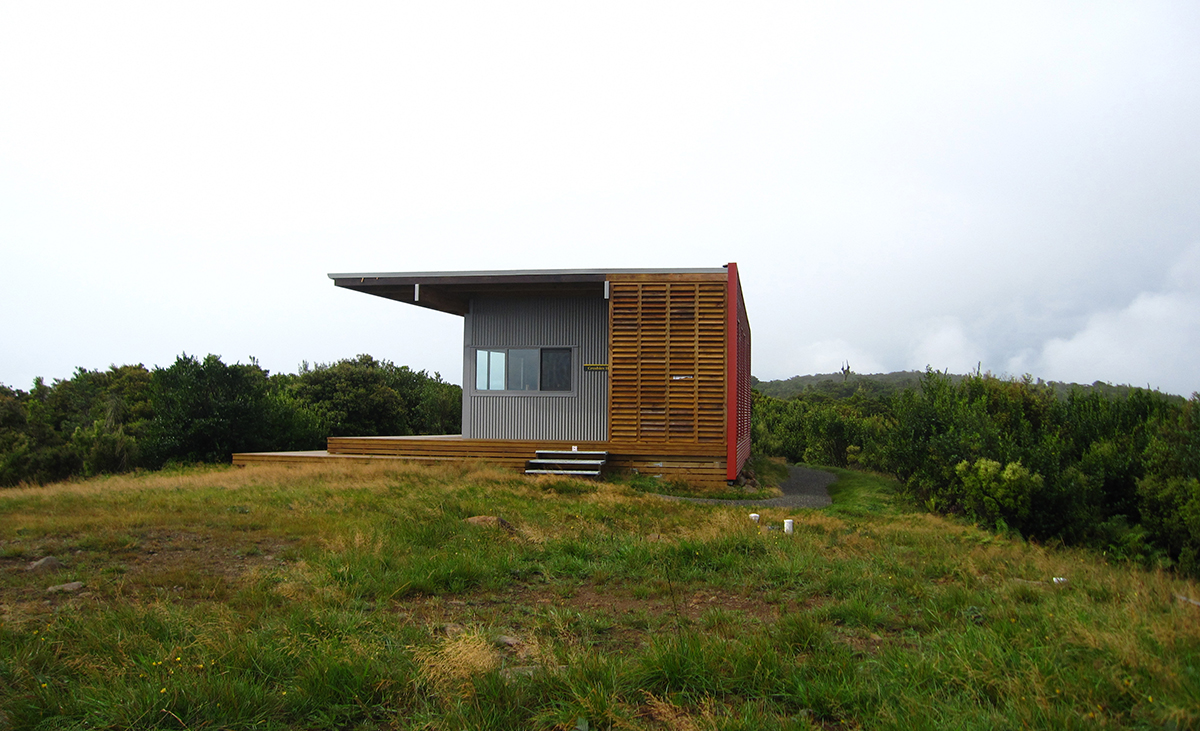
It was an uncharacteristically wet Saturday in March when we set out from Auckland to do the Crosbies Settlement tramp in the Coromandel Ranges. By Thames, the rain was coming down in bucketfuls and seven of our group had texted to say they weren’t coming. The remaining three of us regrouped over a long lunch at the cosy Brian Boru Hotel. It was early afternoon when we finally convinced ourselves to start out from Booms Flat in the Kauaeranga Valley.
There are eight different routes to Crosbies. The Booms Flat Track starts off in pine forest before winding steeply into native bush. The track is narrow and not well-used. A fallen tree completely blocked the path at one point and required careful climbing to negotiate. The bush was mossy and lush, with bright kidney ferns and colourful fungus. We stopped to examine a blue bird’s egg resting in the squelching mud, only to realise it was a pouch fungus with its stem hidden in the leaf litter.
After an hour of walking, passing by the side of Table Mountain, we reached the first track junction, where the Booms Flat and Whangaiterenga tracks meet. From there it was another hour to Orange Peel Corner where the Tapu Road Summit is signposted at six hours, Thames at 5.5 hours and Crosbies at 2.5 hours.
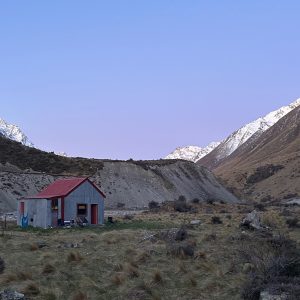
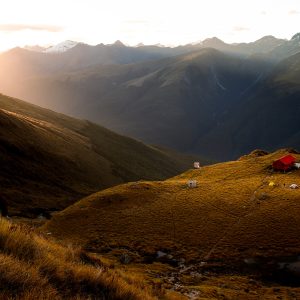
We arrived, soaking wet, about four hours after setting out. The hut is on the main ridge of the Coromandel Range, at the northern end of the settlement. The area has some serious history. In 1880, five sections of 121ha were allocated to prospective settlers. The land was regarded as waste land, and would become freehold if settlers developed and occupied it for a set period of time.
The settlers diligently went about burning off, fencing, planting fruit trees and digging gardens. Farming was not successful in the wet, windy and cold conditions, and coal was mined at the eastern end of the settlement and kauri gum collected to supplement settlers’ incomes. As the Crosbies allotment was the only block with ongoing occupation, the whole area became known as Crosbies Settlement. Access was by foot, then horse, and finally by horse-drawn sledge.
The Lyes family bought the property and built a dairy, a two-bale cowshed, a three-horse stable, and a five-room house. They had a field in carrots and pickled their own meat. But the yearlings they brought in for drystock died in the harsh weather, and the difficult access took its toll. In 1928, the Lyes abandoned the settlement. By the 1950s, more than half of it had reverted to bush. Several more attempts were made to farm the land, but by the 1970s the only building left standing was a woolshed and the settlement was made part of Coromandel Forest Park. The woolshed served as a tramper’s hut until it was blown away by Cyclone Bola in 1988.
The current hut was built in 2010 and the first thing we did was light the wood stove. It’s a one-room hut with 10 bunks, and maybe it’s because we were cold, wet and muddy, but I would rate it as one of the best huts I’ve stayed in.
We’d finished dinner, dried our clothes, told some ghost stories and bunked down when we heard noises outside. At 10pm on a wild and windy night in the middle of nowhere, I was sure no good could come of this. We trained our headlights on the door which burst open and a soaking wet, laughing member of our tramping party fell in. Brendon had regretted his earlier decision to pull out of the tramp and decided to join us after all.
Next morning we looked around the settlement before heading back the way we came. The site is largely undisturbed, with fences, farm machinery, building materials, low stone walls and exotic trees. Close to the hut is a memorial for Swedish tourists Heidi Paakkonen and Urban Hoglin, who went missing in the bush in 1989.
The hike back was hard going and we took turns sliding down the muddy track. There was no warm hut with a fire at the end of it but it was a relief to get back to the car park.
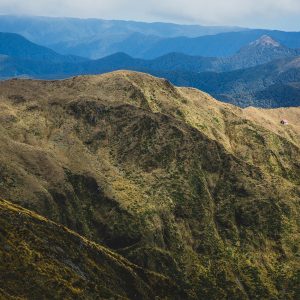
This is a rewarding short tramp and we will definitely be back to try one of the other tracks to Crosbies, hopefully in better weather so we can experience the spectacular views.
– Vanessa James

34 years of inspiring New Zealanders to explore the outdoors. Don’t miss out — subscribe today.

Questions? Contact us