Ruahine revels

April 2011

Read more from

April 2011

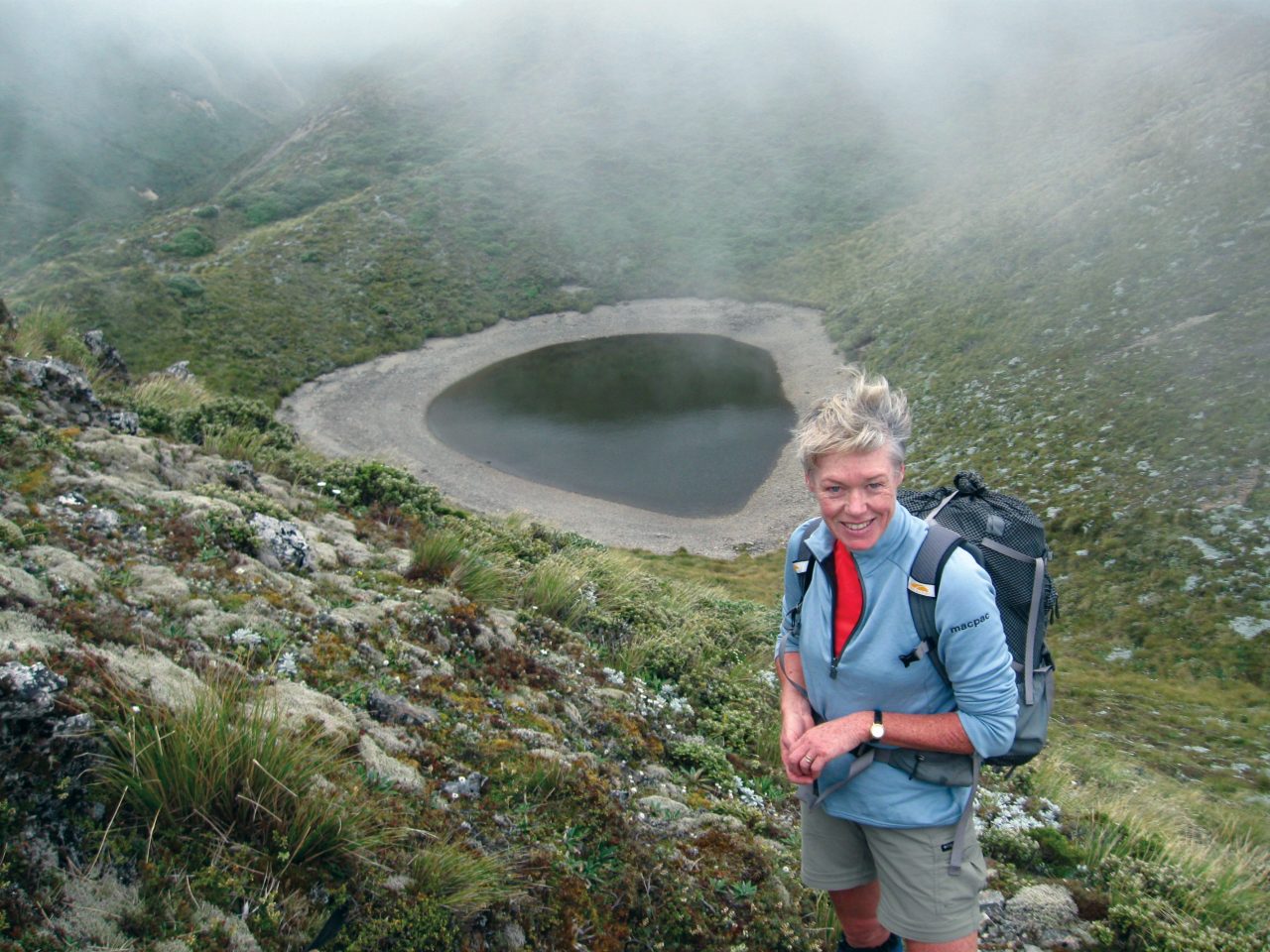
The small lake north of Ina Rock. Photo: Lisa Mead
Parks Peak Hut and Kylie Bivouac, Eastern Ruahine Forest Park

It’s a warm evening as we leave the car in an anonymous grassy paddock an hour inland from Napier and shoulder our packs to begin the relentlessly steep ascent to Parks Peak Hut.

Quickly passing Sentry Box Hut, built in 1960 and originally a day’s hike from the former road end, we climb up the spur through regenerating scrub, cresting a rocky knoll at 978m, which affords great views back towards Hawkes Bay.

Cresting the range around 1300m, we make loud ‘we are not deer’ conversation and sing songs to alert any hunters out for an evening foray. We hike a further 30-minutes through beech forest to reach the pristine and newish six bunk hut shortly before 9pm.

Next morning we descend just as steeply to Upper Makaroro Hut, perched a few metres above Makaroro River. The hut is the same vintage as Geoff (1956) and equally well maintained. A sign cautions that the route downriver to Barlow Hut is for experienced trampers only, but the river appears low and the sun reaches deep into the entrenched walls of the gorge.

Our route criss-crosses the river with occasional waist deep wades through clear pools. I slip and take an unplanned dunking but soon drip dry. Multiple bluffs and slips create occasional choke points in the impressive gorge which soars over 50m above our heads at times – it’s definitely not a wet weather option.

After a scrog stop at Barlow Hut (again a well- maintained older hut) we begin the long haul up Colenso Spur to the open tops of the main Ruahine Range. William Colenso was a 19th century missionary, printer, botanist and explorer who made several long trips through trackless forest in the company of Maori guides. By lunchtime the sweat is pouring off us and we still have another hour or two before we crest the range in mist in the late afternoon. So much for the view.

The tops are not poled but the route north along the main range is fairly straight forward as far as a distinctive small lake. We then follow a compass bearing in low visibility, finding first the trig at Tupari (1527m) before veering eastward and are thankful when a sign appears out of the murk, pointing the way down to Kylie Bivouac.

Marker poles guide us down through leatherwood and tussock and suddenly a weathered orange structure looms out of the mist. It is of the generous dog kennel variety – comfortable for two and cosy for three or four friends. The last visitors were DOC staff some seven months ago, who repaired the water tank tap. Kylie Biv receives only a handful of visitors each year and we can only imagine what the view must be like from the open air thunderbox loo.

The mist develops into drizzle and rain – a perfect opportunity for pit-bashing after an 8.5hr day.

A reddish dawn stains the sky and the tussock is blowing horizontally as we leave the biv by 7.15am, donning over-trousers, gloves, parkas and woolly hats just before reaching the tops. Summer seems a million miles away as we strain against the howling wind, struggling to stay upright and make headway through the almost tangibly solid wall of mist which muffles the contours of the range.

After 30 minutes or so we decide discretion is the better part of valour and plan to abandon the hostile conditions on the main range and escape down Totara Spur back to Upper Makaroro Hut. There are no maker poles and the broad range offers few clues as to our position; we make several exploratory forays out from a lone cairn but cannot locate the spur down.

Out with the compass again and we come across a junction sign to Ruahine Corner Hut – we have overshot our spur and head back on a bearing, hugging the eastern side of the ridge. Suddenly there is a break in the swirling cloud cover and we glimpse our escape route.

It seems we got out of bed too soon! As we linger another 20 minutes in a sheltered hollow the fog disperses and the northern Ruahines are revealed – green and gold against a blue sky. Our traverse is back on and we navigate the kinks of the range over Piopio (1437m) and then eastward, with Mts Ruapehu and Ngauruhoe silhouetted on the horizon. There are occasional faint trails through tussock, spaniards and masses of alpine daisies, but this is no trampers’ highway.

We shed the storm gear and eventually pick up a few cairns and permolat markers through a bushy saddle which leads onto a starkly beautiful plateau, past semi-derelict Aranga Hut and on to the junction of the track leading to No Mans Hut. We turn south towards the distinctive outcrop of Pohatuhaha (1368m) which offers excellent views back across to the dress-circle of the ranges we’ve just traversed. We can even make out Kylie Bivvy and it is very satisfying to see our route spread out before us. It is less than an hour back to Parks Peak Hut, where we stay one more night before we drop back to our car the next morning.

– Lisa Mead

About the author

Ashleigh Martin

More From Wild Trips

Related Topics

Similar Articles

75 top trampers’ peaks

Gambolling in the Goulter

A dark experience

Trending Now

The 2026 Wilderness Outdoor Photographer of the Year competition

Otamatapaio Hut, Oteake Conservation Park

Why we’re putting on weight

Dirt bike trial on Tongariro Northern Circuit gets approval

A lofty location for Brass Monkey

Subscribe!
Each issue of Wilderness celebrates Aotearoa’s great outdoors — written and photographed with care, not algorithms.Subscribe and help keep our wild stories alive.

Join Wilderness. You'll see more, do more and live more.

Already a subscriber?  to keep reading. Or…

34 years of inspiring New Zealanders to explore the outdoors. Don’t miss out — subscribe today.

Your subscriber-only benefits:

All this for as little as $6.75/month.

1

free articles left this month.

Already a subscriber? Login Now