Best for bikepacking and fast-packing
Plusses: Extra-short folding poles, bikepack-ready, highly livable, light.
Minuses: Care required in high winds, stuff sack needs improvements.
1710g / 2.7m2
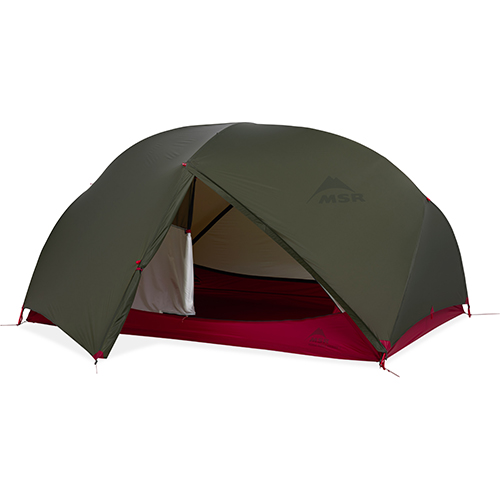
Features: This is MSR’s first bikepacking-specific tent. It has extra-short folding DAC alloy poles and a waterproof stuff sack, designed for direct mounting onto handlebars. The tent’s design is popular and much imitated, and furthers some of the classic Hubba Hubba features with plenty of leg- and headroom and larger vestibules for gear.
Pitching: It’s a fast, uncomplicated pitch, easily managed by one person except in high winds. On level ground the tent has a uniform tension and is well supported. The ground-level tabs that the pole ends lock into are alloy, making them virtually indestructible. As with previous Hubba Hubba 2s I have used, the fly has a tendency to touch the inner at the tent ends and can contribute to moisture transfer into the inner.
Comfort: The floor is rectangular, so taller users, or those with a lot of gear, will appreciate the wider foot area. It’s not a big difference, but combined with increased headroom, it’s enough to make it feel more relaxed and roomier than similar tents. Additional features include: an adjustable clothesline, rain gutters on the fly (to prevent water dripping in an open door), and nifty little struts to maintain a ventilation gap at the top of the fly zips. I would have liked larger and more conveniently placed internal pockets, and a daisy chain on the fly for drying pack towels and so on.
In use: On one windy night I appreciated the tent’s high nylon-to-mesh ratio on the inner. This helps bridge the gap between 3- and 4-season tents by keeping the inner a bit warmer, and less permeable to dust than those with large areas of mesh. It also means the tent is more of an all-rounder for different temperatures and environments.
The tent’s Achilles heel is high winds: it can buckle when sideloaded. Campsites should be chosen with this in mind. The tent stuff sack is ready for mounting on a handlebar, and has removable foam spacers and excellent locking tension buckles. However, the shock cord head tube strap is too stretchy to be useful (I replaced it with a burlier nylon strap). There was capacity to also fit in a down jacket and quilt, making it nearly as useful as a dedicated handlebar carry system. The tent poles banged on my fork crown, so their position on the outside of the bag needs to be adjustable.
Value: It is more expensive than a standard freestanding two-person tent, but brings excellent features that many will be happy to pay extra for.
Verdict: A highly versatile tent with some features that will benefit a variety of users, not only bikepackers.