Lakeside serenity

December 2014

Read more from

December 2014

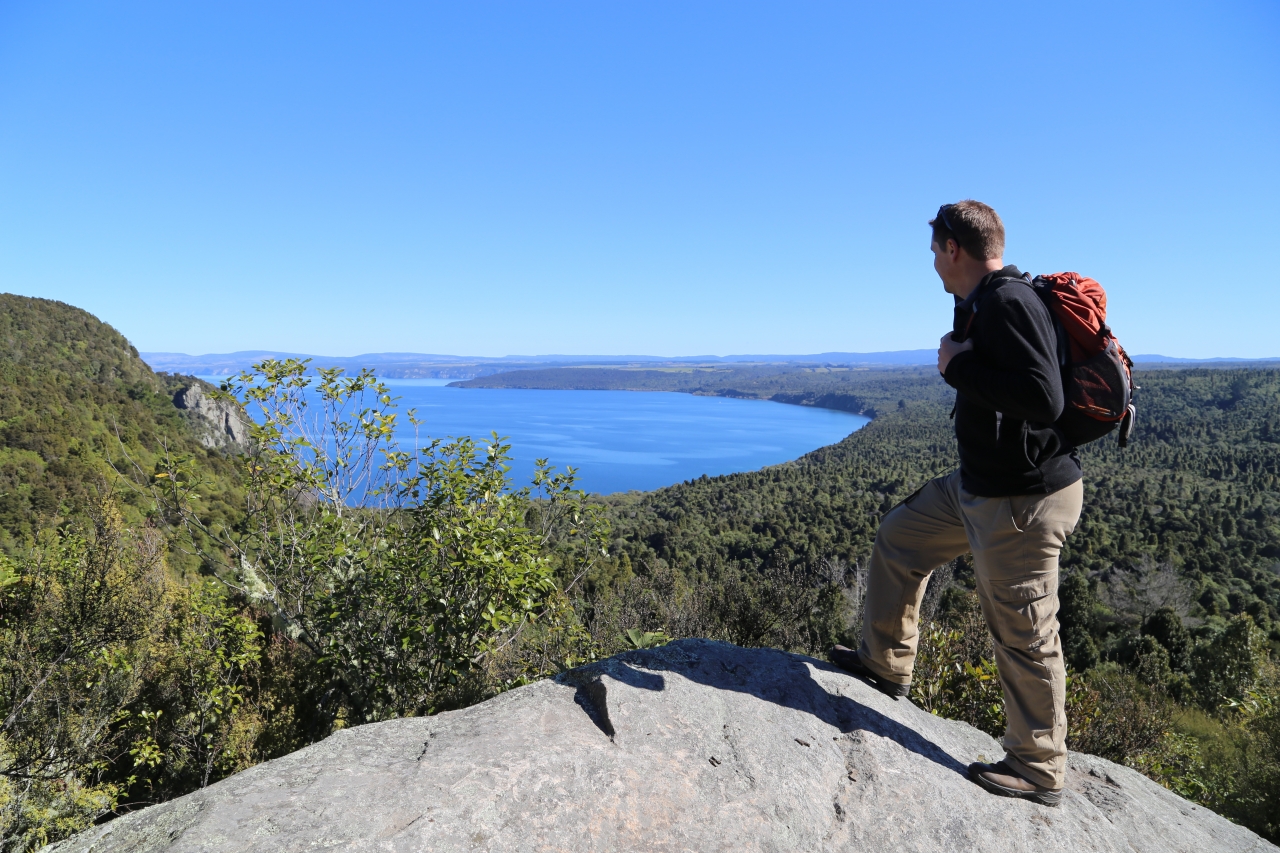
The lookout over Kawakawa Bay. Photo: Matthew Pike

Kawakawa Bay Track, Taupo

This is a great way to experience Lake Taupo while avoiding the hustle of the town. Kinloch is a small village just 20km or so west of Taupo and, from here, there are two popular mountain bike tracks – the W2K (Whakaipo Bay to Kinloch) and the K2K (Kawakawa Bay to Kinloch).

My partner Lauren and I chose the K2K, heading west over the peninsula to Kawakawa Bay, where there’s no road access. In fact, from here there’s no paved road access to the lake until you reach Te Hape Bay in the south-western corner of Lake Taupo, and virtually all the coastline is bush, giving this side of the lake a much wilder feel.

The tracks may be designed for bikers but they also make excellent not-too-strenuous walking tracks. Runners use the tracks too.

We set off along a path that runs adjacent to the shoreline and it didn’t take long for the white mountains of Tongariro National park to appear from behind the Whangamata Bluffs. Soon the path veered away from the shore to go through bush and there were few clues, other than the occasional engine noise from a boat, that the lake was nearby.

The track gradually rose and fell several times and crossed numerous streams before reaching the climb over the peninsula.

Being designed for mountain bikes, the gradient was always agreeable, but it was so full of bends that I lost my bearings. This was at no stage disconcerting because the track’s so easy to follow, but I was convinced the map was out-dated and the track was taking me around the headland to the south of Te Kauwae.

There is the occasional view of the impressive Te Tuhi Point on the Whangamata Bluffs, which drops steeply into the water. But it was not until we reached a lookout over Kawakawa Bay that I realised we’d been following the same route as on the map all along.

The view from the lookout was amazing – overlooking forest-clad coastline and the water a tremendous blue in the early afternoon sun. Te Kauwae blocks the Central Plateau mountains, but this hardly seems to matter.

The large rock at the lookout provided the perfect platform to stop for lunch. This was interrupted several times by bikers and runners also keen to admire the view.

The thought of an ice cream at Kinloch was enough to entice Lauren back to the start. But I decided to complete the track all the way to Whangamata Rd. The path quickly descended to Kawakawa Bay via some dank, dark gullies which you can hardly imagine the sun’s rays ever touching.

Kawakawa Bay was glorious. A narrow, shingle strip with bush to one side and calm, glistening water the other, below the rocks on the steep slopes of Te Kauwae.

There are toilets here and a raised camping shelter with log fire. The track continues close to the water for only 100m or so before heading deeper into the bush and beginning the climb.

An innocuous bridge took me over a deep ravine – dropping a long way between a gap in the rock so narrow it was little more than a crack. It would be easily missed. Soon, two benches provide a rest, if needed, and one of the last panoramas over the lake, this time with the mountains of Tongariro in full view.

The track follows a stream up a little valley, leaving the native bush for mixed forest and paddocks. At one stage, I crossed a farm track through a tunnel beneath a bridge made from earth and used tyres.

The bird life changed too – gone were the numerous tui and fantails and now I could hear magpies, chaffinches and paradise ducks.

When I reached a longdrop toilet I heard cars once more and saw my very obliging girlfriend waiting for me in the car park.

Matthew Pike

About the author

Matthew Pike

More From Wild Trips

Similar Articles

75 top trampers’ peaks

Gambolling in the Goulter

A dark experience

Trending Now

Trampers say decision to remove beloved hut failed to follow process

2026’s guide to outdoor socks

Roaming the red rocks

Foggy Peak, Korowai-Torlesse Tussockland Park

Lowry from Days Bay, East Harbour Regional Park

Subscribe!
Each issue of Wilderness celebrates Aotearoa’s great outdoors — written and photographed with care, not algorithms.Subscribe and help keep our wild stories alive.

Join Wilderness. You'll see more, do more and live more.

Already a subscriber?  to keep reading. Or…

34 years of inspiring New Zealanders to explore the outdoors. Don’t miss out — subscribe today.

Your subscriber-only benefits:

All this for as little as $6.75/month.

1

free articles left this month.

Already a subscriber? Login Now