The Four Sisters Walk in Northland’s Waipoua Forest is to be temporarily closed.
The Department of Conservation and Te Roroa (kaitiaki over Waipoua Forest) have announced that the Four Sisters Walk has temporarily closed. This is due to the discovery of the kauri dieback pathogen, Phytophthora agathidicida (PA), in the vicinity.
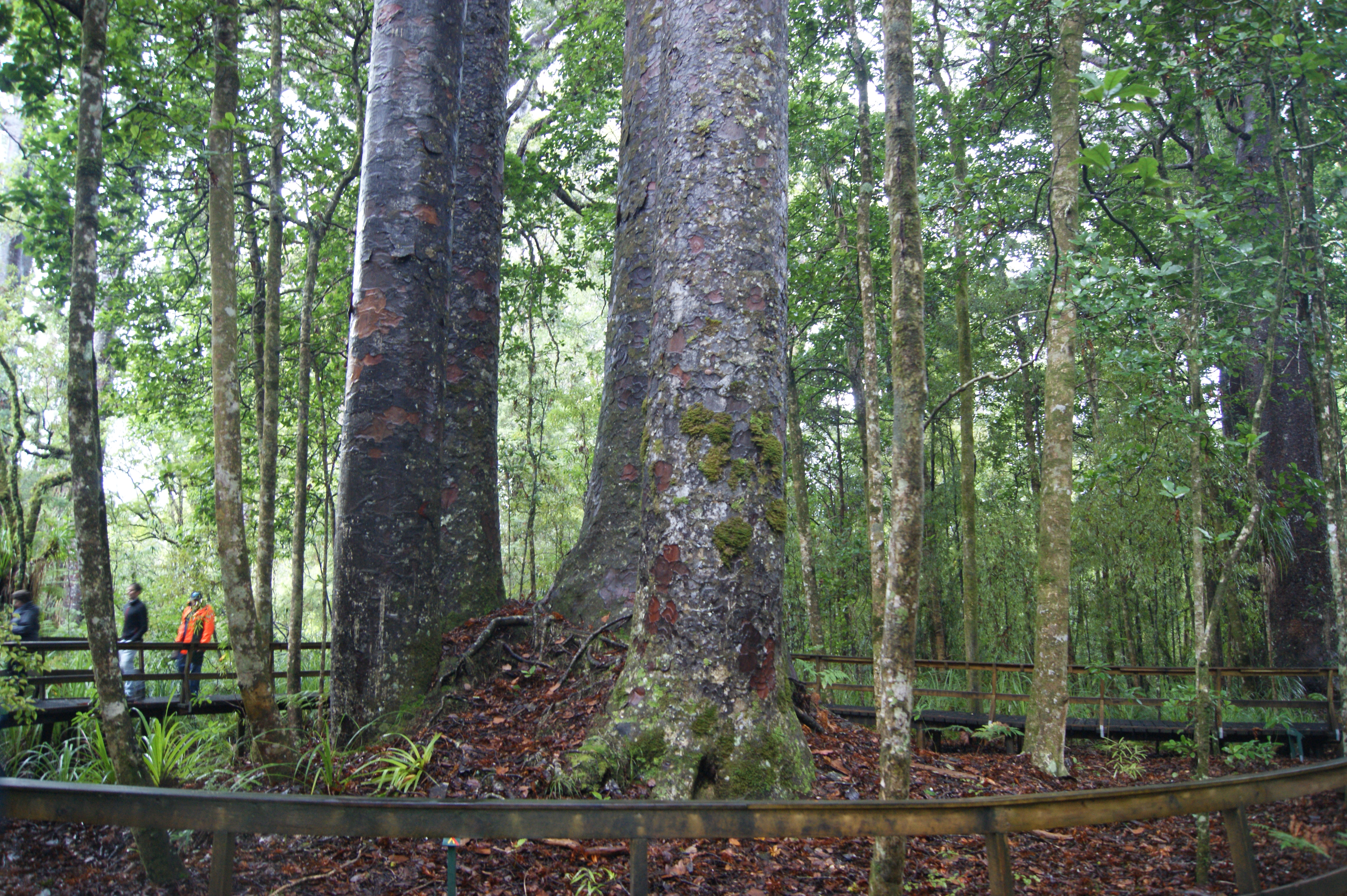
The walk is a short loop that leads through kauri and rimu forest to see the ‘Four Sisters’, an impressive stand of four kauri trees growing extremely close together.
A viewing platform encircles the trees and protects the habitat from any disturbance.
Test results from recent soil samples were positive for two sites at the stand of kauri trees named ‘the Four Sisters’. The walk will close until further notice from today and will be monitored for unauthorised visitor usage. The walks to Tāne Mahuta and Te Matua Ngahere remain open.
DOC northern North Island operations director Sue Reed-Thomas said DOC and Te Roroa are working in partnership to manage the disease at the Four Sisters.
“The immediate closure of the track is the best way to protect the kauri until an informed decision is made on future infrastructure at the site. People should understand that if they access the closed track, and the surrounding site, they are putting our kauri at great risk.
“Waipoua Forest already has limited public access and most visitors use the formed tracks. To help protect the forest’s kauri, it’s important for visitors to stick to the open tracks and clean their footwear thoroughly before entering and leaving,” says Sue Reed-Thomas.
Te Roroa staff conducted the soil sampling in February to establish how close the disease was to the Four Sisters.
Snow Tane, General Manager for Te Roroa, said that although most visitors to the Four Sisters are well behaved, a small number step off the boardwalk and risk spreading the disease.
Alan Nesbit, Chair of the Te Roroa Manawhenua Trust, is concerned an iconic stand of trees, such as the Four Sisters in Waipoua, is impacted by kauri dieback. The trust, through its technical advisory group, is monitoring the situation closely at Kauri Walks.
Kauri dieback can kill kauri of all ages. It’s a disease caused by a microscopic fungus-like organism that lives in the soil and infects kauri roots, damaging the tissues that carry nutrients and water within the tree, effectively starving it to death.
There is no cure for kauri dieback, and the disease kills most if not all the kauri it infects. It can be spread by just a pinhead of soil.