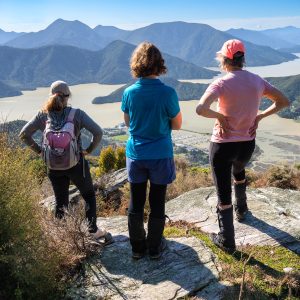
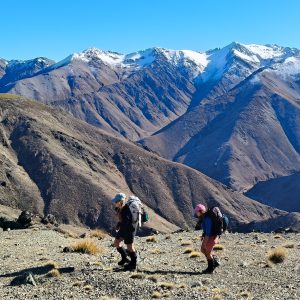
Volunteer groups and regional councils in the South Island have been tramping across conservation areas over autumn to protect high-country landscapes from invasive weeds.
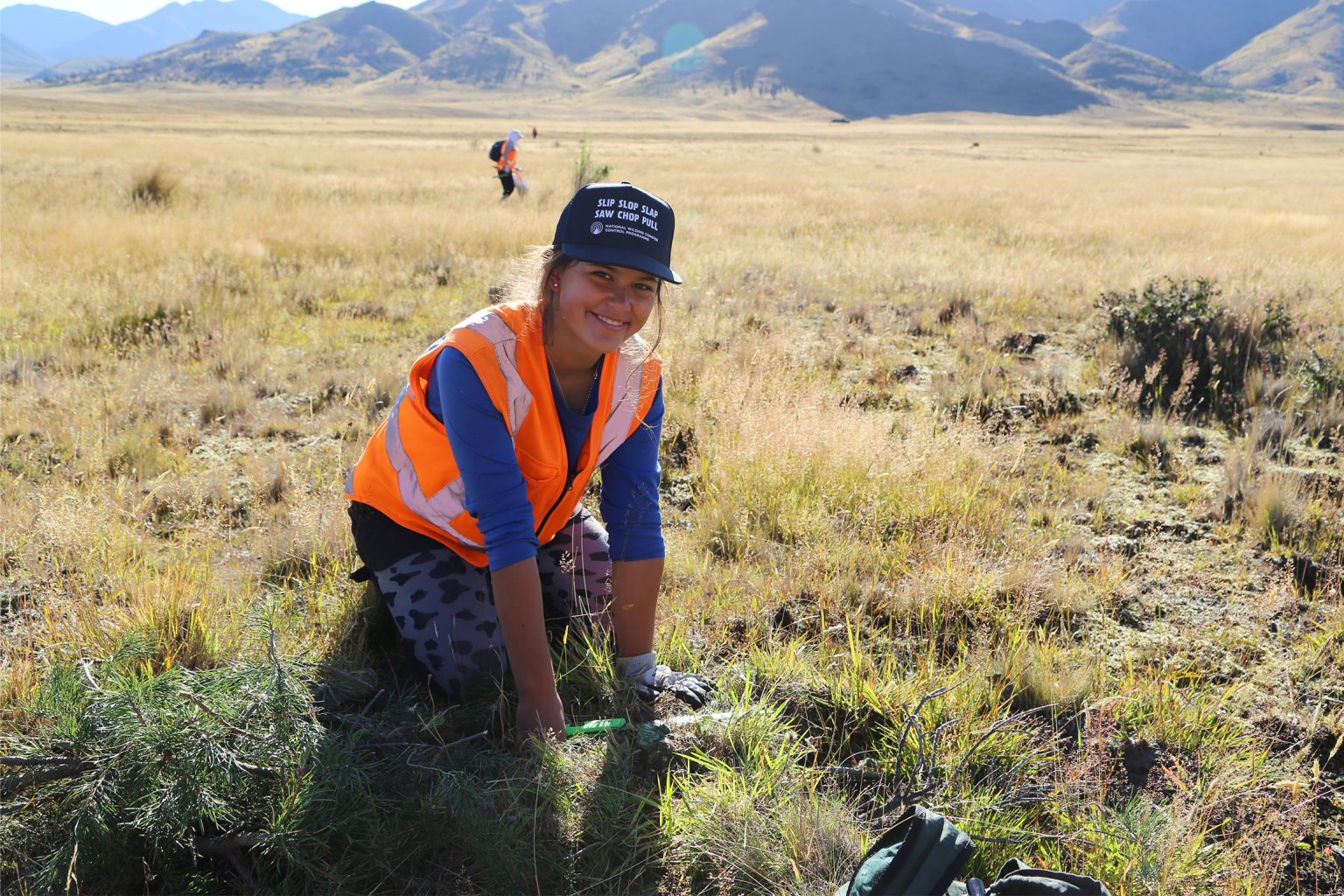
In March, ten volunteers from Hurunui Biodiversity Trust (HBT), guided by staff from Boffa Miskell, a company engaged by Marlborough District Council to deliver specialist wilding pine management, set out along the Molesworth border between Canterbury and Marlborough to remove small to medium Scots and contorta pines.
“Despite some big wins, like removing the seed source of old shelterbelts, much of the work is about holding the line against reinvasion,” HBT trustee Gill Dalmer said, adding that current funding from the National Wilding Pine Control Programme is barely sufficient to achieve even this.
Wilding conifers spread their seeds over several kilometres on the wind, and young pines crowd out native plants and consume huge quantities of water. The volunteers worked to ‘seek and destroy’ isolated trees growing among the alpine vegetation, and cleared more than 1000 trees.
“Like the natives, the pines had been sculpted by harsh weather and grazing into dense bushy plants, which were quite a challenge but no match for our tireless volunteers,” Dalmer said. “Although it was easy to look around and feel overwhelmed by the scale of the wilding problem, we left feeling we had made a real difference.”
A second effort, an annual trip to the Upper Ōhau catchment led by Environment Canterbury, worked on preventing invasive species like old man’s beard, cotoneaster, Russell lupins and rogue willow seedlings from becoming established.
This programme began in 2018 and has resulted in reduced densities of several of these target weeds. “This catchment is one of Waitaha Canterbury’s most unique and intact alpine landscapes. Staying on top of weed threats protects those values for the long term,” said Gina Slee, team leader of South Biosecurity and Biodiversity.