A round-up of news from the wild.
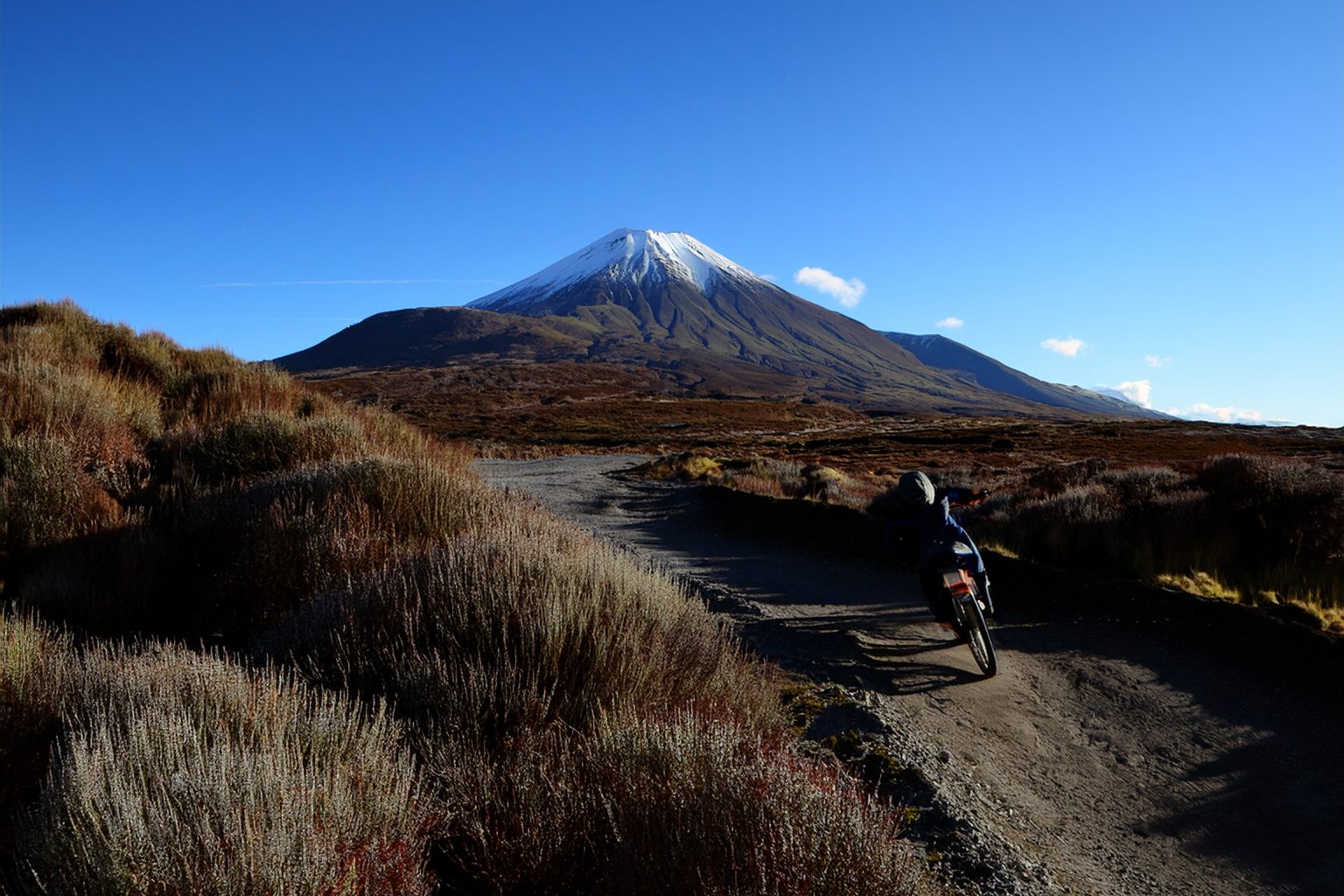
A trial allowing motorised dirt bikes on the Tongariro Northern Circuit has been approved, in what officials say is an effort to explore “new recreational opportunities” in suitable alpine landscapes.
Under the proposal, a small number of riders will be permitted to complete the 45km Great Walk during a three-month pilot programme next summer. Riders will be limited to low-emission trail bikes and must give way to trampers at all times. Officials say the trial is designed to test whether the two user groups can share the track.
Some trampers have expressed concern about the idea of motorbikes on one of the country’s premier walking tracks, particularly on narrow sections of the trail. Riders will be required to slow to walking pace when passing walkers and will be expected to demonstrate a high level of courtesy.
“Participants will be experienced outdoors people who understand the importance of respecting other users,” a spokesperson said. “We expect most interactions will be positive.”
Early interest in the trial has been strong, and Wilderness spoke with several riders who have registered to take part. One rider, who wished to remain anonymous, said the circuit would provide an exciting new challenge. “It’ll be a great way to see the park. I’ve always wondered what the Red Crater section would be like with a bit more momentum.”
Authorities say they are looking at ways to mitigate fire risk and they will monitor the trial closely before making any decisions about expanding the programme to other areas.
Researchers identify most commonly used hut phrase
A 25-year longitudinal study of backcountry hut books has identified the most frequently written phrase in New Zealand tramping history. After analysing thousands of entries across multiple regions, the $18 million taxpayer-funded survey – carried out by the government’s newly established Hut Data Taskforce – found the most common remark was “Nice hut”.
The phrase narrowly beat several other popular entries, including “Good trip”, “Some clag” and “Track muddy”. Researchers say the phrase – which appeared in hut books 754,117 times over the study period – was used regardless of the hut’s actual condition.
DOC to remove navigational signs in new ‘back to basics’ initiative
A new initiative to encourage trampers to be more self-sufficient in the backcountry is set to be rolled out this winter, when new ‘Optional Navigation Zones’ (ONZ) are introduced to selected areas throughout the country. All directional signposts will be removed from the Kaweka Range and cellphone jammers deployed above the treeline in a bid to allow trampers to experience what officials describe as a “more authentic relationship with uncertainty”.
Under the proposal, only pre-internet technology, such as maps, compasses and gut-feeling, will be permitted within ONZs. Cairns will be permitted, but must be limited to three rocks. A DOC spokesperson said the initiative was designed to restore a sense of adventure that had been gradually eroded by increasingly well-marked tracks. “Apps like Google Maps and All Trails have made things a little too easy for the tramping public. Trampers can often walk for hours without once wondering if they’re lost. This is not the way it should be.”
The spokesperson said ONZs would allow trampers to “reconnect with the original spirit of exploration”. To avoid misunderstandings, DOC said each ONZ would be clearly marked by a large sign at the entrance stating: “Navigation beyond this point may become increasingly optional.”
Reaction from the tramping community has been mixed. Some experienced trampers – most of them named Dave, Graham or Liz – have welcomed the move, saying it will encourage trampers to develop better navigational skills. Others have expressed concern that it could lead to trampers ending up in the wrong valley or ridgeline. DOC acknowledged this possibility but said it was consistent with the goals of the programme. “Discovering you are in the wrong valley has been an important part of the Aotearoa tramping experience,” the spokesperson said. “We’re simply restoring that tradition.” The spokesperson added that the department had no plans to remove huts within the ONZs. “Our feedback has been that people still prefer to arrive somewhere eventually.”
Artificial intelligence to assist trampers with route finding
Trampers heading into the backcountry may soon be able to consult an AI assistant before setting out, after DOC announced a trial of a new digital route advisory tool.
The system, called TrackGPT, allows trampers to enter the name of a track and receive instant advice on conditions, weather and potential hazards.
DOC says the technology could reduce pressure on visitor centres, where rangers currently field thousands of questions each year from people wanting to know if the rain will ever stop, how cold it might get and whether the sandflies are “very bad or just normal bad”.
“We’re hopeful this tool will answer many of the common questions trampers ask before a trip,” a DOC spokesperson said, adding that the AI platform will free up time for staff to work on important matters, like designing a new algorithm to manage Milford Track bookings.
Early users of TrackGPT have reported mixed results. One tramper who asked whether a swollen river on the West Coast was safe to cross received the reply, “Based on available information, conditions appear manageable for experienced users exercising caution.” The tramper later told Wilderness he was surprised to find himself being swept downstream almost immediately after entering the Arahura River. “I got washed up near Hokitika, which was actually quite helpful as the internet reception was better there, and I was able to ask TrackGPT how to get back to the road end.”
Search and rescue volunteers say they have already encountered several trampers who were relying heavily on the tool. “One group we ended up rescuing said the AI told them the route should be straightforward,” the SAR volunteer said. “Unfortunately the track it described hasn’t been maintained since 1987.”
DOC said it is working on an updated version of TrackGPT that will be capable of answering the most common backcountry questions, such as, “Are there many people in the hut tonight?”
Record broken for longest time spent ‘just five minutes away’
A new national record has been set for the longest time a tramper has spent claiming a hut was ‘just five minutes away’. Taihape tramper Shane Cunningham reportedly made the claim at 3.17pm while descending a ridge in the Ruahine. According to witnesses, the hut was eventually reached at 5.44pm. Members of the group say Cunningham repeated the remark several times throughout the afternoon. Experts say the phenomenon is common in New Zealand tramping culture and often occurs when a group member is either attempting to maintain morale, or has absolutely no idea where they are.
Hut mattress turned over for the first time in 27 years
Routine cleaning at a West Coast hut has uncovered the underside of a hut mattress for what is believed to be the first time since the late 1990s. The discovery was made when a tramper accidentally lifted the mattress while searching for a dropped headlamp. Witnesses describe the underside as “surprisingly clean”.