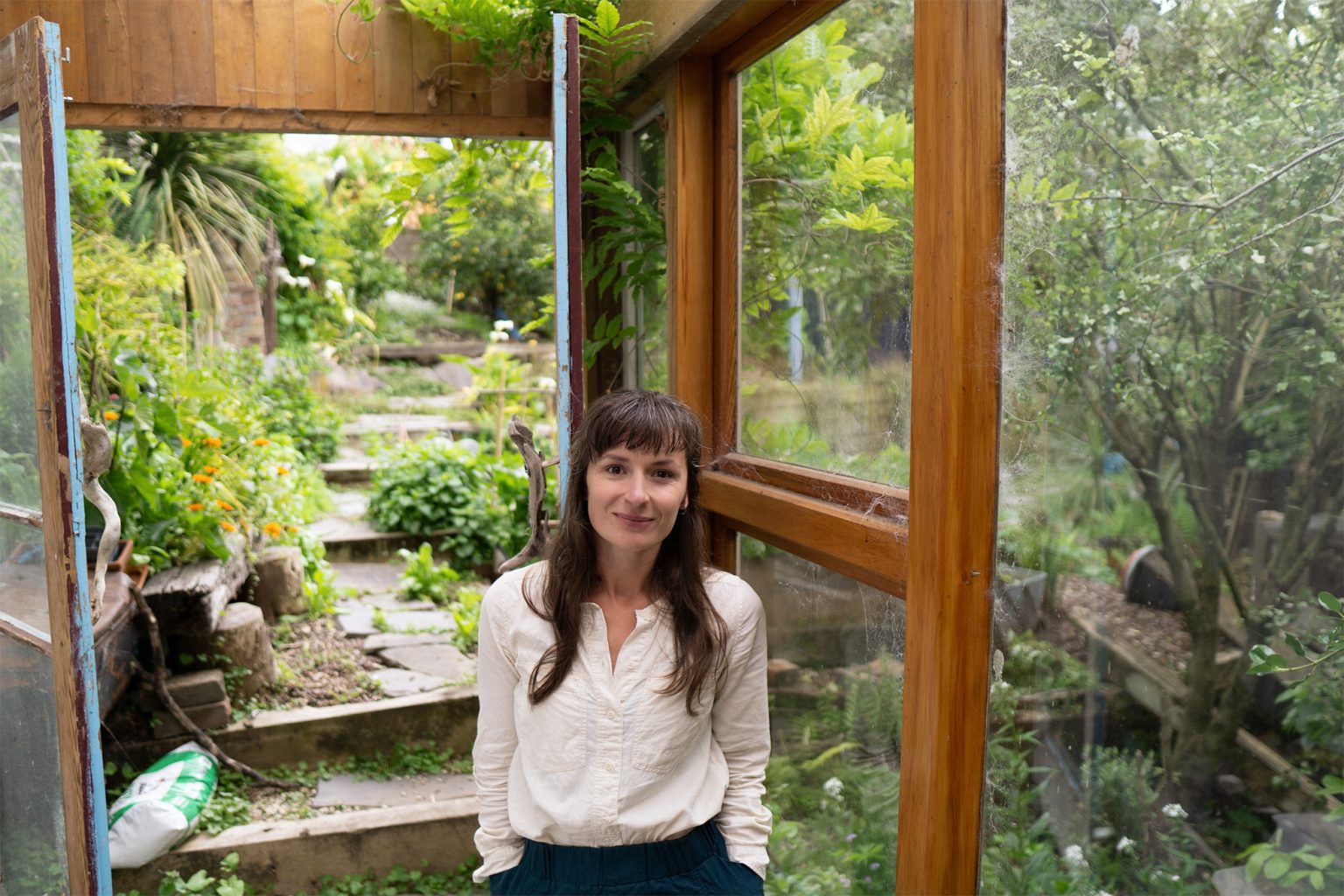
Lily Duval’s life revolves around bugs. She has a master’s in cultural entomology – how we represent insects in culture – and is a researcher for RNZ’s ‘Critter of the week’. Her new book, the exquisitely illustrated Six-legged Ghosts: The insects of Aotearoa, examines the lives of insects in nature, culture and history.
How did you go from being afraid of bugs to being an entomophile?
I wanted to paint all the threatened species of Aotearoa because I felt this overwhelming sadness about the biodiversity we were losing. When I started the project, I thought it would be about birds, but there are thousands of threatened species – and the majority are invertebrates. The more I dug into insects and bugs, the more I was fascinated by them. I think the more you get to know things, the more you like them, generally.
Why the title, Six-legged Ghosts?
I really love the title. Obviously
‘six-legged’ for insects, and ‘ghosts’ for two reasons. The first is we tend not to notice insects – they lead quite hidden lives. A lot of our native species only come out at night, so we have to go looking for them. So, they’re ghosts because they do so much to create our world but we don’t really see them. And second, because many of our native insects are going extinct.
What’s the book about?
It’s my attempt to contribute to raising the profile of insects. Because I’m not a scientist, my lens on the subject is culture. The book looks at the ways we talk about insects, the ways we represent them in our culture – whether in art, museums or the media. I’ve also included some positive stories about insect conservation and species we’ve managed to recover, as well as stories about species that have gone extinct.
Is there a particular insect you’re most fascinated by?
I love the Canterbury knobbled weevil. They’re these little bumpy, cute critters. All weevils have something called a rostrum that looks a bit like a snout. In 1922 they were declared extinct, then in 2004 they were rediscovered at Burkes Pass, next to the highway.
There’s one population in a patch of speargrass and another nearby, and that’s it. They live on this inhospitable, spiky plant that trampers hate – or love to hate – and they’re making do, munching away at the leaves, and if they think there’s a threat they drop down to the base and use the spikes to protect themselves. They’re the only knobbled species left on the mainland, and the reason they’ve declined is because speargrass has been removed from a lot of land, and introduced predators see them as tasty snacks. It’s given me a different perspective on speargrass.
The insects in your paintings have a real sense of dynamism. How do you achieve this?
One of the processes for me has been going from the classic pinned specimen to trying to show the insects alive. I shopped around for images on iNaturalist and a couple of photographers were really generous with making their work available. I would pull up as many images as I could to get the sense of the bug.
Where do you go out into the hills?
The past few years my partner and I have been pretty obsessed with the Remote Huts website, so we’ve been trying to get to a lot of those. I like that those tracks are a little more challenging. We recently did trips to the Olderog bivs on the West Coast and Matiri Range in Kahurangi National Park. We gear our lives around trips as much as we can. And I make sure to have enough energy to look for bugs before bed.
Buy Six-legged Ghosts: The insects of Aotearoa. Wilderness Subscribers get a 10% discount.