Breaching a guardian’s defences

October 2013

Read more from

October 2013

Mount Earnslaw East Peak, Mt Aspiring National Park

After Mount Aspiring, Mount Earnslaw’s East Peak (2830m) is the second highest summit in Mt Aspiring National Park.

The Maori name for Earnslaw is Pikirakatahi. Though the origins of the name are lost it’s thought that during the mountain’s creation a wedge of pounamu was inserted into it and Pikirakatahi is seen as a guardian of nearby supplies of pounamu.

The base of the climb starts in beech forest at 700m and just beyond the tree line at 1000m lie two rock bivvies at the base of Kea Basin. The larger of the two exudes character, with its old makeshift hearth, sooty walls and straw covered floor.

Beyond the bivvies is a band of tussock hills that eventually gives way to scree. The scree then gives way to bands of rock, waterfalls and snow fields. Above that is the bare ice of the glacier leading to Wright Col (2264m).

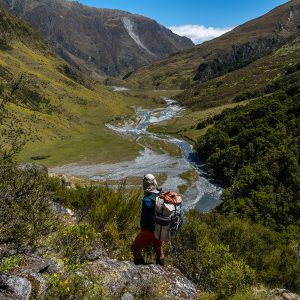
It’s not just the variety of terrain beneath our feet that made the approach so memorable. As we climbed, the views back down the Rees and of the mountains beyond became ever more expansive and impressive.

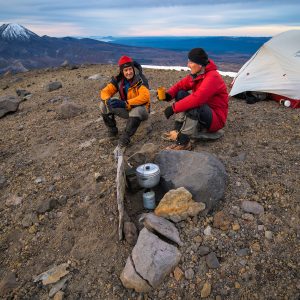
We reached Esquilant Bivouac Hut (2150m) in mid afternoon, leaving plenty of time to ponder the following day’s route up Earnslaw, which towered directly above us; and to just soak up the ambiance of this lovely location.

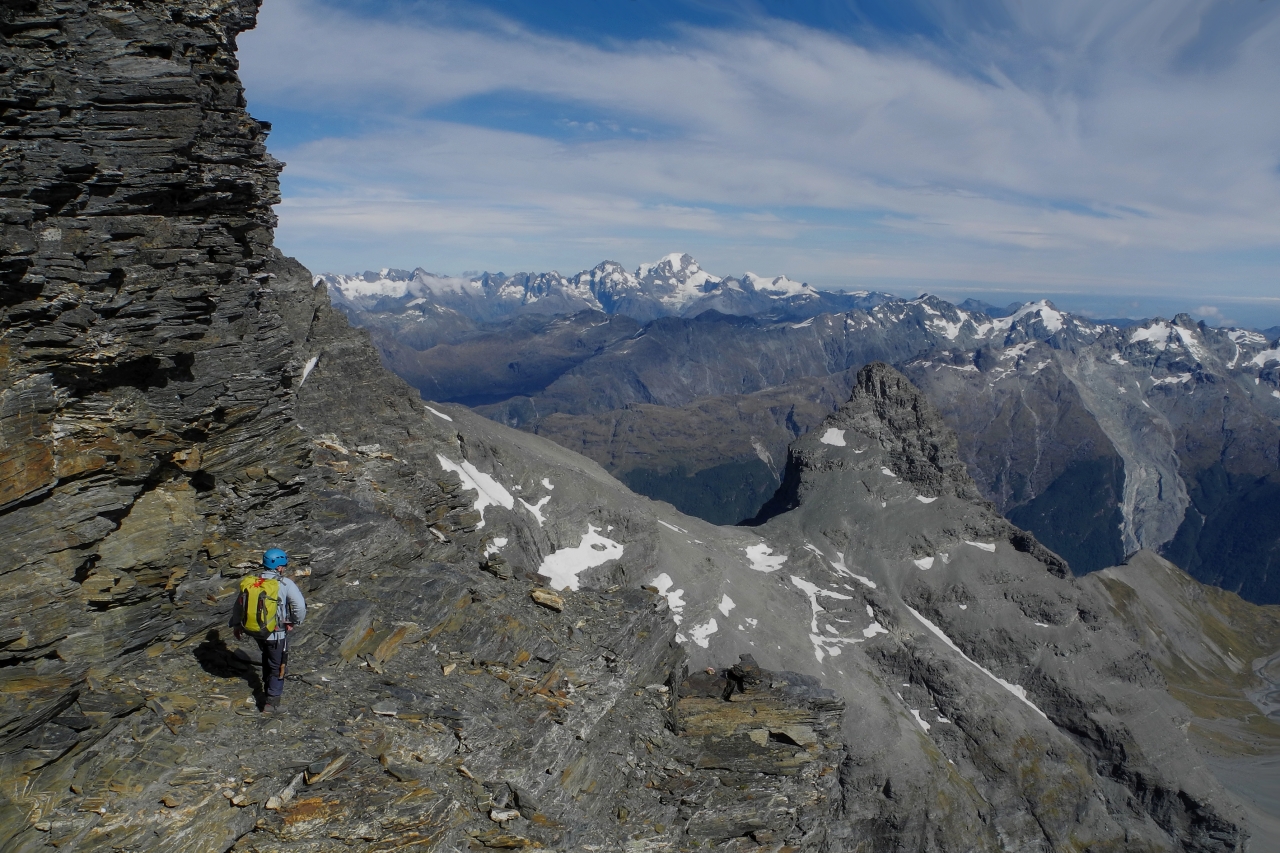
At dawn next morning we began our climb. Until the rays of the sun reached us it was cold, but settled. Like many routes on mountains, once actually on them, they don’t feel as steep as they looked beforehand. The main challenge on Earnslaw East in summer is route finding. The mountain is a huge pile of crumbling rock with many cliffs and gullies. The rock cairns marking the best route up blend into all the other rock around, so it’s important to resist charging ahead and to take your time identifying the cairns as you go.

Two hours of this rewarded us with the summit from where a wonderful panorama encompassing peaks, ridges, glaciers, rivers and valleys opens up in every direction and for as far as the eye can see.

Directly along a frighteningly sheer and jagged ridge is the west peak. From the east summit it’s plain to see why the traverse between the two is still regarded as one of New Zealand’s classic climbs.


Peter Laurenson

About the author

Peter Laurenson

Peter is a tramper, occasional climber, photographer, editor and writer. His adventures, spanning 30+ years, come together on his website ‘OccasionalClimber’. Richmond-based, Peter is editor of FMC’s Backcountry and has published three books: Occasional Climber (2013) and Khumbu (2021) and Aotearoa Light (2025).

More From Waypoints

Similar Articles

Diamond in the rough

Getting Technical

The three trips that changed my life: Celia Hogan

Trending Now

The 2026 Wilderness Outdoor Photographer of the Year competition

A tale of adventure and tragedy

Mt Peel, Kahurangi National Park

The trail of the tenacious

A lofty location for Brass Monkey

Subscribe!
Each issue of Wilderness celebrates Aotearoa’s great outdoors — written and photographed with care, not algorithms.Subscribe and help keep our wild stories alive.

Join Wilderness. You'll see more, do more and live more.

Already a subscriber?  to keep reading. Or…

34 years of inspiring New Zealanders to explore the outdoors. Don’t miss out — subscribe today.

Your subscriber-only benefits:

All this for as little as $6.75/month.

1

free articles left this month.

Already a subscriber? Login Now