Nominations are open for this year’s Wilderness Outdoor Awards;
click here to nominate your favourite hut, brand, retailer, or outdoor hero.
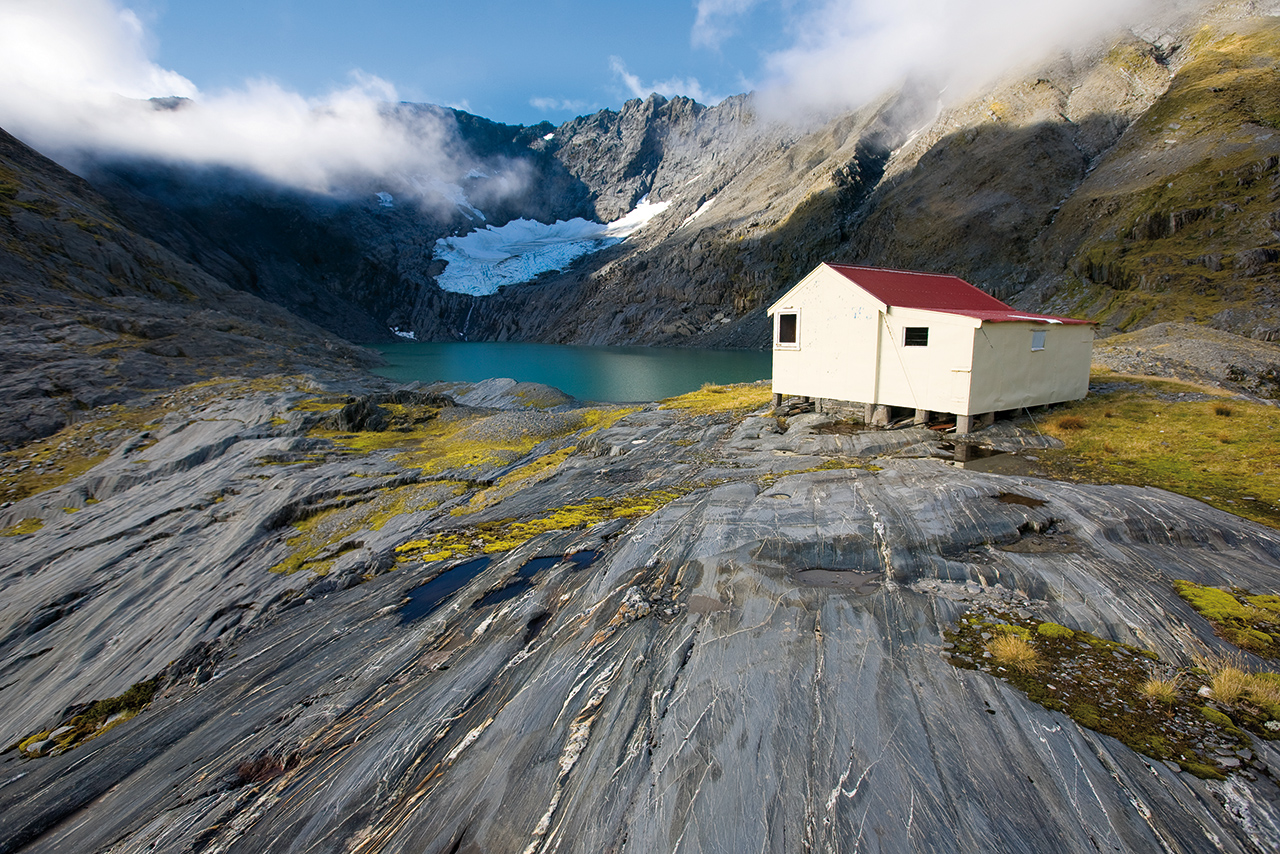
Last year, Wilderness named Ivory Lake Hut ‘Hut of the Year’. There’s no doubt that it’s stunning; perched on a polished rock bench above Stag Creek and overlooking Ivory Lake. But perhaps what makes it even more special is the arduous journey to reach the hut. Since Wilderness crowned the hut, several tramping parties have required rescue from the rugged and sometimes treacherous journey there.
Colin Rolfe of Nelson has been to Ivory Lake twice this season, and he said it’s likely that people underestimate the difficulty of the route to the hut.
It’s about 30km to get to Ivory Lake Hut, which typically takes people two to three days. “But there’s no easy way in there – there are no tracks like you’d find in national parks,” Rolfe said. “The West Coast is pretty rugged even in the best of times.”
The shortest route – and the only route appropriate for non-mountaineers – is up the Waitaha River, starting from the Waitaha road end.
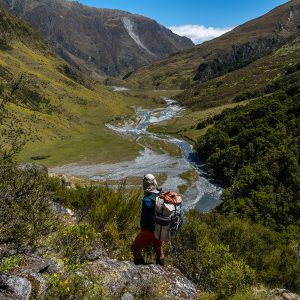
The track ends at Chainman Creek, and from there, “it’s a long and rugged stretch of riverbed travel to Top Waitaha Hut,” the Permolat group, who maintains it, states on their website. If the river is low, it’s not too bad, Rolfe says. “You can scoot along the side, and every so often you get to a bit where you can’t get past, and you have to go up into the bush a bit or go over some boulders.”
But when the river is high, it’s a “no-go zone” Rolfe says. “It can take an hour to get 200m downstream.” Rolfe speaks from experience; on his second trip in, he and his tramping party were delayed half a day because of wet conditions.
“People underestimate it. They just look at the map and they say, ‘That looks pretty easy, the contour lines aren’t too difficult’, and off they go,” he says.
Jayne Bretherton from Greymouth Search and Rescue (SAR) says in the past six months, they’ve had six rescues from the area.
“After the second or third rescue, we were wondering what was happening, and someone mentioned that they had read an article in Wilderness, so we thought well, that’s probably behind it.”
Rolfe agrees, adding that because it’s in such a beautiful location, people forget that it’s in one of the most rugged parts of the country.
“Even trampers with a bit of experience would think, ‘Ah that’s a nice photo, that’s a neat place. Then they a look at the map, yeah doesn’t look too hard, and off they go. But then they get a day into to it – especially if the river is up a little bit, and realise, gee, it’s hard-going.”
Bretherton says the people they’ve rescued have expressed surprise at the difficulty of it.
“One of the chaps we picked up said he wouldn’t recommend the track or advise anyone to do the track unless they were going with someone who had done it,” she says.
There are other routes to Ivory Lake Hut aside from the Waitaha, but mountaineering skills are necessary as it’s mostly tops-travel. It’s not uncommon to get fogged in, so it’s important to have solid navigation skills. Rolfe says.
So, if you’re planning on visiting Wilderness’s 2016 Hut of the Year, by all means have a go, but do your research and expect a good challenge.