

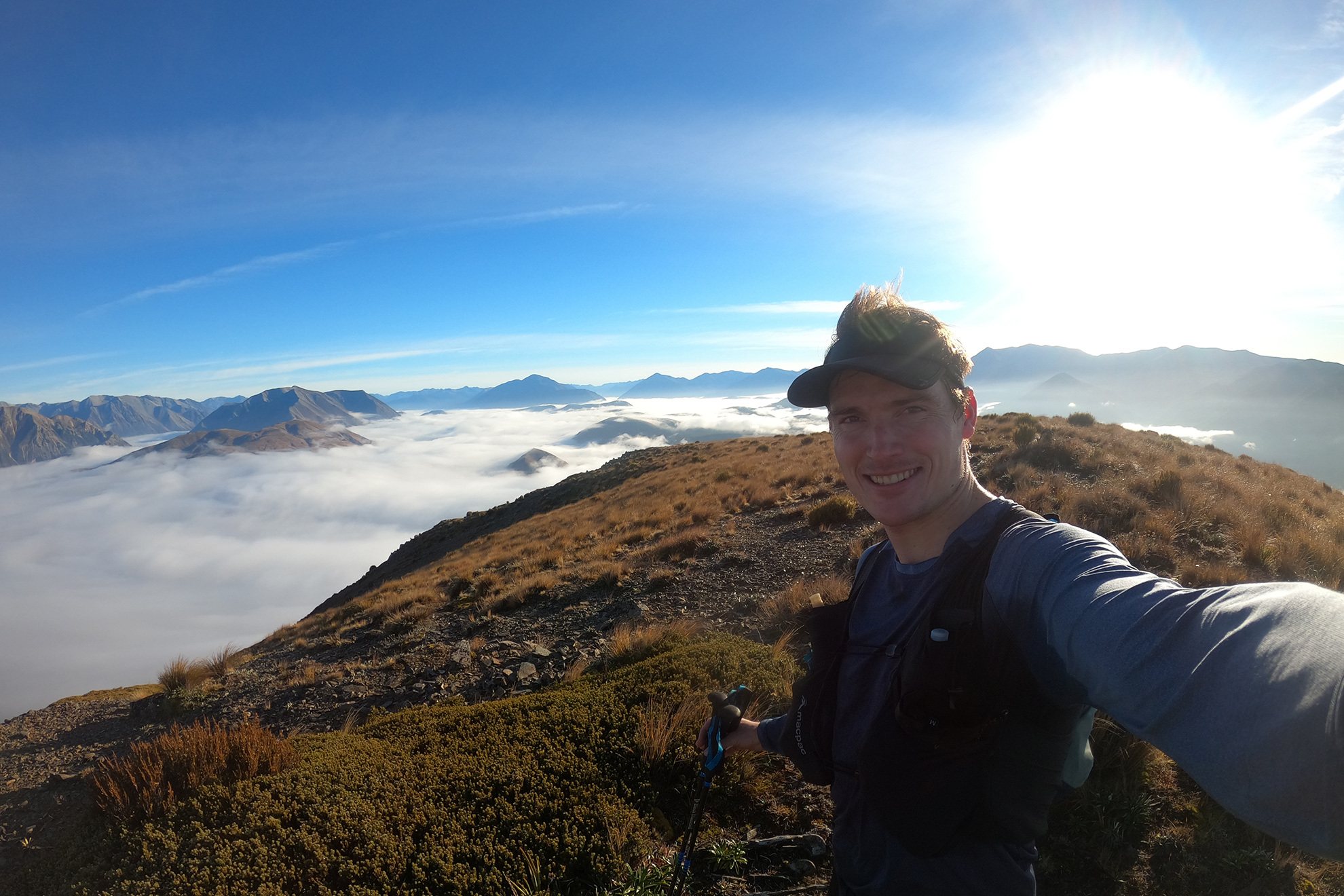
Fastpacker Alastair McDowell, 31, is one of New Zealand’s top mountaineers and has had similar recollections. “I always wanted to run when I was out on the trails.”
He’s from a family of runners and trampers – his cousin was an Olympic track athlete, his grandad a tramper. It felt logical to merge the two. He defines fastpacking as “multi-day travel on foot with an emphasis on travelling as fast and light as possible”.
“You can cover more ground in less time, so you can achieve trips in a timeframe that you wouldn’t be able to achieve in normal style,” he says.
Brice says she tends to walk the uphills, run the downhills and jog the flats.
McDowell says, “To be honest, you’re not running that much, you tend to find a pace you can maintain all day – a shuffle, a fast walk.”
The key is moving faster, travelling lighter. How it looks is up to the individual.
In 2021 Brice created the Fastpacking New Zealand group on Facebook and Instagram. She created a gear spreadsheet that members could update, shared trip photos and information, and encouraged others to do the same. There are now more than 3000 members.
“People are loving the community aspect,” she says. “The gear spreadsheet, in particular, people have found very helpful.”
While newer, lighter fabrics and fastpacking-specific gear has opened up the sport, price can be a barrier.
“If you don’t have a lightweight 20l pack with the right pockets where you can reach your water and food on the go, poles and lightweight clothes, a shell jacket, pants, lightweight sleeping bag and a lightweight cooker, then it’s hard to access fastpacking,” says McDowell.
He says you needn’t go top of the line – his stove is made from a coke can and runs on meths – but you do need to find the right equipment.
Brice says newcomers often carry extra weight because their gear is heavy and they’re unsure what is and isn’t needed. “I encourage people to get out there with what they’ve got and slowly upgrade,” she says.
Both Brice and McDowell say pack weight and distance covered each day depends on a number of factors: the route (length and elevation), access to water, amount of food, bookable huts or a tent, as well as the season. Brice’s ideal pack weight is 6.5kg; if she’s carrying more water and warmer gear, that can creep up to 9kg. McDowell doesn’t weigh his pack but estimates it’s 5–7kg. “It has to be below 7kg to be light enough to jog the downhills,” he says.
A good fastpacking route can be quite personal. McDowell is drawn to the alpine, Brice likes elevation and bookable huts; she’s keen to do more Great Walks and sections of Te Araroa Trail.
The formation of the TA in 2011 introduced New Zealand to fastpacking – particularly longer journeys, popular in Europe and North America with established networks of thru-hiking trails. International fastpackers like Anna McNuff put the 3000km TA on the map.
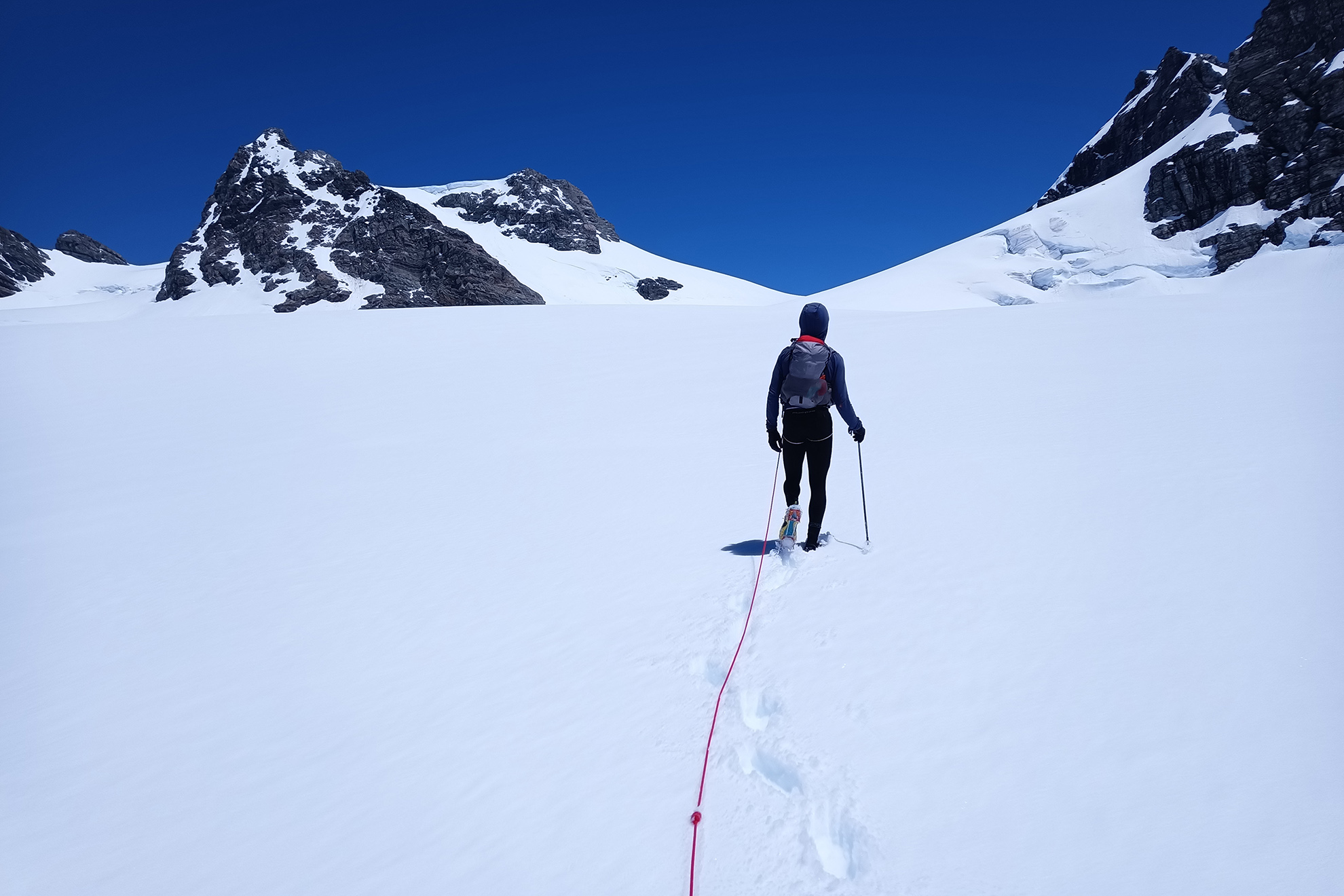
In 2021 Queenstown-based nurse Brooke Thomas completed the TA in 57 days, 10 hours. She broke the women’s running record and raised over $30,000 for Heart Kids, a charity that supports families of children with heart conditions.
“A huge part of my motivation was the personal challenge,” says Thomas. “Going to things like the Banff Film Festival, I’d get so inspired by people living their dreams. I thought it would be amazing to do a similar mission here. I had to have a pace- maker when I was 22, so it also felt such a privilege to enjoy having health again. That’s why I fundraised for Heart Kids.”
Before the TA, the longest distance Thomas had run was the 60km Kepler Challenge. On the TA she was running 50–70km most days. It was immediately gruelling: on day eight she was hospitalised. “I somehow managed to put on 4kg of fluid retention in one day; with my cardiac history I had to be careful,” she says. “I also needed an iron infusion.”
After that, Thomas shifted her perspective to enjoying each day and found her stride, continually growing stronger. Her parents followed in their campervan with her mum cooking high-protein meals. Thomas ran the bulk of the North Island by herself. Previous record-holders, friends and the running community joined her for sections in the south, assisting with river crossings after two “frightening” solo crossings near Arthur’s Pass. Her longest unsupported stint was eight days in the South Island, where she carried a 13kg pack with a bivvy bag, sleeping bag, cooker and food. Thomas finished the trail at Bluff after a mammoth 100km day – and took the record she’d set out to achieve.
Since the TA, the 35-year-old has become a competitive runner and recently placed fourth in the 100km Ultra-Trail Australia.
“I don’t know what exactly motivates me,” she says. “Probably a bit of an addiction to the physical and mental wellbeing that trail running has to offer. As for endurance distances, I think it’s curiosity about what my body might be capable of.”
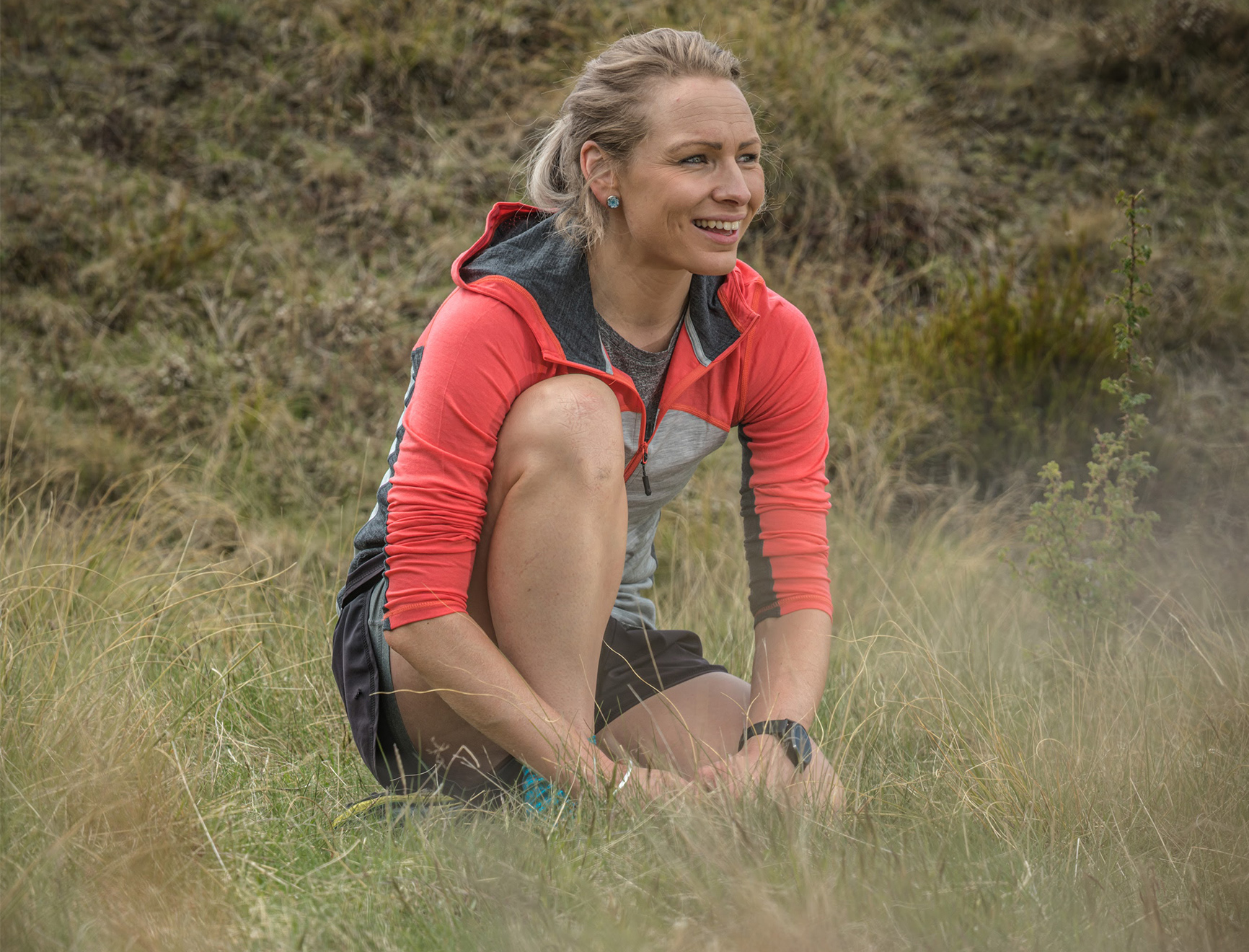
Brice competes too – and has found fastpacking a great way to train. Before this year’s Mt Oxford Odyssey – New Zealand’s toughest marathon – she fastpacked the route. It was “a huge advantage” on race day, knowing where water sources were and where she would need to vary her pace. She was fifth female home, in 8hr 52min.
However, her primary motivation for fastpacking is to be in nature for longer. “When I go out for a trail run, it’s a big day but then it’s over and I go home. But when tramping, or in my case fastpacking, you’re immersed in it for longer. You get to have the hut chats and meet other people around the dinner table.”
McDowell, a Christchurch-based engineer, wants to move through mountains in the lightest way. In 2021 he and Sam Spector fastpacked a transalpine line from Arthur’s Pass to Aoraki, covering 220km in six days. McDowell had already completed a similar traverse in 33 days via the West Coast, and on skis in spring in 21 days.
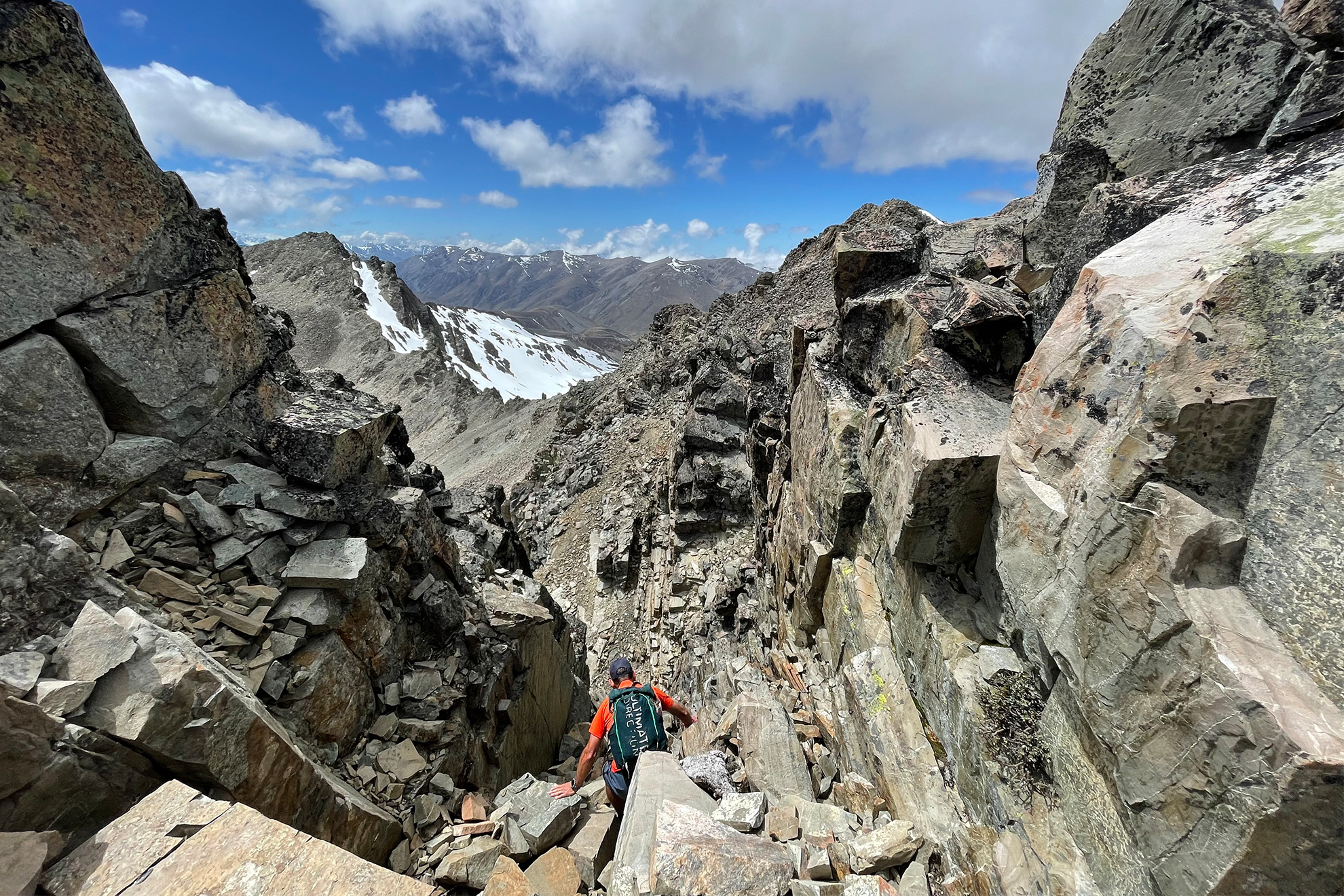
He introduced the term ‘trailpinism’ (trail alpinism) to New Zealand – combining trail running gear, tactics and efficiency with alpinism. He considers it as essentially single-day pushes, but says it’s applicable to multi-day trips too. “It’s related to fastpacking. It’s a fascination with what kind of terrain you can climb in running shoes.”
Going above the snowline in running shoes and lightweight crampons opens up possibilities in the mountains. “Suddenly you can do the entire trip in running shoes,” McDowell says. “You can do it all really light.” This allowed McDowell, Hamish Fleming and Rose Pearson to ascend Tititea / Mt Aspiring in under 12 hours. The idea caught on, and others have since chipped several hours off that time.
“What I don’t do is just go out for a wander – I like to have a purpose or objective,” he says. “Imagine an artist trying to create a piece of artwork; for me the trip is the artwork and the way I move through it is the aesthetic, the style.”
He says the variety of routes between Arthur’s Pass and Aoraki are testimony to early adventurers’ explorations of the land. “Now we’ve explored all that, we’re trying to explore different techniques of travel. Reimagining what’s possible.”
Trailpinism may also become more popular as the effects of climate change are felt. As photographer Dan Patitucci wrote of tackling the Swiss Alps in this way, ‘Drier conditions and more rock might be the new normal and as such a different approach and strategy will be necessary to continue climbing’.
Fastpacking has its critics, particularly online. On the trail, Brice says she’s been met only with curiosity; online she acknowledges the importance of a safe space.
A criticism is that fastpackers should slow down. It’s an embedded idea of how nature should be enjoyed – at the speed of thought, perhaps, in the vein of psychogeography. But as Lonely Planet writer Patrick Kinsella has said, everyone is free to enjoy the outdoors in their own way. ‘Cyclists ride, walkers hike, runners run – no biggie.’ A certain level of fitness is required to fastpack; as a consequence, ‘running isn’t necessarily rushing’.
Another criticism is whether fastpacking is safe. Brice only fastpacks from October to April, leaves intentions and is well-equipped. She carries a PLB, an emergency blanket, maps and GPS, and a tent when there’s no bookable huts. Because she’s travelling lighter, she can also move faster.
Thomas acknowledges the risks, especially when pushing for fastest known times, or FKT. “I pushed through some rivers and mountain ranges that were pretty risky. I kind of understand the criticism about safety; you have to be sensible and read the weather and know when to back off.”
McDowell says he’s had to be rescued from the outdoors once when fastpacking in the Kaimanawa Range. He and a friend were caught in a storm and became hypothermic. “You could say I’ve learned to keep fastpacking to favourable conditions,” he says.
He also says every outdoor pursuit has inherent accepted risk, which can differ between individuals.
With minimalism comes the disclaimer: don’t cut the safety margins too fine.
Fastpacking is about going further, faster – covering more ground, carrying less. Fastpackers prioritise minimalism and self-sufficiency, and movement during the day over comfort in the evening. Part of the adventure is the challenge of discovering what’s personally possible.
Brice suggests newcomers join the Facebook community to connect with others and find answers to those burning questions – tent or tarp, sleeping bag or quilt, the best food, are poles really necessary?
Thomas says, go for it. “I think a lot of people have imposter syndrome. I definitely had that for ages, not wanting to join the local running group in case I couldn’t keep up. Maybe train a little, start shorter.” Then, reflecting on her own decision to jump head-first into the TA: “Or maybe not.”
McDowell points out, “It doesn’t matter how fast you actually go; it’s how fast you go relative to how fast you’d normally go.”
Fastpacking offers a chance to build fitness, hone outdoor skills and streamline systems. It can be liberating to move unencumbered, lightly, having left luxuries behind.
1- Aotea Track, Great Barrier Island
Loops the central mountainous area of the island, with plenty of scope to make it longer or shorter.
Distance: 25km Total elevation: 1445m Grade: Easy
2- Round the Mountain Track, Tongariro National Park
Circuits Ruapehu through a diverse landscape – mountains, desert, river gorges.
Distance: 66km Total elevation: 2273m Grade: Moderate
3- Tararua Peaks Circuit, Tararua Forest Park
Exposed running with the infamous Tararua ladder to climb, the peaks circuit, from Ōtaki Forks, is a mixed bag of bush and tops.
Distance: 43km Total elevation: 3941m Grade: Moderate-difficult
4- Gillespie Pass / Wilkin–Young Circuit, Mt Aspiring National Park
A stunning alpine loop with the option of a side trip to Crucible Lake or jet boating down the Wilkin River.
Distance: 58km Total elevation: 2299m Grade: Moderate-difficult
5- Greenstone–Caples Circuit, Mt Aspiring National Park
Tall mountains, big sky and gently graded tracks running in parallel river valleys.
Distance: 61km Total elevation: 2758m Grade: Easy-moderate



