Straps
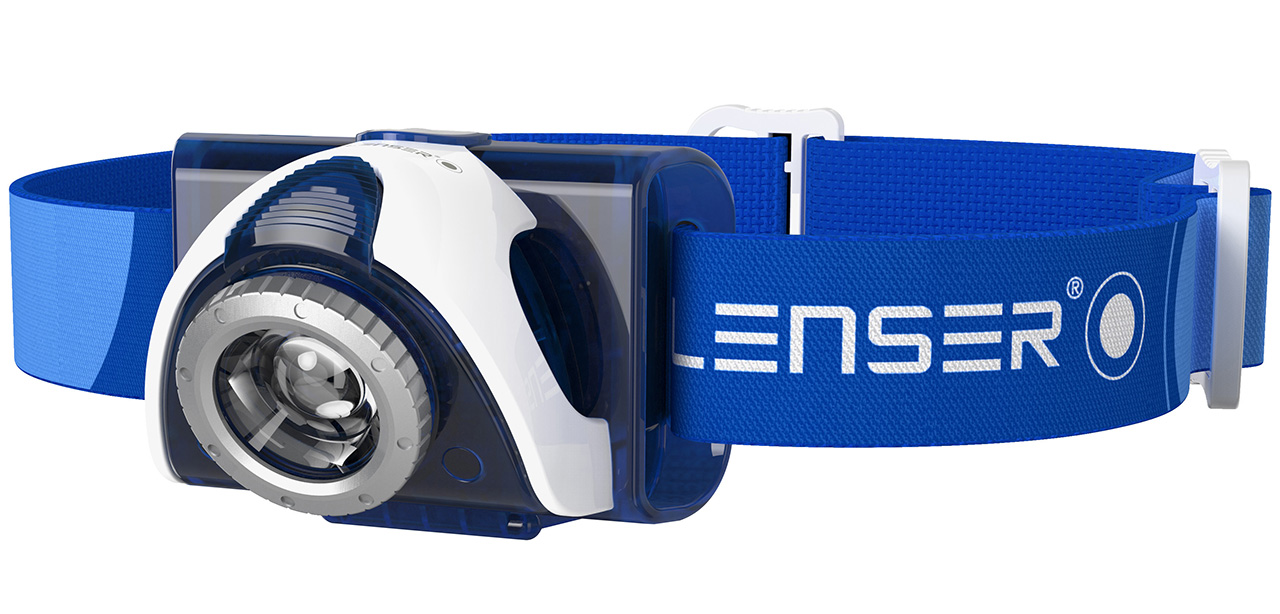
Wide enough to support the weight of the torch and easily adjusted to prevent the torch from bouncing around or sliding down while you’re moving about. A top strap is common on models with a heavier, rear-mounted battery pack.
On/off
Most switches are on the head unit, though some dimmer switches are on the rear-mounted battery packs of heavier models. Check for glove-friendly on/off.
Output and range
Measured in lumens, light output ranges from between 25 to 2000 lumens. Output also dictates range. Low-output one, two or three LED models are useful work lights around the campsite or hut, while high output single LED models light the path for night tramping or climbing expeditions.
Function and mode
Single-switch operation is the norm, with the one on/off button used to toggle through the various lighting modes. A twist face will adjust the light from spot to floodlight (also turns some models on). A transport lock is useful to prevent the headlamp being accidentally turned on in your pack or pocket. Many headlamps have a red light function to preserve night vision – useful for reading and star gazing.
Run time
Battery life is related to output and the more powerful the torch, the more power-hungry it is. Run times shown in this feature are for the headlamp’s lowest light setting.
Water resistance
Headlamps have an IPX rating indicating their water-resistance
IPX-4 Can handle splashing water (10-litre/min) from any angle – that’s most rainy conditions.
IPX-6 Protected against splashed and pressurised water from any angle from a 12.5mm nozzle at 100-litre/min.
IPX-7 Full immersion in one metre of water for up to 30min. The perfect head torch in extreme conditions.
IPX-8 Full and continuous immersion, up to and within the manufacturer’s specifications.
ANSI rating
The American National Standards Institute (ANSI) FL-1 flashlight standard measures the following features in laboratory conditions:
Output Total light output measured in lumens after the light has been on for 30 to 120 seconds
Run time The time until the light output drops to 10 per cent of its original value
Range The distance in metres at which the headlamp produces a light intensity of 0.25 lux (about the same brightness as a full moon).