

Such an event occurred this year, when 250mm of rain fell in Fiordland on one February day, leading to more than two dozen trampers being helicoptered off the Milford Track. And in February 2020, there was forced closure of the Routeburn Track after heavy rain led to landslides and the destruction of Howden Hut. Tramper Josh Moffitt told RNZ in an interview after being rescued from the scene. “Some people started to hear faint rumblings and shifting sounds. And then maybe 30 seconds of really loud roaring, you know, a bearing down freight train sort of sound, followed by splintering, crushing and then screaming … The toilet block, which is between us and another outbuilding – five bays of toilet cubicles – was non-existent, just wiped … that could have been our whole hut.”
Daisley says about 12 per cent of search and rescues involve inclement weather conditions, but adds that other factors are often at play, such as insufficient preparation, inadequate clothing, navigational errors, or when trampers decide to wait out bad weather but are unable to alert friends and family of their delay. “To avoid an unnecessary rescue operation when people aren’t in danger, we recommend trampers take a two-way communication device that isn’t dependent on cell coverage,” Daisley says.
Contending with bad weather on a Great Walk is very unpleasant, but it could become more common in future, says Nava Fedaeff, manager of climate, atmosphere and hazards at the National Institute of Water and Atmospheric Research. “With a warming climate we will see more extreme weather events.”
She says future projections suggest more extremes at both ends of the spectrum – dry days and the risk of drought and fire as well as increased rainfall.
DOC has published a climate change adaptation action plan with risk assessments being made on tracks.
One problem as a tramper, Fedaeff says, is that you have to book a Great Walk in advance not knowing what the weather will be like. She tramped the Routeburn in persistent rain a couple of years ago. “It was beautiful, but I would have liked to see the tops of the mountains.”
Christchurch tramper Julia Van Essen was caught out on her first multi-day hike, the Abel Tasman Coast Track, in heavy rain. “My wet weather gear was not the best. I got soaked through and thoroughly sick of the whole thing. I learned from that experience and never went out with poor wet weather gear again.”
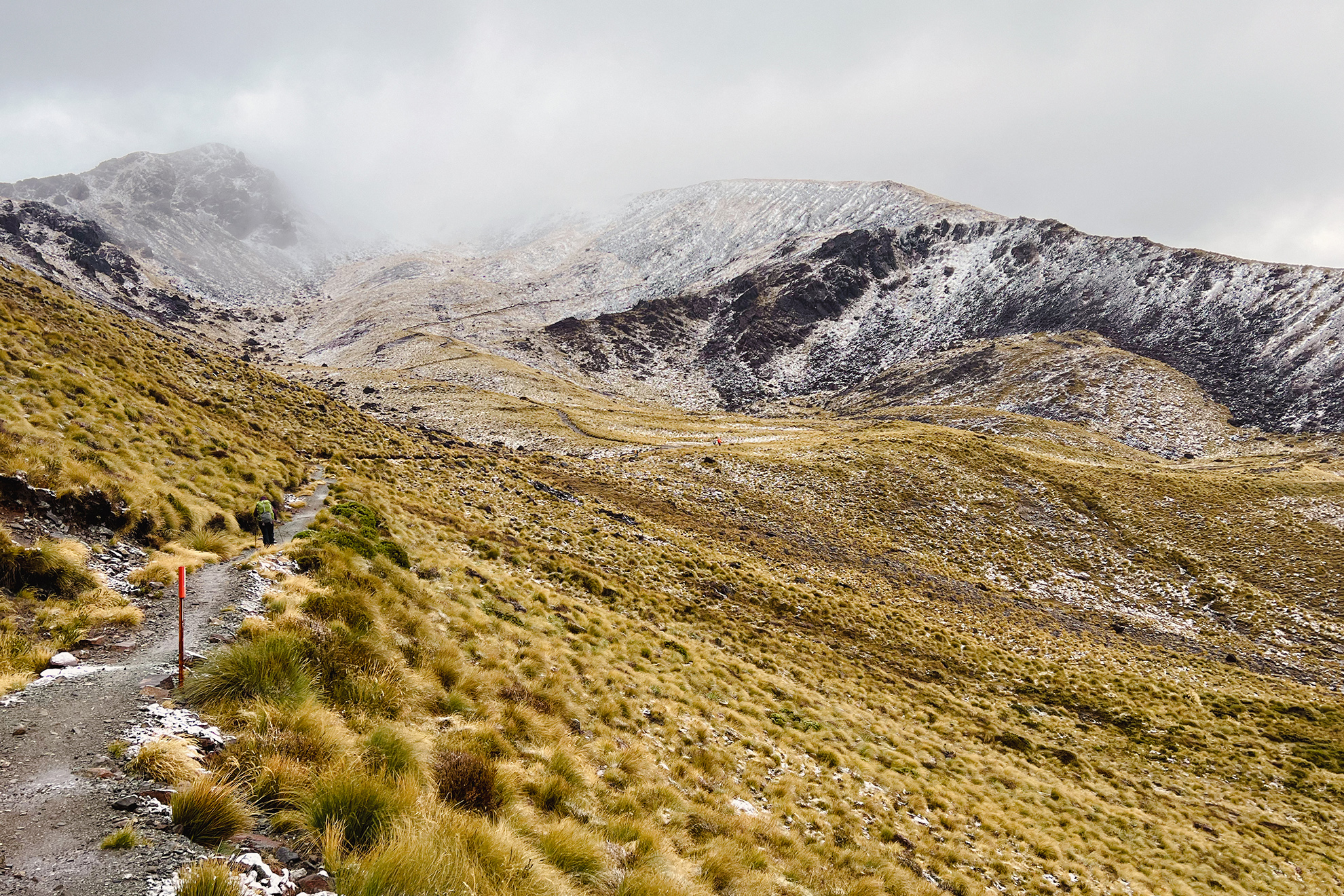
Since then Van Essen has walked several of the Great Walks. On the Kepler Track she experienced rain and snow across the alpine ridge. “I was much better prepared with good wet weather gear and merino layers,” she says.
Having the right gear made all the difference, but it wasn’t like that for everyone. “One girl in the hut was trying to ultra-lightweight the Kepler. She looked like she regretted it. She was cold and wet, but not dangerously so. Thanks to the DOC wardens for maintaining huts and wood supplies, we were able to dry everything off for the next day.”
Van Essen says she would be keen to walk the Kepler again. “It was quite fun when the snow came, but we didn’t hang around … I missed out on some of the views because of the cloud cover.”
The weather can affect a Great Walks experience, but Daisley says, “People should not be put off by a little bit of rain or wind … but if there’s a heavy rain warning for the area, they may need to change plans or postpone their trip.”
The bottom line is to be prepared for all eventualities. Always take extra food and a personal locator beacon. If you are caught out on a track, move away from riverbanks and find somewhere safe to wait out the weather. This will make it easier for emergency services to find you if needed.



