For a heightened experience of the outdoors, try a winter tramp.
The thought of winter tramping conjures images of short daylight hours, cold temperatures, wet weather and dull light – all negative thoughts. I find it useful, however, to reframe these supposed disadvantages as advantages, so that the idea of winter tramping provides opportunities, not barriers.
Take the cold, for example. As the Scots say, ‘There’s no such thing as bad weather, just the wrong clothes.’ Good clothing and sound planning can mitigate the risk of hypothermia and exposure. When the elements are at their most extreme, we really appreciate the fundamental basics like warmth and shelter. There is nothing like the comfort of dry clothes, a warm hut, a hot drink and sitting around glowing embers appreciating the lingering dusk. Crawling into a sleeping bag after a wind-harassed day is a pleasure all to itself as tired muscles are enveloped in a cocoon of insulating down.
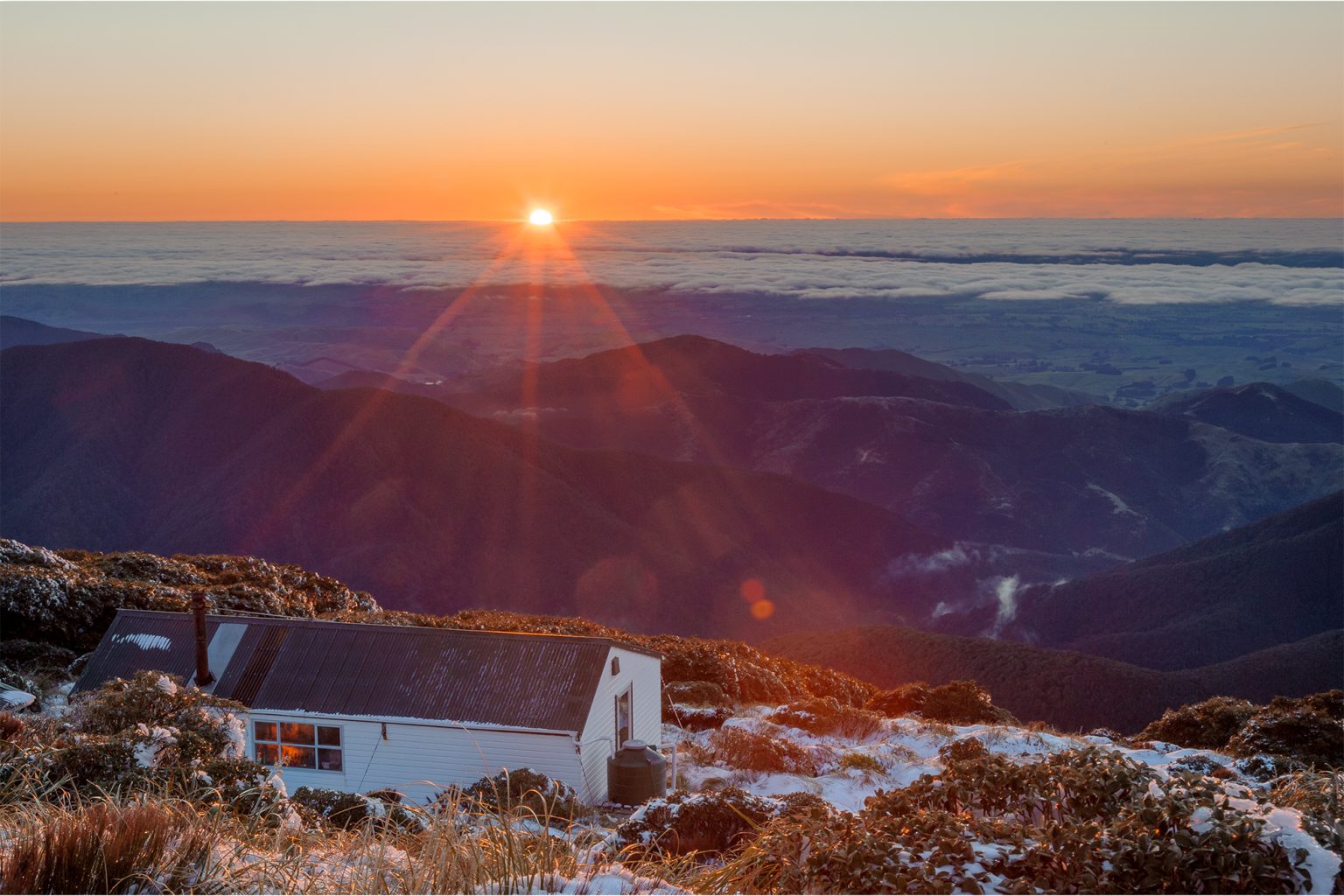
The advantages of winter tramping include the scenery. Winter snows lend a magnificence and prominence to maunga often denied them in summer. I have snowshoed the Kepler Track in winter and been able to appreciate snow-capped Fiordland in its full splendour. In the North Island I have marvelled at the sharp summits of Sawtooth Ridge in Ruahine Forest Park and watched Blue Lake shimmer in the wintery haze as Ngāuruhoe brooded above. Even the Holdsworth–Jumbo Circuit in Tararua Forest Park takes on a new stature during winter. Icicles dangling off the Holdsworth trig tinkle as they begin to melt.
During winter the light is often at a low angle and, of course, the sun rises later. Both present advantages for winter photography. Ice can form in attractive patterns on alpine plants, lending them a form and style impossible during summer.
Snow can alert us to the presence of other creatures. Takahē, whio and kiwi, in particular, all make curious marks in the snow.
Each issue of Wilderness celebrates Aotearoa’s great outdoors — written and photographed with care, not algorithms.Subscribe and help keep our wild stories alive.