

Section-by-section over the Whanganui River Journey
Tackle New Zealand’s wettest Great Walk in three days or five.
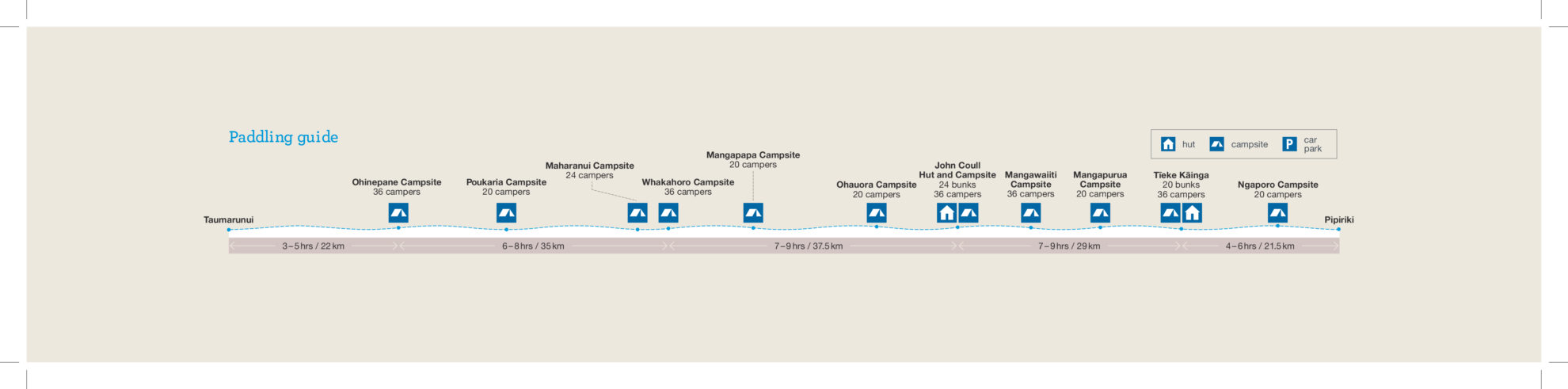
Taumaranui to Ohinepane Campsite
22km, 3-5hr
The lesser paddled upper reaches of the river will give you a greater chance of solitude, and enjoyable sets of rapids as you drift through rolling hills and farmland. Fast paddlers will reach the campsite within 3 hours, and some may wish to continue to the smaller Poukaria campsite.
Ohinepane Campsite to Whakahoro Campsite
35km, 6-8hr
Day two is punctuated by more rapids, but it is prone to treefall, and can be dangerous for paddlers. The scenic Whakahoro Campsite offers views over the river, but the consequence is a 400m walk from the landing, which paddlers will have to lug their barrels up. The good news, however, is that paddlers can eat their feelings away at nearby Blue Duck Cafe.
Whakahoro Campsite to John Coull Hut and Campsite
37.5km, 7-9hr
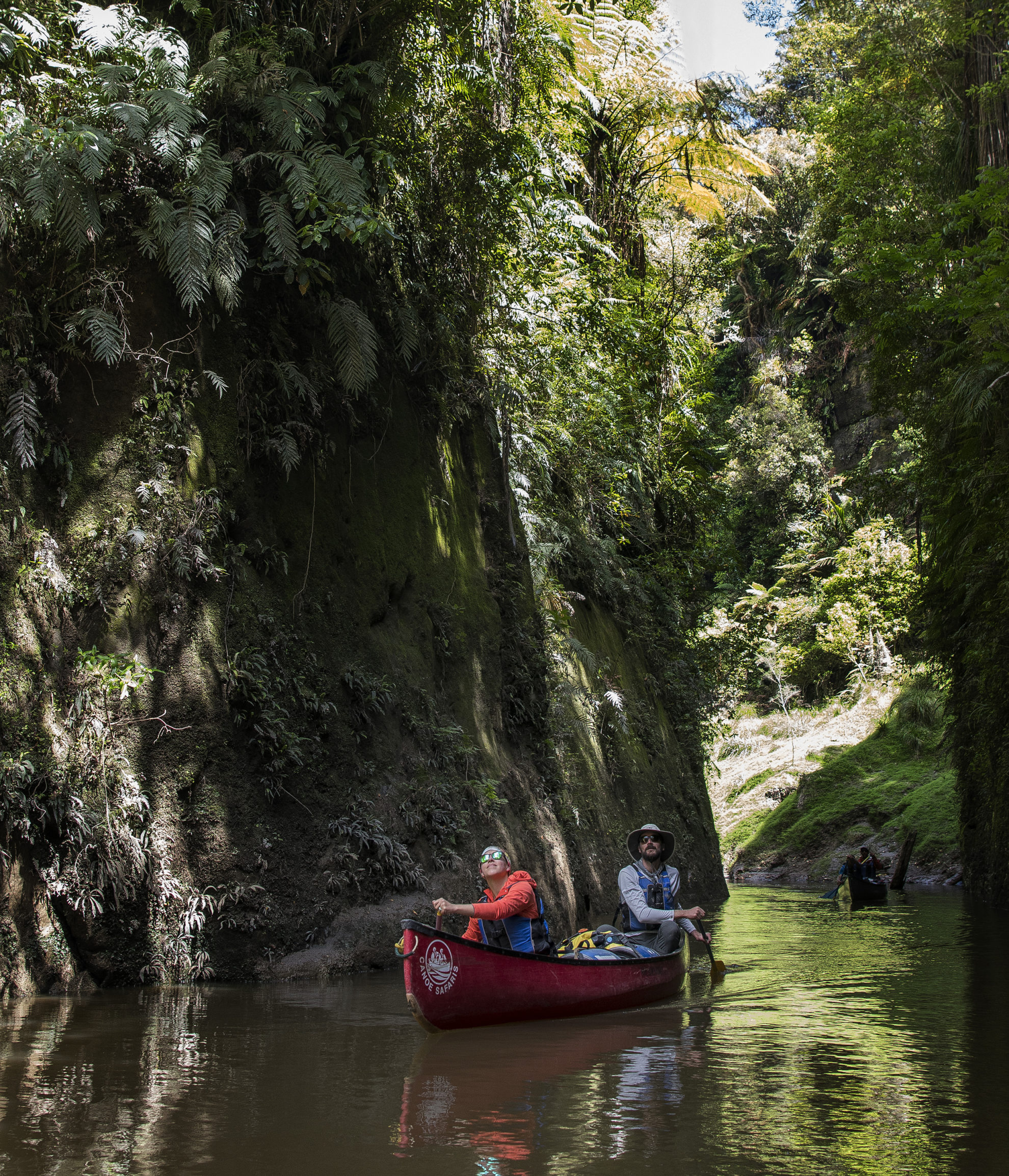
The starting point for the popular three day journey, Whakahoro marks the beginning of true wilderness, and the next road access is not until Pipiriki 88km away. This section is one of the most scenic as it passes through narrow mossy gorges. It’s a relaxing day with small rapids, so you may feel it in your arms by day’s end. John Coull Hut is the first roof you’ll find on the journey, and a good spot to listen for kiwi or spot long-tailed pekapeka at dusk.
John Coull Hut and Campsite to Tieke Kāinga
29km, 7-9hr
The scenery continues on relaxing day four, and within a few hours, the iconic Bridge to Nowhere is reached – a must-see on this section. The 1.5hr return side trip is a good chance to stretch the legs from the track start at Mangapurua Landing. Arrive early to find a mooring and avoid crowds from jet boat tours. From here, continue to Tieke Kāinga – the only Marae accommodation of the Great Walks.
Tieke Kāinga to Pipiriki
21.5km, 4-6hr
If you’ve managed to stay in your canoe thus far, the final day’s paddle might have other plans for you. The infamous Fifty-fifty, which capsizes half of the paddlers who take it on, is one of two rapids sure to thrill on the short but sweet final leg to Pipiriki.
In the neighbourhood
Alternative track: The Mohaka River in Hawke’s Bay provides a range of journeys for more experienced paddlers, with a number of DOC campsites along its banks.
Since you’re already here: Walk the 2hr Te Maire Loop Track near Taumarunui to explore some of the region’s now rare podocarp forest.
Just got a weekend? A two day paddle is possible from Taumarunui to Whakahoro, and includes some of the best rapids.
Where to stay: Check with your canoe hire company about pre-trip accommodation options.
Where to stock up: Taumaranui’s Seriously Outdoors for gear, or supermarkets for food.



