

Wake up hanging off a cliff
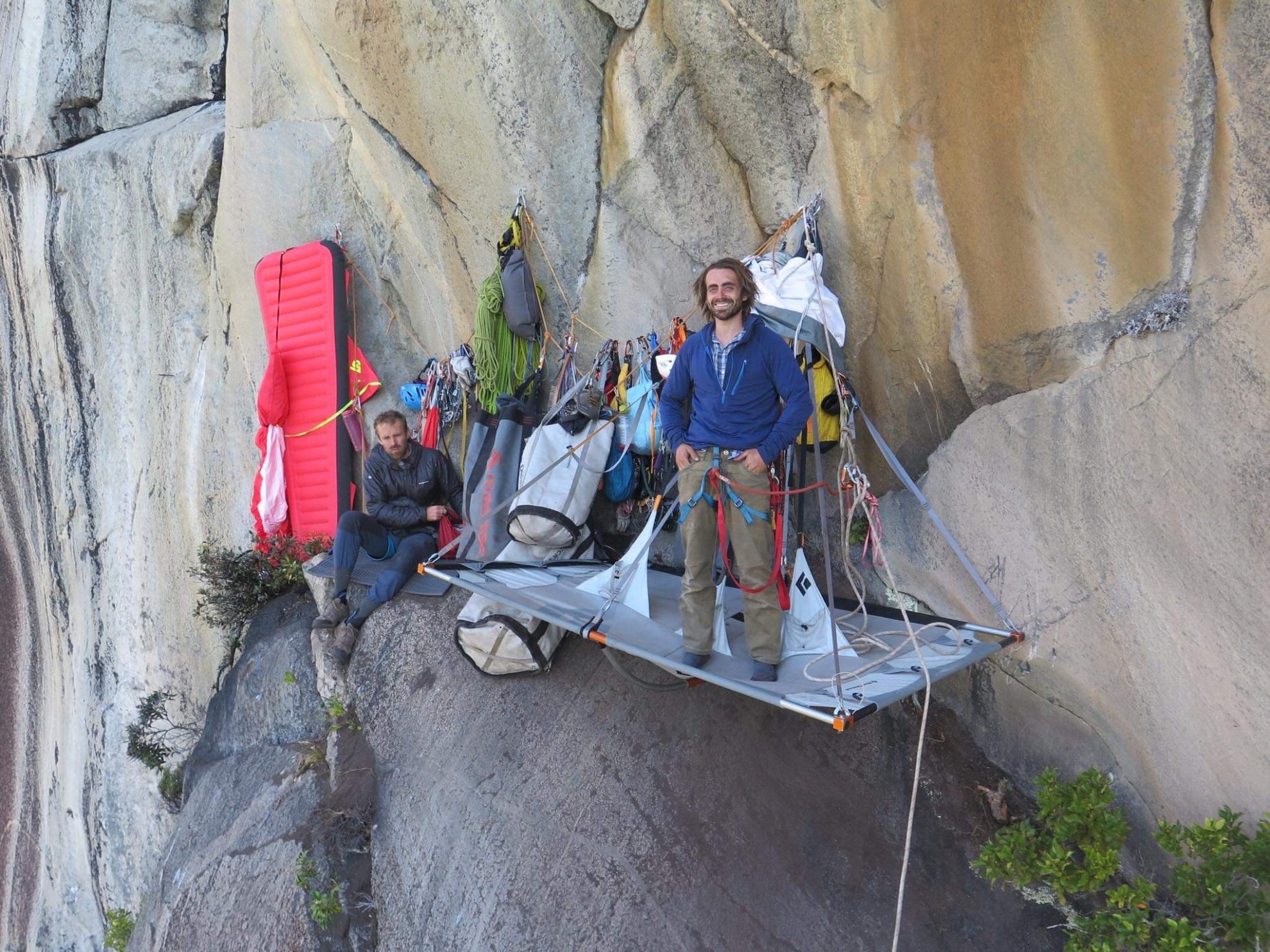
When it’s time for big-wall rock climbers to bed down for the night, options are somewhat limited. A portaledge looks a bit like a surfboard that hangs from a cliff, and you sleep clipped into a harness (welcome news for anyone prone to rolling over in the middle of the night). While portaledges are de rigueur on the world’s most famous big walls such as El Capitan, a 1000m-high rock formation in Yosemite National Park, there’s not been need to use them here as New Zealand’s walls can usually be climbed in a day. That was until last year, when climber Daniel Joll pioneered the first route up a herculean 700m rock wall that rises above the tiny airstrip at Milford Sound.
The ‘Airport Wall’ takes multiple days to climb. Fellow climber Alastair McDowell spent a week with Joll on the wall, sleeping in a portaledge each night, hanging hundreds of metres above the grandeur of Milford Sound. Finding a suitable place to set up the portaledge was the first challenge, says McDowell.
“The wall is quite vegetated, and we had to find a tree strong enough to hold the portaledge. We ended up camping dangling from a tree hanging 500m above the ground.”
On the portaledge, cookers hang from clips. When you shift your weight the portaledge moves under you. But what it does offer is freedom.
“You can camp anywhere on a wall, and climb steeper and blanker walls day after day, so you have more options to get to more remote places,” says Joll. Then there’s the thrill of waking up in the sky. “It’s quite unbelievable. You’re perched on this wall for a week gazing over Milford Sound, across to Mitre Peak, with the ocean in the background and a 500m drop directly below. It doesn’t get any better.”
Wake up in a snow cave
“I’ve woken up in some pretty unusual places,” confesses David Eaton, lead instructor for Off Track Adventures. “Under logs, on rocky overhangs, on the side of mountains. I tend to avoid huts.”
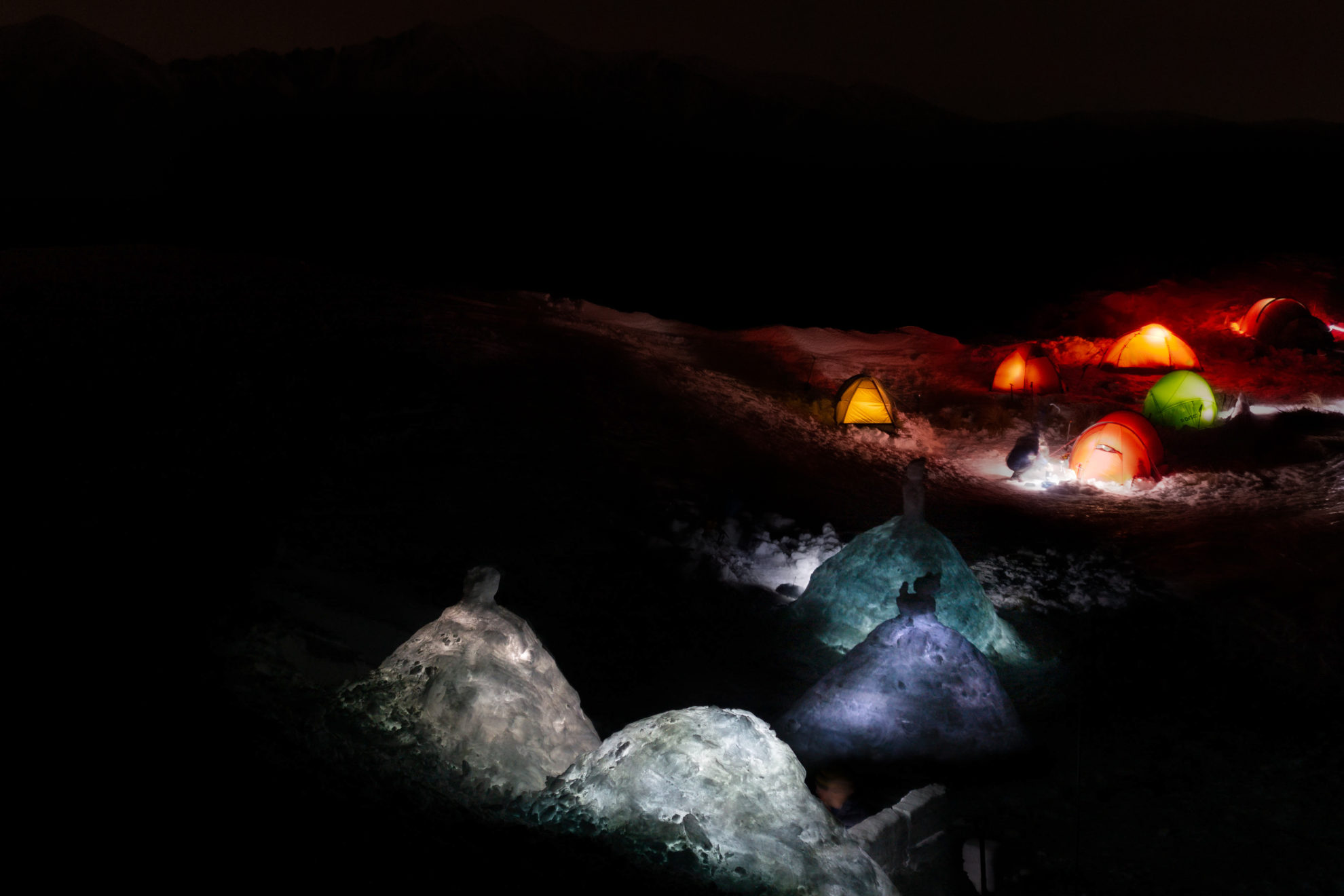
But for a cosy retreat out of the weather, Eaton reckons you can’t beat a snow cave. Come winter, you’ll often find Eaton happily ensconced in a snow cave dug into the side of Mt Ruapehu.
Eaton’s description of his snow caves read like a real estate advertisement, complete with a veranda, multiple rooms, a skylight, cooking areas, cupboards for gear and a wardrobe. “You can even cut holes in the walls and pretend it’s a TV,” he says.
If there are two people, one person will generally dig inside while the other stands at the entrance shovelling snow out. Eaton’s pro tip is to cut the snow into blocks, which you can then roll out and use to build a veranda. “That way you can watch the sunset from your deck. Or on a nice evening make a cooking area outside.”
Safety is paramount when building a snow cave, though, as a lack of oxygen or a build-up of gas from cooking could be fatal. Other dangers include hypothermia. A snow cave is warmer than being outside, but you work up a sweat digging, meaning you’ll be wet. Putting a bivvy bag or groundsheet down will insulate a sleeper from the cold floor, and an insulated mattress is a must.
The reward for your hard work is pure serenity. “It’s quite magical,” says Eaton. “When that blue light seeps in through the ceiling it’s gorgeous, and it can feel luxurious if you get it right. Some people feel nervous about being in a snow cave, but once you get in there the majority of people think it’s really cool.”
Wake up under a rock
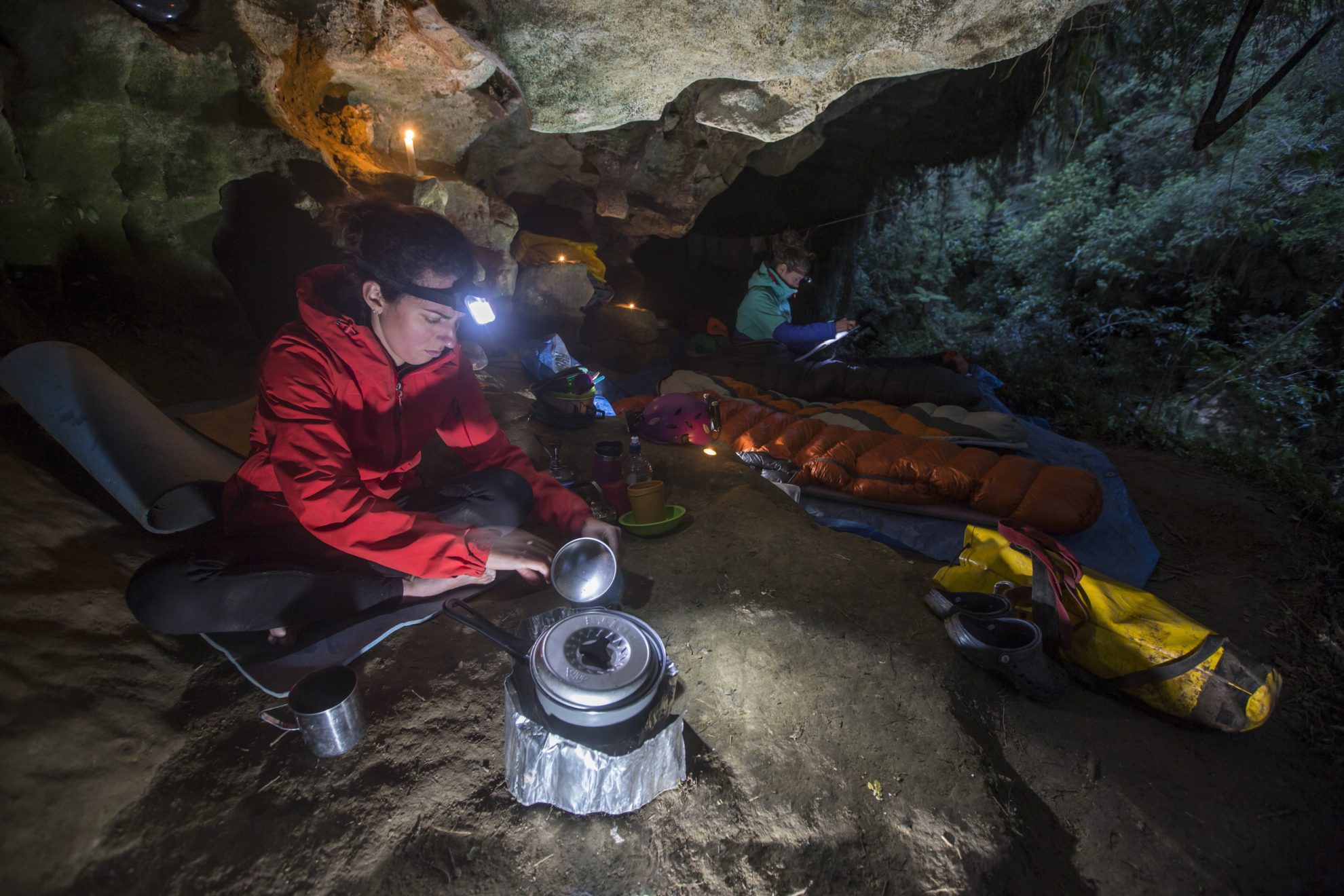
For Wanaka-based author and adventurer Dan Clearwater, waking up between a rock and a hard place is his idea of heaven. Rock bivouacs are plentiful through the Otago region where Clearwater spends much of his time, often created when huge boulders break away from mountains and fall ready-made as a home for the night.
One of New Zealand’s most well-known rock bivvies, the Ballroom Overhang in Paparoa National Park, is actually part of the cliff, a massive limestone outcrop scoured out by a bend in the river. Being easily eroded, limestone is the perfect rock for overhanging rock bivvies.
Clearwater says one of the great joys of sleeping in a rock bivvy is that it’s a completely natural place. “You sometimes sit there marvelling at the way nature has created certain things. You become a creature of the environment rather than a space invader with your fancy life support system.”
That’s not to say you can’t do some sprucing up. Many rock bivvies have been renovated with rock walls to block a prevailing wind, some have an established fireplace. Others can be miserable and damp, with drips from the ceiling and swarming with sandflies. But when you find a good one, it’s a special occasion.
A rock bivvy near Park Pass in Mt Aspiring National Park is one of Clearwater’s favourites. “It’s a house-sized boulder with a classic lean-to arrangement on one side, and a view across the whole valley beneath you. It was storming last time I was there and we sat sheltered in this beautiful vantage point, watching the storm unveiling in front of us.”
The South Island is the place to be if you’re after a rock bivvy experience, and Clearwater recommends picking up a copy of Moirs Guide North – The Otago Southern Alps, which has details on where to find many of the best. Or just go looking yourself.
“Discovery is half the fun,” says Clearwater. “It adds a wonderful dimension to something we already love. Do something new and wake up somewhere new. You won’t regret it.”



