Experienced tramper Simon Sawers is embarking on a 3300km fundraiser starting with Te Araroa South Island. He asked Wilderness for advice on streamlining his set-up.
By Mark Watson and Leigh Hopkinson
Goal
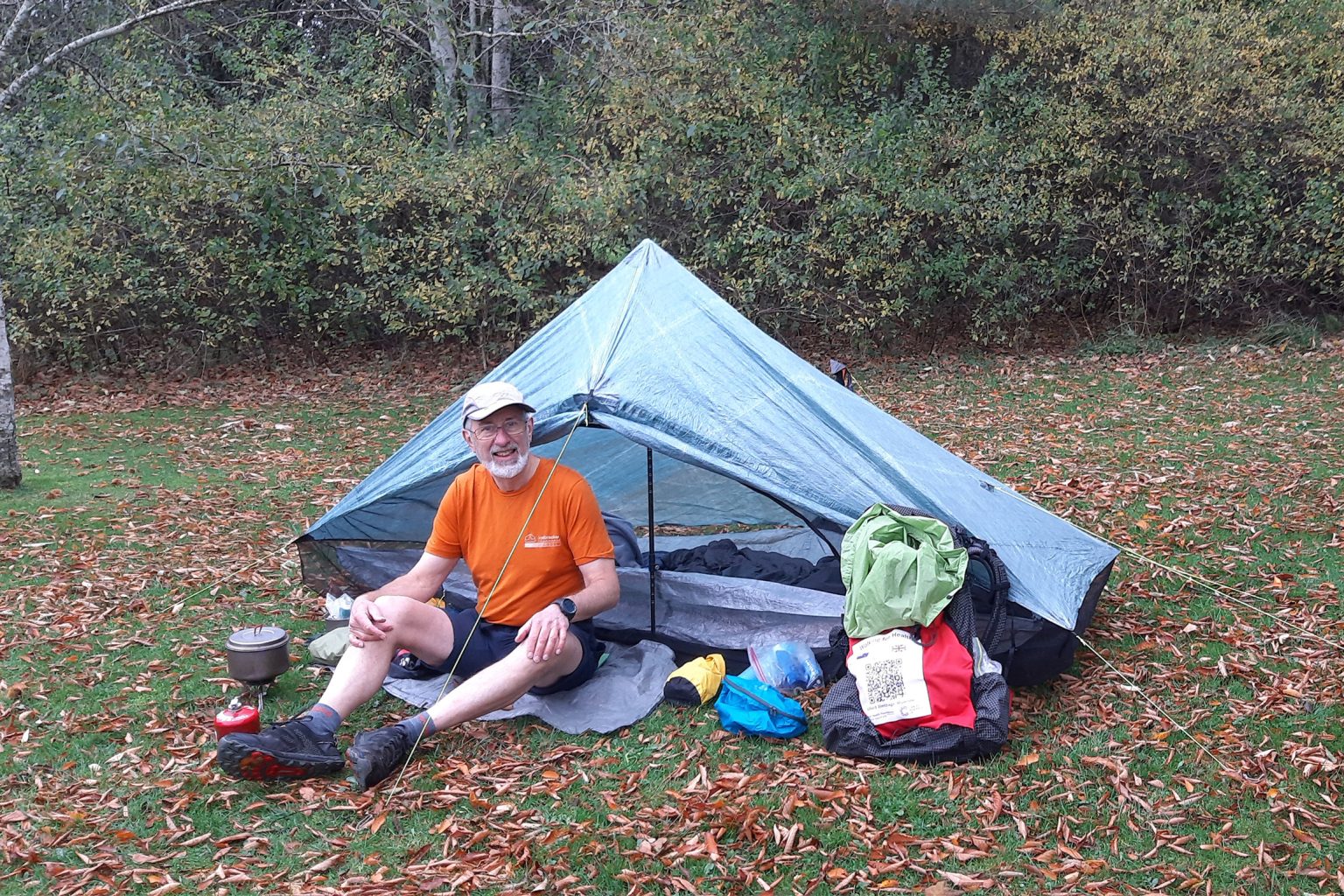
UK man Simon Sawers is a long-distance tramper, hillwalker and qualified mountain leader with the British Mountaineering Council. He thru-hiked Te Araroa, southbound, in 2018–19 and repeated sections of the South Island this summer, northbound. He is currently preparing to walk another 2000km from the Scilly Isles to Shetland in the UK.
“I’m calling the whole thing ‘Walking for Health’ and have three reasons for doing it: raising at least $200,000 for charities, promoting the idea that walking is healthy, and having a fantastic adventure,” he says.
Simon’s charities are the Mental Health Foundation of New Zealand, Cancer Research UK and the Alford Heritage Museum.
He’d like advice on his sleep system, devices and keeping things dry, and whether his current set-up could be improved.
“I carry a lightweight down sleeping bag and often sleep in extra clothing. This includes a down jacket and down trousers, both of which double as hut wear or cold-weather walking wear.”
His one luxury is a Kindle. “I keep my phone on flight mode or off and carry a power bank, a spare phone battery and a SPOT device for emergencies and so people can track me.”
He keeps his sleeping bag and down clothing in drybags; other gear goes into a pack liner. Simon’s base weight is 7.4kg.
Gear
Simon’s existing gear
→ Zpacks pack with pouches, bumbag, waterproof liner and rain cover
→ Zpacks Duplex tent
→ Exped sleeping mat, Therm-a-Rest pillow
→ PHD sleeping bag with silk liner
→ PHD down trousers, Montane down jacket
→ Zpacks windproof jacket, Berghaus waterproof overtrousers, Montane waterproof jacket
→ Zpacks rain kilt/mini-groundsheet
→ Buff, gloves, beanie, rainproof over mitts, sun hat
→ Toiletries
→ MSR stove and titanium pots; Sea to Summit bowl, mug and titanium knife, fork, spoon
→ Sawyer mini-filter; 2 x Platypus water carriers
→ Drybag with 5200mAh power bank, charger and cables
→ Swiss army knife, pen, duct tape
→ Kindle
→ Walking clothing: Long- and short-sleeve merino tees, zip-off trousers, fleece jacket, Montane windproof gilet, Moggans merino socks, Rab mini-gaiters
→ Spare clothing: Moggans merino socks, EDZ boxers
→First aid and repair kits
→Leki walking poles
→Altra Lone Peak 8 shoes
Gear Simon needs
For Te Araroa Simon will need two pairs of shoes, plus socks, base layers and walking poles. His budget is $1000.
Gear Simon is curious about:
“I have used Altra Lone Peak shoes and would like advice as to size – should I get my usual foot size or one size up to allow for swelling? I have had blister problems with conventional boots and approach shoes before.
“I’ve been told I have the least spare clothing other trampers have ever seen. Should I take more?
“I find walking poles really good for propulsion uphill, on the flat and for braking downhill, and they double as tent poles. I prefer aluminium poles over carbon fibre because they bend, not snap if you fall on them. Thoughts about the best compromise between weight and lateral strength would be useful.”
Mark Watson’s recommendations

Shoes
Fit is important. We’d advise going up a half size to allow for swelling and possible widening. For some people, and some shoe brands, a full size might be appropriate, but the shoes should not feel clumsy or too long on the foot.
Trail running shoes like the Altra Lone Peak Simon uses are popular for thru-hiking, but they may not be suitable for Te Araroa’s unformed tracks, variable surfaces, rocky river crossings and wet weather. More durable shoes could be considered, as well as sole designs that have at least a partially defined heel for traction. Don’t rule out mid-height footwear as this protects the ankles.
Waterproof shoes reduce dust and silt penetration, both of which can contribute to blisters; non-waterproof shoes breathe better and dry faster.
Wilderness pick: Topo Terraventure 4, $269.95, 572g; La Sportiva Bushido III, $299.95, 600g; or Salomon XA Pro 3D V9, $297.50, 646g

Socks
Simon has two pairs in his packing list. He could consider three: two pairs for hiking and one that is kept dry for sleeping. Two hiking pairs means he can change them every day or two to rinse out dust and sweat, which helps prevent blisters. We recommend light- to medium-weight socks that blend merino wool with synthetic fibre for warmth and durability.
Wilderness pick: Bridgedale Hike Lightweight Merino Performance Boot Sock, $54.99; or Smartwool Men’s Hike Light Cushion Crew, $50

Hiking poles
It’s a good call to use strong poles. Look for three-section poles with low-profile flick locks and adjustable wrist loops. Extended handles (grips below the main hand grip) are also useful. With these features in mind, a weight of 250–270g per pole is a starting point, but pole length should be checked for tent use.
Wilderness pick: Masters Speedster, $239.95, 500g/pair; or Black Diamond Pursuit, $279.99, 500g/pair

Baselayers
Thermal leggings are not on Simon’s list but zip-off hiking pants and down pants are. Zip-off pants are versatile and offer sun protection, but down pants are overkill for Te Araroa during summer and useless in the wet. Leggings would provide extra sleeping warmth and are ideal in combination with overpants for stormy tops travel. Polyester leggings are light and fast drying; a merino/polyester blend is a great option too.
Merino or polyester for tops comes down to personal preference. Merino is the most pleasant to wear day after day without washing, but its durability is limited compared with polyester. It’s also slower to dry and doesn’t wick as well under rainwear. We recommend merino T-shirts for daily use, but a polyester long-sleeve top might provide lighter wet-weather performance than Simon’s merino one. For full versatility he could also consider a polyester sun hoodie as his long-sleeve top.
Wilderness pick: Macpac Men’s Geothermal Pants, $49.99; Outdoor Research Men’s Echo Hoodie, $129.99
Comments and additional recommended gear
Simon’s gear list is well considered. One way to determine a clothing list is to ask what would be left to wear for core insulation if you fell into a river in cold weather while already wearing base layers, mid-layer and rainwear. Simon would be left with a single base layer and a down jacket for his upper body, which is the bare minimum.
If he’s really counting grams he could drop the pack cover since his electronics are separately drybagged. He could also use a bowl that doubles as a mug, and swap the three cutlery items for a spork. Upgrading to a 10,000 mAh power bank would give him a bit more recharge power.