The world at our feet

March 2024

Read more from

March 2024

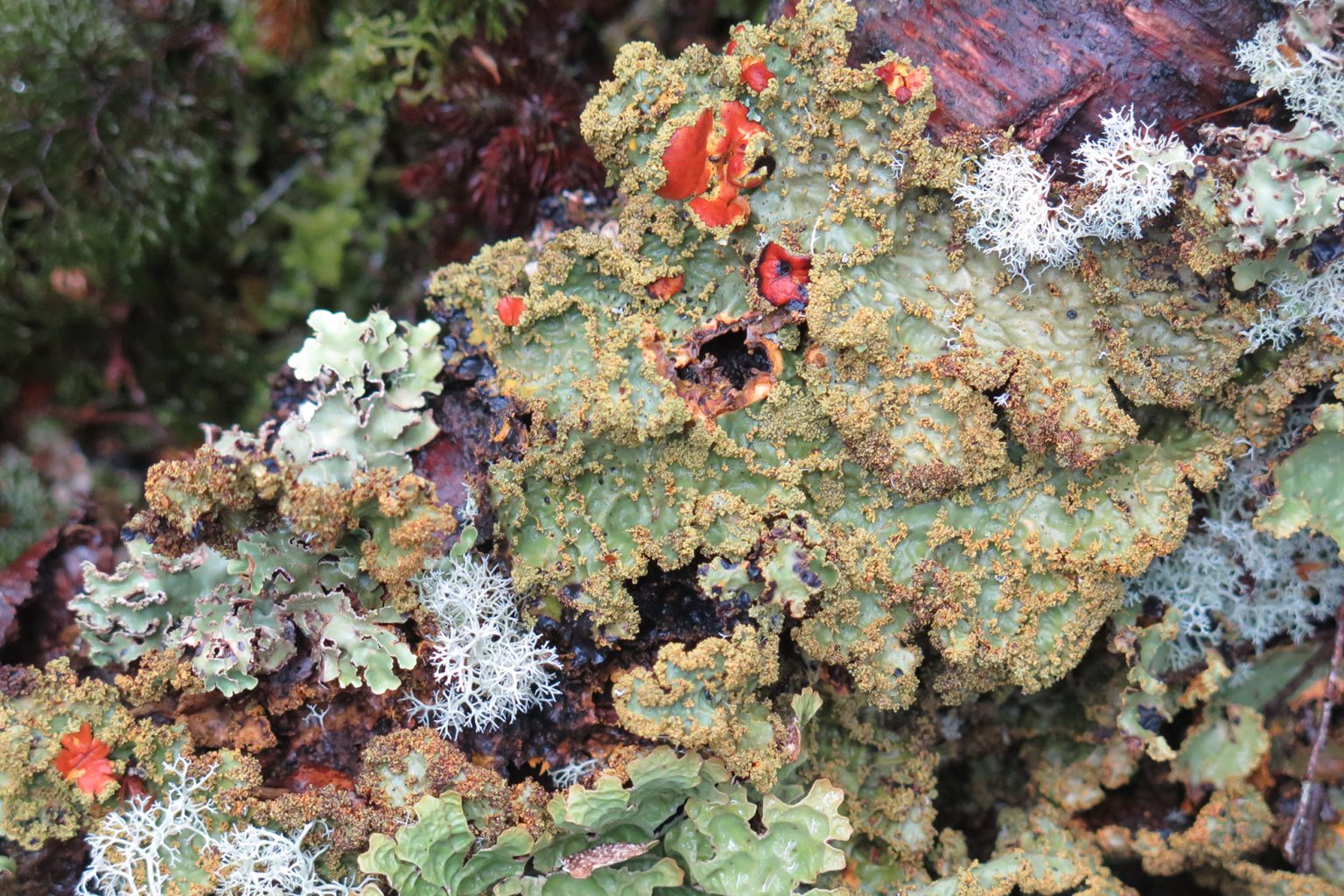
Lichens are a fungus that has teamed up with a plant. Photo: Robert Vennell

New Zealand’s backcountry is full of stunning scenery, mountain views and unique wildlife. But when you’re out and about, remember to look down.

Great wildlife encounters can come from studying the rocks and rotten logs by the side of the trail. So, slow down and look at the forest floor. You’ll soon discover that within a mouldy old tree stump there are worlds within worlds – a multitude of tiny plants and fungi that are, arguably, just as fascinating and remarkable as other, more visible, wildlife.

Lichens, for instance, are less of a distinct individual species than a way of life: a fungus that has teamed up with a plant – a cyanobacteria or an algae. The fungus forms the bulk of the lichen, capturing the plant within its cells and harvesting sugars from it. 

Lichens are such incredibly successful partnerships that they cover around eight per cent of the earth’s surface – more than the entire area covered by tropical rainforest. Some, like the crusty yellow map lichen found growing in alpine areas and on rocky tops, is one of the oldest known organisms. One map lichen, found in the Arctic, is estimated to be around 8600 years old and grows at the leisurely pace of one centimetre per century. 

Or consider the liverworts. You can find them delicately weaving across a tree trunk or a rock, or lounging on the edge of a rocky river boulder, like some sort of reptilian creature. New Zealand is a world hotspot for liverworts. The country has so many that, in the wettest forests, chances are that most of the ‘mossy’ stuff is actually liverworts. 

Photo: Robert Vennell

Liverworts are little green chemists that can manufacture a dizzying array of chemical compounds, many of which are strongly aromatic. They can smell like pine, freshly mown grass, pepper or citrus. Here, a number of species have been made into perfume. But not all liverworts smell so sweet. Some give off odours of turpentine, dried fish or sulphur. One foul-smelling species, Cryptolophocolea pallida, found clinging to the base of tree ferns, produces the same chemical compound as stinkbugs.

How about slime moulds? They look like a pile of yellow puke but are actually highly mobile predators, moving slowly across the forest floor consuming fungi and microbes along the way. Interestingly, research into the nature of intelligence now involves slime moulds. They don’t have a brain, but somehow navigate through the forest in search of food. 

Scientists have shown that slime moulds can solve mazes. Amazingly, when tasked with finding the fastest routes between population centres on a map of Japan, slime moulds created a miniature replica of the Japanese rail network. A new field of slime mould computing has developed, turning these blobs into biological computers. They’re being studied at NASA in efforts to better understand the distribution of dark matter in the galaxy, and they’ve been used in research to understand the origin of life on Earth. 

So next time you’re in the bush, spare a thought for the little, forgotten creatures living by the side of the trail. What at first glance looks like a pile of yellow snot might just hold the answers to the secrets of the universe. 

Robert Vennell is the author of three books, including The Forgotten Forest, which explores the hidden world of fungi, mosses, liverworts, lichens and slime moulds. 

Robert Vennell

About the author

Robert Vennell

More From Natural history

Related Topics

Similar Articles

The dilemma of deer

Here be dragons and damsels

A latter-day squawkzilla

Trending Now

Apply for the Shaun Barnett Memorial Scholarship

DOC’s best huts

Harris Saddle and Routeburn Falls Hut, Mount Aspiring National Park

Dobson Loop Track, Tararua Forest Park

Upgrading to ultralight without replacing everything

Subscribe!
Each issue of Wilderness celebrates Aotearoa’s great outdoors — written and photographed with care, not algorithms.Subscribe and help keep our wild stories alive.

Join Wilderness. You'll see more, do more and live more.

Already a subscriber?  to keep reading. Or…

34 years of inspiring New Zealanders to explore the outdoors. Don’t miss out — subscribe today.

Your subscriber-only benefits:

All this for as little as $6.75/month.

1

free articles left this month.

Already a subscriber? Login Now