The silvereye

January 2017

Read more from

January 2017

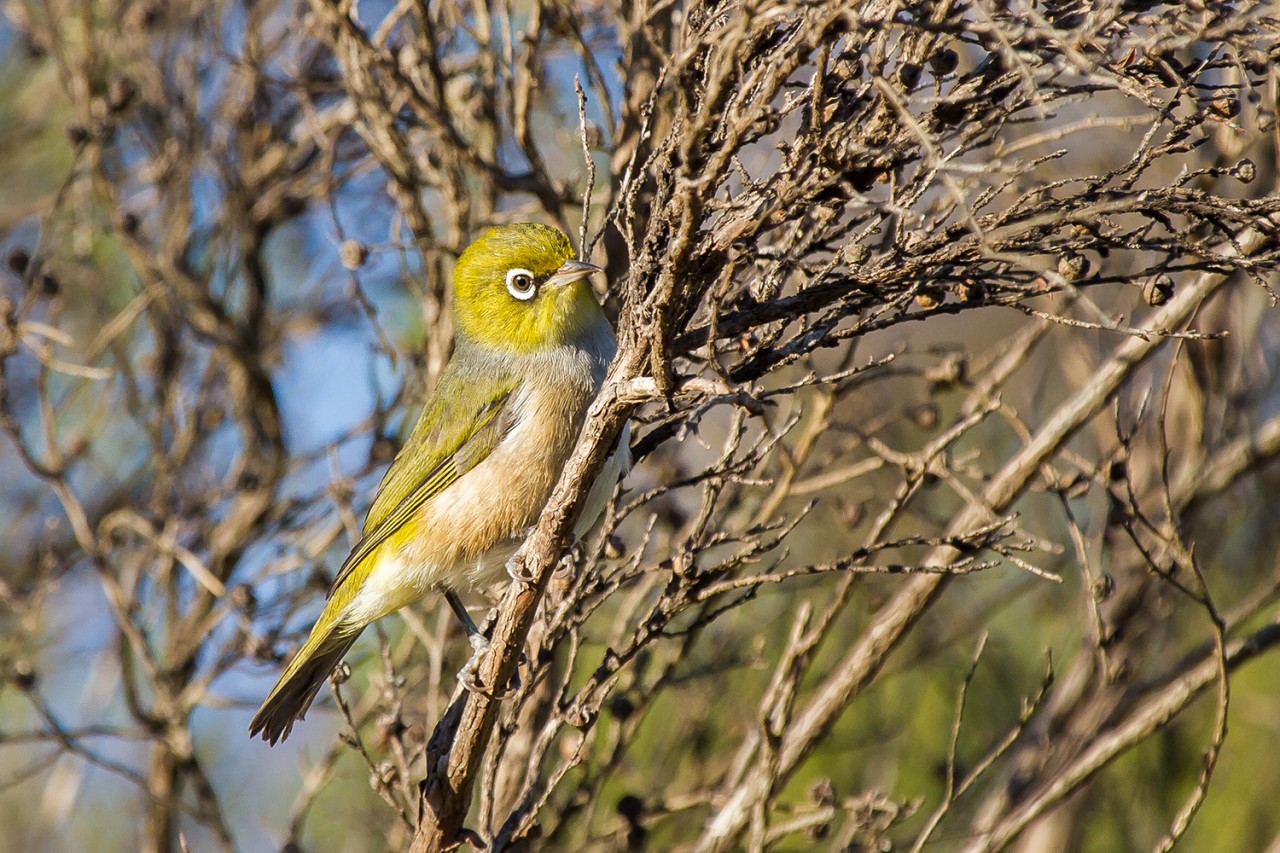
An adult silvereye displaying its distinguishing white eye ring. Photo: Matthew Winter
This bird is an ally of fruit growers everywhere.

THE SILVEREYE (tauhou) is self introduced, making this delightful little bird a native to New Zealand. They are now one of New Zealand’s most abundant and widespread bird species.

They are found throughout New Zealand from sea level right up to about 1200m altitude, inhabiting urban areas, farmlands, orchards and all indigenous and exotic forests and scrublands. They are less common in open grassland areas of Otago and there are only small numbers on all of New Zealand’s offshore islands.

The silvereye is monomorphic – adults of both sexes look identical with olive-green on the head, lower back and upper tail and mid-grey around the neck and upper back. The underparts are whitish-cream from the throat right down to the tail, including the underside of the wings. The most distinctive physical feature (and where its name is derived from) is the conspicuous white ring around the eye. This feature distinguishes an adult from a juvenile, which will not posses the white ring.

Silvereyes are monogamous and territorial when breeding, nesting between August and February, peaking in October/November in most localities. Nests are well-built, delicate cups woven into small branches. The inside is very soft, comprising moss, lichen, hair, spider web and thistledown. Two or three clutches may be raised during a season. Chicks are well-feathered at 10 days old and fledge at just 11 or 12 days. All parenting duties are shared by both sexes including the incubation (10 to 12 days).

The silvereye is an omnivore with a diet that includes insects of all types, fruit and even nectar. They are usually welcome in gardens and orchards as they perform a valuable service eating insects harmful to produce, including aphids, scale insects and the diamondback moth.

Matthew Winter

About the author

Matthew Winter

More From Bird Spotting

Related Topics

Similar Articles

From peaks to beaks

An ethical guide to visiting the Muriwai gannet colony

Spotted shag

Trending Now

Apply for the Shaun Barnett Memorial Scholarship

DOC’s best huts

Harris Saddle and Routeburn Falls Hut, Mount Aspiring National Park

Dobson Loop Track, Tararua Forest Park

Upgrading to ultralight without replacing everything

Subscribe!
Each issue of Wilderness celebrates Aotearoa’s great outdoors — written and photographed with care, not algorithms.Subscribe and help keep our wild stories alive.

Join Wilderness. You'll see more, do more and live more.

Already a subscriber?  to keep reading. Or…

34 years of inspiring New Zealanders to explore the outdoors. Don’t miss out — subscribe today.

Your subscriber-only benefits:

All this for as little as $6.75/month.

1

free articles left this month.

Already a subscriber? Login Now